


SundayMarch 1, 2026
Exhibitions
Exhibition Schedule
December 16, 2025–March 22, 2026: Collection Exhibitions
March 24–April 16, 2026: Museum Gardens Only
Open areas: Museum gardens, outdoor exhibits
All museum galleries are closed for re-installation.
- Galleries and Exhibition Themes
- 3F
- 2F
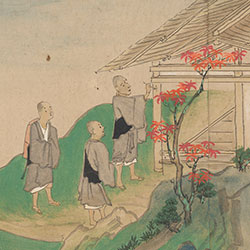
2F-1 Illustrated Handscrolls
Illustrated Biographies of Venerable Ji Shū Priests
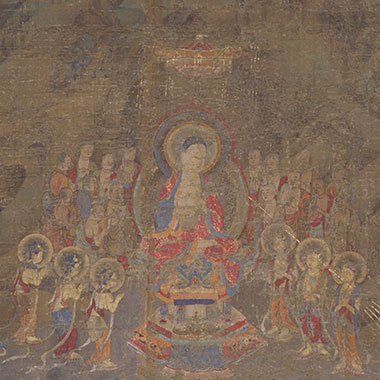
2F-2 Buddhist Paintings
The Lotus Sutra and the Buddha in Art
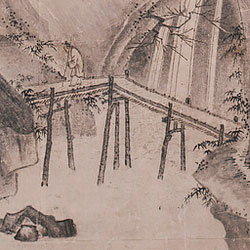
2F-3 Medieval Paintings
Sliding Door Paintings of Daitoku-ji’s Former Subtemple Yōtoku-in, Part II
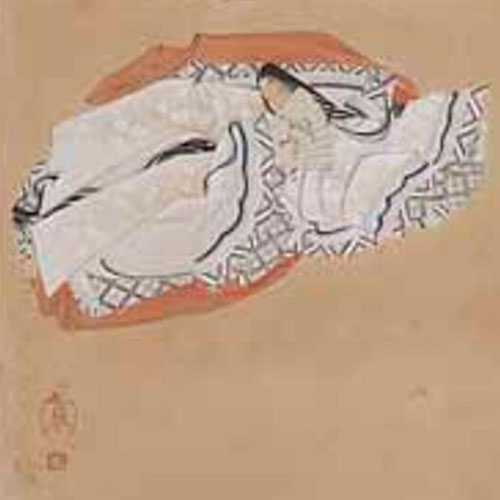
2F-4 Momoyama-Edo Paintings
The Kyoto Kano School: Paintings by Einō and Eikei
2F-5 Chinese Paintings
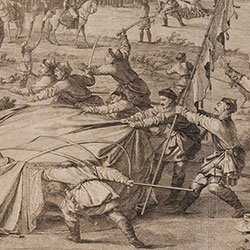
Copperplate Prints of the Qing Dynasty: Depictions of Emperor Qianlong’s Victories
- 1F
1F-1 Sculpture
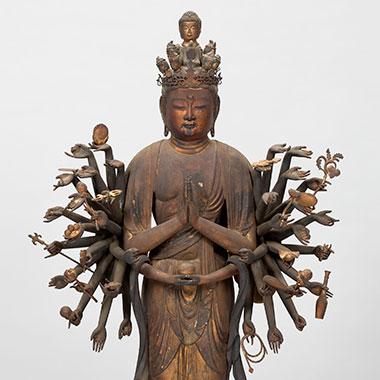
Buddhist Sculpture of the Heian Period
Gallery 1F-2 Feature Exhibition
Feature Exhibition
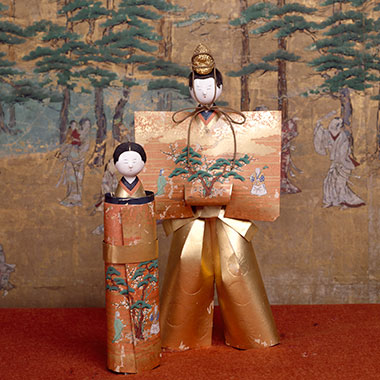
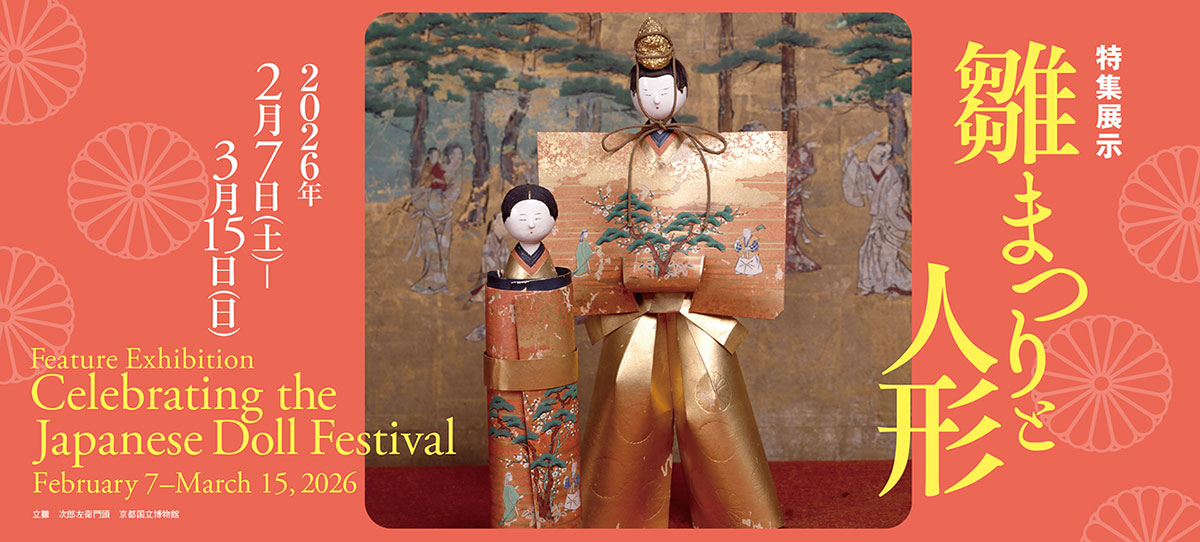
Celebrating the Japanese Doll Festival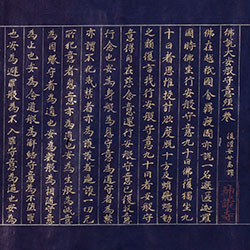
1F-3 Calligraphy
The Jingo-ji Sutras
Galleries 1F-4, 5 Feature Exhibition
Feature Exhibition
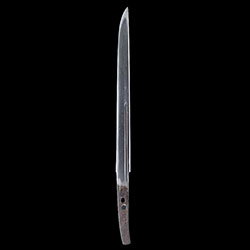
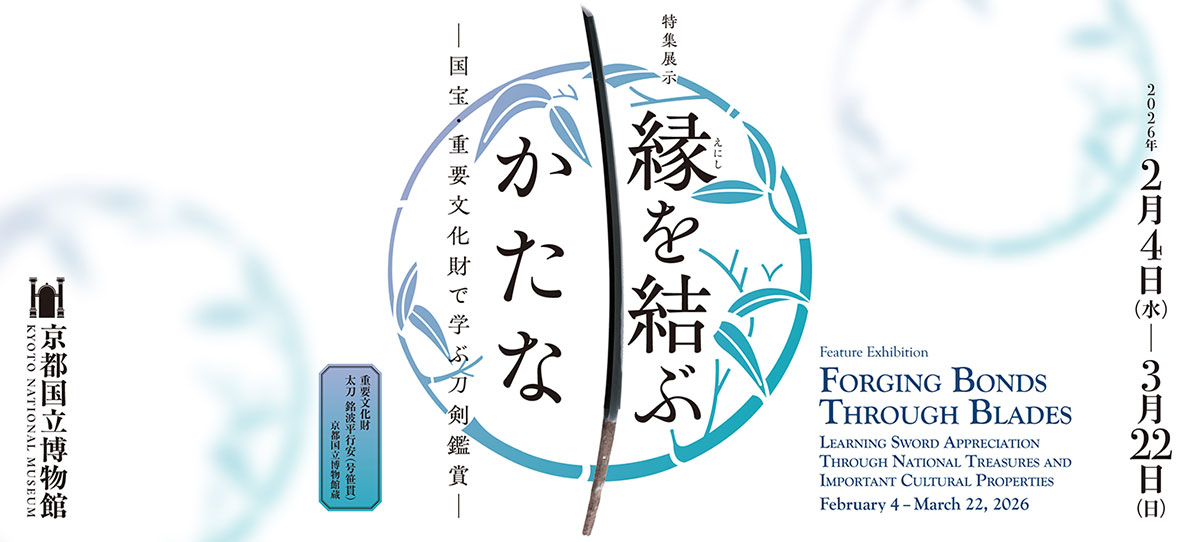
Forging Bonds Through Blades: Learning Sword Appreciation Through National Treasures and Important Cultural PropertiesGalleries 1F-4, 5 Feature Exhibition
Feature Exhibition
Forging Bonds Through Blades: Learning Sword Appreciation Through National Treasures and Important Cultural Properties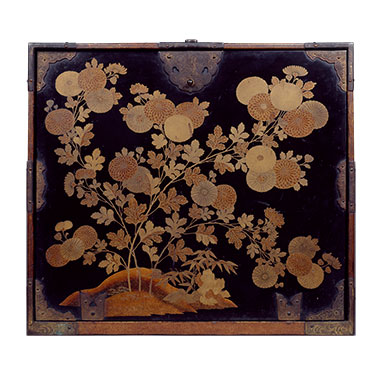
1F-6 Lacquerware
Casual and Deluxe: Kōdai-ji Makie Decoration
MondayMarch 2, 2026
The Museum is ClosedCalendarSee Current Exhibition Details
Exhibition Schedule
December 16, 2025–March 22, 2026: Collection Exhibitions
March 24–April 16, 2026: Museum Gardens Only
Open areas: Museum gardens, outdoor exhibits
All museum galleries are closed for re-installation.
- Galleries and Exhibition Themes
- 3F
- 2F
2F-1 Illustrated Handscrolls
Illustrated Biographies of Venerable Ji Shū Priests
2F-2 Buddhist Paintings
The Lotus Sutra and the Buddha in Art
2F-3 Medieval Paintings
Sliding Door Paintings of Daitoku-ji’s Former Subtemple Yōtoku-in, Part II
2F-4 Momoyama-Edo Paintings
The Kyoto Kano School: Paintings by Einō and Eikei
2F-5 Chinese Paintings
Copperplate Prints of the Qing Dynasty: Depictions of Emperor Qianlong’s Victories
- 1F
1F-1 Sculpture
Buddhist Sculpture of the Heian Period
Gallery 1F-2 Feature Exhibition
Feature Exhibition
Celebrating the Japanese Doll Festival1F-3 Calligraphy
The Jingo-ji Sutras
Galleries 1F-4, 5 Feature Exhibition
Feature Exhibition
Forging Bonds Through Blades: Learning Sword Appreciation Through National Treasures and Important Cultural PropertiesGalleries 1F-4, 5 Feature Exhibition
Feature Exhibition
Forging Bonds Through Blades: Learning Sword Appreciation Through National Treasures and Important Cultural Properties1F-6 Lacquerware
Casual and Deluxe: Kōdai-ji Makie Decoration
TuesdayMarch 3, 2026
Exhibitions
Exhibition Schedule
December 16, 2025–March 22, 2026: Collection Exhibitions
March 24–April 16, 2026: Museum Gardens Only
Open areas: Museum gardens, outdoor exhibits
All museum galleries are closed for re-installation.
- Galleries and Exhibition Themes
- 3F
- 2F
2F-1 Illustrated Handscrolls
Illustrated Biographies of Venerable Ji Shū Priests
2F-2 Buddhist Paintings
The Lotus Sutra and the Buddha in Art
2F-3 Medieval Paintings
Sliding Door Paintings of Daitoku-ji’s Former Subtemple Yōtoku-in, Part II
2F-4 Momoyama-Edo Paintings
The Kyoto Kano School: Paintings by Einō and Eikei
2F-5 Chinese Paintings
Copperplate Prints of the Qing Dynasty: Depictions of Emperor Qianlong’s Victories
- 1F
1F-1 Sculpture
Buddhist Sculpture of the Heian Period
Gallery 1F-2 Feature Exhibition
Feature Exhibition
Celebrating the Japanese Doll Festival1F-3 Calligraphy
The Jingo-ji Sutras
Galleries 1F-4, 5 Feature Exhibition
Feature Exhibition
Forging Bonds Through Blades: Learning Sword Appreciation Through National Treasures and Important Cultural PropertiesGalleries 1F-4, 5 Feature Exhibition
Feature Exhibition
Forging Bonds Through Blades: Learning Sword Appreciation Through National Treasures and Important Cultural Properties1F-6 Lacquerware
Casual and Deluxe: Kōdai-ji Makie Decoration
WednesdayMarch 4, 2026
Exhibitions
Exhibition Schedule
December 16, 2025–March 22, 2026: Collection Exhibitions
March 24–April 16, 2026: Museum Gardens Only
Open areas: Museum gardens, outdoor exhibits
All museum galleries are closed for re-installation.
- Galleries and Exhibition Themes
- 3F
- 2F
2F-1 Illustrated Handscrolls
Illustrated Biographies of Venerable Ji Shū Priests
2F-2 Buddhist Paintings
The Lotus Sutra and the Buddha in Art
2F-3 Medieval Paintings
Sliding Door Paintings of Daitoku-ji’s Former Subtemple Yōtoku-in, Part II
2F-4 Momoyama-Edo Paintings
The Kyoto Kano School: Paintings by Einō and Eikei
2F-5 Chinese Paintings
Copperplate Prints of the Qing Dynasty: Depictions of Emperor Qianlong’s Victories
- 1F
1F-1 Sculpture
Buddhist Sculpture of the Heian Period
Gallery 1F-2 Feature Exhibition
Feature Exhibition
Celebrating the Japanese Doll Festival1F-3 Calligraphy
The Jingo-ji Sutras
Galleries 1F-4, 5 Feature Exhibition
Feature Exhibition
Forging Bonds Through Blades: Learning Sword Appreciation Through National Treasures and Important Cultural PropertiesGalleries 1F-4, 5 Feature Exhibition
Feature Exhibition
Forging Bonds Through Blades: Learning Sword Appreciation Through National Treasures and Important Cultural Properties1F-6 Lacquerware
Casual and Deluxe: Kōdai-ji Makie Decoration
ThursdayMarch 5, 2026
Exhibitions
Exhibition Schedule
December 16, 2025–March 22, 2026: Collection Exhibitions
March 24–April 16, 2026: Museum Gardens Only
Open areas: Museum gardens, outdoor exhibits
All museum galleries are closed for re-installation.
- Galleries and Exhibition Themes
- 3F
- 2F
2F-1 Illustrated Handscrolls
Illustrated Biographies of Venerable Ji Shū Priests
2F-2 Buddhist Paintings
The Lotus Sutra and the Buddha in Art
2F-3 Medieval Paintings
Sliding Door Paintings of Daitoku-ji’s Former Subtemple Yōtoku-in, Part II
2F-4 Momoyama-Edo Paintings
The Kyoto Kano School: Paintings by Einō and Eikei
2F-5 Chinese Paintings
Copperplate Prints of the Qing Dynasty: Depictions of Emperor Qianlong’s Victories
- 1F
1F-1 Sculpture
Buddhist Sculpture of the Heian Period
Gallery 1F-2 Feature Exhibition
Feature Exhibition
Celebrating the Japanese Doll Festival1F-3 Calligraphy
The Jingo-ji Sutras
Galleries 1F-4, 5 Feature Exhibition
Feature Exhibition
Forging Bonds Through Blades: Learning Sword Appreciation Through National Treasures and Important Cultural PropertiesGalleries 1F-4, 5 Feature Exhibition
Feature Exhibition
Forging Bonds Through Blades: Learning Sword Appreciation Through National Treasures and Important Cultural Properties1F-6 Lacquerware
Casual and Deluxe: Kōdai-ji Makie Decoration
FridayMarch 6, 2026
Exhibitions
Exhibition Schedule
December 16, 2025–March 22, 2026: Collection Exhibitions
March 24–April 16, 2026: Museum Gardens Only
Open areas: Museum gardens, outdoor exhibits
All museum galleries are closed for re-installation.
- Galleries and Exhibition Themes
- 3F
- 2F
2F-1 Illustrated Handscrolls
Illustrated Biographies of Venerable Ji Shū Priests
2F-2 Buddhist Paintings
The Lotus Sutra and the Buddha in Art
2F-3 Medieval Paintings
Sliding Door Paintings of Daitoku-ji’s Former Subtemple Yōtoku-in, Part II
2F-4 Momoyama-Edo Paintings
The Kyoto Kano School: Paintings by Einō and Eikei
2F-5 Chinese Paintings
Copperplate Prints of the Qing Dynasty: Depictions of Emperor Qianlong’s Victories
- 1F
1F-1 Sculpture
Buddhist Sculpture of the Heian Period
Gallery 1F-2 Feature Exhibition
Feature Exhibition
Celebrating the Japanese Doll Festival1F-3 Calligraphy
The Jingo-ji Sutras
Galleries 1F-4, 5 Feature Exhibition
Feature Exhibition
Forging Bonds Through Blades: Learning Sword Appreciation Through National Treasures and Important Cultural PropertiesGalleries 1F-4, 5 Feature Exhibition
Feature Exhibition
Forging Bonds Through Blades: Learning Sword Appreciation Through National Treasures and Important Cultural Properties1F-6 Lacquerware
Casual and Deluxe: Kōdai-ji Makie Decoration
SaturdayMarch 7, 2026
Exhibitions
Exhibition Schedule
December 16, 2025–March 22, 2026: Collection Exhibitions
March 24–April 16, 2026: Museum Gardens Only
Open areas: Museum gardens, outdoor exhibits
All museum galleries are closed for re-installation.
- Galleries and Exhibition Themes
- 3F
- 2F
2F-1 Illustrated Handscrolls
Illustrated Biographies of Venerable Ji Shū Priests
2F-2 Buddhist Paintings
The Lotus Sutra and the Buddha in Art
2F-3 Medieval Paintings
Sliding Door Paintings of Daitoku-ji’s Former Subtemple Yōtoku-in, Part II
2F-4 Momoyama-Edo Paintings
The Kyoto Kano School: Paintings by Einō and Eikei
2F-5 Chinese Paintings
Copperplate Prints of the Qing Dynasty: Depictions of Emperor Qianlong’s Victories
- 1F
1F-1 Sculpture
Buddhist Sculpture of the Heian Period
Gallery 1F-2 Feature Exhibition
Feature Exhibition
Celebrating the Japanese Doll Festival1F-3 Calligraphy
The Jingo-ji Sutras
Galleries 1F-4, 5 Feature Exhibition
Feature Exhibition
Forging Bonds Through Blades: Learning Sword Appreciation Through National Treasures and Important Cultural PropertiesGalleries 1F-4, 5 Feature Exhibition
Feature Exhibition
Forging Bonds Through Blades: Learning Sword Appreciation Through National Treasures and Important Cultural Properties1F-6 Lacquerware
Casual and Deluxe: Kōdai-ji Makie Decoration
SundayMarch 8, 2026
Exhibitions
Exhibition Schedule
December 16, 2025–March 22, 2026: Collection Exhibitions
March 24–April 16, 2026: Museum Gardens Only
Open areas: Museum gardens, outdoor exhibits
All museum galleries are closed for re-installation.
- Galleries and Exhibition Themes
- 3F
- 2F
2F-1 Illustrated Handscrolls
Illustrated Biographies of Venerable Ji Shū Priests
2F-2 Buddhist Paintings
The Lotus Sutra and the Buddha in Art
2F-3 Medieval Paintings
Sliding Door Paintings of Daitoku-ji’s Former Subtemple Yōtoku-in, Part II
2F-4 Momoyama-Edo Paintings
The Kyoto Kano School: Paintings by Einō and Eikei
2F-5 Chinese Paintings
Copperplate Prints of the Qing Dynasty: Depictions of Emperor Qianlong’s Victories
- 1F
1F-1 Sculpture
Buddhist Sculpture of the Heian Period
Gallery 1F-2 Feature Exhibition
Feature Exhibition
Celebrating the Japanese Doll Festival1F-3 Calligraphy
The Jingo-ji Sutras
Galleries 1F-4, 5 Feature Exhibition
Feature Exhibition
Forging Bonds Through Blades: Learning Sword Appreciation Through National Treasures and Important Cultural PropertiesGalleries 1F-4, 5 Feature Exhibition
Feature Exhibition
Forging Bonds Through Blades: Learning Sword Appreciation Through National Treasures and Important Cultural Properties1F-6 Lacquerware
Casual and Deluxe: Kōdai-ji Makie Decoration
MondayMarch 9, 2026
The Museum is ClosedCalendarSee Current Exhibition Details
Exhibition Schedule
December 16, 2025–March 22, 2026: Collection Exhibitions
March 24–April 16, 2026: Museum Gardens Only
Open areas: Museum gardens, outdoor exhibits
All museum galleries are closed for re-installation.
- Galleries and Exhibition Themes
- 3F
- 2F
2F-1 Illustrated Handscrolls
Illustrated Biographies of Venerable Ji Shū Priests
2F-2 Buddhist Paintings
The Lotus Sutra and the Buddha in Art
2F-3 Medieval Paintings
Sliding Door Paintings of Daitoku-ji’s Former Subtemple Yōtoku-in, Part II
2F-4 Momoyama-Edo Paintings
The Kyoto Kano School: Paintings by Einō and Eikei
2F-5 Chinese Paintings
Copperplate Prints of the Qing Dynasty: Depictions of Emperor Qianlong’s Victories
- 1F
1F-1 Sculpture
Buddhist Sculpture of the Heian Period
Gallery 1F-2 Feature Exhibition
Feature Exhibition
Celebrating the Japanese Doll Festival1F-3 Calligraphy
The Jingo-ji Sutras
Galleries 1F-4, 5 Feature Exhibition
Feature Exhibition
Forging Bonds Through Blades: Learning Sword Appreciation Through National Treasures and Important Cultural PropertiesGalleries 1F-4, 5 Feature Exhibition
Feature Exhibition
Forging Bonds Through Blades: Learning Sword Appreciation Through National Treasures and Important Cultural Properties1F-6 Lacquerware
Casual and Deluxe: Kōdai-ji Makie Decoration
TuesdayMarch 10, 2026
Exhibitions
Exhibition Schedule
December 16, 2025–March 22, 2026: Collection Exhibitions
March 24–April 16, 2026: Museum Gardens Only
Open areas: Museum gardens, outdoor exhibits
All museum galleries are closed for re-installation.
- Galleries and Exhibition Themes
- 3F
- 2F
2F-1 Illustrated Handscrolls
Illustrated Biographies of Venerable Ji Shū Priests
2F-2 Buddhist Paintings
The Lotus Sutra and the Buddha in Art
2F-3 Medieval Paintings
Sliding Door Paintings of Daitoku-ji’s Former Subtemple Yōtoku-in, Part II
2F-4 Momoyama-Edo Paintings
The Kyoto Kano School: Paintings by Einō and Eikei
2F-5 Chinese Paintings
Copperplate Prints of the Qing Dynasty: Depictions of Emperor Qianlong’s Victories
- 1F
1F-1 Sculpture
Buddhist Sculpture of the Heian Period
Gallery 1F-2 Feature Exhibition
Feature Exhibition
Celebrating the Japanese Doll Festival1F-3 Calligraphy
The Jingo-ji Sutras
Galleries 1F-4, 5 Feature Exhibition
Feature Exhibition
Forging Bonds Through Blades: Learning Sword Appreciation Through National Treasures and Important Cultural PropertiesGalleries 1F-4, 5 Feature Exhibition
Feature Exhibition
Forging Bonds Through Blades: Learning Sword Appreciation Through National Treasures and Important Cultural Properties1F-6 Lacquerware
Casual and Deluxe: Kōdai-ji Makie Decoration
WednesdayMarch 11, 2026
Exhibitions
Exhibition Schedule
December 16, 2025–March 22, 2026: Collection Exhibitions
March 24–April 16, 2026: Museum Gardens Only
Open areas: Museum gardens, outdoor exhibits
All museum galleries are closed for re-installation.
- Galleries and Exhibition Themes
- 3F
- 2F
2F-1 Illustrated Handscrolls
Illustrated Biographies of Venerable Ji Shū Priests
2F-2 Buddhist Paintings
The Lotus Sutra and the Buddha in Art
2F-3 Medieval Paintings
Sliding Door Paintings of Daitoku-ji’s Former Subtemple Yōtoku-in, Part II
2F-4 Momoyama-Edo Paintings
The Kyoto Kano School: Paintings by Einō and Eikei
2F-5 Chinese Paintings
Copperplate Prints of the Qing Dynasty: Depictions of Emperor Qianlong’s Victories
- 1F
1F-1 Sculpture
Buddhist Sculpture of the Heian Period
Gallery 1F-2 Feature Exhibition
Feature Exhibition
Celebrating the Japanese Doll Festival1F-3 Calligraphy
The Jingo-ji Sutras
Galleries 1F-4, 5 Feature Exhibition
Feature Exhibition
Forging Bonds Through Blades: Learning Sword Appreciation Through National Treasures and Important Cultural PropertiesGalleries 1F-4, 5 Feature Exhibition
Feature Exhibition
Forging Bonds Through Blades: Learning Sword Appreciation Through National Treasures and Important Cultural Properties1F-6 Lacquerware
Casual and Deluxe: Kōdai-ji Makie Decoration
ThursdayMarch 12, 2026
Exhibitions
Exhibition Schedule
December 16, 2025–March 22, 2026: Collection Exhibitions
March 24–April 16, 2026: Museum Gardens Only
Open areas: Museum gardens, outdoor exhibits
All museum galleries are closed for re-installation.
- Galleries and Exhibition Themes
- 3F
- 2F
2F-1 Illustrated Handscrolls
Illustrated Biographies of Venerable Ji Shū Priests
2F-2 Buddhist Paintings
The Lotus Sutra and the Buddha in Art
2F-3 Medieval Paintings
Sliding Door Paintings of Daitoku-ji’s Former Subtemple Yōtoku-in, Part II
2F-4 Momoyama-Edo Paintings
The Kyoto Kano School: Paintings by Einō and Eikei
2F-5 Chinese Paintings
Copperplate Prints of the Qing Dynasty: Depictions of Emperor Qianlong’s Victories
- 1F
1F-1 Sculpture
Buddhist Sculpture of the Heian Period
Gallery 1F-2 Feature Exhibition
Feature Exhibition
Celebrating the Japanese Doll Festival1F-3 Calligraphy
The Jingo-ji Sutras
Galleries 1F-4, 5 Feature Exhibition
Feature Exhibition
Forging Bonds Through Blades: Learning Sword Appreciation Through National Treasures and Important Cultural PropertiesGalleries 1F-4, 5 Feature Exhibition
Feature Exhibition
Forging Bonds Through Blades: Learning Sword Appreciation Through National Treasures and Important Cultural Properties1F-6 Lacquerware
Casual and Deluxe: Kōdai-ji Makie Decoration
FridayMarch 13, 2026
Exhibitions
Exhibition Schedule
December 16, 2025–March 22, 2026: Collection Exhibitions
March 24–April 16, 2026: Museum Gardens Only
Open areas: Museum gardens, outdoor exhibits
All museum galleries are closed for re-installation.
- Galleries and Exhibition Themes
- 3F
- 2F
2F-1 Illustrated Handscrolls
Illustrated Biographies of Venerable Ji Shū Priests
2F-2 Buddhist Paintings
The Lotus Sutra and the Buddha in Art
2F-3 Medieval Paintings
Sliding Door Paintings of Daitoku-ji’s Former Subtemple Yōtoku-in, Part II
2F-4 Momoyama-Edo Paintings
The Kyoto Kano School: Paintings by Einō and Eikei
2F-5 Chinese Paintings
Copperplate Prints of the Qing Dynasty: Depictions of Emperor Qianlong’s Victories
- 1F
1F-1 Sculpture
Buddhist Sculpture of the Heian Period
Gallery 1F-2 Feature Exhibition
Feature Exhibition
Celebrating the Japanese Doll Festival1F-3 Calligraphy
The Jingo-ji Sutras
Galleries 1F-4, 5 Feature Exhibition
Feature Exhibition
Forging Bonds Through Blades: Learning Sword Appreciation Through National Treasures and Important Cultural PropertiesGalleries 1F-4, 5 Feature Exhibition
Feature Exhibition
Forging Bonds Through Blades: Learning Sword Appreciation Through National Treasures and Important Cultural Properties1F-6 Lacquerware
Casual and Deluxe: Kōdai-ji Makie Decoration
SaturdayMarch 14, 2026
Exhibitions
Exhibition Schedule
December 16, 2025–March 22, 2026: Collection Exhibitions
March 24–April 16, 2026: Museum Gardens Only
Open areas: Museum gardens, outdoor exhibits
All museum galleries are closed for re-installation.
- Galleries and Exhibition Themes
- 3F
- 2F
2F-1 Illustrated Handscrolls
Illustrated Biographies of Venerable Ji Shū Priests
2F-2 Buddhist Paintings
The Lotus Sutra and the Buddha in Art
2F-3 Medieval Paintings
Sliding Door Paintings of Daitoku-ji’s Former Subtemple Yōtoku-in, Part II
2F-4 Momoyama-Edo Paintings
The Kyoto Kano School: Paintings by Einō and Eikei
2F-5 Chinese Paintings
Copperplate Prints of the Qing Dynasty: Depictions of Emperor Qianlong’s Victories
- 1F
1F-1 Sculpture
Buddhist Sculpture of the Heian Period
Gallery 1F-2 Feature Exhibition
Feature Exhibition
Celebrating the Japanese Doll Festival1F-3 Calligraphy
The Jingo-ji Sutras
Galleries 1F-4, 5 Feature Exhibition
Feature Exhibition
Forging Bonds Through Blades: Learning Sword Appreciation Through National Treasures and Important Cultural PropertiesGalleries 1F-4, 5 Feature Exhibition
Feature Exhibition
Forging Bonds Through Blades: Learning Sword Appreciation Through National Treasures and Important Cultural Properties1F-6 Lacquerware
Casual and Deluxe: Kōdai-ji Makie Decoration
SundayMarch 15, 2026
Exhibitions
Exhibition Schedule
December 16, 2025–March 22, 2026: Collection Exhibitions
March 24–April 16, 2026: Museum Gardens Only
Open areas: Museum gardens, outdoor exhibits
All museum galleries are closed for re-installation.
- Galleries and Exhibition Themes
- 3F
- 2F
2F-1 Illustrated Handscrolls
Illustrated Biographies of Venerable Ji Shū Priests
2F-2 Buddhist Paintings
The Lotus Sutra and the Buddha in Art
2F-3 Medieval Paintings
Sliding Door Paintings of Daitoku-ji’s Former Subtemple Yōtoku-in, Part II
2F-4 Momoyama-Edo Paintings
The Kyoto Kano School: Paintings by Einō and Eikei
2F-5 Chinese Paintings
Copperplate Prints of the Qing Dynasty: Depictions of Emperor Qianlong’s Victories
- 1F
1F-1 Sculpture
Buddhist Sculpture of the Heian Period
Gallery 1F-2 Feature Exhibition
Feature Exhibition
Celebrating the Japanese Doll Festival1F-3 Calligraphy
The Jingo-ji Sutras
Galleries 1F-4, 5 Feature Exhibition
Feature Exhibition
Forging Bonds Through Blades: Learning Sword Appreciation Through National Treasures and Important Cultural PropertiesGalleries 1F-4, 5 Feature Exhibition
Feature Exhibition
Forging Bonds Through Blades: Learning Sword Appreciation Through National Treasures and Important Cultural Properties1F-6 Lacquerware
Casual and Deluxe: Kōdai-ji Makie Decoration
MondayMarch 16, 2026
The Museum is ClosedCalendarSee Current Exhibition Details
Exhibition Schedule
December 16, 2025–March 22, 2026: Collection Exhibitions
March 24–April 16, 2026: Museum Gardens Only
Open areas: Museum gardens, outdoor exhibits
All museum galleries are closed for re-installation.
- Galleries and Exhibition Themes
- 3F

3F-1
Closed
3F-2
Closed
- 2F
2F-1 Illustrated Handscrolls
Illustrated Biographies of Venerable Ji Shū Priests
2F-2 Buddhist Paintings
The Lotus Sutra and the Buddha in Art
2F-3 Medieval Paintings
Sliding Door Paintings of Daitoku-ji’s Former Subtemple Yōtoku-in, Part II
2F-4 Momoyama-Edo Paintings
The Kyoto Kano School: Paintings by Einō and Eikei
2F-5 Chinese Paintings
Copperplate Prints of the Qing Dynasty: Depictions of Emperor Qianlong’s Victories
- 1F
1F-1 Sculpture
Buddhist Sculpture of the Heian Period
1F-2
Closed
1F-3 Calligraphy
The Jingo-ji Sutras
Galleries 1F-4, 5 Feature Exhibition
Feature Exhibition
Forging Bonds Through Blades: Learning Sword Appreciation Through National Treasures and Important Cultural PropertiesGalleries 1F-4, 5 Feature Exhibition
Feature Exhibition
Forging Bonds Through Blades: Learning Sword Appreciation Through National Treasures and Important Cultural Properties1F-6 Lacquerware
Casual and Deluxe: Kōdai-ji Makie Decoration
TuesdayMarch 17, 2026
Exhibitions
Exhibition Schedule
December 16, 2025–March 22, 2026: Collection Exhibitions
March 24–April 16, 2026: Museum Gardens Only
Open areas: Museum gardens, outdoor exhibits
All museum galleries are closed for re-installation.
- Galleries and Exhibition Themes
- 3F
3F-1
Closed
3F-2
Closed
- 2F
2F-1 Illustrated Handscrolls
Illustrated Biographies of Venerable Ji Shū Priests
2F-2 Buddhist Paintings
The Lotus Sutra and the Buddha in Art
2F-3 Medieval Paintings
Sliding Door Paintings of Daitoku-ji’s Former Subtemple Yōtoku-in, Part II
2F-4 Momoyama-Edo Paintings
The Kyoto Kano School: Paintings by Einō and Eikei
2F-5 Chinese Paintings
Copperplate Prints of the Qing Dynasty: Depictions of Emperor Qianlong’s Victories
- 1F
1F-1 Sculpture
Buddhist Sculpture of the Heian Period
1F-2
Closed
1F-3 Calligraphy
The Jingo-ji Sutras
Galleries 1F-4, 5 Feature Exhibition
Feature Exhibition
Forging Bonds Through Blades: Learning Sword Appreciation Through National Treasures and Important Cultural PropertiesGalleries 1F-4, 5 Feature Exhibition
Feature Exhibition
Forging Bonds Through Blades: Learning Sword Appreciation Through National Treasures and Important Cultural Properties1F-6 Lacquerware
Casual and Deluxe: Kōdai-ji Makie Decoration
WednesdayMarch 18, 2026
Exhibitions
Exhibition Schedule
December 16, 2025–March 22, 2026: Collection Exhibitions
March 24–April 16, 2026: Museum Gardens Only
Open areas: Museum gardens, outdoor exhibits
All museum galleries are closed for re-installation.
- Galleries and Exhibition Themes
- 3F
3F-1
Closed
3F-2
Closed
- 2F
2F-1 Illustrated Handscrolls
Illustrated Biographies of Venerable Ji Shū Priests
2F-2 Buddhist Paintings
The Lotus Sutra and the Buddha in Art
2F-3 Medieval Paintings
Sliding Door Paintings of Daitoku-ji’s Former Subtemple Yōtoku-in, Part II
2F-4 Momoyama-Edo Paintings
The Kyoto Kano School: Paintings by Einō and Eikei
2F-5 Chinese Paintings
Copperplate Prints of the Qing Dynasty: Depictions of Emperor Qianlong’s Victories
- 1F
1F-1 Sculpture
Buddhist Sculpture of the Heian Period
1F-2
Closed
1F-3 Calligraphy
The Jingo-ji Sutras
Galleries 1F-4, 5 Feature Exhibition
Feature Exhibition
Forging Bonds Through Blades: Learning Sword Appreciation Through National Treasures and Important Cultural PropertiesGalleries 1F-4, 5 Feature Exhibition
Feature Exhibition
Forging Bonds Through Blades: Learning Sword Appreciation Through National Treasures and Important Cultural Properties1F-6 Lacquerware
Casual and Deluxe: Kōdai-ji Makie Decoration
ThursdayMarch 19, 2026
Exhibitions
Exhibition Schedule
December 16, 2025–March 22, 2026: Collection Exhibitions
March 24–April 16, 2026: Museum Gardens Only
Open areas: Museum gardens, outdoor exhibits
All museum galleries are closed for re-installation.
- Galleries and Exhibition Themes
- 3F
3F-1
Closed
3F-2
Closed
- 2F
2F-1 Illustrated Handscrolls
Illustrated Biographies of Venerable Ji Shū Priests
2F-2 Buddhist Paintings
The Lotus Sutra and the Buddha in Art
2F-3 Medieval Paintings
Sliding Door Paintings of Daitoku-ji’s Former Subtemple Yōtoku-in, Part II
2F-4 Momoyama-Edo Paintings
The Kyoto Kano School: Paintings by Einō and Eikei
2F-5 Chinese Paintings
Copperplate Prints of the Qing Dynasty: Depictions of Emperor Qianlong’s Victories
- 1F
1F-1 Sculpture
Buddhist Sculpture of the Heian Period
1F-2
Closed
1F-3 Calligraphy
The Jingo-ji Sutras
Galleries 1F-4, 5 Feature Exhibition
Feature Exhibition
Forging Bonds Through Blades: Learning Sword Appreciation Through National Treasures and Important Cultural PropertiesGalleries 1F-4, 5 Feature Exhibition
Feature Exhibition
Forging Bonds Through Blades: Learning Sword Appreciation Through National Treasures and Important Cultural Properties1F-6 Lacquerware
Casual and Deluxe: Kōdai-ji Makie Decoration
FridayMarch 20, 2026
Exhibitions
Exhibition Schedule
December 16, 2025–March 22, 2026: Collection Exhibitions
March 24–April 16, 2026: Museum Gardens Only
Open areas: Museum gardens, outdoor exhibits
All museum galleries are closed for re-installation.
- Galleries and Exhibition Themes
- 3F
3F-1
Closed
3F-2
Closed
- 2F
2F-1 Illustrated Handscrolls
Illustrated Biographies of Venerable Ji Shū Priests
2F-2 Buddhist Paintings
The Lotus Sutra and the Buddha in Art
2F-3 Medieval Paintings
Sliding Door Paintings of Daitoku-ji’s Former Subtemple Yōtoku-in, Part II
2F-4 Momoyama-Edo Paintings
The Kyoto Kano School: Paintings by Einō and Eikei
2F-5 Chinese Paintings
Copperplate Prints of the Qing Dynasty: Depictions of Emperor Qianlong’s Victories
- 1F
1F-1 Sculpture
Buddhist Sculpture of the Heian Period
1F-2
Closed
1F-3 Calligraphy
The Jingo-ji Sutras
Galleries 1F-4, 5 Feature Exhibition
Feature Exhibition
Forging Bonds Through Blades: Learning Sword Appreciation Through National Treasures and Important Cultural PropertiesGalleries 1F-4, 5 Feature Exhibition
Feature Exhibition
Forging Bonds Through Blades: Learning Sword Appreciation Through National Treasures and Important Cultural Properties1F-6 Lacquerware
Casual and Deluxe: Kōdai-ji Makie Decoration
SaturdayMarch 21, 2026
Exhibitions
Exhibition Schedule
December 16, 2025–March 22, 2026: Collection Exhibitions
March 24–April 16, 2026: Museum Gardens Only
Open areas: Museum gardens, outdoor exhibits
All museum galleries are closed for re-installation.
- Galleries and Exhibition Themes
- 3F
3F-1
Closed
3F-2
Closed
- 2F
2F-1 Illustrated Handscrolls
Illustrated Biographies of Venerable Ji Shū Priests
2F-2 Buddhist Paintings
The Lotus Sutra and the Buddha in Art
2F-3 Medieval Paintings
Sliding Door Paintings of Daitoku-ji’s Former Subtemple Yōtoku-in, Part II
2F-4 Momoyama-Edo Paintings
The Kyoto Kano School: Paintings by Einō and Eikei
2F-5 Chinese Paintings
Copperplate Prints of the Qing Dynasty: Depictions of Emperor Qianlong’s Victories
- 1F
1F-1 Sculpture
Buddhist Sculpture of the Heian Period
1F-2
Closed
1F-3 Calligraphy
The Jingo-ji Sutras
Galleries 1F-4, 5 Feature Exhibition
Feature Exhibition
Forging Bonds Through Blades: Learning Sword Appreciation Through National Treasures and Important Cultural PropertiesGalleries 1F-4, 5 Feature Exhibition
Feature Exhibition
Forging Bonds Through Blades: Learning Sword Appreciation Through National Treasures and Important Cultural Properties1F-6 Lacquerware
Casual and Deluxe: Kōdai-ji Makie Decoration
SundayMarch 22, 2026
Exhibitions
Exhibition Schedule
December 16, 2025–March 22, 2026: Collection Exhibitions
March 24–April 16, 2026: Museum Gardens Only
Open areas: Museum gardens, outdoor exhibits
All museum galleries are closed for re-installation.
- Galleries and Exhibition Themes
- 3F
3F-1
Closed
3F-2
Closed
- 2F
2F-1 Illustrated Handscrolls
Illustrated Biographies of Venerable Ji Shū Priests
2F-2 Buddhist Paintings
The Lotus Sutra and the Buddha in Art
2F-3 Medieval Paintings
Sliding Door Paintings of Daitoku-ji’s Former Subtemple Yōtoku-in, Part II
2F-4 Momoyama-Edo Paintings
The Kyoto Kano School: Paintings by Einō and Eikei
2F-5 Chinese Paintings
Copperplate Prints of the Qing Dynasty: Depictions of Emperor Qianlong’s Victories
- 1F
1F-1 Sculpture
Buddhist Sculpture of the Heian Period
1F-2
Closed
1F-3 Calligraphy
The Jingo-ji Sutras
Galleries 1F-4, 5 Feature Exhibition
Feature Exhibition
Forging Bonds Through Blades: Learning Sword Appreciation Through National Treasures and Important Cultural PropertiesGalleries 1F-4, 5 Feature Exhibition
Feature Exhibition
Forging Bonds Through Blades: Learning Sword Appreciation Through National Treasures and Important Cultural Properties1F-6 Lacquerware
Casual and Deluxe: Kōdai-ji Makie Decoration
MondayMarch 23, 2026
The Museum is ClosedCalendarSee Current Exhibition Details
Exhibition Schedule
December 16, 2025–March 22, 2026: Collection Exhibitions
March 24–April 16, 2026: Museum Gardens Only
Open areas: Museum gardens, outdoor exhibits
All museum galleries are closed for re-installation.
- Galleries and Exhibition Themes
- 3F
3F-1
Closed
3F-2
Closed
- 2F
2F-1
Closed
2F-2
Closed
2F-3
Closed
2F-4
Closed
2F-5
Closed
- 1F
1F-1
Closed
1F-2
Closed
1F-3
Closed
1F-4
Closed
1F-5
Closed
1F-6
Closed
TuesdayMarch 24, 2026
Exhibitions
Exhibition Schedule
December 16, 2025–March 22, 2026: Collection Exhibitions
March 24–April 16, 2026: Museum Gardens Only
Open areas: Museum gardens, outdoor exhibits
All museum galleries are closed for re-installation.
- Galleries and Exhibition Themes
- 3F
3F-1
Closed
3F-2
Closed
- 2F
2F-1
Closed
2F-2
Closed
2F-3
Closed
2F-4
Closed
2F-5
Closed
- 1F
1F-1
Closed
1F-2
Closed
1F-3
Closed
1F-4
Closed
1F-5
Closed
1F-6
Closed
WednesdayMarch 25, 2026
Exhibitions
Exhibition Schedule
December 16, 2025–March 22, 2026: Collection Exhibitions
March 24–April 16, 2026: Museum Gardens Only
Open areas: Museum gardens, outdoor exhibits
All museum galleries are closed for re-installation.
- Galleries and Exhibition Themes
- 3F
3F-1
Closed
3F-2
Closed
- 2F
2F-1
Closed
2F-2
Closed
2F-3
Closed
2F-4
Closed
2F-5
Closed
- 1F
1F-1
Closed
1F-2
Closed
1F-3
Closed
1F-4
Closed
1F-5
Closed
1F-6
Closed
ThursdayMarch 26, 2026
Exhibitions
Exhibition Schedule
December 16, 2025–March 22, 2026: Collection Exhibitions
March 24–April 16, 2026: Museum Gardens Only
Open areas: Museum gardens, outdoor exhibits
All museum galleries are closed for re-installation.
- Galleries and Exhibition Themes
- 3F
3F-1
Closed
3F-2
Closed
- 2F
2F-1
Closed
2F-2
Closed
2F-3
Closed
2F-4
Closed
2F-5
Closed
- 1F
1F-1
Closed
1F-2
Closed
1F-3
Closed
1F-4
Closed
1F-5
Closed
1F-6
Closed
FridayMarch 27, 2026
Exhibitions
Exhibition Schedule
December 16, 2025–March 22, 2026: Collection Exhibitions
March 24–April 16, 2026: Museum Gardens Only
Open areas: Museum gardens, outdoor exhibits
All museum galleries are closed for re-installation.
- Galleries and Exhibition Themes
- 3F
3F-1
Closed
3F-2
Closed
- 2F
2F-1
Closed
2F-2
Closed
2F-3
Closed
2F-4
Closed
2F-5
Closed
- 1F
1F-1
Closed
1F-2
Closed
1F-3
Closed
1F-4
Closed
1F-5
Closed
1F-6
Closed
SaturdayMarch 28, 2026
Exhibitions
Exhibition Schedule
December 16, 2025–March 22, 2026: Collection Exhibitions
March 24–April 16, 2026: Museum Gardens Only
Open areas: Museum gardens, outdoor exhibits
All museum galleries are closed for re-installation.
- Galleries and Exhibition Themes
- 3F
3F-1
Closed
3F-2
Closed
- 2F
2F-1
Closed
2F-2
Closed
2F-3
Closed
2F-4
Closed
2F-5
Closed
- 1F
1F-1
Closed
1F-2
Closed
1F-3
Closed
1F-4
Closed
1F-5
Closed
1F-6
Closed
SundayMarch 29, 2026
Exhibitions
Exhibition Schedule
December 16, 2025–March 22, 2026: Collection Exhibitions
March 24–April 16, 2026: Museum Gardens Only
Open areas: Museum gardens, outdoor exhibits
All museum galleries are closed for re-installation.
- Galleries and Exhibition Themes
- 3F
3F-1
Closed
3F-2
Closed
- 2F
2F-1
Closed
2F-2
Closed
2F-3
Closed
2F-4
Closed
2F-5
Closed
- 1F
1F-1
Closed
1F-2
Closed
1F-3
Closed
1F-4
Closed
1F-5
Closed
1F-6
Closed
MondayMarch 30, 2026
The Museum is ClosedCalendarSee Current Exhibition Details
Exhibition Schedule
December 16, 2025–March 22, 2026: Collection Exhibitions
March 24–April 16, 2026: Museum Gardens Only
Open areas: Museum gardens, outdoor exhibits
All museum galleries are closed for re-installation.
- Galleries and Exhibition Themes
- 3F
3F-1
Closed
3F-2
Closed
- 2F
2F-1
Closed
2F-2
Closed
2F-3
Closed
2F-4
Closed
2F-5
Closed
- 1F
1F-1
Closed
1F-2
Closed
1F-3
Closed
1F-4
Closed
1F-5
Closed
1F-6
Closed
TuesdayMarch 31, 2026
Exhibitions
Exhibition Schedule
December 16, 2025–March 22, 2026: Collection Exhibitions
March 24–April 16, 2026: Museum Gardens Only
Open areas: Museum gardens, outdoor exhibits
All museum galleries are closed for re-installation.
- Galleries and Exhibition Themes
- 3F
3F-1
Closed
3F-2
Closed
- 2F
2F-1
Closed
2F-2
Closed
2F-3
Closed
2F-4
Closed
2F-5
Closed
- 1F
1F-1
Closed
1F-2
Closed
1F-3
Closed
1F-4
Closed
1F-5
Closed
1F-6
Closed
Feature Exhibitions
Feature Exhibitions
Feature Exhibitions
Feature Exhibitions
Feature Exhibitions
Feature Exhibitions
Feature Exhibitions
Feature Exhibitions
Feature Exhibitions
Feature Exhibitions
Feature Exhibitions
Feature Exhibitions
Feature Exhibitions
Feature Exhibitions
Feature Exhibitions
Also On View in the Collection Galleries特別展観覧料が必要
Polychrome Porcelain from the Late Ming and Early Qing Dynasties
December 16, 2025–March 15, 2026
Ceramics|3F-1 gallery
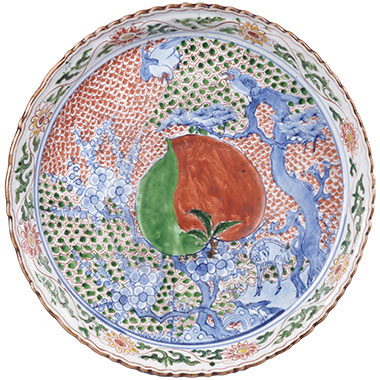
The late Ming and early Qing dynasties in China, spanning the end of the sixteenth to the seventeenth centuries, were an era of profound transformation, marked by intercultural exchange between the East and West as European culture spread throughout the globe. In Japan, such encounters exerted a wide-ranging influence and shaped the development of Edo-period (1615–1868) Japanese culture. This impacted numerous types of Japanese ceramics, ranging from Imari overglaze-enamel porcelain to Kyoto ware. This exhibition introduces a selection of Chinese polychrome porcelain——including iroe Shonzui, Nankin akae ("Nanjing red"), and famille verte (Kangxi wucai)——that shaped the emergence and development of Japan’s own overglaze enamel porcelain tradition.
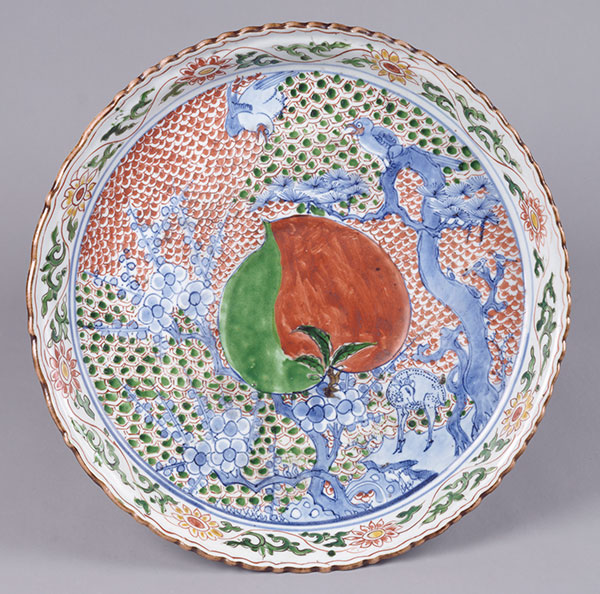
Lobed Dish with Peach, Pine, and Deer
Inscription: "Made during the Jiajing era of the Ming dynasty"
Kyoto National Museum
Ceramics of Japan and East Asia
December 16, 2025–March 15, 2026
Ceramics|3F-1 gallery
Ceramics are not only admired for their beauty but are also broadly used in daily life, making them one of the most familiar forms of decorative arts. East Asian ceramics in particular feature a rich variety of patterns, forms, and colors, and have equally wide-ranging uses. Additionally, the type of ware (such as earthenware or porcelain), clay, glazes, decor, and firing techniques each vary depending on the region of production. Focusing on Japan, China, and the Korean Peninsula, this gallery presents a diverse selection of East Asian ceramics, showcasing their distinctive qualities and artistic appeal.
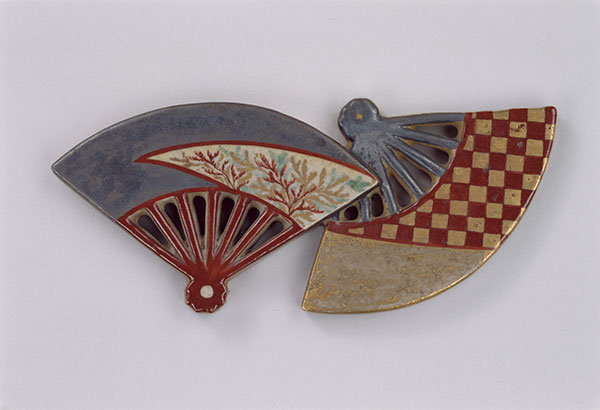
Important Cultural Property
Decorative Nail Covers
Attributed to Nonomura Ninsei
Kyoto National Museum
Archaeological Materials from Northern Kyoto
December 16, 2025–March 15, 2026
Archaeological Relics|3F-2 gallery
Northern Kyoto Prefecture has long served as a hub of both domestic and international exchange. Comprising the Tango region and part of the Tamba region, the area is bordered by the Sea of Japan and mountains. Archaeological excavations have revealed that during the latter half of the early Jōmon period (pre-10,000–ca. 5th c. BCE), dugout canoes were used to travel across the open sea, while during the Yayoi (ca. 5th c. BCE–ca. 3rd c. CE) and Kofun (ca. 3rd c.–6th c.) periods, large tombs were constructed. The unique culture of northern Kyoto led to it being referred to as the “Tango Kingdom.” From the Heian period (794–1185) onward, the region maintained close ties with the capital yet also nurtured its own distinctive art and religious traditions, as evidenced by artifacts excavated from sutra mounds. This exhibition provides a glimpse into the rich culture of northern Kyoto through archaeological materials from the Jōmon period to the medieval era.
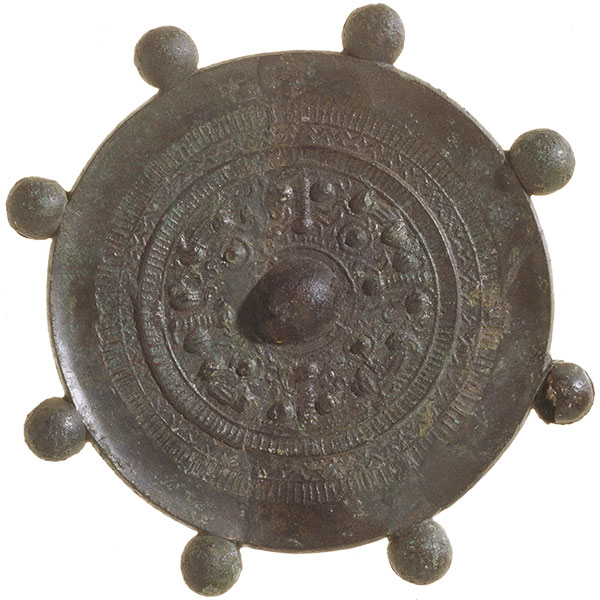
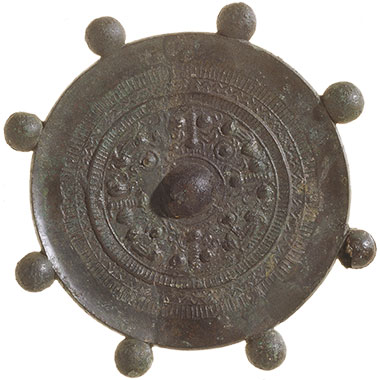
Mirror with Bells
Excavated from Benzai Tumulus No. 1, Kyoto
Kyoto National Museum
Archaeological Artifacts of Japan
December 16, 2025–March 15, 2026
Archaeological Relics|3F-2 gallery
This exhibition explores the history of Japan through introducing a variety of archaeological relics. Many of these artifacts were excavated from ancient ruins. Some are special tools used in rituals and ceremonies, while others are objects used by people in their daily lives. Through exploring Japanese archaeology, we can gain a sense of the lives and experiences of people of the past.
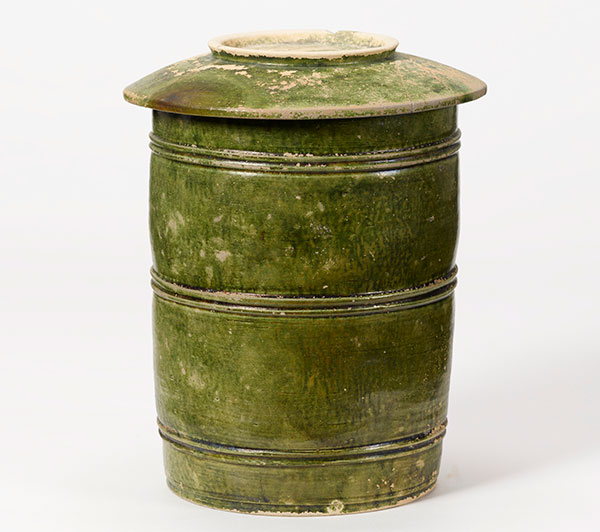
Important Cultural Property
Sutra Container
Reportedly excavated in Wakayama
Kyoto National Museum
Illustrated Biographies of Venerable Ji Shū Priests
February 25–March 22, 2026
Illustrated Handscrolls|2F-1 gallery
The Ji Shū sect is best known for its practice of “dancing nenbutsu” (odori nenbutsu)——ecstatic dancing performed while reciting Amida Buddha’s name in an incantatory prayer. Today, the best known visual painted depiction of the Ji Shū is the National Treasure Illustrated Biography of the Priest Ippen (Ippen hijiri-e), a set of twelve handscrolls describing the life of its founder Ippen (1239–1289). During the medieval and early modern period, however, there was another set of ten scrolls belonging to a different lineage that was disseminated far more widely among Ji Shū temples. This set, entitled Illustrated Legends of the Venerable Itinerant Priests (Yugyō Shōnin engi-e) was thought to have been compiled by the monk Shōshun (dates unknown), and is notable for including not only Ippen’s biography but also episodes related to the Ji Shū’s second patriarch Ta’a (1237–1319). The original version is lost, but many copies have survived to the present. This exhibition introduces biographies of eminent Ji Shū priests and related works..
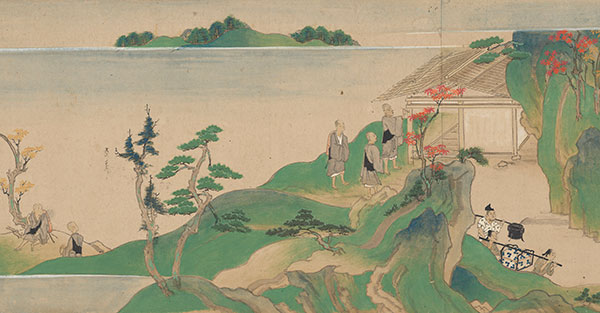
Important Cultural Property
Illustrated Legends of the Venerable Itinerant Priests, Vol. 2 (Upper Section)
Konren-ji Temple, Kyoto
The Lotus Sutra and the Buddha in Art
February 25–March 22, 2026
Buddhist Paintings|2F-2 gallery
Although the Lotus Sutra is traditionally attributed to the Historical Buddha Shakyamuni, it was in fact compiled within the Mahayana Buddhist tradition after his death. Early Buddhist schools emphasized the desire for personal enlightenment; in contrast, Mahayana Buddhism actively advocates for the salvation of all living beings. The Lotus Sutra teaches that everyone has a Buddha-nature and can be saved, yet this belief was too progressive for its time. The text itself even states repeatedly “There are non-believers who will speak poorly of these teachings, but they are the truth.” Representing the essence of Mahayana Buddhism, the Lotus Sutra was widely embraced in Japan and played a central role in shaping the Kamakura-period (1185–1333) Buddhist movements that sought salvation for all. Consequently, many Buddhist paintings connected to the Lotus Sutra survive to the present and have a formidable presence within Japanese art.
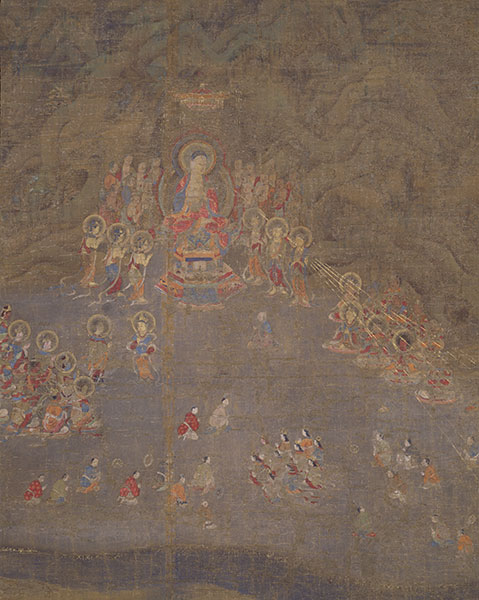
Important Cultural Property
Lotus Sutra Mandala
Kaijūsen-ji Temple, Kyoto
Sliding Door Paintings of Daitoku-ji’s Former Subtemple Yōtoku-in, Part II
February 25–March 22, 2026
Medieval Paintings|2F-3 gallery
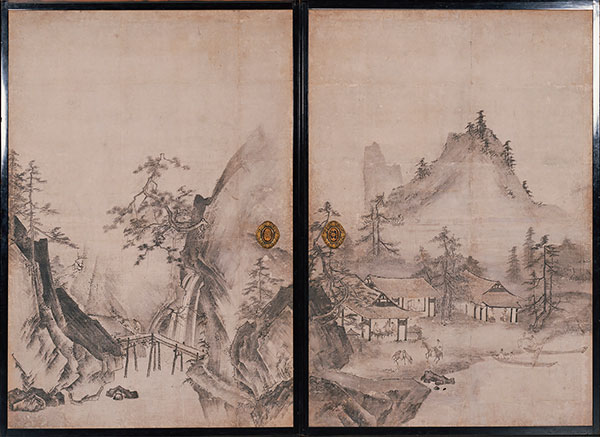
The sliding door (fusuma) paintings Landscapes, The Four Accomplishments, and Wild Geese and Reeds in the collection of the Kyoto National Museum were originally part of a set that adorned the main hall of Yōtoku-in, a subtemple within the Zen complex of Daitoku-ji in Kyoto. Most of these works were painted around 1490 by Sōkei (dates unknown) and other artists connected to a lineage of official painters serving the Muromachi shogunate. Due to Yōtoku-in’s relocation and major remodeling during the medieval and early modern periods——as well as the dispersal of the sliding doors in the nineteenth century——these paintings underwent multiple large-scale alterations and retouching. As a result, it is extremely difficult to reconstruct their original appearance. Nonetheless, as the oldest surviving examples of ink-painted sliding door paintings in Japan, the Yōtoku-in screens hold a distinguished place in the history of Japanese art. The paintings were dismantled and conserved between 2020 and 2024; this exhibition marks their first public display since the completion of conservation.
Important Cultural Property
Landscapes
By Sōkei
Kyoto National Museum
The Kyoto Kano School: Paintings by Einō and Eikei
February 3–March 22, 2026
Momoyama-Edo Paintings|2F-4 gallery
In the early modern era, a group of painters active in Edo (present-day Tokyo) led by Kano Tan’yū (1602–1674), official painter to the Tokugawa shogunate, came to be known as the Edo Kano school. They dominated the Japanese art world until the late nineteenth century. In contrast, the lineage of Kano-school painters who remained in Kyoto rather than entering the service of the shogunate in Edo is referred to as the Kyō Kano school.
The third-generation head of the Kyō Kano lineage was Einō (1631–1697). Inheriting the scholarly temperament of his father Sansetsu (1590–1651), Einō published History of Painting of the Realm (Honchō gashi), the first systematic history of Japanese art. He worked in a restrained style, incorporating elements from the approach of Edo Kano painters. In contrast, his eldest son and successor Eikei (1662–1702) developed a distinctive mode of expression characterized by bold, vigorous brushwork——a style thought to have influenced later painters such as Soga Shōhaku (1730–1781).
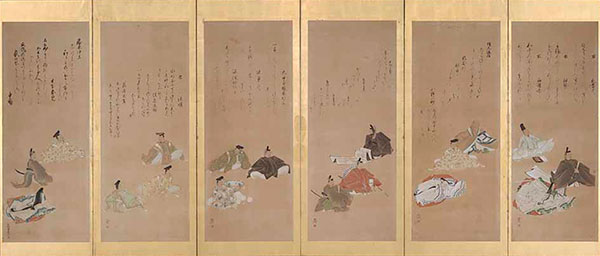
Thirty-Six Immortal Poets (left screen)
By Kano Einō
Copperplate Prints of the Qing Dynasty: Depictions of Emperor Qianlong’s Victories
February 3–March 22, 2026
Chinese Paintings|2F-5 gallery
The Qianlong Emperor (r. 1735–1796), the sixth sovereign of the Qing dynasty, built upon the achievements of his grandfather, the Kangxi Emperor, and his father, the Yongzheng Emperor, to usher in a new golden age. In order to expand the empire, he launched ten military campaigns into Central Asia, emerging victorious from all of them and bringing Qing territory to its largest extent. These triumphs came to be known as the “Ten Great Campaigns” (shiquan wugong). To commemorate his military successes, the Qianlong Emperor commissioned Western painters such as Giuseppe Castiglione (1688–1766), an Italian artist serving at the Qing court, to depict scenes of his victories. The paintings were then sent to France, where they were reproduced as copper plates and used to make prints. Versions printed on Western paper in France and on xuan paper in China are presented together in this exhibition.
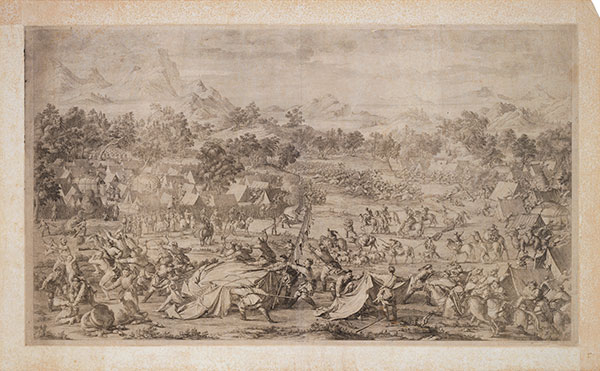
Battle of Oroi-Jalatu
From the Copperplate Print Series Victories and Conquests of the Emperor of China
Kyoto National Museum
Buddhist Sculpture of the Heian Period
December 16, 2025–March 22, 2026
Sculpture|1F-1 gallery
The Heian period (794–1185) was one of the most dynamic eras within the history of Japanese sculpture. The impression of Buddhist icons from the ninth century, during which the monks Saichō (767–822) and Kūkai (774–835) introduced Esoteric Buddhism from China, differs greatly from the serene air of twelfth-century statues.
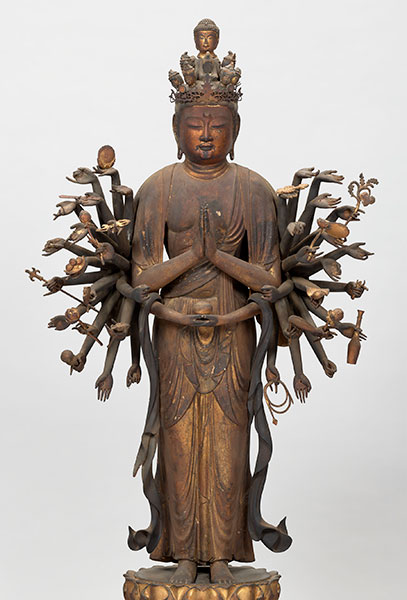
Most temples were located in Kyoto’s surroundings until the middle of the Heian period. However, from the late Heian period onwards, temple construction within the capital itself increased, accompanied by the active production of Buddhist sculptures. Although unfortunately some works have been lost due to wars and natural disasters, many others have been carefully protected and passed down throughout generations. This exhibition presents a variety of sculptures capturing the spirit of the Heian period.
Important Cultural Property
Standing Thousand-Armed Kannon (Sahasrabhuja Avalokiteśvara) Bodhisattva
Zenkai-ji Temple, Kyoto
Shinto Deities and Pairs of Guardian Lions and Lion-Dogs
December 16, 2025–March 22, 2026
Sculpture|1F-1 gallery
Originally, indigenous Japanese deities (kami) were thought to be invisible to humans, but the influence of Buddhism lead to the production of statues of Shinto gods. Many of them were small in scale, as they were enclosed within miniature shrines. Shinto sculptures also distinguished between male and female deities and had a human-like appearance, sometimes being depicted wearing the clothing and armor of nobles or monks.
Lions and lion dogs are stationed at shrine entrances to guard the deity inside. Within this protective pair, the open-mouthed creature without horns is the lion, while the close-mouthed and horned figure is the lion-dog. Pairs of lions are sometimes placed before Buddha sculptures, as within Buddhism the roar of the "king of the beasts" is likened to the Buddha’s voice preaching the dharma. This exhibition presents a variety of sculptures, including stone figures from China and wooden statues from Japan.
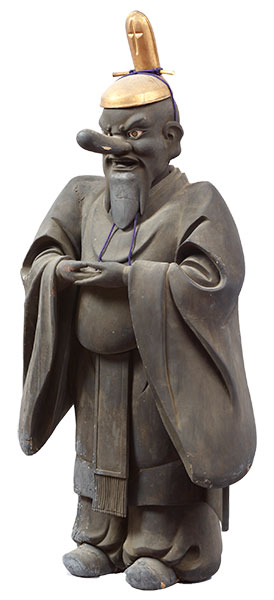
Standing Deity Traditionally Identified as Sarutahiko
Kyoto National Museum
The Jingo-ji Sutras
February 25–March 22, 2026
Calligraphy|1F-3 gallery
The Brief History of Jingo-ji (Jingoji ryakki), which tells the history of Takaosan Jingo-ji——an ancient temple guarding northwestern Kyoto——describes the temple’s sutra repository during the fourteenth century. It records that the repository housed three versions of the complete Buddhist canon (the Tripitaka): the Original Canon, the Gold Canon, and the Tang Canon. It also housed ten volumes of the Lotus Sutra, Innumerable Meanings Sutra, and Samantabhadra Meditation Sutra written in gold paint on indigo-dyed paper. These were collectively referred to as the Lotus Assembly Sutras. This exhibition presents manuscripts from the Original Canon, Gold Canon, and Lotus Assembly Sutras (excluding the woodblock-printed Tang Canon), masterpieces capturing the splendor of Jingo-ji Temple in its prime.
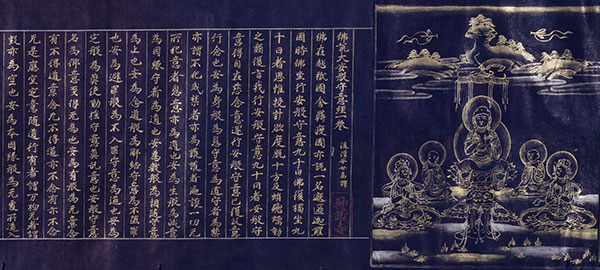
Important Art Object
Great Sutra on Mindfulness of Inhalation and Exhalation, from the Jingo-ji Gold Canon
Commissioned by Emperor Toba
Kyoto National Museum
Casual and Deluxe: Kōdai-ji Makie Decoration
February 4–March 22, 2026
Lacquerware|1F-6 gallery
Makie (mah-ki-eh) is a decorative technique in which metallic powder is sprinkled onto wet lacquer, taking advantage of lacquer's inherent adhesive qualities to create pictorial designs. Lacquer itself is a luxurious material to begin with, and makie makes liberal use of precious materials such as gold and silver. The process is also highly time- and labor-intensive, consequently, makie was originally reserved for objects dedicated to deities or used by the aristocracy.
After Toyotomi Hideyoshi (1537–1598) unified Japan in the 1500s, the number of lacquer artisans increased, and many workshops specializing in makie were established. Warlords, now powerful enough to build their own castles, took a liking to makie and used it to embellish everything from tableware and document boxes to architectural elements and even bath pails. The quickly executed yet lavish decoration produced by these new artisans came to be known as Kōdai-ji makie, named after the Kyoto family temple of Hideyoshi and his wife, where many such examples survive today.
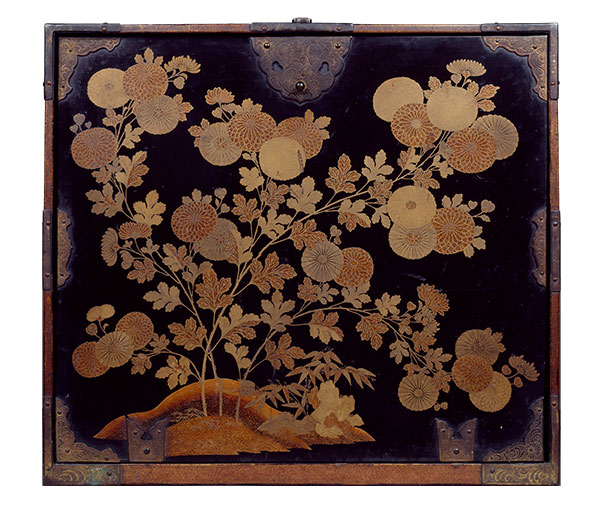
Tea-Utensil Cabinet (Kikyoku)
Kyoto National Museum
Also On View in the Collection Galleries特別展観覧料が必要
Polychrome Porcelain from the Late Ming and Early Qing Dynasties
December 16, 2025–March 15, 2026
Ceramics|3F-1 gallery
The late Ming and early Qing dynasties in China, spanning the end of the sixteenth to the seventeenth centuries, were an era of profound transformation, marked by intercultural exchange between the East and West as European culture spread throughout the globe. In Japan, such encounters exerted a wide-ranging influence and shaped the development of Edo-period (1615–1868) Japanese culture. This impacted numerous types of Japanese ceramics, ranging from Imari overglaze-enamel porcelain to Kyoto ware. This exhibition introduces a selection of Chinese polychrome porcelain——including iroe Shonzui, Nankin akae ("Nanjing red"), and famille verte (Kangxi wucai)——that shaped the emergence and development of Japan’s own overglaze enamel porcelain tradition.
Lobed Dish with Peach, Pine, and Deer
Inscription: "Made during the Jiajing era of the Ming dynasty"
Kyoto National Museum
Ceramics of Japan and East Asia
December 16, 2025–March 15, 2026
Ceramics|3F-1 gallery
Ceramics are not only admired for their beauty but are also broadly used in daily life, making them one of the most familiar forms of decorative arts. East Asian ceramics in particular feature a rich variety of patterns, forms, and colors, and have equally wide-ranging uses. Additionally, the type of ware (such as earthenware or porcelain), clay, glazes, decor, and firing techniques each vary depending on the region of production. Focusing on Japan, China, and the Korean Peninsula, this gallery presents a diverse selection of East Asian ceramics, showcasing their distinctive qualities and artistic appeal.
Important Cultural Property
Decorative Nail Covers
Attributed to Nonomura Ninsei
Kyoto National Museum
Archaeological Materials from Northern Kyoto
December 16, 2025–March 15, 2026
Archaeological Relics|3F-2 gallery
Northern Kyoto Prefecture has long served as a hub of both domestic and international exchange. Comprising the Tango region and part of the Tamba region, the area is bordered by the Sea of Japan and mountains. Archaeological excavations have revealed that during the latter half of the early Jōmon period (pre-10,000–ca. 5th c. BCE), dugout canoes were used to travel across the open sea, while during the Yayoi (ca. 5th c. BCE–ca. 3rd c. CE) and Kofun (ca. 3rd c.–6th c.) periods, large tombs were constructed. The unique culture of northern Kyoto led to it being referred to as the “Tango Kingdom.” From the Heian period (794–1185) onward, the region maintained close ties with the capital yet also nurtured its own distinctive art and religious traditions, as evidenced by artifacts excavated from sutra mounds. This exhibition provides a glimpse into the rich culture of northern Kyoto through archaeological materials from the Jōmon period to the medieval era.
Mirror with Bells
Excavated from Benzai Tumulus No. 1, Kyoto
Kyoto National Museum
Archaeological Artifacts of Japan
December 16, 2025–March 15, 2026
Archaeological Relics|3F-2 gallery
This exhibition explores the history of Japan through introducing a variety of archaeological relics. Many of these artifacts were excavated from ancient ruins. Some are special tools used in rituals and ceremonies, while others are objects used by people in their daily lives. Through exploring Japanese archaeology, we can gain a sense of the lives and experiences of people of the past.
Important Cultural Property
Sutra Container
Reportedly excavated in Wakayama
Kyoto National Museum
Illustrated Biographies of Venerable Ji Shū Priests
February 25–March 22, 2026
Illustrated Handscrolls|2F-1 gallery
The Ji Shū sect is best known for its practice of “dancing nenbutsu” (odori nenbutsu)——ecstatic dancing performed while reciting Amida Buddha’s name in an incantatory prayer. Today, the best known visual painted depiction of the Ji Shū is the National Treasure Illustrated Biography of the Priest Ippen (Ippen hijiri-e), a set of twelve handscrolls describing the life of its founder Ippen (1239–1289). During the medieval and early modern period, however, there was another set of ten scrolls belonging to a different lineage that was disseminated far more widely among Ji Shū temples. This set, entitled Illustrated Legends of the Venerable Itinerant Priests (Yugyō Shōnin engi-e) was thought to have been compiled by the monk Shōshun (dates unknown), and is notable for including not only Ippen’s biography but also episodes related to the Ji Shū’s second patriarch Ta’a (1237–1319). The original version is lost, but many copies have survived to the present. This exhibition introduces biographies of eminent Ji Shū priests and related works..
Important Cultural Property
Illustrated Legends of the Venerable Itinerant Priests, Vol. 2 (Upper Section)
Konren-ji Temple, Kyoto
The Lotus Sutra and the Buddha in Art
February 25–March 22, 2026
Buddhist Paintings|2F-2 gallery
Although the Lotus Sutra is traditionally attributed to the Historical Buddha Shakyamuni, it was in fact compiled within the Mahayana Buddhist tradition after his death. Early Buddhist schools emphasized the desire for personal enlightenment; in contrast, Mahayana Buddhism actively advocates for the salvation of all living beings. The Lotus Sutra teaches that everyone has a Buddha-nature and can be saved, yet this belief was too progressive for its time. The text itself even states repeatedly “There are non-believers who will speak poorly of these teachings, but they are the truth.” Representing the essence of Mahayana Buddhism, the Lotus Sutra was widely embraced in Japan and played a central role in shaping the Kamakura-period (1185–1333) Buddhist movements that sought salvation for all. Consequently, many Buddhist paintings connected to the Lotus Sutra survive to the present and have a formidable presence within Japanese art.
Important Cultural Property
Lotus Sutra Mandala
Kaijūsen-ji Temple, Kyoto
Sliding Door Paintings of Daitoku-ji’s Former Subtemple Yōtoku-in, Part II
February 25–March 22, 2026
Medieval Paintings|2F-3 gallery
The sliding door (fusuma) paintings Landscapes, The Four Accomplishments, and Wild Geese and Reeds in the collection of the Kyoto National Museum were originally part of a set that adorned the main hall of Yōtoku-in, a subtemple within the Zen complex of Daitoku-ji in Kyoto. Most of these works were painted around 1490 by Sōkei (dates unknown) and other artists connected to a lineage of official painters serving the Muromachi shogunate. Due to Yōtoku-in’s relocation and major remodeling during the medieval and early modern periods——as well as the dispersal of the sliding doors in the nineteenth century——these paintings underwent multiple large-scale alterations and retouching. As a result, it is extremely difficult to reconstruct their original appearance. Nonetheless, as the oldest surviving examples of ink-painted sliding door paintings in Japan, the Yōtoku-in screens hold a distinguished place in the history of Japanese art. The paintings were dismantled and conserved between 2020 and 2024; this exhibition marks their first public display since the completion of conservation.
Important Cultural Property
Landscapes
By Sōkei
Kyoto National Museum
The Kyoto Kano School: Paintings by Einō and Eikei
February 3–March 22, 2026
Momoyama-Edo Paintings|2F-4 gallery
In the early modern era, a group of painters active in Edo (present-day Tokyo) led by Kano Tan’yū (1602–1674), official painter to the Tokugawa shogunate, came to be known as the Edo Kano school. They dominated the Japanese art world until the late nineteenth century. In contrast, the lineage of Kano-school painters who remained in Kyoto rather than entering the service of the shogunate in Edo is referred to as the Kyō Kano school.
The third-generation head of the Kyō Kano lineage was Einō (1631–1697). Inheriting the scholarly temperament of his father Sansetsu (1590–1651), Einō published History of Painting of the Realm (Honchō gashi), the first systematic history of Japanese art. He worked in a restrained style, incorporating elements from the approach of Edo Kano painters. In contrast, his eldest son and successor Eikei (1662–1702) developed a distinctive mode of expression characterized by bold, vigorous brushwork——a style thought to have influenced later painters such as Soga Shōhaku (1730–1781).
Thirty-Six Immortal Poets (left screen)
By Kano Einō
Copperplate Prints of the Qing Dynasty: Depictions of Emperor Qianlong’s Victories
February 3–March 22, 2026
Chinese Paintings|2F-5 gallery
The Qianlong Emperor (r. 1735–1796), the sixth sovereign of the Qing dynasty, built upon the achievements of his grandfather, the Kangxi Emperor, and his father, the Yongzheng Emperor, to usher in a new golden age. In order to expand the empire, he launched ten military campaigns into Central Asia, emerging victorious from all of them and bringing Qing territory to its largest extent. These triumphs came to be known as the “Ten Great Campaigns” (shiquan wugong). To commemorate his military successes, the Qianlong Emperor commissioned Western painters such as Giuseppe Castiglione (1688–1766), an Italian artist serving at the Qing court, to depict scenes of his victories. The paintings were then sent to France, where they were reproduced as copper plates and used to make prints. Versions printed on Western paper in France and on xuan paper in China are presented together in this exhibition.
Battle of Oroi-Jalatu
From the Copperplate Print Series Victories and Conquests of the Emperor of China
Kyoto National Museum
Buddhist Sculpture of the Heian Period
December 16, 2025–March 22, 2026
Sculpture|1F-1 gallery
The Heian period (794–1185) was one of the most dynamic eras within the history of Japanese sculpture. The impression of Buddhist icons from the ninth century, during which the monks Saichō (767–822) and Kūkai (774–835) introduced Esoteric Buddhism from China, differs greatly from the serene air of twelfth-century statues.
Most temples were located in Kyoto’s surroundings until the middle of the Heian period. However, from the late Heian period onwards, temple construction within the capital itself increased, accompanied by the active production of Buddhist sculptures. Although unfortunately some works have been lost due to wars and natural disasters, many others have been carefully protected and passed down throughout generations. This exhibition presents a variety of sculptures capturing the spirit of the Heian period.
Important Cultural Property
Standing Thousand-Armed Kannon (Sahasrabhuja Avalokiteśvara) Bodhisattva
Zenkai-ji Temple, Kyoto
Shinto Deities and Pairs of Guardian Lions and Lion-Dogs
December 16, 2025–March 22, 2026
Sculpture|1F-1 gallery
Originally, indigenous Japanese deities (kami) were thought to be invisible to humans, but the influence of Buddhism lead to the production of statues of Shinto gods. Many of them were small in scale, as they were enclosed within miniature shrines. Shinto sculptures also distinguished between male and female deities and had a human-like appearance, sometimes being depicted wearing the clothing and armor of nobles or monks.
Lions and lion dogs are stationed at shrine entrances to guard the deity inside. Within this protective pair, the open-mouthed creature without horns is the lion, while the close-mouthed and horned figure is the lion-dog. Pairs of lions are sometimes placed before Buddha sculptures, as within Buddhism the roar of the "king of the beasts" is likened to the Buddha’s voice preaching the dharma. This exhibition presents a variety of sculptures, including stone figures from China and wooden statues from Japan.
Standing Deity Traditionally Identified as Sarutahiko
Kyoto National Museum
The Jingo-ji Sutras
February 25–March 22, 2026
Calligraphy|1F-3 gallery
The Brief History of Jingo-ji (Jingoji ryakki), which tells the history of Takaosan Jingo-ji——an ancient temple guarding northwestern Kyoto——describes the temple’s sutra repository during the fourteenth century. It records that the repository housed three versions of the complete Buddhist canon (the Tripitaka): the Original Canon, the Gold Canon, and the Tang Canon. It also housed ten volumes of the Lotus Sutra, Innumerable Meanings Sutra, and Samantabhadra Meditation Sutra written in gold paint on indigo-dyed paper. These were collectively referred to as the Lotus Assembly Sutras. This exhibition presents manuscripts from the Original Canon, Gold Canon, and Lotus Assembly Sutras (excluding the woodblock-printed Tang Canon), masterpieces capturing the splendor of Jingo-ji Temple in its prime.
Important Art Object
Great Sutra on Mindfulness of Inhalation and Exhalation, from the Jingo-ji Gold Canon
Commissioned by Emperor Toba
Kyoto National Museum
Casual and Deluxe: Kōdai-ji Makie Decoration
February 4–March 22, 2026
Lacquerware|1F-6 gallery
Makie (mah-ki-eh) is a decorative technique in which metallic powder is sprinkled onto wet lacquer, taking advantage of lacquer's inherent adhesive qualities to create pictorial designs. Lacquer itself is a luxurious material to begin with, and makie makes liberal use of precious materials such as gold and silver. The process is also highly time- and labor-intensive, consequently, makie was originally reserved for objects dedicated to deities or used by the aristocracy.
After Toyotomi Hideyoshi (1537–1598) unified Japan in the 1500s, the number of lacquer artisans increased, and many workshops specializing in makie were established. Warlords, now powerful enough to build their own castles, took a liking to makie and used it to embellish everything from tableware and document boxes to architectural elements and even bath pails. The quickly executed yet lavish decoration produced by these new artisans came to be known as Kōdai-ji makie, named after the Kyoto family temple of Hideyoshi and his wife, where many such examples survive today.
Tea-Utensil Cabinet (Kikyoku)
Kyoto National Museum
Also On View in the Collection Galleries特別展観覧料が必要
Polychrome Porcelain from the Late Ming and Early Qing Dynasties
December 16, 2025–March 15, 2026
Ceramics|3F-1 gallery
The late Ming and early Qing dynasties in China, spanning the end of the sixteenth to the seventeenth centuries, were an era of profound transformation, marked by intercultural exchange between the East and West as European culture spread throughout the globe. In Japan, such encounters exerted a wide-ranging influence and shaped the development of Edo-period (1615–1868) Japanese culture. This impacted numerous types of Japanese ceramics, ranging from Imari overglaze-enamel porcelain to Kyoto ware. This exhibition introduces a selection of Chinese polychrome porcelain——including iroe Shonzui, Nankin akae ("Nanjing red"), and famille verte (Kangxi wucai)——that shaped the emergence and development of Japan’s own overglaze enamel porcelain tradition.
Lobed Dish with Peach, Pine, and Deer
Inscription: "Made during the Jiajing era of the Ming dynasty"
Kyoto National Museum
Ceramics of Japan and East Asia
December 16, 2025–March 15, 2026
Ceramics|3F-1 gallery
Ceramics are not only admired for their beauty but are also broadly used in daily life, making them one of the most familiar forms of decorative arts. East Asian ceramics in particular feature a rich variety of patterns, forms, and colors, and have equally wide-ranging uses. Additionally, the type of ware (such as earthenware or porcelain), clay, glazes, decor, and firing techniques each vary depending on the region of production. Focusing on Japan, China, and the Korean Peninsula, this gallery presents a diverse selection of East Asian ceramics, showcasing their distinctive qualities and artistic appeal.
Important Cultural Property
Decorative Nail Covers
Attributed to Nonomura Ninsei
Kyoto National Museum
Archaeological Materials from Northern Kyoto
December 16, 2025–March 15, 2026
Archaeological Relics|3F-2 gallery
Northern Kyoto Prefecture has long served as a hub of both domestic and international exchange. Comprising the Tango region and part of the Tamba region, the area is bordered by the Sea of Japan and mountains. Archaeological excavations have revealed that during the latter half of the early Jōmon period (pre-10,000–ca. 5th c. BCE), dugout canoes were used to travel across the open sea, while during the Yayoi (ca. 5th c. BCE–ca. 3rd c. CE) and Kofun (ca. 3rd c.–6th c.) periods, large tombs were constructed. The unique culture of northern Kyoto led to it being referred to as the “Tango Kingdom.” From the Heian period (794–1185) onward, the region maintained close ties with the capital yet also nurtured its own distinctive art and religious traditions, as evidenced by artifacts excavated from sutra mounds. This exhibition provides a glimpse into the rich culture of northern Kyoto through archaeological materials from the Jōmon period to the medieval era.
Mirror with Bells
Excavated from Benzai Tumulus No. 1, Kyoto
Kyoto National Museum
Archaeological Artifacts of Japan
December 16, 2025–March 15, 2026
Archaeological Relics|3F-2 gallery
This exhibition explores the history of Japan through introducing a variety of archaeological relics. Many of these artifacts were excavated from ancient ruins. Some are special tools used in rituals and ceremonies, while others are objects used by people in their daily lives. Through exploring Japanese archaeology, we can gain a sense of the lives and experiences of people of the past.
Important Cultural Property
Sutra Container
Reportedly excavated in Wakayama
Kyoto National Museum
Illustrated Biographies of Venerable Ji Shū Priests
February 25–March 22, 2026
Illustrated Handscrolls|2F-1 gallery
The Ji Shū sect is best known for its practice of “dancing nenbutsu” (odori nenbutsu)——ecstatic dancing performed while reciting Amida Buddha’s name in an incantatory prayer. Today, the best known visual painted depiction of the Ji Shū is the National Treasure Illustrated Biography of the Priest Ippen (Ippen hijiri-e), a set of twelve handscrolls describing the life of its founder Ippen (1239–1289). During the medieval and early modern period, however, there was another set of ten scrolls belonging to a different lineage that was disseminated far more widely among Ji Shū temples. This set, entitled Illustrated Legends of the Venerable Itinerant Priests (Yugyō Shōnin engi-e) was thought to have been compiled by the monk Shōshun (dates unknown), and is notable for including not only Ippen’s biography but also episodes related to the Ji Shū’s second patriarch Ta’a (1237–1319). The original version is lost, but many copies have survived to the present. This exhibition introduces biographies of eminent Ji Shū priests and related works..
Important Cultural Property
Illustrated Legends of the Venerable Itinerant Priests, Vol. 2 (Upper Section)
Konren-ji Temple, Kyoto
The Lotus Sutra and the Buddha in Art
February 25–March 22, 2026
Buddhist Paintings|2F-2 gallery
Although the Lotus Sutra is traditionally attributed to the Historical Buddha Shakyamuni, it was in fact compiled within the Mahayana Buddhist tradition after his death. Early Buddhist schools emphasized the desire for personal enlightenment; in contrast, Mahayana Buddhism actively advocates for the salvation of all living beings. The Lotus Sutra teaches that everyone has a Buddha-nature and can be saved, yet this belief was too progressive for its time. The text itself even states repeatedly “There are non-believers who will speak poorly of these teachings, but they are the truth.” Representing the essence of Mahayana Buddhism, the Lotus Sutra was widely embraced in Japan and played a central role in shaping the Kamakura-period (1185–1333) Buddhist movements that sought salvation for all. Consequently, many Buddhist paintings connected to the Lotus Sutra survive to the present and have a formidable presence within Japanese art.
Important Cultural Property
Lotus Sutra Mandala
Kaijūsen-ji Temple, Kyoto
Sliding Door Paintings of Daitoku-ji’s Former Subtemple Yōtoku-in, Part II
February 25–March 22, 2026
Medieval Paintings|2F-3 gallery
The sliding door (fusuma) paintings Landscapes, The Four Accomplishments, and Wild Geese and Reeds in the collection of the Kyoto National Museum were originally part of a set that adorned the main hall of Yōtoku-in, a subtemple within the Zen complex of Daitoku-ji in Kyoto. Most of these works were painted around 1490 by Sōkei (dates unknown) and other artists connected to a lineage of official painters serving the Muromachi shogunate. Due to Yōtoku-in’s relocation and major remodeling during the medieval and early modern periods——as well as the dispersal of the sliding doors in the nineteenth century——these paintings underwent multiple large-scale alterations and retouching. As a result, it is extremely difficult to reconstruct their original appearance. Nonetheless, as the oldest surviving examples of ink-painted sliding door paintings in Japan, the Yōtoku-in screens hold a distinguished place in the history of Japanese art. The paintings were dismantled and conserved between 2020 and 2024; this exhibition marks their first public display since the completion of conservation.
Important Cultural Property
Landscapes
By Sōkei
Kyoto National Museum
The Kyoto Kano School: Paintings by Einō and Eikei
February 3–March 22, 2026
Momoyama-Edo Paintings|2F-4 gallery
In the early modern era, a group of painters active in Edo (present-day Tokyo) led by Kano Tan’yū (1602–1674), official painter to the Tokugawa shogunate, came to be known as the Edo Kano school. They dominated the Japanese art world until the late nineteenth century. In contrast, the lineage of Kano-school painters who remained in Kyoto rather than entering the service of the shogunate in Edo is referred to as the Kyō Kano school.
The third-generation head of the Kyō Kano lineage was Einō (1631–1697). Inheriting the scholarly temperament of his father Sansetsu (1590–1651), Einō published History of Painting of the Realm (Honchō gashi), the first systematic history of Japanese art. He worked in a restrained style, incorporating elements from the approach of Edo Kano painters. In contrast, his eldest son and successor Eikei (1662–1702) developed a distinctive mode of expression characterized by bold, vigorous brushwork——a style thought to have influenced later painters such as Soga Shōhaku (1730–1781).
Thirty-Six Immortal Poets (left screen)
By Kano Einō
Copperplate Prints of the Qing Dynasty: Depictions of Emperor Qianlong’s Victories
February 3–March 22, 2026
Chinese Paintings|2F-5 gallery
The Qianlong Emperor (r. 1735–1796), the sixth sovereign of the Qing dynasty, built upon the achievements of his grandfather, the Kangxi Emperor, and his father, the Yongzheng Emperor, to usher in a new golden age. In order to expand the empire, he launched ten military campaigns into Central Asia, emerging victorious from all of them and bringing Qing territory to its largest extent. These triumphs came to be known as the “Ten Great Campaigns” (shiquan wugong). To commemorate his military successes, the Qianlong Emperor commissioned Western painters such as Giuseppe Castiglione (1688–1766), an Italian artist serving at the Qing court, to depict scenes of his victories. The paintings were then sent to France, where they were reproduced as copper plates and used to make prints. Versions printed on Western paper in France and on xuan paper in China are presented together in this exhibition.
Battle of Oroi-Jalatu
From the Copperplate Print Series Victories and Conquests of the Emperor of China
Kyoto National Museum
Buddhist Sculpture of the Heian Period
December 16, 2025–March 22, 2026
Sculpture|1F-1 gallery
The Heian period (794–1185) was one of the most dynamic eras within the history of Japanese sculpture. The impression of Buddhist icons from the ninth century, during which the monks Saichō (767–822) and Kūkai (774–835) introduced Esoteric Buddhism from China, differs greatly from the serene air of twelfth-century statues.
Most temples were located in Kyoto’s surroundings until the middle of the Heian period. However, from the late Heian period onwards, temple construction within the capital itself increased, accompanied by the active production of Buddhist sculptures. Although unfortunately some works have been lost due to wars and natural disasters, many others have been carefully protected and passed down throughout generations. This exhibition presents a variety of sculptures capturing the spirit of the Heian period.
Important Cultural Property
Standing Thousand-Armed Kannon (Sahasrabhuja Avalokiteśvara) Bodhisattva
Zenkai-ji Temple, Kyoto
Shinto Deities and Pairs of Guardian Lions and Lion-Dogs
December 16, 2025–March 22, 2026
Sculpture|1F-1 gallery
Originally, indigenous Japanese deities (kami) were thought to be invisible to humans, but the influence of Buddhism lead to the production of statues of Shinto gods. Many of them were small in scale, as they were enclosed within miniature shrines. Shinto sculptures also distinguished between male and female deities and had a human-like appearance, sometimes being depicted wearing the clothing and armor of nobles or monks.
Lions and lion dogs are stationed at shrine entrances to guard the deity inside. Within this protective pair, the open-mouthed creature without horns is the lion, while the close-mouthed and horned figure is the lion-dog. Pairs of lions are sometimes placed before Buddha sculptures, as within Buddhism the roar of the "king of the beasts" is likened to the Buddha’s voice preaching the dharma. This exhibition presents a variety of sculptures, including stone figures from China and wooden statues from Japan.
Standing Deity Traditionally Identified as Sarutahiko
Kyoto National Museum
The Jingo-ji Sutras
February 25–March 22, 2026
Calligraphy|1F-3 gallery
The Brief History of Jingo-ji (Jingoji ryakki), which tells the history of Takaosan Jingo-ji——an ancient temple guarding northwestern Kyoto——describes the temple’s sutra repository during the fourteenth century. It records that the repository housed three versions of the complete Buddhist canon (the Tripitaka): the Original Canon, the Gold Canon, and the Tang Canon. It also housed ten volumes of the Lotus Sutra, Innumerable Meanings Sutra, and Samantabhadra Meditation Sutra written in gold paint on indigo-dyed paper. These were collectively referred to as the Lotus Assembly Sutras. This exhibition presents manuscripts from the Original Canon, Gold Canon, and Lotus Assembly Sutras (excluding the woodblock-printed Tang Canon), masterpieces capturing the splendor of Jingo-ji Temple in its prime.
Important Art Object
Great Sutra on Mindfulness of Inhalation and Exhalation, from the Jingo-ji Gold Canon
Commissioned by Emperor Toba
Kyoto National Museum
Casual and Deluxe: Kōdai-ji Makie Decoration
February 4–March 22, 2026
Lacquerware|1F-6 gallery
Makie (mah-ki-eh) is a decorative technique in which metallic powder is sprinkled onto wet lacquer, taking advantage of lacquer's inherent adhesive qualities to create pictorial designs. Lacquer itself is a luxurious material to begin with, and makie makes liberal use of precious materials such as gold and silver. The process is also highly time- and labor-intensive, consequently, makie was originally reserved for objects dedicated to deities or used by the aristocracy.
After Toyotomi Hideyoshi (1537–1598) unified Japan in the 1500s, the number of lacquer artisans increased, and many workshops specializing in makie were established. Warlords, now powerful enough to build their own castles, took a liking to makie and used it to embellish everything from tableware and document boxes to architectural elements and even bath pails. The quickly executed yet lavish decoration produced by these new artisans came to be known as Kōdai-ji makie, named after the Kyoto family temple of Hideyoshi and his wife, where many such examples survive today.
Tea-Utensil Cabinet (Kikyoku)
Kyoto National Museum
Also On View in the Collection Galleries特別展観覧料が必要
Polychrome Porcelain from the Late Ming and Early Qing Dynasties
December 16, 2025–March 15, 2026
Ceramics|3F-1 gallery
The late Ming and early Qing dynasties in China, spanning the end of the sixteenth to the seventeenth centuries, were an era of profound transformation, marked by intercultural exchange between the East and West as European culture spread throughout the globe. In Japan, such encounters exerted a wide-ranging influence and shaped the development of Edo-period (1615–1868) Japanese culture. This impacted numerous types of Japanese ceramics, ranging from Imari overglaze-enamel porcelain to Kyoto ware. This exhibition introduces a selection of Chinese polychrome porcelain——including iroe Shonzui, Nankin akae ("Nanjing red"), and famille verte (Kangxi wucai)——that shaped the emergence and development of Japan’s own overglaze enamel porcelain tradition.
Lobed Dish with Peach, Pine, and Deer
Inscription: "Made during the Jiajing era of the Ming dynasty"
Kyoto National Museum
Ceramics of Japan and East Asia
December 16, 2025–March 15, 2026
Ceramics|3F-1 gallery
Ceramics are not only admired for their beauty but are also broadly used in daily life, making them one of the most familiar forms of decorative arts. East Asian ceramics in particular feature a rich variety of patterns, forms, and colors, and have equally wide-ranging uses. Additionally, the type of ware (such as earthenware or porcelain), clay, glazes, decor, and firing techniques each vary depending on the region of production. Focusing on Japan, China, and the Korean Peninsula, this gallery presents a diverse selection of East Asian ceramics, showcasing their distinctive qualities and artistic appeal.
Important Cultural Property
Decorative Nail Covers
Attributed to Nonomura Ninsei
Kyoto National Museum
Archaeological Materials from Northern Kyoto
December 16, 2025–March 15, 2026
Archaeological Relics|3F-2 gallery
Northern Kyoto Prefecture has long served as a hub of both domestic and international exchange. Comprising the Tango region and part of the Tamba region, the area is bordered by the Sea of Japan and mountains. Archaeological excavations have revealed that during the latter half of the early Jōmon period (pre-10,000–ca. 5th c. BCE), dugout canoes were used to travel across the open sea, while during the Yayoi (ca. 5th c. BCE–ca. 3rd c. CE) and Kofun (ca. 3rd c.–6th c.) periods, large tombs were constructed. The unique culture of northern Kyoto led to it being referred to as the “Tango Kingdom.” From the Heian period (794–1185) onward, the region maintained close ties with the capital yet also nurtured its own distinctive art and religious traditions, as evidenced by artifacts excavated from sutra mounds. This exhibition provides a glimpse into the rich culture of northern Kyoto through archaeological materials from the Jōmon period to the medieval era.
Mirror with Bells
Excavated from Benzai Tumulus No. 1, Kyoto
Kyoto National Museum
Archaeological Artifacts of Japan
December 16, 2025–March 15, 2026
Archaeological Relics|3F-2 gallery
This exhibition explores the history of Japan through introducing a variety of archaeological relics. Many of these artifacts were excavated from ancient ruins. Some are special tools used in rituals and ceremonies, while others are objects used by people in their daily lives. Through exploring Japanese archaeology, we can gain a sense of the lives and experiences of people of the past.
Important Cultural Property
Sutra Container
Reportedly excavated in Wakayama
Kyoto National Museum
Illustrated Biographies of Venerable Ji Shū Priests
February 25–March 22, 2026
Illustrated Handscrolls|2F-1 gallery
The Ji Shū sect is best known for its practice of “dancing nenbutsu” (odori nenbutsu)——ecstatic dancing performed while reciting Amida Buddha’s name in an incantatory prayer. Today, the best known visual painted depiction of the Ji Shū is the National Treasure Illustrated Biography of the Priest Ippen (Ippen hijiri-e), a set of twelve handscrolls describing the life of its founder Ippen (1239–1289). During the medieval and early modern period, however, there was another set of ten scrolls belonging to a different lineage that was disseminated far more widely among Ji Shū temples. This set, entitled Illustrated Legends of the Venerable Itinerant Priests (Yugyō Shōnin engi-e) was thought to have been compiled by the monk Shōshun (dates unknown), and is notable for including not only Ippen’s biography but also episodes related to the Ji Shū’s second patriarch Ta’a (1237–1319). The original version is lost, but many copies have survived to the present. This exhibition introduces biographies of eminent Ji Shū priests and related works..
Important Cultural Property
Illustrated Legends of the Venerable Itinerant Priests, Vol. 2 (Upper Section)
Konren-ji Temple, Kyoto
The Lotus Sutra and the Buddha in Art
February 25–March 22, 2026
Buddhist Paintings|2F-2 gallery
Although the Lotus Sutra is traditionally attributed to the Historical Buddha Shakyamuni, it was in fact compiled within the Mahayana Buddhist tradition after his death. Early Buddhist schools emphasized the desire for personal enlightenment; in contrast, Mahayana Buddhism actively advocates for the salvation of all living beings. The Lotus Sutra teaches that everyone has a Buddha-nature and can be saved, yet this belief was too progressive for its time. The text itself even states repeatedly “There are non-believers who will speak poorly of these teachings, but they are the truth.” Representing the essence of Mahayana Buddhism, the Lotus Sutra was widely embraced in Japan and played a central role in shaping the Kamakura-period (1185–1333) Buddhist movements that sought salvation for all. Consequently, many Buddhist paintings connected to the Lotus Sutra survive to the present and have a formidable presence within Japanese art.
Important Cultural Property
Lotus Sutra Mandala
Kaijūsen-ji Temple, Kyoto
Sliding Door Paintings of Daitoku-ji’s Former Subtemple Yōtoku-in, Part II
February 25–March 22, 2026
Medieval Paintings|2F-3 gallery
The sliding door (fusuma) paintings Landscapes, The Four Accomplishments, and Wild Geese and Reeds in the collection of the Kyoto National Museum were originally part of a set that adorned the main hall of Yōtoku-in, a subtemple within the Zen complex of Daitoku-ji in Kyoto. Most of these works were painted around 1490 by Sōkei (dates unknown) and other artists connected to a lineage of official painters serving the Muromachi shogunate. Due to Yōtoku-in’s relocation and major remodeling during the medieval and early modern periods——as well as the dispersal of the sliding doors in the nineteenth century——these paintings underwent multiple large-scale alterations and retouching. As a result, it is extremely difficult to reconstruct their original appearance. Nonetheless, as the oldest surviving examples of ink-painted sliding door paintings in Japan, the Yōtoku-in screens hold a distinguished place in the history of Japanese art. The paintings were dismantled and conserved between 2020 and 2024; this exhibition marks their first public display since the completion of conservation.
Important Cultural Property
Landscapes
By Sōkei
Kyoto National Museum
The Kyoto Kano School: Paintings by Einō and Eikei
February 3–March 22, 2026
Momoyama-Edo Paintings|2F-4 gallery
In the early modern era, a group of painters active in Edo (present-day Tokyo) led by Kano Tan’yū (1602–1674), official painter to the Tokugawa shogunate, came to be known as the Edo Kano school. They dominated the Japanese art world until the late nineteenth century. In contrast, the lineage of Kano-school painters who remained in Kyoto rather than entering the service of the shogunate in Edo is referred to as the Kyō Kano school.
The third-generation head of the Kyō Kano lineage was Einō (1631–1697). Inheriting the scholarly temperament of his father Sansetsu (1590–1651), Einō published History of Painting of the Realm (Honchō gashi), the first systematic history of Japanese art. He worked in a restrained style, incorporating elements from the approach of Edo Kano painters. In contrast, his eldest son and successor Eikei (1662–1702) developed a distinctive mode of expression characterized by bold, vigorous brushwork——a style thought to have influenced later painters such as Soga Shōhaku (1730–1781).
Thirty-Six Immortal Poets (left screen)
By Kano Einō
Copperplate Prints of the Qing Dynasty: Depictions of Emperor Qianlong’s Victories
February 3–March 22, 2026
Chinese Paintings|2F-5 gallery
The Qianlong Emperor (r. 1735–1796), the sixth sovereign of the Qing dynasty, built upon the achievements of his grandfather, the Kangxi Emperor, and his father, the Yongzheng Emperor, to usher in a new golden age. In order to expand the empire, he launched ten military campaigns into Central Asia, emerging victorious from all of them and bringing Qing territory to its largest extent. These triumphs came to be known as the “Ten Great Campaigns” (shiquan wugong). To commemorate his military successes, the Qianlong Emperor commissioned Western painters such as Giuseppe Castiglione (1688–1766), an Italian artist serving at the Qing court, to depict scenes of his victories. The paintings were then sent to France, where they were reproduced as copper plates and used to make prints. Versions printed on Western paper in France and on xuan paper in China are presented together in this exhibition.
Battle of Oroi-Jalatu
From the Copperplate Print Series Victories and Conquests of the Emperor of China
Kyoto National Museum
Buddhist Sculpture of the Heian Period
December 16, 2025–March 22, 2026
Sculpture|1F-1 gallery
The Heian period (794–1185) was one of the most dynamic eras within the history of Japanese sculpture. The impression of Buddhist icons from the ninth century, during which the monks Saichō (767–822) and Kūkai (774–835) introduced Esoteric Buddhism from China, differs greatly from the serene air of twelfth-century statues.
Most temples were located in Kyoto’s surroundings until the middle of the Heian period. However, from the late Heian period onwards, temple construction within the capital itself increased, accompanied by the active production of Buddhist sculptures. Although unfortunately some works have been lost due to wars and natural disasters, many others have been carefully protected and passed down throughout generations. This exhibition presents a variety of sculptures capturing the spirit of the Heian period.
Important Cultural Property
Standing Thousand-Armed Kannon (Sahasrabhuja Avalokiteśvara) Bodhisattva
Zenkai-ji Temple, Kyoto
Shinto Deities and Pairs of Guardian Lions and Lion-Dogs
December 16, 2025–March 22, 2026
Sculpture|1F-1 gallery
Originally, indigenous Japanese deities (kami) were thought to be invisible to humans, but the influence of Buddhism lead to the production of statues of Shinto gods. Many of them were small in scale, as they were enclosed within miniature shrines. Shinto sculptures also distinguished between male and female deities and had a human-like appearance, sometimes being depicted wearing the clothing and armor of nobles or monks.
Lions and lion dogs are stationed at shrine entrances to guard the deity inside. Within this protective pair, the open-mouthed creature without horns is the lion, while the close-mouthed and horned figure is the lion-dog. Pairs of lions are sometimes placed before Buddha sculptures, as within Buddhism the roar of the "king of the beasts" is likened to the Buddha’s voice preaching the dharma. This exhibition presents a variety of sculptures, including stone figures from China and wooden statues from Japan.
Standing Deity Traditionally Identified as Sarutahiko
Kyoto National Museum
The Jingo-ji Sutras
February 25–March 22, 2026
Calligraphy|1F-3 gallery
The Brief History of Jingo-ji (Jingoji ryakki), which tells the history of Takaosan Jingo-ji——an ancient temple guarding northwestern Kyoto——describes the temple’s sutra repository during the fourteenth century. It records that the repository housed three versions of the complete Buddhist canon (the Tripitaka): the Original Canon, the Gold Canon, and the Tang Canon. It also housed ten volumes of the Lotus Sutra, Innumerable Meanings Sutra, and Samantabhadra Meditation Sutra written in gold paint on indigo-dyed paper. These were collectively referred to as the Lotus Assembly Sutras. This exhibition presents manuscripts from the Original Canon, Gold Canon, and Lotus Assembly Sutras (excluding the woodblock-printed Tang Canon), masterpieces capturing the splendor of Jingo-ji Temple in its prime.
Important Art Object
Great Sutra on Mindfulness of Inhalation and Exhalation, from the Jingo-ji Gold Canon
Commissioned by Emperor Toba
Kyoto National Museum
Casual and Deluxe: Kōdai-ji Makie Decoration
February 4–March 22, 2026
Lacquerware|1F-6 gallery
Makie (mah-ki-eh) is a decorative technique in which metallic powder is sprinkled onto wet lacquer, taking advantage of lacquer's inherent adhesive qualities to create pictorial designs. Lacquer itself is a luxurious material to begin with, and makie makes liberal use of precious materials such as gold and silver. The process is also highly time- and labor-intensive, consequently, makie was originally reserved for objects dedicated to deities or used by the aristocracy.
After Toyotomi Hideyoshi (1537–1598) unified Japan in the 1500s, the number of lacquer artisans increased, and many workshops specializing in makie were established. Warlords, now powerful enough to build their own castles, took a liking to makie and used it to embellish everything from tableware and document boxes to architectural elements and even bath pails. The quickly executed yet lavish decoration produced by these new artisans came to be known as Kōdai-ji makie, named after the Kyoto family temple of Hideyoshi and his wife, where many such examples survive today.
Tea-Utensil Cabinet (Kikyoku)
Kyoto National Museum
Also On View in the Collection Galleries特別展観覧料が必要
Polychrome Porcelain from the Late Ming and Early Qing Dynasties
December 16, 2025–March 15, 2026
Ceramics|3F-1 gallery
The late Ming and early Qing dynasties in China, spanning the end of the sixteenth to the seventeenth centuries, were an era of profound transformation, marked by intercultural exchange between the East and West as European culture spread throughout the globe. In Japan, such encounters exerted a wide-ranging influence and shaped the development of Edo-period (1615–1868) Japanese culture. This impacted numerous types of Japanese ceramics, ranging from Imari overglaze-enamel porcelain to Kyoto ware. This exhibition introduces a selection of Chinese polychrome porcelain——including iroe Shonzui, Nankin akae ("Nanjing red"), and famille verte (Kangxi wucai)——that shaped the emergence and development of Japan’s own overglaze enamel porcelain tradition.
Lobed Dish with Peach, Pine, and Deer
Inscription: "Made during the Jiajing era of the Ming dynasty"
Kyoto National Museum
Ceramics of Japan and East Asia
December 16, 2025–March 15, 2026
Ceramics|3F-1 gallery
Ceramics are not only admired for their beauty but are also broadly used in daily life, making them one of the most familiar forms of decorative arts. East Asian ceramics in particular feature a rich variety of patterns, forms, and colors, and have equally wide-ranging uses. Additionally, the type of ware (such as earthenware or porcelain), clay, glazes, decor, and firing techniques each vary depending on the region of production. Focusing on Japan, China, and the Korean Peninsula, this gallery presents a diverse selection of East Asian ceramics, showcasing their distinctive qualities and artistic appeal.
Important Cultural Property
Decorative Nail Covers
Attributed to Nonomura Ninsei
Kyoto National Museum
Archaeological Materials from Northern Kyoto
December 16, 2025–March 15, 2026
Archaeological Relics|3F-2 gallery
Northern Kyoto Prefecture has long served as a hub of both domestic and international exchange. Comprising the Tango region and part of the Tamba region, the area is bordered by the Sea of Japan and mountains. Archaeological excavations have revealed that during the latter half of the early Jōmon period (pre-10,000–ca. 5th c. BCE), dugout canoes were used to travel across the open sea, while during the Yayoi (ca. 5th c. BCE–ca. 3rd c. CE) and Kofun (ca. 3rd c.–6th c.) periods, large tombs were constructed. The unique culture of northern Kyoto led to it being referred to as the “Tango Kingdom.” From the Heian period (794–1185) onward, the region maintained close ties with the capital yet also nurtured its own distinctive art and religious traditions, as evidenced by artifacts excavated from sutra mounds. This exhibition provides a glimpse into the rich culture of northern Kyoto through archaeological materials from the Jōmon period to the medieval era.
Mirror with Bells
Excavated from Benzai Tumulus No. 1, Kyoto
Kyoto National Museum
Archaeological Artifacts of Japan
December 16, 2025–March 15, 2026
Archaeological Relics|3F-2 gallery
This exhibition explores the history of Japan through introducing a variety of archaeological relics. Many of these artifacts were excavated from ancient ruins. Some are special tools used in rituals and ceremonies, while others are objects used by people in their daily lives. Through exploring Japanese archaeology, we can gain a sense of the lives and experiences of people of the past.
Important Cultural Property
Sutra Container
Reportedly excavated in Wakayama
Kyoto National Museum
Illustrated Biographies of Venerable Ji Shū Priests
February 25–March 22, 2026
Illustrated Handscrolls|2F-1 gallery
The Ji Shū sect is best known for its practice of “dancing nenbutsu” (odori nenbutsu)——ecstatic dancing performed while reciting Amida Buddha’s name in an incantatory prayer. Today, the best known visual painted depiction of the Ji Shū is the National Treasure Illustrated Biography of the Priest Ippen (Ippen hijiri-e), a set of twelve handscrolls describing the life of its founder Ippen (1239–1289). During the medieval and early modern period, however, there was another set of ten scrolls belonging to a different lineage that was disseminated far more widely among Ji Shū temples. This set, entitled Illustrated Legends of the Venerable Itinerant Priests (Yugyō Shōnin engi-e) was thought to have been compiled by the monk Shōshun (dates unknown), and is notable for including not only Ippen’s biography but also episodes related to the Ji Shū’s second patriarch Ta’a (1237–1319). The original version is lost, but many copies have survived to the present. This exhibition introduces biographies of eminent Ji Shū priests and related works..
Important Cultural Property
Illustrated Legends of the Venerable Itinerant Priests, Vol. 2 (Upper Section)
Konren-ji Temple, Kyoto
The Lotus Sutra and the Buddha in Art
February 25–March 22, 2026
Buddhist Paintings|2F-2 gallery
Although the Lotus Sutra is traditionally attributed to the Historical Buddha Shakyamuni, it was in fact compiled within the Mahayana Buddhist tradition after his death. Early Buddhist schools emphasized the desire for personal enlightenment; in contrast, Mahayana Buddhism actively advocates for the salvation of all living beings. The Lotus Sutra teaches that everyone has a Buddha-nature and can be saved, yet this belief was too progressive for its time. The text itself even states repeatedly “There are non-believers who will speak poorly of these teachings, but they are the truth.” Representing the essence of Mahayana Buddhism, the Lotus Sutra was widely embraced in Japan and played a central role in shaping the Kamakura-period (1185–1333) Buddhist movements that sought salvation for all. Consequently, many Buddhist paintings connected to the Lotus Sutra survive to the present and have a formidable presence within Japanese art.
Important Cultural Property
Lotus Sutra Mandala
Kaijūsen-ji Temple, Kyoto
Sliding Door Paintings of Daitoku-ji’s Former Subtemple Yōtoku-in, Part II
February 25–March 22, 2026
Medieval Paintings|2F-3 gallery
The sliding door (fusuma) paintings Landscapes, The Four Accomplishments, and Wild Geese and Reeds in the collection of the Kyoto National Museum were originally part of a set that adorned the main hall of Yōtoku-in, a subtemple within the Zen complex of Daitoku-ji in Kyoto. Most of these works were painted around 1490 by Sōkei (dates unknown) and other artists connected to a lineage of official painters serving the Muromachi shogunate. Due to Yōtoku-in’s relocation and major remodeling during the medieval and early modern periods——as well as the dispersal of the sliding doors in the nineteenth century——these paintings underwent multiple large-scale alterations and retouching. As a result, it is extremely difficult to reconstruct their original appearance. Nonetheless, as the oldest surviving examples of ink-painted sliding door paintings in Japan, the Yōtoku-in screens hold a distinguished place in the history of Japanese art. The paintings were dismantled and conserved between 2020 and 2024; this exhibition marks their first public display since the completion of conservation.
Important Cultural Property
Landscapes
By Sōkei
Kyoto National Museum
The Kyoto Kano School: Paintings by Einō and Eikei
February 3–March 22, 2026
Momoyama-Edo Paintings|2F-4 gallery
In the early modern era, a group of painters active in Edo (present-day Tokyo) led by Kano Tan’yū (1602–1674), official painter to the Tokugawa shogunate, came to be known as the Edo Kano school. They dominated the Japanese art world until the late nineteenth century. In contrast, the lineage of Kano-school painters who remained in Kyoto rather than entering the service of the shogunate in Edo is referred to as the Kyō Kano school.
The third-generation head of the Kyō Kano lineage was Einō (1631–1697). Inheriting the scholarly temperament of his father Sansetsu (1590–1651), Einō published History of Painting of the Realm (Honchō gashi), the first systematic history of Japanese art. He worked in a restrained style, incorporating elements from the approach of Edo Kano painters. In contrast, his eldest son and successor Eikei (1662–1702) developed a distinctive mode of expression characterized by bold, vigorous brushwork——a style thought to have influenced later painters such as Soga Shōhaku (1730–1781).
Thirty-Six Immortal Poets (left screen)
By Kano Einō
Copperplate Prints of the Qing Dynasty: Depictions of Emperor Qianlong’s Victories
February 3–March 22, 2026
Chinese Paintings|2F-5 gallery
The Qianlong Emperor (r. 1735–1796), the sixth sovereign of the Qing dynasty, built upon the achievements of his grandfather, the Kangxi Emperor, and his father, the Yongzheng Emperor, to usher in a new golden age. In order to expand the empire, he launched ten military campaigns into Central Asia, emerging victorious from all of them and bringing Qing territory to its largest extent. These triumphs came to be known as the “Ten Great Campaigns” (shiquan wugong). To commemorate his military successes, the Qianlong Emperor commissioned Western painters such as Giuseppe Castiglione (1688–1766), an Italian artist serving at the Qing court, to depict scenes of his victories. The paintings were then sent to France, where they were reproduced as copper plates and used to make prints. Versions printed on Western paper in France and on xuan paper in China are presented together in this exhibition.
Battle of Oroi-Jalatu
From the Copperplate Print Series Victories and Conquests of the Emperor of China
Kyoto National Museum
Buddhist Sculpture of the Heian Period
December 16, 2025–March 22, 2026
Sculpture|1F-1 gallery
The Heian period (794–1185) was one of the most dynamic eras within the history of Japanese sculpture. The impression of Buddhist icons from the ninth century, during which the monks Saichō (767–822) and Kūkai (774–835) introduced Esoteric Buddhism from China, differs greatly from the serene air of twelfth-century statues.
Most temples were located in Kyoto’s surroundings until the middle of the Heian period. However, from the late Heian period onwards, temple construction within the capital itself increased, accompanied by the active production of Buddhist sculptures. Although unfortunately some works have been lost due to wars and natural disasters, many others have been carefully protected and passed down throughout generations. This exhibition presents a variety of sculptures capturing the spirit of the Heian period.
Important Cultural Property
Standing Thousand-Armed Kannon (Sahasrabhuja Avalokiteśvara) Bodhisattva
Zenkai-ji Temple, Kyoto
Shinto Deities and Pairs of Guardian Lions and Lion-Dogs
December 16, 2025–March 22, 2026
Sculpture|1F-1 gallery
Originally, indigenous Japanese deities (kami) were thought to be invisible to humans, but the influence of Buddhism lead to the production of statues of Shinto gods. Many of them were small in scale, as they were enclosed within miniature shrines. Shinto sculptures also distinguished between male and female deities and had a human-like appearance, sometimes being depicted wearing the clothing and armor of nobles or monks.
Lions and lion dogs are stationed at shrine entrances to guard the deity inside. Within this protective pair, the open-mouthed creature without horns is the lion, while the close-mouthed and horned figure is the lion-dog. Pairs of lions are sometimes placed before Buddha sculptures, as within Buddhism the roar of the "king of the beasts" is likened to the Buddha’s voice preaching the dharma. This exhibition presents a variety of sculptures, including stone figures from China and wooden statues from Japan.
Standing Deity Traditionally Identified as Sarutahiko
Kyoto National Museum
The Jingo-ji Sutras
February 25–March 22, 2026
Calligraphy|1F-3 gallery
The Brief History of Jingo-ji (Jingoji ryakki), which tells the history of Takaosan Jingo-ji——an ancient temple guarding northwestern Kyoto——describes the temple’s sutra repository during the fourteenth century. It records that the repository housed three versions of the complete Buddhist canon (the Tripitaka): the Original Canon, the Gold Canon, and the Tang Canon. It also housed ten volumes of the Lotus Sutra, Innumerable Meanings Sutra, and Samantabhadra Meditation Sutra written in gold paint on indigo-dyed paper. These were collectively referred to as the Lotus Assembly Sutras. This exhibition presents manuscripts from the Original Canon, Gold Canon, and Lotus Assembly Sutras (excluding the woodblock-printed Tang Canon), masterpieces capturing the splendor of Jingo-ji Temple in its prime.
Important Art Object
Great Sutra on Mindfulness of Inhalation and Exhalation, from the Jingo-ji Gold Canon
Commissioned by Emperor Toba
Kyoto National Museum
Casual and Deluxe: Kōdai-ji Makie Decoration
February 4–March 22, 2026
Lacquerware|1F-6 gallery
Makie (mah-ki-eh) is a decorative technique in which metallic powder is sprinkled onto wet lacquer, taking advantage of lacquer's inherent adhesive qualities to create pictorial designs. Lacquer itself is a luxurious material to begin with, and makie makes liberal use of precious materials such as gold and silver. The process is also highly time- and labor-intensive, consequently, makie was originally reserved for objects dedicated to deities or used by the aristocracy.
After Toyotomi Hideyoshi (1537–1598) unified Japan in the 1500s, the number of lacquer artisans increased, and many workshops specializing in makie were established. Warlords, now powerful enough to build their own castles, took a liking to makie and used it to embellish everything from tableware and document boxes to architectural elements and even bath pails. The quickly executed yet lavish decoration produced by these new artisans came to be known as Kōdai-ji makie, named after the Kyoto family temple of Hideyoshi and his wife, where many such examples survive today.
Tea-Utensil Cabinet (Kikyoku)
Kyoto National Museum
Also On View in the Collection Galleries特別展観覧料が必要
Polychrome Porcelain from the Late Ming and Early Qing Dynasties
December 16, 2025–March 15, 2026
Ceramics|3F-1 gallery
The late Ming and early Qing dynasties in China, spanning the end of the sixteenth to the seventeenth centuries, were an era of profound transformation, marked by intercultural exchange between the East and West as European culture spread throughout the globe. In Japan, such encounters exerted a wide-ranging influence and shaped the development of Edo-period (1615–1868) Japanese culture. This impacted numerous types of Japanese ceramics, ranging from Imari overglaze-enamel porcelain to Kyoto ware. This exhibition introduces a selection of Chinese polychrome porcelain——including iroe Shonzui, Nankin akae ("Nanjing red"), and famille verte (Kangxi wucai)——that shaped the emergence and development of Japan’s own overglaze enamel porcelain tradition.
Lobed Dish with Peach, Pine, and Deer
Inscription: "Made during the Jiajing era of the Ming dynasty"
Kyoto National Museum
Ceramics of Japan and East Asia
December 16, 2025–March 15, 2026
Ceramics|3F-1 gallery
Ceramics are not only admired for their beauty but are also broadly used in daily life, making them one of the most familiar forms of decorative arts. East Asian ceramics in particular feature a rich variety of patterns, forms, and colors, and have equally wide-ranging uses. Additionally, the type of ware (such as earthenware or porcelain), clay, glazes, decor, and firing techniques each vary depending on the region of production. Focusing on Japan, China, and the Korean Peninsula, this gallery presents a diverse selection of East Asian ceramics, showcasing their distinctive qualities and artistic appeal.
Important Cultural Property
Decorative Nail Covers
Attributed to Nonomura Ninsei
Kyoto National Museum
Archaeological Materials from Northern Kyoto
December 16, 2025–March 15, 2026
Archaeological Relics|3F-2 gallery
Northern Kyoto Prefecture has long served as a hub of both domestic and international exchange. Comprising the Tango region and part of the Tamba region, the area is bordered by the Sea of Japan and mountains. Archaeological excavations have revealed that during the latter half of the early Jōmon period (pre-10,000–ca. 5th c. BCE), dugout canoes were used to travel across the open sea, while during the Yayoi (ca. 5th c. BCE–ca. 3rd c. CE) and Kofun (ca. 3rd c.–6th c.) periods, large tombs were constructed. The unique culture of northern Kyoto led to it being referred to as the “Tango Kingdom.” From the Heian period (794–1185) onward, the region maintained close ties with the capital yet also nurtured its own distinctive art and religious traditions, as evidenced by artifacts excavated from sutra mounds. This exhibition provides a glimpse into the rich culture of northern Kyoto through archaeological materials from the Jōmon period to the medieval era.
Mirror with Bells
Excavated from Benzai Tumulus No. 1, Kyoto
Kyoto National Museum
Archaeological Artifacts of Japan
December 16, 2025–March 15, 2026
Archaeological Relics|3F-2 gallery
This exhibition explores the history of Japan through introducing a variety of archaeological relics. Many of these artifacts were excavated from ancient ruins. Some are special tools used in rituals and ceremonies, while others are objects used by people in their daily lives. Through exploring Japanese archaeology, we can gain a sense of the lives and experiences of people of the past.
Important Cultural Property
Sutra Container
Reportedly excavated in Wakayama
Kyoto National Museum
Illustrated Biographies of Venerable Ji Shū Priests
February 25–March 22, 2026
Illustrated Handscrolls|2F-1 gallery
The Ji Shū sect is best known for its practice of “dancing nenbutsu” (odori nenbutsu)——ecstatic dancing performed while reciting Amida Buddha’s name in an incantatory prayer. Today, the best known visual painted depiction of the Ji Shū is the National Treasure Illustrated Biography of the Priest Ippen (Ippen hijiri-e), a set of twelve handscrolls describing the life of its founder Ippen (1239–1289). During the medieval and early modern period, however, there was another set of ten scrolls belonging to a different lineage that was disseminated far more widely among Ji Shū temples. This set, entitled Illustrated Legends of the Venerable Itinerant Priests (Yugyō Shōnin engi-e) was thought to have been compiled by the monk Shōshun (dates unknown), and is notable for including not only Ippen’s biography but also episodes related to the Ji Shū’s second patriarch Ta’a (1237–1319). The original version is lost, but many copies have survived to the present. This exhibition introduces biographies of eminent Ji Shū priests and related works..
Important Cultural Property
Illustrated Legends of the Venerable Itinerant Priests, Vol. 2 (Upper Section)
Konren-ji Temple, Kyoto
The Lotus Sutra and the Buddha in Art
February 25–March 22, 2026
Buddhist Paintings|2F-2 gallery
Although the Lotus Sutra is traditionally attributed to the Historical Buddha Shakyamuni, it was in fact compiled within the Mahayana Buddhist tradition after his death. Early Buddhist schools emphasized the desire for personal enlightenment; in contrast, Mahayana Buddhism actively advocates for the salvation of all living beings. The Lotus Sutra teaches that everyone has a Buddha-nature and can be saved, yet this belief was too progressive for its time. The text itself even states repeatedly “There are non-believers who will speak poorly of these teachings, but they are the truth.” Representing the essence of Mahayana Buddhism, the Lotus Sutra was widely embraced in Japan and played a central role in shaping the Kamakura-period (1185–1333) Buddhist movements that sought salvation for all. Consequently, many Buddhist paintings connected to the Lotus Sutra survive to the present and have a formidable presence within Japanese art.
Important Cultural Property
Lotus Sutra Mandala
Kaijūsen-ji Temple, Kyoto
Sliding Door Paintings of Daitoku-ji’s Former Subtemple Yōtoku-in, Part II
February 25–March 22, 2026
Medieval Paintings|2F-3 gallery
The sliding door (fusuma) paintings Landscapes, The Four Accomplishments, and Wild Geese and Reeds in the collection of the Kyoto National Museum were originally part of a set that adorned the main hall of Yōtoku-in, a subtemple within the Zen complex of Daitoku-ji in Kyoto. Most of these works were painted around 1490 by Sōkei (dates unknown) and other artists connected to a lineage of official painters serving the Muromachi shogunate. Due to Yōtoku-in’s relocation and major remodeling during the medieval and early modern periods——as well as the dispersal of the sliding doors in the nineteenth century——these paintings underwent multiple large-scale alterations and retouching. As a result, it is extremely difficult to reconstruct their original appearance. Nonetheless, as the oldest surviving examples of ink-painted sliding door paintings in Japan, the Yōtoku-in screens hold a distinguished place in the history of Japanese art. The paintings were dismantled and conserved between 2020 and 2024; this exhibition marks their first public display since the completion of conservation.
Important Cultural Property
Landscapes
By Sōkei
Kyoto National Museum
The Kyoto Kano School: Paintings by Einō and Eikei
February 3–March 22, 2026
Momoyama-Edo Paintings|2F-4 gallery
In the early modern era, a group of painters active in Edo (present-day Tokyo) led by Kano Tan’yū (1602–1674), official painter to the Tokugawa shogunate, came to be known as the Edo Kano school. They dominated the Japanese art world until the late nineteenth century. In contrast, the lineage of Kano-school painters who remained in Kyoto rather than entering the service of the shogunate in Edo is referred to as the Kyō Kano school.
The third-generation head of the Kyō Kano lineage was Einō (1631–1697). Inheriting the scholarly temperament of his father Sansetsu (1590–1651), Einō published History of Painting of the Realm (Honchō gashi), the first systematic history of Japanese art. He worked in a restrained style, incorporating elements from the approach of Edo Kano painters. In contrast, his eldest son and successor Eikei (1662–1702) developed a distinctive mode of expression characterized by bold, vigorous brushwork——a style thought to have influenced later painters such as Soga Shōhaku (1730–1781).
Thirty-Six Immortal Poets (left screen)
By Kano Einō
Copperplate Prints of the Qing Dynasty: Depictions of Emperor Qianlong’s Victories
February 3–March 22, 2026
Chinese Paintings|2F-5 gallery
The Qianlong Emperor (r. 1735–1796), the sixth sovereign of the Qing dynasty, built upon the achievements of his grandfather, the Kangxi Emperor, and his father, the Yongzheng Emperor, to usher in a new golden age. In order to expand the empire, he launched ten military campaigns into Central Asia, emerging victorious from all of them and bringing Qing territory to its largest extent. These triumphs came to be known as the “Ten Great Campaigns” (shiquan wugong). To commemorate his military successes, the Qianlong Emperor commissioned Western painters such as Giuseppe Castiglione (1688–1766), an Italian artist serving at the Qing court, to depict scenes of his victories. The paintings were then sent to France, where they were reproduced as copper plates and used to make prints. Versions printed on Western paper in France and on xuan paper in China are presented together in this exhibition.
Battle of Oroi-Jalatu
From the Copperplate Print Series Victories and Conquests of the Emperor of China
Kyoto National Museum
Buddhist Sculpture of the Heian Period
December 16, 2025–March 22, 2026
Sculpture|1F-1 gallery
The Heian period (794–1185) was one of the most dynamic eras within the history of Japanese sculpture. The impression of Buddhist icons from the ninth century, during which the monks Saichō (767–822) and Kūkai (774–835) introduced Esoteric Buddhism from China, differs greatly from the serene air of twelfth-century statues.
Most temples were located in Kyoto’s surroundings until the middle of the Heian period. However, from the late Heian period onwards, temple construction within the capital itself increased, accompanied by the active production of Buddhist sculptures. Although unfortunately some works have been lost due to wars and natural disasters, many others have been carefully protected and passed down throughout generations. This exhibition presents a variety of sculptures capturing the spirit of the Heian period.
Important Cultural Property
Standing Thousand-Armed Kannon (Sahasrabhuja Avalokiteśvara) Bodhisattva
Zenkai-ji Temple, Kyoto
Shinto Deities and Pairs of Guardian Lions and Lion-Dogs
December 16, 2025–March 22, 2026
Sculpture|1F-1 gallery
Originally, indigenous Japanese deities (kami) were thought to be invisible to humans, but the influence of Buddhism lead to the production of statues of Shinto gods. Many of them were small in scale, as they were enclosed within miniature shrines. Shinto sculptures also distinguished between male and female deities and had a human-like appearance, sometimes being depicted wearing the clothing and armor of nobles or monks.
Lions and lion dogs are stationed at shrine entrances to guard the deity inside. Within this protective pair, the open-mouthed creature without horns is the lion, while the close-mouthed and horned figure is the lion-dog. Pairs of lions are sometimes placed before Buddha sculptures, as within Buddhism the roar of the "king of the beasts" is likened to the Buddha’s voice preaching the dharma. This exhibition presents a variety of sculptures, including stone figures from China and wooden statues from Japan.
Standing Deity Traditionally Identified as Sarutahiko
Kyoto National Museum
The Jingo-ji Sutras
February 25–March 22, 2026
Calligraphy|1F-3 gallery
The Brief History of Jingo-ji (Jingoji ryakki), which tells the history of Takaosan Jingo-ji——an ancient temple guarding northwestern Kyoto——describes the temple’s sutra repository during the fourteenth century. It records that the repository housed three versions of the complete Buddhist canon (the Tripitaka): the Original Canon, the Gold Canon, and the Tang Canon. It also housed ten volumes of the Lotus Sutra, Innumerable Meanings Sutra, and Samantabhadra Meditation Sutra written in gold paint on indigo-dyed paper. These were collectively referred to as the Lotus Assembly Sutras. This exhibition presents manuscripts from the Original Canon, Gold Canon, and Lotus Assembly Sutras (excluding the woodblock-printed Tang Canon), masterpieces capturing the splendor of Jingo-ji Temple in its prime.
Important Art Object
Great Sutra on Mindfulness of Inhalation and Exhalation, from the Jingo-ji Gold Canon
Commissioned by Emperor Toba
Kyoto National Museum
Casual and Deluxe: Kōdai-ji Makie Decoration
February 4–March 22, 2026
Lacquerware|1F-6 gallery
Makie (mah-ki-eh) is a decorative technique in which metallic powder is sprinkled onto wet lacquer, taking advantage of lacquer's inherent adhesive qualities to create pictorial designs. Lacquer itself is a luxurious material to begin with, and makie makes liberal use of precious materials such as gold and silver. The process is also highly time- and labor-intensive, consequently, makie was originally reserved for objects dedicated to deities or used by the aristocracy.
After Toyotomi Hideyoshi (1537–1598) unified Japan in the 1500s, the number of lacquer artisans increased, and many workshops specializing in makie were established. Warlords, now powerful enough to build their own castles, took a liking to makie and used it to embellish everything from tableware and document boxes to architectural elements and even bath pails. The quickly executed yet lavish decoration produced by these new artisans came to be known as Kōdai-ji makie, named after the Kyoto family temple of Hideyoshi and his wife, where many such examples survive today.
Tea-Utensil Cabinet (Kikyoku)
Kyoto National Museum
Also On View in the Collection Galleries特別展観覧料が必要
Polychrome Porcelain from the Late Ming and Early Qing Dynasties
December 16, 2025–March 15, 2026
Ceramics|3F-1 gallery
The late Ming and early Qing dynasties in China, spanning the end of the sixteenth to the seventeenth centuries, were an era of profound transformation, marked by intercultural exchange between the East and West as European culture spread throughout the globe. In Japan, such encounters exerted a wide-ranging influence and shaped the development of Edo-period (1615–1868) Japanese culture. This impacted numerous types of Japanese ceramics, ranging from Imari overglaze-enamel porcelain to Kyoto ware. This exhibition introduces a selection of Chinese polychrome porcelain——including iroe Shonzui, Nankin akae ("Nanjing red"), and famille verte (Kangxi wucai)——that shaped the emergence and development of Japan’s own overglaze enamel porcelain tradition.
Lobed Dish with Peach, Pine, and Deer
Inscription: "Made during the Jiajing era of the Ming dynasty"
Kyoto National Museum
Ceramics of Japan and East Asia
December 16, 2025–March 15, 2026
Ceramics|3F-1 gallery
Ceramics are not only admired for their beauty but are also broadly used in daily life, making them one of the most familiar forms of decorative arts. East Asian ceramics in particular feature a rich variety of patterns, forms, and colors, and have equally wide-ranging uses. Additionally, the type of ware (such as earthenware or porcelain), clay, glazes, decor, and firing techniques each vary depending on the region of production. Focusing on Japan, China, and the Korean Peninsula, this gallery presents a diverse selection of East Asian ceramics, showcasing their distinctive qualities and artistic appeal.
Important Cultural Property
Decorative Nail Covers
Attributed to Nonomura Ninsei
Kyoto National Museum
Archaeological Materials from Northern Kyoto
December 16, 2025–March 15, 2026
Archaeological Relics|3F-2 gallery
Northern Kyoto Prefecture has long served as a hub of both domestic and international exchange. Comprising the Tango region and part of the Tamba region, the area is bordered by the Sea of Japan and mountains. Archaeological excavations have revealed that during the latter half of the early Jōmon period (pre-10,000–ca. 5th c. BCE), dugout canoes were used to travel across the open sea, while during the Yayoi (ca. 5th c. BCE–ca. 3rd c. CE) and Kofun (ca. 3rd c.–6th c.) periods, large tombs were constructed. The unique culture of northern Kyoto led to it being referred to as the “Tango Kingdom.” From the Heian period (794–1185) onward, the region maintained close ties with the capital yet also nurtured its own distinctive art and religious traditions, as evidenced by artifacts excavated from sutra mounds. This exhibition provides a glimpse into the rich culture of northern Kyoto through archaeological materials from the Jōmon period to the medieval era.
Mirror with Bells
Excavated from Benzai Tumulus No. 1, Kyoto
Kyoto National Museum
Archaeological Artifacts of Japan
December 16, 2025–March 15, 2026
Archaeological Relics|3F-2 gallery
This exhibition explores the history of Japan through introducing a variety of archaeological relics. Many of these artifacts were excavated from ancient ruins. Some are special tools used in rituals and ceremonies, while others are objects used by people in their daily lives. Through exploring Japanese archaeology, we can gain a sense of the lives and experiences of people of the past.
Important Cultural Property
Sutra Container
Reportedly excavated in Wakayama
Kyoto National Museum
Illustrated Biographies of Venerable Ji Shū Priests
February 25–March 22, 2026
Illustrated Handscrolls|2F-1 gallery
The Ji Shū sect is best known for its practice of “dancing nenbutsu” (odori nenbutsu)——ecstatic dancing performed while reciting Amida Buddha’s name in an incantatory prayer. Today, the best known visual painted depiction of the Ji Shū is the National Treasure Illustrated Biography of the Priest Ippen (Ippen hijiri-e), a set of twelve handscrolls describing the life of its founder Ippen (1239–1289). During the medieval and early modern period, however, there was another set of ten scrolls belonging to a different lineage that was disseminated far more widely among Ji Shū temples. This set, entitled Illustrated Legends of the Venerable Itinerant Priests (Yugyō Shōnin engi-e) was thought to have been compiled by the monk Shōshun (dates unknown), and is notable for including not only Ippen’s biography but also episodes related to the Ji Shū’s second patriarch Ta’a (1237–1319). The original version is lost, but many copies have survived to the present. This exhibition introduces biographies of eminent Ji Shū priests and related works..
Important Cultural Property
Illustrated Legends of the Venerable Itinerant Priests, Vol. 2 (Upper Section)
Konren-ji Temple, Kyoto
The Lotus Sutra and the Buddha in Art
February 25–March 22, 2026
Buddhist Paintings|2F-2 gallery
Although the Lotus Sutra is traditionally attributed to the Historical Buddha Shakyamuni, it was in fact compiled within the Mahayana Buddhist tradition after his death. Early Buddhist schools emphasized the desire for personal enlightenment; in contrast, Mahayana Buddhism actively advocates for the salvation of all living beings. The Lotus Sutra teaches that everyone has a Buddha-nature and can be saved, yet this belief was too progressive for its time. The text itself even states repeatedly “There are non-believers who will speak poorly of these teachings, but they are the truth.” Representing the essence of Mahayana Buddhism, the Lotus Sutra was widely embraced in Japan and played a central role in shaping the Kamakura-period (1185–1333) Buddhist movements that sought salvation for all. Consequently, many Buddhist paintings connected to the Lotus Sutra survive to the present and have a formidable presence within Japanese art.
Important Cultural Property
Lotus Sutra Mandala
Kaijūsen-ji Temple, Kyoto
Sliding Door Paintings of Daitoku-ji’s Former Subtemple Yōtoku-in, Part II
February 25–March 22, 2026
Medieval Paintings|2F-3 gallery
The sliding door (fusuma) paintings Landscapes, The Four Accomplishments, and Wild Geese and Reeds in the collection of the Kyoto National Museum were originally part of a set that adorned the main hall of Yōtoku-in, a subtemple within the Zen complex of Daitoku-ji in Kyoto. Most of these works were painted around 1490 by Sōkei (dates unknown) and other artists connected to a lineage of official painters serving the Muromachi shogunate. Due to Yōtoku-in’s relocation and major remodeling during the medieval and early modern periods——as well as the dispersal of the sliding doors in the nineteenth century——these paintings underwent multiple large-scale alterations and retouching. As a result, it is extremely difficult to reconstruct their original appearance. Nonetheless, as the oldest surviving examples of ink-painted sliding door paintings in Japan, the Yōtoku-in screens hold a distinguished place in the history of Japanese art. The paintings were dismantled and conserved between 2020 and 2024; this exhibition marks their first public display since the completion of conservation.
Important Cultural Property
Landscapes
By Sōkei
Kyoto National Museum
The Kyoto Kano School: Paintings by Einō and Eikei
February 3–March 22, 2026
Momoyama-Edo Paintings|2F-4 gallery
In the early modern era, a group of painters active in Edo (present-day Tokyo) led by Kano Tan’yū (1602–1674), official painter to the Tokugawa shogunate, came to be known as the Edo Kano school. They dominated the Japanese art world until the late nineteenth century. In contrast, the lineage of Kano-school painters who remained in Kyoto rather than entering the service of the shogunate in Edo is referred to as the Kyō Kano school.
The third-generation head of the Kyō Kano lineage was Einō (1631–1697). Inheriting the scholarly temperament of his father Sansetsu (1590–1651), Einō published History of Painting of the Realm (Honchō gashi), the first systematic history of Japanese art. He worked in a restrained style, incorporating elements from the approach of Edo Kano painters. In contrast, his eldest son and successor Eikei (1662–1702) developed a distinctive mode of expression characterized by bold, vigorous brushwork——a style thought to have influenced later painters such as Soga Shōhaku (1730–1781).
Thirty-Six Immortal Poets (left screen)
By Kano Einō
Copperplate Prints of the Qing Dynasty: Depictions of Emperor Qianlong’s Victories
February 3–March 22, 2026
Chinese Paintings|2F-5 gallery
The Qianlong Emperor (r. 1735–1796), the sixth sovereign of the Qing dynasty, built upon the achievements of his grandfather, the Kangxi Emperor, and his father, the Yongzheng Emperor, to usher in a new golden age. In order to expand the empire, he launched ten military campaigns into Central Asia, emerging victorious from all of them and bringing Qing territory to its largest extent. These triumphs came to be known as the “Ten Great Campaigns” (shiquan wugong). To commemorate his military successes, the Qianlong Emperor commissioned Western painters such as Giuseppe Castiglione (1688–1766), an Italian artist serving at the Qing court, to depict scenes of his victories. The paintings were then sent to France, where they were reproduced as copper plates and used to make prints. Versions printed on Western paper in France and on xuan paper in China are presented together in this exhibition.
Battle of Oroi-Jalatu
From the Copperplate Print Series Victories and Conquests of the Emperor of China
Kyoto National Museum
Buddhist Sculpture of the Heian Period
December 16, 2025–March 22, 2026
Sculpture|1F-1 gallery
The Heian period (794–1185) was one of the most dynamic eras within the history of Japanese sculpture. The impression of Buddhist icons from the ninth century, during which the monks Saichō (767–822) and Kūkai (774–835) introduced Esoteric Buddhism from China, differs greatly from the serene air of twelfth-century statues.
Most temples were located in Kyoto’s surroundings until the middle of the Heian period. However, from the late Heian period onwards, temple construction within the capital itself increased, accompanied by the active production of Buddhist sculptures. Although unfortunately some works have been lost due to wars and natural disasters, many others have been carefully protected and passed down throughout generations. This exhibition presents a variety of sculptures capturing the spirit of the Heian period.
Important Cultural Property
Standing Thousand-Armed Kannon (Sahasrabhuja Avalokiteśvara) Bodhisattva
Zenkai-ji Temple, Kyoto
Shinto Deities and Pairs of Guardian Lions and Lion-Dogs
December 16, 2025–March 22, 2026
Sculpture|1F-1 gallery
Originally, indigenous Japanese deities (kami) were thought to be invisible to humans, but the influence of Buddhism lead to the production of statues of Shinto gods. Many of them were small in scale, as they were enclosed within miniature shrines. Shinto sculptures also distinguished between male and female deities and had a human-like appearance, sometimes being depicted wearing the clothing and armor of nobles or monks.
Lions and lion dogs are stationed at shrine entrances to guard the deity inside. Within this protective pair, the open-mouthed creature without horns is the lion, while the close-mouthed and horned figure is the lion-dog. Pairs of lions are sometimes placed before Buddha sculptures, as within Buddhism the roar of the "king of the beasts" is likened to the Buddha’s voice preaching the dharma. This exhibition presents a variety of sculptures, including stone figures from China and wooden statues from Japan.
Standing Deity Traditionally Identified as Sarutahiko
Kyoto National Museum
The Jingo-ji Sutras
February 25–March 22, 2026
Calligraphy|1F-3 gallery
The Brief History of Jingo-ji (Jingoji ryakki), which tells the history of Takaosan Jingo-ji——an ancient temple guarding northwestern Kyoto——describes the temple’s sutra repository during the fourteenth century. It records that the repository housed three versions of the complete Buddhist canon (the Tripitaka): the Original Canon, the Gold Canon, and the Tang Canon. It also housed ten volumes of the Lotus Sutra, Innumerable Meanings Sutra, and Samantabhadra Meditation Sutra written in gold paint on indigo-dyed paper. These were collectively referred to as the Lotus Assembly Sutras. This exhibition presents manuscripts from the Original Canon, Gold Canon, and Lotus Assembly Sutras (excluding the woodblock-printed Tang Canon), masterpieces capturing the splendor of Jingo-ji Temple in its prime.
Important Art Object
Great Sutra on Mindfulness of Inhalation and Exhalation, from the Jingo-ji Gold Canon
Commissioned by Emperor Toba
Kyoto National Museum
Casual and Deluxe: Kōdai-ji Makie Decoration
February 4–March 22, 2026
Lacquerware|1F-6 gallery
Makie (mah-ki-eh) is a decorative technique in which metallic powder is sprinkled onto wet lacquer, taking advantage of lacquer's inherent adhesive qualities to create pictorial designs. Lacquer itself is a luxurious material to begin with, and makie makes liberal use of precious materials such as gold and silver. The process is also highly time- and labor-intensive, consequently, makie was originally reserved for objects dedicated to deities or used by the aristocracy.
After Toyotomi Hideyoshi (1537–1598) unified Japan in the 1500s, the number of lacquer artisans increased, and many workshops specializing in makie were established. Warlords, now powerful enough to build their own castles, took a liking to makie and used it to embellish everything from tableware and document boxes to architectural elements and even bath pails. The quickly executed yet lavish decoration produced by these new artisans came to be known as Kōdai-ji makie, named after the Kyoto family temple of Hideyoshi and his wife, where many such examples survive today.
Tea-Utensil Cabinet (Kikyoku)
Kyoto National Museum
Also On View in the Collection Galleries特別展観覧料が必要
Polychrome Porcelain from the Late Ming and Early Qing Dynasties
December 16, 2025–March 15, 2026
Ceramics|3F-1 gallery
The late Ming and early Qing dynasties in China, spanning the end of the sixteenth to the seventeenth centuries, were an era of profound transformation, marked by intercultural exchange between the East and West as European culture spread throughout the globe. In Japan, such encounters exerted a wide-ranging influence and shaped the development of Edo-period (1615–1868) Japanese culture. This impacted numerous types of Japanese ceramics, ranging from Imari overglaze-enamel porcelain to Kyoto ware. This exhibition introduces a selection of Chinese polychrome porcelain——including iroe Shonzui, Nankin akae ("Nanjing red"), and famille verte (Kangxi wucai)——that shaped the emergence and development of Japan’s own overglaze enamel porcelain tradition.
Lobed Dish with Peach, Pine, and Deer
Inscription: "Made during the Jiajing era of the Ming dynasty"
Kyoto National Museum
Ceramics of Japan and East Asia
December 16, 2025–March 15, 2026
Ceramics|3F-1 gallery
Ceramics are not only admired for their beauty but are also broadly used in daily life, making them one of the most familiar forms of decorative arts. East Asian ceramics in particular feature a rich variety of patterns, forms, and colors, and have equally wide-ranging uses. Additionally, the type of ware (such as earthenware or porcelain), clay, glazes, decor, and firing techniques each vary depending on the region of production. Focusing on Japan, China, and the Korean Peninsula, this gallery presents a diverse selection of East Asian ceramics, showcasing their distinctive qualities and artistic appeal.
Important Cultural Property
Decorative Nail Covers
Attributed to Nonomura Ninsei
Kyoto National Museum
Archaeological Materials from Northern Kyoto
December 16, 2025–March 15, 2026
Archaeological Relics|3F-2 gallery
Northern Kyoto Prefecture has long served as a hub of both domestic and international exchange. Comprising the Tango region and part of the Tamba region, the area is bordered by the Sea of Japan and mountains. Archaeological excavations have revealed that during the latter half of the early Jōmon period (pre-10,000–ca. 5th c. BCE), dugout canoes were used to travel across the open sea, while during the Yayoi (ca. 5th c. BCE–ca. 3rd c. CE) and Kofun (ca. 3rd c.–6th c.) periods, large tombs were constructed. The unique culture of northern Kyoto led to it being referred to as the “Tango Kingdom.” From the Heian period (794–1185) onward, the region maintained close ties with the capital yet also nurtured its own distinctive art and religious traditions, as evidenced by artifacts excavated from sutra mounds. This exhibition provides a glimpse into the rich culture of northern Kyoto through archaeological materials from the Jōmon period to the medieval era.
Mirror with Bells
Excavated from Benzai Tumulus No. 1, Kyoto
Kyoto National Museum
Archaeological Artifacts of Japan
December 16, 2025–March 15, 2026
Archaeological Relics|3F-2 gallery
This exhibition explores the history of Japan through introducing a variety of archaeological relics. Many of these artifacts were excavated from ancient ruins. Some are special tools used in rituals and ceremonies, while others are objects used by people in their daily lives. Through exploring Japanese archaeology, we can gain a sense of the lives and experiences of people of the past.
Important Cultural Property
Sutra Container
Reportedly excavated in Wakayama
Kyoto National Museum
Illustrated Biographies of Venerable Ji Shū Priests
February 25–March 22, 2026
Illustrated Handscrolls|2F-1 gallery
The Ji Shū sect is best known for its practice of “dancing nenbutsu” (odori nenbutsu)——ecstatic dancing performed while reciting Amida Buddha’s name in an incantatory prayer. Today, the best known visual painted depiction of the Ji Shū is the National Treasure Illustrated Biography of the Priest Ippen (Ippen hijiri-e), a set of twelve handscrolls describing the life of its founder Ippen (1239–1289). During the medieval and early modern period, however, there was another set of ten scrolls belonging to a different lineage that was disseminated far more widely among Ji Shū temples. This set, entitled Illustrated Legends of the Venerable Itinerant Priests (Yugyō Shōnin engi-e) was thought to have been compiled by the monk Shōshun (dates unknown), and is notable for including not only Ippen’s biography but also episodes related to the Ji Shū’s second patriarch Ta’a (1237–1319). The original version is lost, but many copies have survived to the present. This exhibition introduces biographies of eminent Ji Shū priests and related works..
Important Cultural Property
Illustrated Legends of the Venerable Itinerant Priests, Vol. 2 (Upper Section)
Konren-ji Temple, Kyoto
The Lotus Sutra and the Buddha in Art
February 25–March 22, 2026
Buddhist Paintings|2F-2 gallery
Although the Lotus Sutra is traditionally attributed to the Historical Buddha Shakyamuni, it was in fact compiled within the Mahayana Buddhist tradition after his death. Early Buddhist schools emphasized the desire for personal enlightenment; in contrast, Mahayana Buddhism actively advocates for the salvation of all living beings. The Lotus Sutra teaches that everyone has a Buddha-nature and can be saved, yet this belief was too progressive for its time. The text itself even states repeatedly “There are non-believers who will speak poorly of these teachings, but they are the truth.” Representing the essence of Mahayana Buddhism, the Lotus Sutra was widely embraced in Japan and played a central role in shaping the Kamakura-period (1185–1333) Buddhist movements that sought salvation for all. Consequently, many Buddhist paintings connected to the Lotus Sutra survive to the present and have a formidable presence within Japanese art.
Important Cultural Property
Lotus Sutra Mandala
Kaijūsen-ji Temple, Kyoto
Sliding Door Paintings of Daitoku-ji’s Former Subtemple Yōtoku-in, Part II
February 25–March 22, 2026
Medieval Paintings|2F-3 gallery
The sliding door (fusuma) paintings Landscapes, The Four Accomplishments, and Wild Geese and Reeds in the collection of the Kyoto National Museum were originally part of a set that adorned the main hall of Yōtoku-in, a subtemple within the Zen complex of Daitoku-ji in Kyoto. Most of these works were painted around 1490 by Sōkei (dates unknown) and other artists connected to a lineage of official painters serving the Muromachi shogunate. Due to Yōtoku-in’s relocation and major remodeling during the medieval and early modern periods——as well as the dispersal of the sliding doors in the nineteenth century——these paintings underwent multiple large-scale alterations and retouching. As a result, it is extremely difficult to reconstruct their original appearance. Nonetheless, as the oldest surviving examples of ink-painted sliding door paintings in Japan, the Yōtoku-in screens hold a distinguished place in the history of Japanese art. The paintings were dismantled and conserved between 2020 and 2024; this exhibition marks their first public display since the completion of conservation.
Important Cultural Property
Landscapes
By Sōkei
Kyoto National Museum
The Kyoto Kano School: Paintings by Einō and Eikei
February 3–March 22, 2026
Momoyama-Edo Paintings|2F-4 gallery
In the early modern era, a group of painters active in Edo (present-day Tokyo) led by Kano Tan’yū (1602–1674), official painter to the Tokugawa shogunate, came to be known as the Edo Kano school. They dominated the Japanese art world until the late nineteenth century. In contrast, the lineage of Kano-school painters who remained in Kyoto rather than entering the service of the shogunate in Edo is referred to as the Kyō Kano school.
The third-generation head of the Kyō Kano lineage was Einō (1631–1697). Inheriting the scholarly temperament of his father Sansetsu (1590–1651), Einō published History of Painting of the Realm (Honchō gashi), the first systematic history of Japanese art. He worked in a restrained style, incorporating elements from the approach of Edo Kano painters. In contrast, his eldest son and successor Eikei (1662–1702) developed a distinctive mode of expression characterized by bold, vigorous brushwork——a style thought to have influenced later painters such as Soga Shōhaku (1730–1781).
Thirty-Six Immortal Poets (left screen)
By Kano Einō
Copperplate Prints of the Qing Dynasty: Depictions of Emperor Qianlong’s Victories
February 3–March 22, 2026
Chinese Paintings|2F-5 gallery
The Qianlong Emperor (r. 1735–1796), the sixth sovereign of the Qing dynasty, built upon the achievements of his grandfather, the Kangxi Emperor, and his father, the Yongzheng Emperor, to usher in a new golden age. In order to expand the empire, he launched ten military campaigns into Central Asia, emerging victorious from all of them and bringing Qing territory to its largest extent. These triumphs came to be known as the “Ten Great Campaigns” (shiquan wugong). To commemorate his military successes, the Qianlong Emperor commissioned Western painters such as Giuseppe Castiglione (1688–1766), an Italian artist serving at the Qing court, to depict scenes of his victories. The paintings were then sent to France, where they were reproduced as copper plates and used to make prints. Versions printed on Western paper in France and on xuan paper in China are presented together in this exhibition.
Battle of Oroi-Jalatu
From the Copperplate Print Series Victories and Conquests of the Emperor of China
Kyoto National Museum
Buddhist Sculpture of the Heian Period
December 16, 2025–March 22, 2026
Sculpture|1F-1 gallery
The Heian period (794–1185) was one of the most dynamic eras within the history of Japanese sculpture. The impression of Buddhist icons from the ninth century, during which the monks Saichō (767–822) and Kūkai (774–835) introduced Esoteric Buddhism from China, differs greatly from the serene air of twelfth-century statues.
Most temples were located in Kyoto’s surroundings until the middle of the Heian period. However, from the late Heian period onwards, temple construction within the capital itself increased, accompanied by the active production of Buddhist sculptures. Although unfortunately some works have been lost due to wars and natural disasters, many others have been carefully protected and passed down throughout generations. This exhibition presents a variety of sculptures capturing the spirit of the Heian period.
Important Cultural Property
Standing Thousand-Armed Kannon (Sahasrabhuja Avalokiteśvara) Bodhisattva
Zenkai-ji Temple, Kyoto
Shinto Deities and Pairs of Guardian Lions and Lion-Dogs
December 16, 2025–March 22, 2026
Sculpture|1F-1 gallery
Originally, indigenous Japanese deities (kami) were thought to be invisible to humans, but the influence of Buddhism lead to the production of statues of Shinto gods. Many of them were small in scale, as they were enclosed within miniature shrines. Shinto sculptures also distinguished between male and female deities and had a human-like appearance, sometimes being depicted wearing the clothing and armor of nobles or monks.
Lions and lion dogs are stationed at shrine entrances to guard the deity inside. Within this protective pair, the open-mouthed creature without horns is the lion, while the close-mouthed and horned figure is the lion-dog. Pairs of lions are sometimes placed before Buddha sculptures, as within Buddhism the roar of the "king of the beasts" is likened to the Buddha’s voice preaching the dharma. This exhibition presents a variety of sculptures, including stone figures from China and wooden statues from Japan.
Standing Deity Traditionally Identified as Sarutahiko
Kyoto National Museum
The Jingo-ji Sutras
February 25–March 22, 2026
Calligraphy|1F-3 gallery
The Brief History of Jingo-ji (Jingoji ryakki), which tells the history of Takaosan Jingo-ji——an ancient temple guarding northwestern Kyoto——describes the temple’s sutra repository during the fourteenth century. It records that the repository housed three versions of the complete Buddhist canon (the Tripitaka): the Original Canon, the Gold Canon, and the Tang Canon. It also housed ten volumes of the Lotus Sutra, Innumerable Meanings Sutra, and Samantabhadra Meditation Sutra written in gold paint on indigo-dyed paper. These were collectively referred to as the Lotus Assembly Sutras. This exhibition presents manuscripts from the Original Canon, Gold Canon, and Lotus Assembly Sutras (excluding the woodblock-printed Tang Canon), masterpieces capturing the splendor of Jingo-ji Temple in its prime.
Important Art Object
Great Sutra on Mindfulness of Inhalation and Exhalation, from the Jingo-ji Gold Canon
Commissioned by Emperor Toba
Kyoto National Museum
Casual and Deluxe: Kōdai-ji Makie Decoration
February 4–March 22, 2026
Lacquerware|1F-6 gallery
Makie (mah-ki-eh) is a decorative technique in which metallic powder is sprinkled onto wet lacquer, taking advantage of lacquer's inherent adhesive qualities to create pictorial designs. Lacquer itself is a luxurious material to begin with, and makie makes liberal use of precious materials such as gold and silver. The process is also highly time- and labor-intensive, consequently, makie was originally reserved for objects dedicated to deities or used by the aristocracy.
After Toyotomi Hideyoshi (1537–1598) unified Japan in the 1500s, the number of lacquer artisans increased, and many workshops specializing in makie were established. Warlords, now powerful enough to build their own castles, took a liking to makie and used it to embellish everything from tableware and document boxes to architectural elements and even bath pails. The quickly executed yet lavish decoration produced by these new artisans came to be known as Kōdai-ji makie, named after the Kyoto family temple of Hideyoshi and his wife, where many such examples survive today.
Tea-Utensil Cabinet (Kikyoku)
Kyoto National Museum
Also On View in the Collection Galleries特別展観覧料が必要
Polychrome Porcelain from the Late Ming and Early Qing Dynasties
December 16, 2025–March 15, 2026
Ceramics|3F-1 gallery
The late Ming and early Qing dynasties in China, spanning the end of the sixteenth to the seventeenth centuries, were an era of profound transformation, marked by intercultural exchange between the East and West as European culture spread throughout the globe. In Japan, such encounters exerted a wide-ranging influence and shaped the development of Edo-period (1615–1868) Japanese culture. This impacted numerous types of Japanese ceramics, ranging from Imari overglaze-enamel porcelain to Kyoto ware. This exhibition introduces a selection of Chinese polychrome porcelain——including iroe Shonzui, Nankin akae ("Nanjing red"), and famille verte (Kangxi wucai)——that shaped the emergence and development of Japan’s own overglaze enamel porcelain tradition.
Lobed Dish with Peach, Pine, and Deer
Inscription: "Made during the Jiajing era of the Ming dynasty"
Kyoto National Museum
Ceramics of Japan and East Asia
December 16, 2025–March 15, 2026
Ceramics|3F-1 gallery
Ceramics are not only admired for their beauty but are also broadly used in daily life, making them one of the most familiar forms of decorative arts. East Asian ceramics in particular feature a rich variety of patterns, forms, and colors, and have equally wide-ranging uses. Additionally, the type of ware (such as earthenware or porcelain), clay, glazes, decor, and firing techniques each vary depending on the region of production. Focusing on Japan, China, and the Korean Peninsula, this gallery presents a diverse selection of East Asian ceramics, showcasing their distinctive qualities and artistic appeal.
Important Cultural Property
Decorative Nail Covers
Attributed to Nonomura Ninsei
Kyoto National Museum
Archaeological Materials from Northern Kyoto
December 16, 2025–March 15, 2026
Archaeological Relics|3F-2 gallery
Northern Kyoto Prefecture has long served as a hub of both domestic and international exchange. Comprising the Tango region and part of the Tamba region, the area is bordered by the Sea of Japan and mountains. Archaeological excavations have revealed that during the latter half of the early Jōmon period (pre-10,000–ca. 5th c. BCE), dugout canoes were used to travel across the open sea, while during the Yayoi (ca. 5th c. BCE–ca. 3rd c. CE) and Kofun (ca. 3rd c.–6th c.) periods, large tombs were constructed. The unique culture of northern Kyoto led to it being referred to as the “Tango Kingdom.” From the Heian period (794–1185) onward, the region maintained close ties with the capital yet also nurtured its own distinctive art and religious traditions, as evidenced by artifacts excavated from sutra mounds. This exhibition provides a glimpse into the rich culture of northern Kyoto through archaeological materials from the Jōmon period to the medieval era.
Mirror with Bells
Excavated from Benzai Tumulus No. 1, Kyoto
Kyoto National Museum
Archaeological Artifacts of Japan
December 16, 2025–March 15, 2026
Archaeological Relics|3F-2 gallery
This exhibition explores the history of Japan through introducing a variety of archaeological relics. Many of these artifacts were excavated from ancient ruins. Some are special tools used in rituals and ceremonies, while others are objects used by people in their daily lives. Through exploring Japanese archaeology, we can gain a sense of the lives and experiences of people of the past.
Important Cultural Property
Sutra Container
Reportedly excavated in Wakayama
Kyoto National Museum
Illustrated Biographies of Venerable Ji Shū Priests
February 25–March 22, 2026
Illustrated Handscrolls|2F-1 gallery
The Ji Shū sect is best known for its practice of “dancing nenbutsu” (odori nenbutsu)——ecstatic dancing performed while reciting Amida Buddha’s name in an incantatory prayer. Today, the best known visual painted depiction of the Ji Shū is the National Treasure Illustrated Biography of the Priest Ippen (Ippen hijiri-e), a set of twelve handscrolls describing the life of its founder Ippen (1239–1289). During the medieval and early modern period, however, there was another set of ten scrolls belonging to a different lineage that was disseminated far more widely among Ji Shū temples. This set, entitled Illustrated Legends of the Venerable Itinerant Priests (Yugyō Shōnin engi-e) was thought to have been compiled by the monk Shōshun (dates unknown), and is notable for including not only Ippen’s biography but also episodes related to the Ji Shū’s second patriarch Ta’a (1237–1319). The original version is lost, but many copies have survived to the present. This exhibition introduces biographies of eminent Ji Shū priests and related works..
Important Cultural Property
Illustrated Legends of the Venerable Itinerant Priests, Vol. 2 (Upper Section)
Konren-ji Temple, Kyoto
The Lotus Sutra and the Buddha in Art
February 25–March 22, 2026
Buddhist Paintings|2F-2 gallery
Although the Lotus Sutra is traditionally attributed to the Historical Buddha Shakyamuni, it was in fact compiled within the Mahayana Buddhist tradition after his death. Early Buddhist schools emphasized the desire for personal enlightenment; in contrast, Mahayana Buddhism actively advocates for the salvation of all living beings. The Lotus Sutra teaches that everyone has a Buddha-nature and can be saved, yet this belief was too progressive for its time. The text itself even states repeatedly “There are non-believers who will speak poorly of these teachings, but they are the truth.” Representing the essence of Mahayana Buddhism, the Lotus Sutra was widely embraced in Japan and played a central role in shaping the Kamakura-period (1185–1333) Buddhist movements that sought salvation for all. Consequently, many Buddhist paintings connected to the Lotus Sutra survive to the present and have a formidable presence within Japanese art.
Important Cultural Property
Lotus Sutra Mandala
Kaijūsen-ji Temple, Kyoto
Sliding Door Paintings of Daitoku-ji’s Former Subtemple Yōtoku-in, Part II
February 25–March 22, 2026
Medieval Paintings|2F-3 gallery
The sliding door (fusuma) paintings Landscapes, The Four Accomplishments, and Wild Geese and Reeds in the collection of the Kyoto National Museum were originally part of a set that adorned the main hall of Yōtoku-in, a subtemple within the Zen complex of Daitoku-ji in Kyoto. Most of these works were painted around 1490 by Sōkei (dates unknown) and other artists connected to a lineage of official painters serving the Muromachi shogunate. Due to Yōtoku-in’s relocation and major remodeling during the medieval and early modern periods——as well as the dispersal of the sliding doors in the nineteenth century——these paintings underwent multiple large-scale alterations and retouching. As a result, it is extremely difficult to reconstruct their original appearance. Nonetheless, as the oldest surviving examples of ink-painted sliding door paintings in Japan, the Yōtoku-in screens hold a distinguished place in the history of Japanese art. The paintings were dismantled and conserved between 2020 and 2024; this exhibition marks their first public display since the completion of conservation.
Important Cultural Property
Landscapes
By Sōkei
Kyoto National Museum
The Kyoto Kano School: Paintings by Einō and Eikei
February 3–March 22, 2026
Momoyama-Edo Paintings|2F-4 gallery
In the early modern era, a group of painters active in Edo (present-day Tokyo) led by Kano Tan’yū (1602–1674), official painter to the Tokugawa shogunate, came to be known as the Edo Kano school. They dominated the Japanese art world until the late nineteenth century. In contrast, the lineage of Kano-school painters who remained in Kyoto rather than entering the service of the shogunate in Edo is referred to as the Kyō Kano school.
The third-generation head of the Kyō Kano lineage was Einō (1631–1697). Inheriting the scholarly temperament of his father Sansetsu (1590–1651), Einō published History of Painting of the Realm (Honchō gashi), the first systematic history of Japanese art. He worked in a restrained style, incorporating elements from the approach of Edo Kano painters. In contrast, his eldest son and successor Eikei (1662–1702) developed a distinctive mode of expression characterized by bold, vigorous brushwork——a style thought to have influenced later painters such as Soga Shōhaku (1730–1781).
Thirty-Six Immortal Poets (left screen)
By Kano Einō
Copperplate Prints of the Qing Dynasty: Depictions of Emperor Qianlong’s Victories
February 3–March 22, 2026
Chinese Paintings|2F-5 gallery
The Qianlong Emperor (r. 1735–1796), the sixth sovereign of the Qing dynasty, built upon the achievements of his grandfather, the Kangxi Emperor, and his father, the Yongzheng Emperor, to usher in a new golden age. In order to expand the empire, he launched ten military campaigns into Central Asia, emerging victorious from all of them and bringing Qing territory to its largest extent. These triumphs came to be known as the “Ten Great Campaigns” (shiquan wugong). To commemorate his military successes, the Qianlong Emperor commissioned Western painters such as Giuseppe Castiglione (1688–1766), an Italian artist serving at the Qing court, to depict scenes of his victories. The paintings were then sent to France, where they were reproduced as copper plates and used to make prints. Versions printed on Western paper in France and on xuan paper in China are presented together in this exhibition.
Battle of Oroi-Jalatu
From the Copperplate Print Series Victories and Conquests of the Emperor of China
Kyoto National Museum
Buddhist Sculpture of the Heian Period
December 16, 2025–March 22, 2026
Sculpture|1F-1 gallery
The Heian period (794–1185) was one of the most dynamic eras within the history of Japanese sculpture. The impression of Buddhist icons from the ninth century, during which the monks Saichō (767–822) and Kūkai (774–835) introduced Esoteric Buddhism from China, differs greatly from the serene air of twelfth-century statues.
Most temples were located in Kyoto’s surroundings until the middle of the Heian period. However, from the late Heian period onwards, temple construction within the capital itself increased, accompanied by the active production of Buddhist sculptures. Although unfortunately some works have been lost due to wars and natural disasters, many others have been carefully protected and passed down throughout generations. This exhibition presents a variety of sculptures capturing the spirit of the Heian period.
Important Cultural Property
Standing Thousand-Armed Kannon (Sahasrabhuja Avalokiteśvara) Bodhisattva
Zenkai-ji Temple, Kyoto
Shinto Deities and Pairs of Guardian Lions and Lion-Dogs
December 16, 2025–March 22, 2026
Sculpture|1F-1 gallery
Originally, indigenous Japanese deities (kami) were thought to be invisible to humans, but the influence of Buddhism lead to the production of statues of Shinto gods. Many of them were small in scale, as they were enclosed within miniature shrines. Shinto sculptures also distinguished between male and female deities and had a human-like appearance, sometimes being depicted wearing the clothing and armor of nobles or monks.
Lions and lion dogs are stationed at shrine entrances to guard the deity inside. Within this protective pair, the open-mouthed creature without horns is the lion, while the close-mouthed and horned figure is the lion-dog. Pairs of lions are sometimes placed before Buddha sculptures, as within Buddhism the roar of the "king of the beasts" is likened to the Buddha’s voice preaching the dharma. This exhibition presents a variety of sculptures, including stone figures from China and wooden statues from Japan.
Standing Deity Traditionally Identified as Sarutahiko
Kyoto National Museum
The Jingo-ji Sutras
February 25–March 22, 2026
Calligraphy|1F-3 gallery
The Brief History of Jingo-ji (Jingoji ryakki), which tells the history of Takaosan Jingo-ji——an ancient temple guarding northwestern Kyoto——describes the temple’s sutra repository during the fourteenth century. It records that the repository housed three versions of the complete Buddhist canon (the Tripitaka): the Original Canon, the Gold Canon, and the Tang Canon. It also housed ten volumes of the Lotus Sutra, Innumerable Meanings Sutra, and Samantabhadra Meditation Sutra written in gold paint on indigo-dyed paper. These were collectively referred to as the Lotus Assembly Sutras. This exhibition presents manuscripts from the Original Canon, Gold Canon, and Lotus Assembly Sutras (excluding the woodblock-printed Tang Canon), masterpieces capturing the splendor of Jingo-ji Temple in its prime.
Important Art Object
Great Sutra on Mindfulness of Inhalation and Exhalation, from the Jingo-ji Gold Canon
Commissioned by Emperor Toba
Kyoto National Museum
Casual and Deluxe: Kōdai-ji Makie Decoration
February 4–March 22, 2026
Lacquerware|1F-6 gallery
Makie (mah-ki-eh) is a decorative technique in which metallic powder is sprinkled onto wet lacquer, taking advantage of lacquer's inherent adhesive qualities to create pictorial designs. Lacquer itself is a luxurious material to begin with, and makie makes liberal use of precious materials such as gold and silver. The process is also highly time- and labor-intensive, consequently, makie was originally reserved for objects dedicated to deities or used by the aristocracy.
After Toyotomi Hideyoshi (1537–1598) unified Japan in the 1500s, the number of lacquer artisans increased, and many workshops specializing in makie were established. Warlords, now powerful enough to build their own castles, took a liking to makie and used it to embellish everything from tableware and document boxes to architectural elements and even bath pails. The quickly executed yet lavish decoration produced by these new artisans came to be known as Kōdai-ji makie, named after the Kyoto family temple of Hideyoshi and his wife, where many such examples survive today.
Tea-Utensil Cabinet (Kikyoku)
Kyoto National Museum
Also On View in the Collection Galleries特別展観覧料が必要
Polychrome Porcelain from the Late Ming and Early Qing Dynasties
December 16, 2025–March 15, 2026
Ceramics|3F-1 gallery
The late Ming and early Qing dynasties in China, spanning the end of the sixteenth to the seventeenth centuries, were an era of profound transformation, marked by intercultural exchange between the East and West as European culture spread throughout the globe. In Japan, such encounters exerted a wide-ranging influence and shaped the development of Edo-period (1615–1868) Japanese culture. This impacted numerous types of Japanese ceramics, ranging from Imari overglaze-enamel porcelain to Kyoto ware. This exhibition introduces a selection of Chinese polychrome porcelain——including iroe Shonzui, Nankin akae ("Nanjing red"), and famille verte (Kangxi wucai)——that shaped the emergence and development of Japan’s own overglaze enamel porcelain tradition.
Lobed Dish with Peach, Pine, and Deer
Inscription: "Made during the Jiajing era of the Ming dynasty"
Kyoto National Museum
Ceramics of Japan and East Asia
December 16, 2025–March 15, 2026
Ceramics|3F-1 gallery
Ceramics are not only admired for their beauty but are also broadly used in daily life, making them one of the most familiar forms of decorative arts. East Asian ceramics in particular feature a rich variety of patterns, forms, and colors, and have equally wide-ranging uses. Additionally, the type of ware (such as earthenware or porcelain), clay, glazes, decor, and firing techniques each vary depending on the region of production. Focusing on Japan, China, and the Korean Peninsula, this gallery presents a diverse selection of East Asian ceramics, showcasing their distinctive qualities and artistic appeal.
Important Cultural Property
Decorative Nail Covers
Attributed to Nonomura Ninsei
Kyoto National Museum
Archaeological Materials from Northern Kyoto
December 16, 2025–March 15, 2026
Archaeological Relics|3F-2 gallery
Northern Kyoto Prefecture has long served as a hub of both domestic and international exchange. Comprising the Tango region and part of the Tamba region, the area is bordered by the Sea of Japan and mountains. Archaeological excavations have revealed that during the latter half of the early Jōmon period (pre-10,000–ca. 5th c. BCE), dugout canoes were used to travel across the open sea, while during the Yayoi (ca. 5th c. BCE–ca. 3rd c. CE) and Kofun (ca. 3rd c.–6th c.) periods, large tombs were constructed. The unique culture of northern Kyoto led to it being referred to as the “Tango Kingdom.” From the Heian period (794–1185) onward, the region maintained close ties with the capital yet also nurtured its own distinctive art and religious traditions, as evidenced by artifacts excavated from sutra mounds. This exhibition provides a glimpse into the rich culture of northern Kyoto through archaeological materials from the Jōmon period to the medieval era.
Mirror with Bells
Excavated from Benzai Tumulus No. 1, Kyoto
Kyoto National Museum
Archaeological Artifacts of Japan
December 16, 2025–March 15, 2026
Archaeological Relics|3F-2 gallery
This exhibition explores the history of Japan through introducing a variety of archaeological relics. Many of these artifacts were excavated from ancient ruins. Some are special tools used in rituals and ceremonies, while others are objects used by people in their daily lives. Through exploring Japanese archaeology, we can gain a sense of the lives and experiences of people of the past.
Important Cultural Property
Sutra Container
Reportedly excavated in Wakayama
Kyoto National Museum
Illustrated Biographies of Venerable Ji Shū Priests
February 25–March 22, 2026
Illustrated Handscrolls|2F-1 gallery
The Ji Shū sect is best known for its practice of “dancing nenbutsu” (odori nenbutsu)——ecstatic dancing performed while reciting Amida Buddha’s name in an incantatory prayer. Today, the best known visual painted depiction of the Ji Shū is the National Treasure Illustrated Biography of the Priest Ippen (Ippen hijiri-e), a set of twelve handscrolls describing the life of its founder Ippen (1239–1289). During the medieval and early modern period, however, there was another set of ten scrolls belonging to a different lineage that was disseminated far more widely among Ji Shū temples. This set, entitled Illustrated Legends of the Venerable Itinerant Priests (Yugyō Shōnin engi-e) was thought to have been compiled by the monk Shōshun (dates unknown), and is notable for including not only Ippen’s biography but also episodes related to the Ji Shū’s second patriarch Ta’a (1237–1319). The original version is lost, but many copies have survived to the present. This exhibition introduces biographies of eminent Ji Shū priests and related works..
Important Cultural Property
Illustrated Legends of the Venerable Itinerant Priests, Vol. 2 (Upper Section)
Konren-ji Temple, Kyoto
The Lotus Sutra and the Buddha in Art
February 25–March 22, 2026
Buddhist Paintings|2F-2 gallery
Although the Lotus Sutra is traditionally attributed to the Historical Buddha Shakyamuni, it was in fact compiled within the Mahayana Buddhist tradition after his death. Early Buddhist schools emphasized the desire for personal enlightenment; in contrast, Mahayana Buddhism actively advocates for the salvation of all living beings. The Lotus Sutra teaches that everyone has a Buddha-nature and can be saved, yet this belief was too progressive for its time. The text itself even states repeatedly “There are non-believers who will speak poorly of these teachings, but they are the truth.” Representing the essence of Mahayana Buddhism, the Lotus Sutra was widely embraced in Japan and played a central role in shaping the Kamakura-period (1185–1333) Buddhist movements that sought salvation for all. Consequently, many Buddhist paintings connected to the Lotus Sutra survive to the present and have a formidable presence within Japanese art.
Important Cultural Property
Lotus Sutra Mandala
Kaijūsen-ji Temple, Kyoto
Sliding Door Paintings of Daitoku-ji’s Former Subtemple Yōtoku-in, Part II
February 25–March 22, 2026
Medieval Paintings|2F-3 gallery
The sliding door (fusuma) paintings Landscapes, The Four Accomplishments, and Wild Geese and Reeds in the collection of the Kyoto National Museum were originally part of a set that adorned the main hall of Yōtoku-in, a subtemple within the Zen complex of Daitoku-ji in Kyoto. Most of these works were painted around 1490 by Sōkei (dates unknown) and other artists connected to a lineage of official painters serving the Muromachi shogunate. Due to Yōtoku-in’s relocation and major remodeling during the medieval and early modern periods——as well as the dispersal of the sliding doors in the nineteenth century——these paintings underwent multiple large-scale alterations and retouching. As a result, it is extremely difficult to reconstruct their original appearance. Nonetheless, as the oldest surviving examples of ink-painted sliding door paintings in Japan, the Yōtoku-in screens hold a distinguished place in the history of Japanese art. The paintings were dismantled and conserved between 2020 and 2024; this exhibition marks their first public display since the completion of conservation.
Important Cultural Property
Landscapes
By Sōkei
Kyoto National Museum
The Kyoto Kano School: Paintings by Einō and Eikei
February 3–March 22, 2026
Momoyama-Edo Paintings|2F-4 gallery
In the early modern era, a group of painters active in Edo (present-day Tokyo) led by Kano Tan’yū (1602–1674), official painter to the Tokugawa shogunate, came to be known as the Edo Kano school. They dominated the Japanese art world until the late nineteenth century. In contrast, the lineage of Kano-school painters who remained in Kyoto rather than entering the service of the shogunate in Edo is referred to as the Kyō Kano school.
The third-generation head of the Kyō Kano lineage was Einō (1631–1697). Inheriting the scholarly temperament of his father Sansetsu (1590–1651), Einō published History of Painting of the Realm (Honchō gashi), the first systematic history of Japanese art. He worked in a restrained style, incorporating elements from the approach of Edo Kano painters. In contrast, his eldest son and successor Eikei (1662–1702) developed a distinctive mode of expression characterized by bold, vigorous brushwork——a style thought to have influenced later painters such as Soga Shōhaku (1730–1781).
Thirty-Six Immortal Poets (left screen)
By Kano Einō
Copperplate Prints of the Qing Dynasty: Depictions of Emperor Qianlong’s Victories
February 3–March 22, 2026
Chinese Paintings|2F-5 gallery
The Qianlong Emperor (r. 1735–1796), the sixth sovereign of the Qing dynasty, built upon the achievements of his grandfather, the Kangxi Emperor, and his father, the Yongzheng Emperor, to usher in a new golden age. In order to expand the empire, he launched ten military campaigns into Central Asia, emerging victorious from all of them and bringing Qing territory to its largest extent. These triumphs came to be known as the “Ten Great Campaigns” (shiquan wugong). To commemorate his military successes, the Qianlong Emperor commissioned Western painters such as Giuseppe Castiglione (1688–1766), an Italian artist serving at the Qing court, to depict scenes of his victories. The paintings were then sent to France, where they were reproduced as copper plates and used to make prints. Versions printed on Western paper in France and on xuan paper in China are presented together in this exhibition.
Battle of Oroi-Jalatu
From the Copperplate Print Series Victories and Conquests of the Emperor of China
Kyoto National Museum
Buddhist Sculpture of the Heian Period
December 16, 2025–March 22, 2026
Sculpture|1F-1 gallery
The Heian period (794–1185) was one of the most dynamic eras within the history of Japanese sculpture. The impression of Buddhist icons from the ninth century, during which the monks Saichō (767–822) and Kūkai (774–835) introduced Esoteric Buddhism from China, differs greatly from the serene air of twelfth-century statues.
Most temples were located in Kyoto’s surroundings until the middle of the Heian period. However, from the late Heian period onwards, temple construction within the capital itself increased, accompanied by the active production of Buddhist sculptures. Although unfortunately some works have been lost due to wars and natural disasters, many others have been carefully protected and passed down throughout generations. This exhibition presents a variety of sculptures capturing the spirit of the Heian period.
Important Cultural Property
Standing Thousand-Armed Kannon (Sahasrabhuja Avalokiteśvara) Bodhisattva
Zenkai-ji Temple, Kyoto
Shinto Deities and Pairs of Guardian Lions and Lion-Dogs
December 16, 2025–March 22, 2026
Sculpture|1F-1 gallery
Originally, indigenous Japanese deities (kami) were thought to be invisible to humans, but the influence of Buddhism lead to the production of statues of Shinto gods. Many of them were small in scale, as they were enclosed within miniature shrines. Shinto sculptures also distinguished between male and female deities and had a human-like appearance, sometimes being depicted wearing the clothing and armor of nobles or monks.
Lions and lion dogs are stationed at shrine entrances to guard the deity inside. Within this protective pair, the open-mouthed creature without horns is the lion, while the close-mouthed and horned figure is the lion-dog. Pairs of lions are sometimes placed before Buddha sculptures, as within Buddhism the roar of the "king of the beasts" is likened to the Buddha’s voice preaching the dharma. This exhibition presents a variety of sculptures, including stone figures from China and wooden statues from Japan.
Standing Deity Traditionally Identified as Sarutahiko
Kyoto National Museum
The Jingo-ji Sutras
February 25–March 22, 2026
Calligraphy|1F-3 gallery
The Brief History of Jingo-ji (Jingoji ryakki), which tells the history of Takaosan Jingo-ji——an ancient temple guarding northwestern Kyoto——describes the temple’s sutra repository during the fourteenth century. It records that the repository housed three versions of the complete Buddhist canon (the Tripitaka): the Original Canon, the Gold Canon, and the Tang Canon. It also housed ten volumes of the Lotus Sutra, Innumerable Meanings Sutra, and Samantabhadra Meditation Sutra written in gold paint on indigo-dyed paper. These were collectively referred to as the Lotus Assembly Sutras. This exhibition presents manuscripts from the Original Canon, Gold Canon, and Lotus Assembly Sutras (excluding the woodblock-printed Tang Canon), masterpieces capturing the splendor of Jingo-ji Temple in its prime.
Important Art Object
Great Sutra on Mindfulness of Inhalation and Exhalation, from the Jingo-ji Gold Canon
Commissioned by Emperor Toba
Kyoto National Museum
Casual and Deluxe: Kōdai-ji Makie Decoration
February 4–March 22, 2026
Lacquerware|1F-6 gallery
Makie (mah-ki-eh) is a decorative technique in which metallic powder is sprinkled onto wet lacquer, taking advantage of lacquer's inherent adhesive qualities to create pictorial designs. Lacquer itself is a luxurious material to begin with, and makie makes liberal use of precious materials such as gold and silver. The process is also highly time- and labor-intensive, consequently, makie was originally reserved for objects dedicated to deities or used by the aristocracy.
After Toyotomi Hideyoshi (1537–1598) unified Japan in the 1500s, the number of lacquer artisans increased, and many workshops specializing in makie were established. Warlords, now powerful enough to build their own castles, took a liking to makie and used it to embellish everything from tableware and document boxes to architectural elements and even bath pails. The quickly executed yet lavish decoration produced by these new artisans came to be known as Kōdai-ji makie, named after the Kyoto family temple of Hideyoshi and his wife, where many such examples survive today.
Tea-Utensil Cabinet (Kikyoku)
Kyoto National Museum
Also On View in the Collection Galleries特別展観覧料が必要
Polychrome Porcelain from the Late Ming and Early Qing Dynasties
December 16, 2025–March 15, 2026
Ceramics|3F-1 gallery
The late Ming and early Qing dynasties in China, spanning the end of the sixteenth to the seventeenth centuries, were an era of profound transformation, marked by intercultural exchange between the East and West as European culture spread throughout the globe. In Japan, such encounters exerted a wide-ranging influence and shaped the development of Edo-period (1615–1868) Japanese culture. This impacted numerous types of Japanese ceramics, ranging from Imari overglaze-enamel porcelain to Kyoto ware. This exhibition introduces a selection of Chinese polychrome porcelain——including iroe Shonzui, Nankin akae ("Nanjing red"), and famille verte (Kangxi wucai)——that shaped the emergence and development of Japan’s own overglaze enamel porcelain tradition.
Lobed Dish with Peach, Pine, and Deer
Inscription: "Made during the Jiajing era of the Ming dynasty"
Kyoto National Museum
Ceramics of Japan and East Asia
December 16, 2025–March 15, 2026
Ceramics|3F-1 gallery
Ceramics are not only admired for their beauty but are also broadly used in daily life, making them one of the most familiar forms of decorative arts. East Asian ceramics in particular feature a rich variety of patterns, forms, and colors, and have equally wide-ranging uses. Additionally, the type of ware (such as earthenware or porcelain), clay, glazes, decor, and firing techniques each vary depending on the region of production. Focusing on Japan, China, and the Korean Peninsula, this gallery presents a diverse selection of East Asian ceramics, showcasing their distinctive qualities and artistic appeal.
Important Cultural Property
Decorative Nail Covers
Attributed to Nonomura Ninsei
Kyoto National Museum
Archaeological Materials from Northern Kyoto
December 16, 2025–March 15, 2026
Archaeological Relics|3F-2 gallery
Northern Kyoto Prefecture has long served as a hub of both domestic and international exchange. Comprising the Tango region and part of the Tamba region, the area is bordered by the Sea of Japan and mountains. Archaeological excavations have revealed that during the latter half of the early Jōmon period (pre-10,000–ca. 5th c. BCE), dugout canoes were used to travel across the open sea, while during the Yayoi (ca. 5th c. BCE–ca. 3rd c. CE) and Kofun (ca. 3rd c.–6th c.) periods, large tombs were constructed. The unique culture of northern Kyoto led to it being referred to as the “Tango Kingdom.” From the Heian period (794–1185) onward, the region maintained close ties with the capital yet also nurtured its own distinctive art and religious traditions, as evidenced by artifacts excavated from sutra mounds. This exhibition provides a glimpse into the rich culture of northern Kyoto through archaeological materials from the Jōmon period to the medieval era.
Mirror with Bells
Excavated from Benzai Tumulus No. 1, Kyoto
Kyoto National Museum
Archaeological Artifacts of Japan
December 16, 2025–March 15, 2026
Archaeological Relics|3F-2 gallery
This exhibition explores the history of Japan through introducing a variety of archaeological relics. Many of these artifacts were excavated from ancient ruins. Some are special tools used in rituals and ceremonies, while others are objects used by people in their daily lives. Through exploring Japanese archaeology, we can gain a sense of the lives and experiences of people of the past.
Important Cultural Property
Sutra Container
Reportedly excavated in Wakayama
Kyoto National Museum
Illustrated Biographies of Venerable Ji Shū Priests
February 25–March 22, 2026
Illustrated Handscrolls|2F-1 gallery
The Ji Shū sect is best known for its practice of “dancing nenbutsu” (odori nenbutsu)——ecstatic dancing performed while reciting Amida Buddha’s name in an incantatory prayer. Today, the best known visual painted depiction of the Ji Shū is the National Treasure Illustrated Biography of the Priest Ippen (Ippen hijiri-e), a set of twelve handscrolls describing the life of its founder Ippen (1239–1289). During the medieval and early modern period, however, there was another set of ten scrolls belonging to a different lineage that was disseminated far more widely among Ji Shū temples. This set, entitled Illustrated Legends of the Venerable Itinerant Priests (Yugyō Shōnin engi-e) was thought to have been compiled by the monk Shōshun (dates unknown), and is notable for including not only Ippen’s biography but also episodes related to the Ji Shū’s second patriarch Ta’a (1237–1319). The original version is lost, but many copies have survived to the present. This exhibition introduces biographies of eminent Ji Shū priests and related works..
Important Cultural Property
Illustrated Legends of the Venerable Itinerant Priests, Vol. 2 (Upper Section)
Konren-ji Temple, Kyoto
The Lotus Sutra and the Buddha in Art
February 25–March 22, 2026
Buddhist Paintings|2F-2 gallery
Although the Lotus Sutra is traditionally attributed to the Historical Buddha Shakyamuni, it was in fact compiled within the Mahayana Buddhist tradition after his death. Early Buddhist schools emphasized the desire for personal enlightenment; in contrast, Mahayana Buddhism actively advocates for the salvation of all living beings. The Lotus Sutra teaches that everyone has a Buddha-nature and can be saved, yet this belief was too progressive for its time. The text itself even states repeatedly “There are non-believers who will speak poorly of these teachings, but they are the truth.” Representing the essence of Mahayana Buddhism, the Lotus Sutra was widely embraced in Japan and played a central role in shaping the Kamakura-period (1185–1333) Buddhist movements that sought salvation for all. Consequently, many Buddhist paintings connected to the Lotus Sutra survive to the present and have a formidable presence within Japanese art.
Important Cultural Property
Lotus Sutra Mandala
Kaijūsen-ji Temple, Kyoto
Sliding Door Paintings of Daitoku-ji’s Former Subtemple Yōtoku-in, Part II
February 25–March 22, 2026
Medieval Paintings|2F-3 gallery
The sliding door (fusuma) paintings Landscapes, The Four Accomplishments, and Wild Geese and Reeds in the collection of the Kyoto National Museum were originally part of a set that adorned the main hall of Yōtoku-in, a subtemple within the Zen complex of Daitoku-ji in Kyoto. Most of these works were painted around 1490 by Sōkei (dates unknown) and other artists connected to a lineage of official painters serving the Muromachi shogunate. Due to Yōtoku-in’s relocation and major remodeling during the medieval and early modern periods——as well as the dispersal of the sliding doors in the nineteenth century——these paintings underwent multiple large-scale alterations and retouching. As a result, it is extremely difficult to reconstruct their original appearance. Nonetheless, as the oldest surviving examples of ink-painted sliding door paintings in Japan, the Yōtoku-in screens hold a distinguished place in the history of Japanese art. The paintings were dismantled and conserved between 2020 and 2024; this exhibition marks their first public display since the completion of conservation.
Important Cultural Property
Landscapes
By Sōkei
Kyoto National Museum
The Kyoto Kano School: Paintings by Einō and Eikei
February 3–March 22, 2026
Momoyama-Edo Paintings|2F-4 gallery
In the early modern era, a group of painters active in Edo (present-day Tokyo) led by Kano Tan’yū (1602–1674), official painter to the Tokugawa shogunate, came to be known as the Edo Kano school. They dominated the Japanese art world until the late nineteenth century. In contrast, the lineage of Kano-school painters who remained in Kyoto rather than entering the service of the shogunate in Edo is referred to as the Kyō Kano school.
The third-generation head of the Kyō Kano lineage was Einō (1631–1697). Inheriting the scholarly temperament of his father Sansetsu (1590–1651), Einō published History of Painting of the Realm (Honchō gashi), the first systematic history of Japanese art. He worked in a restrained style, incorporating elements from the approach of Edo Kano painters. In contrast, his eldest son and successor Eikei (1662–1702) developed a distinctive mode of expression characterized by bold, vigorous brushwork——a style thought to have influenced later painters such as Soga Shōhaku (1730–1781).
Thirty-Six Immortal Poets (left screen)
By Kano Einō
Copperplate Prints of the Qing Dynasty: Depictions of Emperor Qianlong’s Victories
February 3–March 22, 2026
Chinese Paintings|2F-5 gallery
The Qianlong Emperor (r. 1735–1796), the sixth sovereign of the Qing dynasty, built upon the achievements of his grandfather, the Kangxi Emperor, and his father, the Yongzheng Emperor, to usher in a new golden age. In order to expand the empire, he launched ten military campaigns into Central Asia, emerging victorious from all of them and bringing Qing territory to its largest extent. These triumphs came to be known as the “Ten Great Campaigns” (shiquan wugong). To commemorate his military successes, the Qianlong Emperor commissioned Western painters such as Giuseppe Castiglione (1688–1766), an Italian artist serving at the Qing court, to depict scenes of his victories. The paintings were then sent to France, where they were reproduced as copper plates and used to make prints. Versions printed on Western paper in France and on xuan paper in China are presented together in this exhibition.
Battle of Oroi-Jalatu
From the Copperplate Print Series Victories and Conquests of the Emperor of China
Kyoto National Museum
Buddhist Sculpture of the Heian Period
December 16, 2025–March 22, 2026
Sculpture|1F-1 gallery
The Heian period (794–1185) was one of the most dynamic eras within the history of Japanese sculpture. The impression of Buddhist icons from the ninth century, during which the monks Saichō (767–822) and Kūkai (774–835) introduced Esoteric Buddhism from China, differs greatly from the serene air of twelfth-century statues.
Most temples were located in Kyoto’s surroundings until the middle of the Heian period. However, from the late Heian period onwards, temple construction within the capital itself increased, accompanied by the active production of Buddhist sculptures. Although unfortunately some works have been lost due to wars and natural disasters, many others have been carefully protected and passed down throughout generations. This exhibition presents a variety of sculptures capturing the spirit of the Heian period.
Important Cultural Property
Standing Thousand-Armed Kannon (Sahasrabhuja Avalokiteśvara) Bodhisattva
Zenkai-ji Temple, Kyoto
Shinto Deities and Pairs of Guardian Lions and Lion-Dogs
December 16, 2025–March 22, 2026
Sculpture|1F-1 gallery
Originally, indigenous Japanese deities (kami) were thought to be invisible to humans, but the influence of Buddhism lead to the production of statues of Shinto gods. Many of them were small in scale, as they were enclosed within miniature shrines. Shinto sculptures also distinguished between male and female deities and had a human-like appearance, sometimes being depicted wearing the clothing and armor of nobles or monks.
Lions and lion dogs are stationed at shrine entrances to guard the deity inside. Within this protective pair, the open-mouthed creature without horns is the lion, while the close-mouthed and horned figure is the lion-dog. Pairs of lions are sometimes placed before Buddha sculptures, as within Buddhism the roar of the "king of the beasts" is likened to the Buddha’s voice preaching the dharma. This exhibition presents a variety of sculptures, including stone figures from China and wooden statues from Japan.
Standing Deity Traditionally Identified as Sarutahiko
Kyoto National Museum
The Jingo-ji Sutras
February 25–March 22, 2026
Calligraphy|1F-3 gallery
The Brief History of Jingo-ji (Jingoji ryakki), which tells the history of Takaosan Jingo-ji——an ancient temple guarding northwestern Kyoto——describes the temple’s sutra repository during the fourteenth century. It records that the repository housed three versions of the complete Buddhist canon (the Tripitaka): the Original Canon, the Gold Canon, and the Tang Canon. It also housed ten volumes of the Lotus Sutra, Innumerable Meanings Sutra, and Samantabhadra Meditation Sutra written in gold paint on indigo-dyed paper. These were collectively referred to as the Lotus Assembly Sutras. This exhibition presents manuscripts from the Original Canon, Gold Canon, and Lotus Assembly Sutras (excluding the woodblock-printed Tang Canon), masterpieces capturing the splendor of Jingo-ji Temple in its prime.
Important Art Object
Great Sutra on Mindfulness of Inhalation and Exhalation, from the Jingo-ji Gold Canon
Commissioned by Emperor Toba
Kyoto National Museum
Casual and Deluxe: Kōdai-ji Makie Decoration
February 4–March 22, 2026
Lacquerware|1F-6 gallery
Makie (mah-ki-eh) is a decorative technique in which metallic powder is sprinkled onto wet lacquer, taking advantage of lacquer's inherent adhesive qualities to create pictorial designs. Lacquer itself is a luxurious material to begin with, and makie makes liberal use of precious materials such as gold and silver. The process is also highly time- and labor-intensive, consequently, makie was originally reserved for objects dedicated to deities or used by the aristocracy.
After Toyotomi Hideyoshi (1537–1598) unified Japan in the 1500s, the number of lacquer artisans increased, and many workshops specializing in makie were established. Warlords, now powerful enough to build their own castles, took a liking to makie and used it to embellish everything from tableware and document boxes to architectural elements and even bath pails. The quickly executed yet lavish decoration produced by these new artisans came to be known as Kōdai-ji makie, named after the Kyoto family temple of Hideyoshi and his wife, where many such examples survive today.
Tea-Utensil Cabinet (Kikyoku)
Kyoto National Museum
Also On View in the Collection Galleries特別展観覧料が必要
Polychrome Porcelain from the Late Ming and Early Qing Dynasties
December 16, 2025–March 15, 2026
Ceramics|3F-1 gallery
The late Ming and early Qing dynasties in China, spanning the end of the sixteenth to the seventeenth centuries, were an era of profound transformation, marked by intercultural exchange between the East and West as European culture spread throughout the globe. In Japan, such encounters exerted a wide-ranging influence and shaped the development of Edo-period (1615–1868) Japanese culture. This impacted numerous types of Japanese ceramics, ranging from Imari overglaze-enamel porcelain to Kyoto ware. This exhibition introduces a selection of Chinese polychrome porcelain——including iroe Shonzui, Nankin akae ("Nanjing red"), and famille verte (Kangxi wucai)——that shaped the emergence and development of Japan’s own overglaze enamel porcelain tradition.
Lobed Dish with Peach, Pine, and Deer
Inscription: "Made during the Jiajing era of the Ming dynasty"
Kyoto National Museum
Ceramics of Japan and East Asia
December 16, 2025–March 15, 2026
Ceramics|3F-1 gallery
Ceramics are not only admired for their beauty but are also broadly used in daily life, making them one of the most familiar forms of decorative arts. East Asian ceramics in particular feature a rich variety of patterns, forms, and colors, and have equally wide-ranging uses. Additionally, the type of ware (such as earthenware or porcelain), clay, glazes, decor, and firing techniques each vary depending on the region of production. Focusing on Japan, China, and the Korean Peninsula, this gallery presents a diverse selection of East Asian ceramics, showcasing their distinctive qualities and artistic appeal.
Important Cultural Property
Decorative Nail Covers
Attributed to Nonomura Ninsei
Kyoto National Museum
Archaeological Materials from Northern Kyoto
December 16, 2025–March 15, 2026
Archaeological Relics|3F-2 gallery
Northern Kyoto Prefecture has long served as a hub of both domestic and international exchange. Comprising the Tango region and part of the Tamba region, the area is bordered by the Sea of Japan and mountains. Archaeological excavations have revealed that during the latter half of the early Jōmon period (pre-10,000–ca. 5th c. BCE), dugout canoes were used to travel across the open sea, while during the Yayoi (ca. 5th c. BCE–ca. 3rd c. CE) and Kofun (ca. 3rd c.–6th c.) periods, large tombs were constructed. The unique culture of northern Kyoto led to it being referred to as the “Tango Kingdom.” From the Heian period (794–1185) onward, the region maintained close ties with the capital yet also nurtured its own distinctive art and religious traditions, as evidenced by artifacts excavated from sutra mounds. This exhibition provides a glimpse into the rich culture of northern Kyoto through archaeological materials from the Jōmon period to the medieval era.
Mirror with Bells
Excavated from Benzai Tumulus No. 1, Kyoto
Kyoto National Museum
Archaeological Artifacts of Japan
December 16, 2025–March 15, 2026
Archaeological Relics|3F-2 gallery
This exhibition explores the history of Japan through introducing a variety of archaeological relics. Many of these artifacts were excavated from ancient ruins. Some are special tools used in rituals and ceremonies, while others are objects used by people in their daily lives. Through exploring Japanese archaeology, we can gain a sense of the lives and experiences of people of the past.
Important Cultural Property
Sutra Container
Reportedly excavated in Wakayama
Kyoto National Museum
Illustrated Biographies of Venerable Ji Shū Priests
February 25–March 22, 2026
Illustrated Handscrolls|2F-1 gallery
The Ji Shū sect is best known for its practice of “dancing nenbutsu” (odori nenbutsu)——ecstatic dancing performed while reciting Amida Buddha’s name in an incantatory prayer. Today, the best known visual painted depiction of the Ji Shū is the National Treasure Illustrated Biography of the Priest Ippen (Ippen hijiri-e), a set of twelve handscrolls describing the life of its founder Ippen (1239–1289). During the medieval and early modern period, however, there was another set of ten scrolls belonging to a different lineage that was disseminated far more widely among Ji Shū temples. This set, entitled Illustrated Legends of the Venerable Itinerant Priests (Yugyō Shōnin engi-e) was thought to have been compiled by the monk Shōshun (dates unknown), and is notable for including not only Ippen’s biography but also episodes related to the Ji Shū’s second patriarch Ta’a (1237–1319). The original version is lost, but many copies have survived to the present. This exhibition introduces biographies of eminent Ji Shū priests and related works..
Important Cultural Property
Illustrated Legends of the Venerable Itinerant Priests, Vol. 2 (Upper Section)
Konren-ji Temple, Kyoto
The Lotus Sutra and the Buddha in Art
February 25–March 22, 2026
Buddhist Paintings|2F-2 gallery
Although the Lotus Sutra is traditionally attributed to the Historical Buddha Shakyamuni, it was in fact compiled within the Mahayana Buddhist tradition after his death. Early Buddhist schools emphasized the desire for personal enlightenment; in contrast, Mahayana Buddhism actively advocates for the salvation of all living beings. The Lotus Sutra teaches that everyone has a Buddha-nature and can be saved, yet this belief was too progressive for its time. The text itself even states repeatedly “There are non-believers who will speak poorly of these teachings, but they are the truth.” Representing the essence of Mahayana Buddhism, the Lotus Sutra was widely embraced in Japan and played a central role in shaping the Kamakura-period (1185–1333) Buddhist movements that sought salvation for all. Consequently, many Buddhist paintings connected to the Lotus Sutra survive to the present and have a formidable presence within Japanese art.
Important Cultural Property
Lotus Sutra Mandala
Kaijūsen-ji Temple, Kyoto
Sliding Door Paintings of Daitoku-ji’s Former Subtemple Yōtoku-in, Part II
February 25–March 22, 2026
Medieval Paintings|2F-3 gallery
The sliding door (fusuma) paintings Landscapes, The Four Accomplishments, and Wild Geese and Reeds in the collection of the Kyoto National Museum were originally part of a set that adorned the main hall of Yōtoku-in, a subtemple within the Zen complex of Daitoku-ji in Kyoto. Most of these works were painted around 1490 by Sōkei (dates unknown) and other artists connected to a lineage of official painters serving the Muromachi shogunate. Due to Yōtoku-in’s relocation and major remodeling during the medieval and early modern periods——as well as the dispersal of the sliding doors in the nineteenth century——these paintings underwent multiple large-scale alterations and retouching. As a result, it is extremely difficult to reconstruct their original appearance. Nonetheless, as the oldest surviving examples of ink-painted sliding door paintings in Japan, the Yōtoku-in screens hold a distinguished place in the history of Japanese art. The paintings were dismantled and conserved between 2020 and 2024; this exhibition marks their first public display since the completion of conservation.
Important Cultural Property
Landscapes
By Sōkei
Kyoto National Museum
The Kyoto Kano School: Paintings by Einō and Eikei
February 3–March 22, 2026
Momoyama-Edo Paintings|2F-4 gallery
In the early modern era, a group of painters active in Edo (present-day Tokyo) led by Kano Tan’yū (1602–1674), official painter to the Tokugawa shogunate, came to be known as the Edo Kano school. They dominated the Japanese art world until the late nineteenth century. In contrast, the lineage of Kano-school painters who remained in Kyoto rather than entering the service of the shogunate in Edo is referred to as the Kyō Kano school.
The third-generation head of the Kyō Kano lineage was Einō (1631–1697). Inheriting the scholarly temperament of his father Sansetsu (1590–1651), Einō published History of Painting of the Realm (Honchō gashi), the first systematic history of Japanese art. He worked in a restrained style, incorporating elements from the approach of Edo Kano painters. In contrast, his eldest son and successor Eikei (1662–1702) developed a distinctive mode of expression characterized by bold, vigorous brushwork——a style thought to have influenced later painters such as Soga Shōhaku (1730–1781).
Thirty-Six Immortal Poets (left screen)
By Kano Einō
Copperplate Prints of the Qing Dynasty: Depictions of Emperor Qianlong’s Victories
February 3–March 22, 2026
Chinese Paintings|2F-5 gallery
The Qianlong Emperor (r. 1735–1796), the sixth sovereign of the Qing dynasty, built upon the achievements of his grandfather, the Kangxi Emperor, and his father, the Yongzheng Emperor, to usher in a new golden age. In order to expand the empire, he launched ten military campaigns into Central Asia, emerging victorious from all of them and bringing Qing territory to its largest extent. These triumphs came to be known as the “Ten Great Campaigns” (shiquan wugong). To commemorate his military successes, the Qianlong Emperor commissioned Western painters such as Giuseppe Castiglione (1688–1766), an Italian artist serving at the Qing court, to depict scenes of his victories. The paintings were then sent to France, where they were reproduced as copper plates and used to make prints. Versions printed on Western paper in France and on xuan paper in China are presented together in this exhibition.
Battle of Oroi-Jalatu
From the Copperplate Print Series Victories and Conquests of the Emperor of China
Kyoto National Museum
Buddhist Sculpture of the Heian Period
December 16, 2025–March 22, 2026
Sculpture|1F-1 gallery
The Heian period (794–1185) was one of the most dynamic eras within the history of Japanese sculpture. The impression of Buddhist icons from the ninth century, during which the monks Saichō (767–822) and Kūkai (774–835) introduced Esoteric Buddhism from China, differs greatly from the serene air of twelfth-century statues.
Most temples were located in Kyoto’s surroundings until the middle of the Heian period. However, from the late Heian period onwards, temple construction within the capital itself increased, accompanied by the active production of Buddhist sculptures. Although unfortunately some works have been lost due to wars and natural disasters, many others have been carefully protected and passed down throughout generations. This exhibition presents a variety of sculptures capturing the spirit of the Heian period.
Important Cultural Property
Standing Thousand-Armed Kannon (Sahasrabhuja Avalokiteśvara) Bodhisattva
Zenkai-ji Temple, Kyoto
Shinto Deities and Pairs of Guardian Lions and Lion-Dogs
December 16, 2025–March 22, 2026
Sculpture|1F-1 gallery
Originally, indigenous Japanese deities (kami) were thought to be invisible to humans, but the influence of Buddhism lead to the production of statues of Shinto gods. Many of them were small in scale, as they were enclosed within miniature shrines. Shinto sculptures also distinguished between male and female deities and had a human-like appearance, sometimes being depicted wearing the clothing and armor of nobles or monks.
Lions and lion dogs are stationed at shrine entrances to guard the deity inside. Within this protective pair, the open-mouthed creature without horns is the lion, while the close-mouthed and horned figure is the lion-dog. Pairs of lions are sometimes placed before Buddha sculptures, as within Buddhism the roar of the "king of the beasts" is likened to the Buddha’s voice preaching the dharma. This exhibition presents a variety of sculptures, including stone figures from China and wooden statues from Japan.
Standing Deity Traditionally Identified as Sarutahiko
Kyoto National Museum
The Jingo-ji Sutras
February 25–March 22, 2026
Calligraphy|1F-3 gallery
The Brief History of Jingo-ji (Jingoji ryakki), which tells the history of Takaosan Jingo-ji——an ancient temple guarding northwestern Kyoto——describes the temple’s sutra repository during the fourteenth century. It records that the repository housed three versions of the complete Buddhist canon (the Tripitaka): the Original Canon, the Gold Canon, and the Tang Canon. It also housed ten volumes of the Lotus Sutra, Innumerable Meanings Sutra, and Samantabhadra Meditation Sutra written in gold paint on indigo-dyed paper. These were collectively referred to as the Lotus Assembly Sutras. This exhibition presents manuscripts from the Original Canon, Gold Canon, and Lotus Assembly Sutras (excluding the woodblock-printed Tang Canon), masterpieces capturing the splendor of Jingo-ji Temple in its prime.
Important Art Object
Great Sutra on Mindfulness of Inhalation and Exhalation, from the Jingo-ji Gold Canon
Commissioned by Emperor Toba
Kyoto National Museum
Casual and Deluxe: Kōdai-ji Makie Decoration
February 4–March 22, 2026
Lacquerware|1F-6 gallery
Makie (mah-ki-eh) is a decorative technique in which metallic powder is sprinkled onto wet lacquer, taking advantage of lacquer's inherent adhesive qualities to create pictorial designs. Lacquer itself is a luxurious material to begin with, and makie makes liberal use of precious materials such as gold and silver. The process is also highly time- and labor-intensive, consequently, makie was originally reserved for objects dedicated to deities or used by the aristocracy.
After Toyotomi Hideyoshi (1537–1598) unified Japan in the 1500s, the number of lacquer artisans increased, and many workshops specializing in makie were established. Warlords, now powerful enough to build their own castles, took a liking to makie and used it to embellish everything from tableware and document boxes to architectural elements and even bath pails. The quickly executed yet lavish decoration produced by these new artisans came to be known as Kōdai-ji makie, named after the Kyoto family temple of Hideyoshi and his wife, where many such examples survive today.
Tea-Utensil Cabinet (Kikyoku)
Kyoto National Museum
Also On View in the Collection Galleries特別展観覧料が必要
Polychrome Porcelain from the Late Ming and Early Qing Dynasties
December 16, 2025–March 15, 2026
Ceramics|3F-1 gallery
The late Ming and early Qing dynasties in China, spanning the end of the sixteenth to the seventeenth centuries, were an era of profound transformation, marked by intercultural exchange between the East and West as European culture spread throughout the globe. In Japan, such encounters exerted a wide-ranging influence and shaped the development of Edo-period (1615–1868) Japanese culture. This impacted numerous types of Japanese ceramics, ranging from Imari overglaze-enamel porcelain to Kyoto ware. This exhibition introduces a selection of Chinese polychrome porcelain——including iroe Shonzui, Nankin akae ("Nanjing red"), and famille verte (Kangxi wucai)——that shaped the emergence and development of Japan’s own overglaze enamel porcelain tradition.
Lobed Dish with Peach, Pine, and Deer
Inscription: "Made during the Jiajing era of the Ming dynasty"
Kyoto National Museum
Ceramics of Japan and East Asia
December 16, 2025–March 15, 2026
Ceramics|3F-1 gallery
Ceramics are not only admired for their beauty but are also broadly used in daily life, making them one of the most familiar forms of decorative arts. East Asian ceramics in particular feature a rich variety of patterns, forms, and colors, and have equally wide-ranging uses. Additionally, the type of ware (such as earthenware or porcelain), clay, glazes, decor, and firing techniques each vary depending on the region of production. Focusing on Japan, China, and the Korean Peninsula, this gallery presents a diverse selection of East Asian ceramics, showcasing their distinctive qualities and artistic appeal.
Important Cultural Property
Decorative Nail Covers
Attributed to Nonomura Ninsei
Kyoto National Museum
Archaeological Materials from Northern Kyoto
December 16, 2025–March 15, 2026
Archaeological Relics|3F-2 gallery
Northern Kyoto Prefecture has long served as a hub of both domestic and international exchange. Comprising the Tango region and part of the Tamba region, the area is bordered by the Sea of Japan and mountains. Archaeological excavations have revealed that during the latter half of the early Jōmon period (pre-10,000–ca. 5th c. BCE), dugout canoes were used to travel across the open sea, while during the Yayoi (ca. 5th c. BCE–ca. 3rd c. CE) and Kofun (ca. 3rd c.–6th c.) periods, large tombs were constructed. The unique culture of northern Kyoto led to it being referred to as the “Tango Kingdom.” From the Heian period (794–1185) onward, the region maintained close ties with the capital yet also nurtured its own distinctive art and religious traditions, as evidenced by artifacts excavated from sutra mounds. This exhibition provides a glimpse into the rich culture of northern Kyoto through archaeological materials from the Jōmon period to the medieval era.
Mirror with Bells
Excavated from Benzai Tumulus No. 1, Kyoto
Kyoto National Museum
Archaeological Artifacts of Japan
December 16, 2025–March 15, 2026
Archaeological Relics|3F-2 gallery
This exhibition explores the history of Japan through introducing a variety of archaeological relics. Many of these artifacts were excavated from ancient ruins. Some are special tools used in rituals and ceremonies, while others are objects used by people in their daily lives. Through exploring Japanese archaeology, we can gain a sense of the lives and experiences of people of the past.
Important Cultural Property
Sutra Container
Reportedly excavated in Wakayama
Kyoto National Museum
Illustrated Biographies of Venerable Ji Shū Priests
February 25–March 22, 2026
Illustrated Handscrolls|2F-1 gallery
The Ji Shū sect is best known for its practice of “dancing nenbutsu” (odori nenbutsu)——ecstatic dancing performed while reciting Amida Buddha’s name in an incantatory prayer. Today, the best known visual painted depiction of the Ji Shū is the National Treasure Illustrated Biography of the Priest Ippen (Ippen hijiri-e), a set of twelve handscrolls describing the life of its founder Ippen (1239–1289). During the medieval and early modern period, however, there was another set of ten scrolls belonging to a different lineage that was disseminated far more widely among Ji Shū temples. This set, entitled Illustrated Legends of the Venerable Itinerant Priests (Yugyō Shōnin engi-e) was thought to have been compiled by the monk Shōshun (dates unknown), and is notable for including not only Ippen’s biography but also episodes related to the Ji Shū’s second patriarch Ta’a (1237–1319). The original version is lost, but many copies have survived to the present. This exhibition introduces biographies of eminent Ji Shū priests and related works..
Important Cultural Property
Illustrated Legends of the Venerable Itinerant Priests, Vol. 2 (Upper Section)
Konren-ji Temple, Kyoto
The Lotus Sutra and the Buddha in Art
February 25–March 22, 2026
Buddhist Paintings|2F-2 gallery
Although the Lotus Sutra is traditionally attributed to the Historical Buddha Shakyamuni, it was in fact compiled within the Mahayana Buddhist tradition after his death. Early Buddhist schools emphasized the desire for personal enlightenment; in contrast, Mahayana Buddhism actively advocates for the salvation of all living beings. The Lotus Sutra teaches that everyone has a Buddha-nature and can be saved, yet this belief was too progressive for its time. The text itself even states repeatedly “There are non-believers who will speak poorly of these teachings, but they are the truth.” Representing the essence of Mahayana Buddhism, the Lotus Sutra was widely embraced in Japan and played a central role in shaping the Kamakura-period (1185–1333) Buddhist movements that sought salvation for all. Consequently, many Buddhist paintings connected to the Lotus Sutra survive to the present and have a formidable presence within Japanese art.
Important Cultural Property
Lotus Sutra Mandala
Kaijūsen-ji Temple, Kyoto
Sliding Door Paintings of Daitoku-ji’s Former Subtemple Yōtoku-in, Part II
February 25–March 22, 2026
Medieval Paintings|2F-3 gallery
The sliding door (fusuma) paintings Landscapes, The Four Accomplishments, and Wild Geese and Reeds in the collection of the Kyoto National Museum were originally part of a set that adorned the main hall of Yōtoku-in, a subtemple within the Zen complex of Daitoku-ji in Kyoto. Most of these works were painted around 1490 by Sōkei (dates unknown) and other artists connected to a lineage of official painters serving the Muromachi shogunate. Due to Yōtoku-in’s relocation and major remodeling during the medieval and early modern periods——as well as the dispersal of the sliding doors in the nineteenth century——these paintings underwent multiple large-scale alterations and retouching. As a result, it is extremely difficult to reconstruct their original appearance. Nonetheless, as the oldest surviving examples of ink-painted sliding door paintings in Japan, the Yōtoku-in screens hold a distinguished place in the history of Japanese art. The paintings were dismantled and conserved between 2020 and 2024; this exhibition marks their first public display since the completion of conservation.
Important Cultural Property
Landscapes
By Sōkei
Kyoto National Museum
The Kyoto Kano School: Paintings by Einō and Eikei
February 3–March 22, 2026
Momoyama-Edo Paintings|2F-4 gallery
In the early modern era, a group of painters active in Edo (present-day Tokyo) led by Kano Tan’yū (1602–1674), official painter to the Tokugawa shogunate, came to be known as the Edo Kano school. They dominated the Japanese art world until the late nineteenth century. In contrast, the lineage of Kano-school painters who remained in Kyoto rather than entering the service of the shogunate in Edo is referred to as the Kyō Kano school.
The third-generation head of the Kyō Kano lineage was Einō (1631–1697). Inheriting the scholarly temperament of his father Sansetsu (1590–1651), Einō published History of Painting of the Realm (Honchō gashi), the first systematic history of Japanese art. He worked in a restrained style, incorporating elements from the approach of Edo Kano painters. In contrast, his eldest son and successor Eikei (1662–1702) developed a distinctive mode of expression characterized by bold, vigorous brushwork——a style thought to have influenced later painters such as Soga Shōhaku (1730–1781).
Thirty-Six Immortal Poets (left screen)
By Kano Einō
Copperplate Prints of the Qing Dynasty: Depictions of Emperor Qianlong’s Victories
February 3–March 22, 2026
Chinese Paintings|2F-5 gallery
The Qianlong Emperor (r. 1735–1796), the sixth sovereign of the Qing dynasty, built upon the achievements of his grandfather, the Kangxi Emperor, and his father, the Yongzheng Emperor, to usher in a new golden age. In order to expand the empire, he launched ten military campaigns into Central Asia, emerging victorious from all of them and bringing Qing territory to its largest extent. These triumphs came to be known as the “Ten Great Campaigns” (shiquan wugong). To commemorate his military successes, the Qianlong Emperor commissioned Western painters such as Giuseppe Castiglione (1688–1766), an Italian artist serving at the Qing court, to depict scenes of his victories. The paintings were then sent to France, where they were reproduced as copper plates and used to make prints. Versions printed on Western paper in France and on xuan paper in China are presented together in this exhibition.
Battle of Oroi-Jalatu
From the Copperplate Print Series Victories and Conquests of the Emperor of China
Kyoto National Museum
Buddhist Sculpture of the Heian Period
December 16, 2025–March 22, 2026
Sculpture|1F-1 gallery
The Heian period (794–1185) was one of the most dynamic eras within the history of Japanese sculpture. The impression of Buddhist icons from the ninth century, during which the monks Saichō (767–822) and Kūkai (774–835) introduced Esoteric Buddhism from China, differs greatly from the serene air of twelfth-century statues.
Most temples were located in Kyoto’s surroundings until the middle of the Heian period. However, from the late Heian period onwards, temple construction within the capital itself increased, accompanied by the active production of Buddhist sculptures. Although unfortunately some works have been lost due to wars and natural disasters, many others have been carefully protected and passed down throughout generations. This exhibition presents a variety of sculptures capturing the spirit of the Heian period.
Important Cultural Property
Standing Thousand-Armed Kannon (Sahasrabhuja Avalokiteśvara) Bodhisattva
Zenkai-ji Temple, Kyoto
Shinto Deities and Pairs of Guardian Lions and Lion-Dogs
December 16, 2025–March 22, 2026
Sculpture|1F-1 gallery
Originally, indigenous Japanese deities (kami) were thought to be invisible to humans, but the influence of Buddhism lead to the production of statues of Shinto gods. Many of them were small in scale, as they were enclosed within miniature shrines. Shinto sculptures also distinguished between male and female deities and had a human-like appearance, sometimes being depicted wearing the clothing and armor of nobles or monks.
Lions and lion dogs are stationed at shrine entrances to guard the deity inside. Within this protective pair, the open-mouthed creature without horns is the lion, while the close-mouthed and horned figure is the lion-dog. Pairs of lions are sometimes placed before Buddha sculptures, as within Buddhism the roar of the "king of the beasts" is likened to the Buddha’s voice preaching the dharma. This exhibition presents a variety of sculptures, including stone figures from China and wooden statues from Japan.
Standing Deity Traditionally Identified as Sarutahiko
Kyoto National Museum
The Jingo-ji Sutras
February 25–March 22, 2026
Calligraphy|1F-3 gallery
The Brief History of Jingo-ji (Jingoji ryakki), which tells the history of Takaosan Jingo-ji——an ancient temple guarding northwestern Kyoto——describes the temple’s sutra repository during the fourteenth century. It records that the repository housed three versions of the complete Buddhist canon (the Tripitaka): the Original Canon, the Gold Canon, and the Tang Canon. It also housed ten volumes of the Lotus Sutra, Innumerable Meanings Sutra, and Samantabhadra Meditation Sutra written in gold paint on indigo-dyed paper. These were collectively referred to as the Lotus Assembly Sutras. This exhibition presents manuscripts from the Original Canon, Gold Canon, and Lotus Assembly Sutras (excluding the woodblock-printed Tang Canon), masterpieces capturing the splendor of Jingo-ji Temple in its prime.
Important Art Object
Great Sutra on Mindfulness of Inhalation and Exhalation, from the Jingo-ji Gold Canon
Commissioned by Emperor Toba
Kyoto National Museum
Casual and Deluxe: Kōdai-ji Makie Decoration
February 4–March 22, 2026
Lacquerware|1F-6 gallery
Makie (mah-ki-eh) is a decorative technique in which metallic powder is sprinkled onto wet lacquer, taking advantage of lacquer's inherent adhesive qualities to create pictorial designs. Lacquer itself is a luxurious material to begin with, and makie makes liberal use of precious materials such as gold and silver. The process is also highly time- and labor-intensive, consequently, makie was originally reserved for objects dedicated to deities or used by the aristocracy.
After Toyotomi Hideyoshi (1537–1598) unified Japan in the 1500s, the number of lacquer artisans increased, and many workshops specializing in makie were established. Warlords, now powerful enough to build their own castles, took a liking to makie and used it to embellish everything from tableware and document boxes to architectural elements and even bath pails. The quickly executed yet lavish decoration produced by these new artisans came to be known as Kōdai-ji makie, named after the Kyoto family temple of Hideyoshi and his wife, where many such examples survive today.
Tea-Utensil Cabinet (Kikyoku)
Kyoto National Museum
Also On View in the Collection Galleries特別展観覧料が必要
Polychrome Porcelain from the Late Ming and Early Qing Dynasties
December 16, 2025–March 15, 2026
Ceramics|3F-1 gallery
The late Ming and early Qing dynasties in China, spanning the end of the sixteenth to the seventeenth centuries, were an era of profound transformation, marked by intercultural exchange between the East and West as European culture spread throughout the globe. In Japan, such encounters exerted a wide-ranging influence and shaped the development of Edo-period (1615–1868) Japanese culture. This impacted numerous types of Japanese ceramics, ranging from Imari overglaze-enamel porcelain to Kyoto ware. This exhibition introduces a selection of Chinese polychrome porcelain——including iroe Shonzui, Nankin akae ("Nanjing red"), and famille verte (Kangxi wucai)——that shaped the emergence and development of Japan’s own overglaze enamel porcelain tradition.
Lobed Dish with Peach, Pine, and Deer
Inscription: "Made during the Jiajing era of the Ming dynasty"
Kyoto National Museum
Ceramics of Japan and East Asia
December 16, 2025–March 15, 2026
Ceramics|3F-1 gallery
Ceramics are not only admired for their beauty but are also broadly used in daily life, making them one of the most familiar forms of decorative arts. East Asian ceramics in particular feature a rich variety of patterns, forms, and colors, and have equally wide-ranging uses. Additionally, the type of ware (such as earthenware or porcelain), clay, glazes, decor, and firing techniques each vary depending on the region of production. Focusing on Japan, China, and the Korean Peninsula, this gallery presents a diverse selection of East Asian ceramics, showcasing their distinctive qualities and artistic appeal.
Important Cultural Property
Decorative Nail Covers
Attributed to Nonomura Ninsei
Kyoto National Museum
Archaeological Materials from Northern Kyoto
December 16, 2025–March 15, 2026
Archaeological Relics|3F-2 gallery
Northern Kyoto Prefecture has long served as a hub of both domestic and international exchange. Comprising the Tango region and part of the Tamba region, the area is bordered by the Sea of Japan and mountains. Archaeological excavations have revealed that during the latter half of the early Jōmon period (pre-10,000–ca. 5th c. BCE), dugout canoes were used to travel across the open sea, while during the Yayoi (ca. 5th c. BCE–ca. 3rd c. CE) and Kofun (ca. 3rd c.–6th c.) periods, large tombs were constructed. The unique culture of northern Kyoto led to it being referred to as the “Tango Kingdom.” From the Heian period (794–1185) onward, the region maintained close ties with the capital yet also nurtured its own distinctive art and religious traditions, as evidenced by artifacts excavated from sutra mounds. This exhibition provides a glimpse into the rich culture of northern Kyoto through archaeological materials from the Jōmon period to the medieval era.
Mirror with Bells
Excavated from Benzai Tumulus No. 1, Kyoto
Kyoto National Museum
Archaeological Artifacts of Japan
December 16, 2025–March 15, 2026
Archaeological Relics|3F-2 gallery
This exhibition explores the history of Japan through introducing a variety of archaeological relics. Many of these artifacts were excavated from ancient ruins. Some are special tools used in rituals and ceremonies, while others are objects used by people in their daily lives. Through exploring Japanese archaeology, we can gain a sense of the lives and experiences of people of the past.
Important Cultural Property
Sutra Container
Reportedly excavated in Wakayama
Kyoto National Museum
Illustrated Biographies of Venerable Ji Shū Priests
February 25–March 22, 2026
Illustrated Handscrolls|2F-1 gallery
The Ji Shū sect is best known for its practice of “dancing nenbutsu” (odori nenbutsu)——ecstatic dancing performed while reciting Amida Buddha’s name in an incantatory prayer. Today, the best known visual painted depiction of the Ji Shū is the National Treasure Illustrated Biography of the Priest Ippen (Ippen hijiri-e), a set of twelve handscrolls describing the life of its founder Ippen (1239–1289). During the medieval and early modern period, however, there was another set of ten scrolls belonging to a different lineage that was disseminated far more widely among Ji Shū temples. This set, entitled Illustrated Legends of the Venerable Itinerant Priests (Yugyō Shōnin engi-e) was thought to have been compiled by the monk Shōshun (dates unknown), and is notable for including not only Ippen’s biography but also episodes related to the Ji Shū’s second patriarch Ta’a (1237–1319). The original version is lost, but many copies have survived to the present. This exhibition introduces biographies of eminent Ji Shū priests and related works..
Important Cultural Property
Illustrated Legends of the Venerable Itinerant Priests, Vol. 2 (Upper Section)
Konren-ji Temple, Kyoto
The Lotus Sutra and the Buddha in Art
February 25–March 22, 2026
Buddhist Paintings|2F-2 gallery
Although the Lotus Sutra is traditionally attributed to the Historical Buddha Shakyamuni, it was in fact compiled within the Mahayana Buddhist tradition after his death. Early Buddhist schools emphasized the desire for personal enlightenment; in contrast, Mahayana Buddhism actively advocates for the salvation of all living beings. The Lotus Sutra teaches that everyone has a Buddha-nature and can be saved, yet this belief was too progressive for its time. The text itself even states repeatedly “There are non-believers who will speak poorly of these teachings, but they are the truth.” Representing the essence of Mahayana Buddhism, the Lotus Sutra was widely embraced in Japan and played a central role in shaping the Kamakura-period (1185–1333) Buddhist movements that sought salvation for all. Consequently, many Buddhist paintings connected to the Lotus Sutra survive to the present and have a formidable presence within Japanese art.
Important Cultural Property
Lotus Sutra Mandala
Kaijūsen-ji Temple, Kyoto
Sliding Door Paintings of Daitoku-ji’s Former Subtemple Yōtoku-in, Part II
February 25–March 22, 2026
Medieval Paintings|2F-3 gallery
The sliding door (fusuma) paintings Landscapes, The Four Accomplishments, and Wild Geese and Reeds in the collection of the Kyoto National Museum were originally part of a set that adorned the main hall of Yōtoku-in, a subtemple within the Zen complex of Daitoku-ji in Kyoto. Most of these works were painted around 1490 by Sōkei (dates unknown) and other artists connected to a lineage of official painters serving the Muromachi shogunate. Due to Yōtoku-in’s relocation and major remodeling during the medieval and early modern periods——as well as the dispersal of the sliding doors in the nineteenth century——these paintings underwent multiple large-scale alterations and retouching. As a result, it is extremely difficult to reconstruct their original appearance. Nonetheless, as the oldest surviving examples of ink-painted sliding door paintings in Japan, the Yōtoku-in screens hold a distinguished place in the history of Japanese art. The paintings were dismantled and conserved between 2020 and 2024; this exhibition marks their first public display since the completion of conservation.
Important Cultural Property
Landscapes
By Sōkei
Kyoto National Museum
The Kyoto Kano School: Paintings by Einō and Eikei
February 3–March 22, 2026
Momoyama-Edo Paintings|2F-4 gallery
In the early modern era, a group of painters active in Edo (present-day Tokyo) led by Kano Tan’yū (1602–1674), official painter to the Tokugawa shogunate, came to be known as the Edo Kano school. They dominated the Japanese art world until the late nineteenth century. In contrast, the lineage of Kano-school painters who remained in Kyoto rather than entering the service of the shogunate in Edo is referred to as the Kyō Kano school.
The third-generation head of the Kyō Kano lineage was Einō (1631–1697). Inheriting the scholarly temperament of his father Sansetsu (1590–1651), Einō published History of Painting of the Realm (Honchō gashi), the first systematic history of Japanese art. He worked in a restrained style, incorporating elements from the approach of Edo Kano painters. In contrast, his eldest son and successor Eikei (1662–1702) developed a distinctive mode of expression characterized by bold, vigorous brushwork——a style thought to have influenced later painters such as Soga Shōhaku (1730–1781).
Thirty-Six Immortal Poets (left screen)
By Kano Einō
Copperplate Prints of the Qing Dynasty: Depictions of Emperor Qianlong’s Victories
February 3–March 22, 2026
Chinese Paintings|2F-5 gallery
The Qianlong Emperor (r. 1735–1796), the sixth sovereign of the Qing dynasty, built upon the achievements of his grandfather, the Kangxi Emperor, and his father, the Yongzheng Emperor, to usher in a new golden age. In order to expand the empire, he launched ten military campaigns into Central Asia, emerging victorious from all of them and bringing Qing territory to its largest extent. These triumphs came to be known as the “Ten Great Campaigns” (shiquan wugong). To commemorate his military successes, the Qianlong Emperor commissioned Western painters such as Giuseppe Castiglione (1688–1766), an Italian artist serving at the Qing court, to depict scenes of his victories. The paintings were then sent to France, where they were reproduced as copper plates and used to make prints. Versions printed on Western paper in France and on xuan paper in China are presented together in this exhibition.
Battle of Oroi-Jalatu
From the Copperplate Print Series Victories and Conquests of the Emperor of China
Kyoto National Museum
Buddhist Sculpture of the Heian Period
December 16, 2025–March 22, 2026
Sculpture|1F-1 gallery
The Heian period (794–1185) was one of the most dynamic eras within the history of Japanese sculpture. The impression of Buddhist icons from the ninth century, during which the monks Saichō (767–822) and Kūkai (774–835) introduced Esoteric Buddhism from China, differs greatly from the serene air of twelfth-century statues.
Most temples were located in Kyoto’s surroundings until the middle of the Heian period. However, from the late Heian period onwards, temple construction within the capital itself increased, accompanied by the active production of Buddhist sculptures. Although unfortunately some works have been lost due to wars and natural disasters, many others have been carefully protected and passed down throughout generations. This exhibition presents a variety of sculptures capturing the spirit of the Heian period.
Important Cultural Property
Standing Thousand-Armed Kannon (Sahasrabhuja Avalokiteśvara) Bodhisattva
Zenkai-ji Temple, Kyoto
Shinto Deities and Pairs of Guardian Lions and Lion-Dogs
December 16, 2025–March 22, 2026
Sculpture|1F-1 gallery
Originally, indigenous Japanese deities (kami) were thought to be invisible to humans, but the influence of Buddhism lead to the production of statues of Shinto gods. Many of them were small in scale, as they were enclosed within miniature shrines. Shinto sculptures also distinguished between male and female deities and had a human-like appearance, sometimes being depicted wearing the clothing and armor of nobles or monks.
Lions and lion dogs are stationed at shrine entrances to guard the deity inside. Within this protective pair, the open-mouthed creature without horns is the lion, while the close-mouthed and horned figure is the lion-dog. Pairs of lions are sometimes placed before Buddha sculptures, as within Buddhism the roar of the "king of the beasts" is likened to the Buddha’s voice preaching the dharma. This exhibition presents a variety of sculptures, including stone figures from China and wooden statues from Japan.
Standing Deity Traditionally Identified as Sarutahiko
Kyoto National Museum
The Jingo-ji Sutras
February 25–March 22, 2026
Calligraphy|1F-3 gallery
The Brief History of Jingo-ji (Jingoji ryakki), which tells the history of Takaosan Jingo-ji——an ancient temple guarding northwestern Kyoto——describes the temple’s sutra repository during the fourteenth century. It records that the repository housed three versions of the complete Buddhist canon (the Tripitaka): the Original Canon, the Gold Canon, and the Tang Canon. It also housed ten volumes of the Lotus Sutra, Innumerable Meanings Sutra, and Samantabhadra Meditation Sutra written in gold paint on indigo-dyed paper. These were collectively referred to as the Lotus Assembly Sutras. This exhibition presents manuscripts from the Original Canon, Gold Canon, and Lotus Assembly Sutras (excluding the woodblock-printed Tang Canon), masterpieces capturing the splendor of Jingo-ji Temple in its prime.
Important Art Object
Great Sutra on Mindfulness of Inhalation and Exhalation, from the Jingo-ji Gold Canon
Commissioned by Emperor Toba
Kyoto National Museum
Casual and Deluxe: Kōdai-ji Makie Decoration
February 4–March 22, 2026
Lacquerware|1F-6 gallery
Makie (mah-ki-eh) is a decorative technique in which metallic powder is sprinkled onto wet lacquer, taking advantage of lacquer's inherent adhesive qualities to create pictorial designs. Lacquer itself is a luxurious material to begin with, and makie makes liberal use of precious materials such as gold and silver. The process is also highly time- and labor-intensive, consequently, makie was originally reserved for objects dedicated to deities or used by the aristocracy.
After Toyotomi Hideyoshi (1537–1598) unified Japan in the 1500s, the number of lacquer artisans increased, and many workshops specializing in makie were established. Warlords, now powerful enough to build their own castles, took a liking to makie and used it to embellish everything from tableware and document boxes to architectural elements and even bath pails. The quickly executed yet lavish decoration produced by these new artisans came to be known as Kōdai-ji makie, named after the Kyoto family temple of Hideyoshi and his wife, where many such examples survive today.
Tea-Utensil Cabinet (Kikyoku)
Kyoto National Museum
Also On View in the Collection Galleries特別展観覧料が必要
Polychrome Porcelain from the Late Ming and Early Qing Dynasties
December 16, 2025–March 15, 2026
Ceramics|3F-1 gallery
The late Ming and early Qing dynasties in China, spanning the end of the sixteenth to the seventeenth centuries, were an era of profound transformation, marked by intercultural exchange between the East and West as European culture spread throughout the globe. In Japan, such encounters exerted a wide-ranging influence and shaped the development of Edo-period (1615–1868) Japanese culture. This impacted numerous types of Japanese ceramics, ranging from Imari overglaze-enamel porcelain to Kyoto ware. This exhibition introduces a selection of Chinese polychrome porcelain——including iroe Shonzui, Nankin akae ("Nanjing red"), and famille verte (Kangxi wucai)——that shaped the emergence and development of Japan’s own overglaze enamel porcelain tradition.
Lobed Dish with Peach, Pine, and Deer
Inscription: "Made during the Jiajing era of the Ming dynasty"
Kyoto National Museum
Ceramics of Japan and East Asia
December 16, 2025–March 15, 2026
Ceramics|3F-1 gallery
Ceramics are not only admired for their beauty but are also broadly used in daily life, making them one of the most familiar forms of decorative arts. East Asian ceramics in particular feature a rich variety of patterns, forms, and colors, and have equally wide-ranging uses. Additionally, the type of ware (such as earthenware or porcelain), clay, glazes, decor, and firing techniques each vary depending on the region of production. Focusing on Japan, China, and the Korean Peninsula, this gallery presents a diverse selection of East Asian ceramics, showcasing their distinctive qualities and artistic appeal.
Important Cultural Property
Decorative Nail Covers
Attributed to Nonomura Ninsei
Kyoto National Museum
Archaeological Materials from Northern Kyoto
December 16, 2025–March 15, 2026
Archaeological Relics|3F-2 gallery
Northern Kyoto Prefecture has long served as a hub of both domestic and international exchange. Comprising the Tango region and part of the Tamba region, the area is bordered by the Sea of Japan and mountains. Archaeological excavations have revealed that during the latter half of the early Jōmon period (pre-10,000–ca. 5th c. BCE), dugout canoes were used to travel across the open sea, while during the Yayoi (ca. 5th c. BCE–ca. 3rd c. CE) and Kofun (ca. 3rd c.–6th c.) periods, large tombs were constructed. The unique culture of northern Kyoto led to it being referred to as the “Tango Kingdom.” From the Heian period (794–1185) onward, the region maintained close ties with the capital yet also nurtured its own distinctive art and religious traditions, as evidenced by artifacts excavated from sutra mounds. This exhibition provides a glimpse into the rich culture of northern Kyoto through archaeological materials from the Jōmon period to the medieval era.
Mirror with Bells
Excavated from Benzai Tumulus No. 1, Kyoto
Kyoto National Museum
Archaeological Artifacts of Japan
December 16, 2025–March 15, 2026
Archaeological Relics|3F-2 gallery
This exhibition explores the history of Japan through introducing a variety of archaeological relics. Many of these artifacts were excavated from ancient ruins. Some are special tools used in rituals and ceremonies, while others are objects used by people in their daily lives. Through exploring Japanese archaeology, we can gain a sense of the lives and experiences of people of the past.
Important Cultural Property
Sutra Container
Reportedly excavated in Wakayama
Kyoto National Museum
Illustrated Biographies of Venerable Ji Shū Priests
February 25–March 22, 2026
Illustrated Handscrolls|2F-1 gallery
The Ji Shū sect is best known for its practice of “dancing nenbutsu” (odori nenbutsu)——ecstatic dancing performed while reciting Amida Buddha’s name in an incantatory prayer. Today, the best known visual painted depiction of the Ji Shū is the National Treasure Illustrated Biography of the Priest Ippen (Ippen hijiri-e), a set of twelve handscrolls describing the life of its founder Ippen (1239–1289). During the medieval and early modern period, however, there was another set of ten scrolls belonging to a different lineage that was disseminated far more widely among Ji Shū temples. This set, entitled Illustrated Legends of the Venerable Itinerant Priests (Yugyō Shōnin engi-e) was thought to have been compiled by the monk Shōshun (dates unknown), and is notable for including not only Ippen’s biography but also episodes related to the Ji Shū’s second patriarch Ta’a (1237–1319). The original version is lost, but many copies have survived to the present. This exhibition introduces biographies of eminent Ji Shū priests and related works..
Important Cultural Property
Illustrated Legends of the Venerable Itinerant Priests, Vol. 2 (Upper Section)
Konren-ji Temple, Kyoto
The Lotus Sutra and the Buddha in Art
February 25–March 22, 2026
Buddhist Paintings|2F-2 gallery
Although the Lotus Sutra is traditionally attributed to the Historical Buddha Shakyamuni, it was in fact compiled within the Mahayana Buddhist tradition after his death. Early Buddhist schools emphasized the desire for personal enlightenment; in contrast, Mahayana Buddhism actively advocates for the salvation of all living beings. The Lotus Sutra teaches that everyone has a Buddha-nature and can be saved, yet this belief was too progressive for its time. The text itself even states repeatedly “There are non-believers who will speak poorly of these teachings, but they are the truth.” Representing the essence of Mahayana Buddhism, the Lotus Sutra was widely embraced in Japan and played a central role in shaping the Kamakura-period (1185–1333) Buddhist movements that sought salvation for all. Consequently, many Buddhist paintings connected to the Lotus Sutra survive to the present and have a formidable presence within Japanese art.
Important Cultural Property
Lotus Sutra Mandala
Kaijūsen-ji Temple, Kyoto
Sliding Door Paintings of Daitoku-ji’s Former Subtemple Yōtoku-in, Part II
February 25–March 22, 2026
Medieval Paintings|2F-3 gallery
The sliding door (fusuma) paintings Landscapes, The Four Accomplishments, and Wild Geese and Reeds in the collection of the Kyoto National Museum were originally part of a set that adorned the main hall of Yōtoku-in, a subtemple within the Zen complex of Daitoku-ji in Kyoto. Most of these works were painted around 1490 by Sōkei (dates unknown) and other artists connected to a lineage of official painters serving the Muromachi shogunate. Due to Yōtoku-in’s relocation and major remodeling during the medieval and early modern periods——as well as the dispersal of the sliding doors in the nineteenth century——these paintings underwent multiple large-scale alterations and retouching. As a result, it is extremely difficult to reconstruct their original appearance. Nonetheless, as the oldest surviving examples of ink-painted sliding door paintings in Japan, the Yōtoku-in screens hold a distinguished place in the history of Japanese art. The paintings were dismantled and conserved between 2020 and 2024; this exhibition marks their first public display since the completion of conservation.
Important Cultural Property
Landscapes
By Sōkei
Kyoto National Museum
The Kyoto Kano School: Paintings by Einō and Eikei
February 3–March 22, 2026
Momoyama-Edo Paintings|2F-4 gallery
In the early modern era, a group of painters active in Edo (present-day Tokyo) led by Kano Tan’yū (1602–1674), official painter to the Tokugawa shogunate, came to be known as the Edo Kano school. They dominated the Japanese art world until the late nineteenth century. In contrast, the lineage of Kano-school painters who remained in Kyoto rather than entering the service of the shogunate in Edo is referred to as the Kyō Kano school.
The third-generation head of the Kyō Kano lineage was Einō (1631–1697). Inheriting the scholarly temperament of his father Sansetsu (1590–1651), Einō published History of Painting of the Realm (Honchō gashi), the first systematic history of Japanese art. He worked in a restrained style, incorporating elements from the approach of Edo Kano painters. In contrast, his eldest son and successor Eikei (1662–1702) developed a distinctive mode of expression characterized by bold, vigorous brushwork——a style thought to have influenced later painters such as Soga Shōhaku (1730–1781).
Thirty-Six Immortal Poets (left screen)
By Kano Einō
Copperplate Prints of the Qing Dynasty: Depictions of Emperor Qianlong’s Victories
February 3–March 22, 2026
Chinese Paintings|2F-5 gallery
The Qianlong Emperor (r. 1735–1796), the sixth sovereign of the Qing dynasty, built upon the achievements of his grandfather, the Kangxi Emperor, and his father, the Yongzheng Emperor, to usher in a new golden age. In order to expand the empire, he launched ten military campaigns into Central Asia, emerging victorious from all of them and bringing Qing territory to its largest extent. These triumphs came to be known as the “Ten Great Campaigns” (shiquan wugong). To commemorate his military successes, the Qianlong Emperor commissioned Western painters such as Giuseppe Castiglione (1688–1766), an Italian artist serving at the Qing court, to depict scenes of his victories. The paintings were then sent to France, where they were reproduced as copper plates and used to make prints. Versions printed on Western paper in France and on xuan paper in China are presented together in this exhibition.
Battle of Oroi-Jalatu
From the Copperplate Print Series Victories and Conquests of the Emperor of China
Kyoto National Museum
Buddhist Sculpture of the Heian Period
December 16, 2025–March 22, 2026
Sculpture|1F-1 gallery
The Heian period (794–1185) was one of the most dynamic eras within the history of Japanese sculpture. The impression of Buddhist icons from the ninth century, during which the monks Saichō (767–822) and Kūkai (774–835) introduced Esoteric Buddhism from China, differs greatly from the serene air of twelfth-century statues.
Most temples were located in Kyoto’s surroundings until the middle of the Heian period. However, from the late Heian period onwards, temple construction within the capital itself increased, accompanied by the active production of Buddhist sculptures. Although unfortunately some works have been lost due to wars and natural disasters, many others have been carefully protected and passed down throughout generations. This exhibition presents a variety of sculptures capturing the spirit of the Heian period.
Important Cultural Property
Standing Thousand-Armed Kannon (Sahasrabhuja Avalokiteśvara) Bodhisattva
Zenkai-ji Temple, Kyoto
Shinto Deities and Pairs of Guardian Lions and Lion-Dogs
December 16, 2025–March 22, 2026
Sculpture|1F-1 gallery
Originally, indigenous Japanese deities (kami) were thought to be invisible to humans, but the influence of Buddhism lead to the production of statues of Shinto gods. Many of them were small in scale, as they were enclosed within miniature shrines. Shinto sculptures also distinguished between male and female deities and had a human-like appearance, sometimes being depicted wearing the clothing and armor of nobles or monks.
Lions and lion dogs are stationed at shrine entrances to guard the deity inside. Within this protective pair, the open-mouthed creature without horns is the lion, while the close-mouthed and horned figure is the lion-dog. Pairs of lions are sometimes placed before Buddha sculptures, as within Buddhism the roar of the "king of the beasts" is likened to the Buddha’s voice preaching the dharma. This exhibition presents a variety of sculptures, including stone figures from China and wooden statues from Japan.
Standing Deity Traditionally Identified as Sarutahiko
Kyoto National Museum
The Jingo-ji Sutras
February 25–March 22, 2026
Calligraphy|1F-3 gallery
The Brief History of Jingo-ji (Jingoji ryakki), which tells the history of Takaosan Jingo-ji——an ancient temple guarding northwestern Kyoto——describes the temple’s sutra repository during the fourteenth century. It records that the repository housed three versions of the complete Buddhist canon (the Tripitaka): the Original Canon, the Gold Canon, and the Tang Canon. It also housed ten volumes of the Lotus Sutra, Innumerable Meanings Sutra, and Samantabhadra Meditation Sutra written in gold paint on indigo-dyed paper. These were collectively referred to as the Lotus Assembly Sutras. This exhibition presents manuscripts from the Original Canon, Gold Canon, and Lotus Assembly Sutras (excluding the woodblock-printed Tang Canon), masterpieces capturing the splendor of Jingo-ji Temple in its prime.
Important Art Object
Great Sutra on Mindfulness of Inhalation and Exhalation, from the Jingo-ji Gold Canon
Commissioned by Emperor Toba
Kyoto National Museum
Casual and Deluxe: Kōdai-ji Makie Decoration
February 4–March 22, 2026
Lacquerware|1F-6 gallery
Makie (mah-ki-eh) is a decorative technique in which metallic powder is sprinkled onto wet lacquer, taking advantage of lacquer's inherent adhesive qualities to create pictorial designs. Lacquer itself is a luxurious material to begin with, and makie makes liberal use of precious materials such as gold and silver. The process is also highly time- and labor-intensive, consequently, makie was originally reserved for objects dedicated to deities or used by the aristocracy.
After Toyotomi Hideyoshi (1537–1598) unified Japan in the 1500s, the number of lacquer artisans increased, and many workshops specializing in makie were established. Warlords, now powerful enough to build their own castles, took a liking to makie and used it to embellish everything from tableware and document boxes to architectural elements and even bath pails. The quickly executed yet lavish decoration produced by these new artisans came to be known as Kōdai-ji makie, named after the Kyoto family temple of Hideyoshi and his wife, where many such examples survive today.
Tea-Utensil Cabinet (Kikyoku)
Kyoto National Museum
Also On View in the Collection Galleries特別展観覧料が必要
Illustrated Biographies of Venerable Ji Shū Priests
February 25–March 22, 2026
Illustrated Handscrolls|2F-1 gallery
The Ji Shū sect is best known for its practice of “dancing nenbutsu” (odori nenbutsu)——ecstatic dancing performed while reciting Amida Buddha’s name in an incantatory prayer. Today, the best known visual painted depiction of the Ji Shū is the National Treasure Illustrated Biography of the Priest Ippen (Ippen hijiri-e), a set of twelve handscrolls describing the life of its founder Ippen (1239–1289). During the medieval and early modern period, however, there was another set of ten scrolls belonging to a different lineage that was disseminated far more widely among Ji Shū temples. This set, entitled Illustrated Legends of the Venerable Itinerant Priests (Yugyō Shōnin engi-e) was thought to have been compiled by the monk Shōshun (dates unknown), and is notable for including not only Ippen’s biography but also episodes related to the Ji Shū’s second patriarch Ta’a (1237–1319). The original version is lost, but many copies have survived to the present. This exhibition introduces biographies of eminent Ji Shū priests and related works..
Important Cultural Property
Illustrated Legends of the Venerable Itinerant Priests, Vol. 2 (Upper Section)
Konren-ji Temple, Kyoto
The Lotus Sutra and the Buddha in Art
February 25–March 22, 2026
Buddhist Paintings|2F-2 gallery
Although the Lotus Sutra is traditionally attributed to the Historical Buddha Shakyamuni, it was in fact compiled within the Mahayana Buddhist tradition after his death. Early Buddhist schools emphasized the desire for personal enlightenment; in contrast, Mahayana Buddhism actively advocates for the salvation of all living beings. The Lotus Sutra teaches that everyone has a Buddha-nature and can be saved, yet this belief was too progressive for its time. The text itself even states repeatedly “There are non-believers who will speak poorly of these teachings, but they are the truth.” Representing the essence of Mahayana Buddhism, the Lotus Sutra was widely embraced in Japan and played a central role in shaping the Kamakura-period (1185–1333) Buddhist movements that sought salvation for all. Consequently, many Buddhist paintings connected to the Lotus Sutra survive to the present and have a formidable presence within Japanese art.
Important Cultural Property
Lotus Sutra Mandala
Kaijūsen-ji Temple, Kyoto
Sliding Door Paintings of Daitoku-ji’s Former Subtemple Yōtoku-in, Part II
February 25–March 22, 2026
Medieval Paintings|2F-3 gallery
The sliding door (fusuma) paintings Landscapes, The Four Accomplishments, and Wild Geese and Reeds in the collection of the Kyoto National Museum were originally part of a set that adorned the main hall of Yōtoku-in, a subtemple within the Zen complex of Daitoku-ji in Kyoto. Most of these works were painted around 1490 by Sōkei (dates unknown) and other artists connected to a lineage of official painters serving the Muromachi shogunate. Due to Yōtoku-in’s relocation and major remodeling during the medieval and early modern periods——as well as the dispersal of the sliding doors in the nineteenth century——these paintings underwent multiple large-scale alterations and retouching. As a result, it is extremely difficult to reconstruct their original appearance. Nonetheless, as the oldest surviving examples of ink-painted sliding door paintings in Japan, the Yōtoku-in screens hold a distinguished place in the history of Japanese art. The paintings were dismantled and conserved between 2020 and 2024; this exhibition marks their first public display since the completion of conservation.
Important Cultural Property
Landscapes
By Sōkei
Kyoto National Museum
The Kyoto Kano School: Paintings by Einō and Eikei
February 3–March 22, 2026
Momoyama-Edo Paintings|2F-4 gallery
In the early modern era, a group of painters active in Edo (present-day Tokyo) led by Kano Tan’yū (1602–1674), official painter to the Tokugawa shogunate, came to be known as the Edo Kano school. They dominated the Japanese art world until the late nineteenth century. In contrast, the lineage of Kano-school painters who remained in Kyoto rather than entering the service of the shogunate in Edo is referred to as the Kyō Kano school.
The third-generation head of the Kyō Kano lineage was Einō (1631–1697). Inheriting the scholarly temperament of his father Sansetsu (1590–1651), Einō published History of Painting of the Realm (Honchō gashi), the first systematic history of Japanese art. He worked in a restrained style, incorporating elements from the approach of Edo Kano painters. In contrast, his eldest son and successor Eikei (1662–1702) developed a distinctive mode of expression characterized by bold, vigorous brushwork——a style thought to have influenced later painters such as Soga Shōhaku (1730–1781).
Thirty-Six Immortal Poets (left screen)
By Kano Einō
Copperplate Prints of the Qing Dynasty: Depictions of Emperor Qianlong’s Victories
February 3–March 22, 2026
Chinese Paintings|2F-5 gallery
The Qianlong Emperor (r. 1735–1796), the sixth sovereign of the Qing dynasty, built upon the achievements of his grandfather, the Kangxi Emperor, and his father, the Yongzheng Emperor, to usher in a new golden age. In order to expand the empire, he launched ten military campaigns into Central Asia, emerging victorious from all of them and bringing Qing territory to its largest extent. These triumphs came to be known as the “Ten Great Campaigns” (shiquan wugong). To commemorate his military successes, the Qianlong Emperor commissioned Western painters such as Giuseppe Castiglione (1688–1766), an Italian artist serving at the Qing court, to depict scenes of his victories. The paintings were then sent to France, where they were reproduced as copper plates and used to make prints. Versions printed on Western paper in France and on xuan paper in China are presented together in this exhibition.
Battle of Oroi-Jalatu
From the Copperplate Print Series Victories and Conquests of the Emperor of China
Kyoto National Museum
Buddhist Sculpture of the Heian Period
December 16, 2025–March 22, 2026
Sculpture|1F-1 gallery
The Heian period (794–1185) was one of the most dynamic eras within the history of Japanese sculpture. The impression of Buddhist icons from the ninth century, during which the monks Saichō (767–822) and Kūkai (774–835) introduced Esoteric Buddhism from China, differs greatly from the serene air of twelfth-century statues.
Most temples were located in Kyoto’s surroundings until the middle of the Heian period. However, from the late Heian period onwards, temple construction within the capital itself increased, accompanied by the active production of Buddhist sculptures. Although unfortunately some works have been lost due to wars and natural disasters, many others have been carefully protected and passed down throughout generations. This exhibition presents a variety of sculptures capturing the spirit of the Heian period.
Important Cultural Property
Standing Thousand-Armed Kannon (Sahasrabhuja Avalokiteśvara) Bodhisattva
Zenkai-ji Temple, Kyoto
Shinto Deities and Pairs of Guardian Lions and Lion-Dogs
December 16, 2025–March 22, 2026
Sculpture|1F-1 gallery
Originally, indigenous Japanese deities (kami) were thought to be invisible to humans, but the influence of Buddhism lead to the production of statues of Shinto gods. Many of them were small in scale, as they were enclosed within miniature shrines. Shinto sculptures also distinguished between male and female deities and had a human-like appearance, sometimes being depicted wearing the clothing and armor of nobles or monks.
Lions and lion dogs are stationed at shrine entrances to guard the deity inside. Within this protective pair, the open-mouthed creature without horns is the lion, while the close-mouthed and horned figure is the lion-dog. Pairs of lions are sometimes placed before Buddha sculptures, as within Buddhism the roar of the "king of the beasts" is likened to the Buddha’s voice preaching the dharma. This exhibition presents a variety of sculptures, including stone figures from China and wooden statues from Japan.
Standing Deity Traditionally Identified as Sarutahiko
Kyoto National Museum
The Jingo-ji Sutras
February 25–March 22, 2026
Calligraphy|1F-3 gallery
The Brief History of Jingo-ji (Jingoji ryakki), which tells the history of Takaosan Jingo-ji——an ancient temple guarding northwestern Kyoto——describes the temple’s sutra repository during the fourteenth century. It records that the repository housed three versions of the complete Buddhist canon (the Tripitaka): the Original Canon, the Gold Canon, and the Tang Canon. It also housed ten volumes of the Lotus Sutra, Innumerable Meanings Sutra, and Samantabhadra Meditation Sutra written in gold paint on indigo-dyed paper. These were collectively referred to as the Lotus Assembly Sutras. This exhibition presents manuscripts from the Original Canon, Gold Canon, and Lotus Assembly Sutras (excluding the woodblock-printed Tang Canon), masterpieces capturing the splendor of Jingo-ji Temple in its prime.
Important Art Object
Great Sutra on Mindfulness of Inhalation and Exhalation, from the Jingo-ji Gold Canon
Commissioned by Emperor Toba
Kyoto National Museum
Casual and Deluxe: Kōdai-ji Makie Decoration
February 4–March 22, 2026
Lacquerware|1F-6 gallery
Makie (mah-ki-eh) is a decorative technique in which metallic powder is sprinkled onto wet lacquer, taking advantage of lacquer's inherent adhesive qualities to create pictorial designs. Lacquer itself is a luxurious material to begin with, and makie makes liberal use of precious materials such as gold and silver. The process is also highly time- and labor-intensive, consequently, makie was originally reserved for objects dedicated to deities or used by the aristocracy.
After Toyotomi Hideyoshi (1537–1598) unified Japan in the 1500s, the number of lacquer artisans increased, and many workshops specializing in makie were established. Warlords, now powerful enough to build their own castles, took a liking to makie and used it to embellish everything from tableware and document boxes to architectural elements and even bath pails. The quickly executed yet lavish decoration produced by these new artisans came to be known as Kōdai-ji makie, named after the Kyoto family temple of Hideyoshi and his wife, where many such examples survive today.
Tea-Utensil Cabinet (Kikyoku)
Kyoto National Museum
Also On View in the Collection Galleries特別展観覧料が必要
Illustrated Biographies of Venerable Ji Shū Priests
February 25–March 22, 2026
Illustrated Handscrolls|2F-1 gallery
The Ji Shū sect is best known for its practice of “dancing nenbutsu” (odori nenbutsu)——ecstatic dancing performed while reciting Amida Buddha’s name in an incantatory prayer. Today, the best known visual painted depiction of the Ji Shū is the National Treasure Illustrated Biography of the Priest Ippen (Ippen hijiri-e), a set of twelve handscrolls describing the life of its founder Ippen (1239–1289). During the medieval and early modern period, however, there was another set of ten scrolls belonging to a different lineage that was disseminated far more widely among Ji Shū temples. This set, entitled Illustrated Legends of the Venerable Itinerant Priests (Yugyō Shōnin engi-e) was thought to have been compiled by the monk Shōshun (dates unknown), and is notable for including not only Ippen’s biography but also episodes related to the Ji Shū’s second patriarch Ta’a (1237–1319). The original version is lost, but many copies have survived to the present. This exhibition introduces biographies of eminent Ji Shū priests and related works..
Important Cultural Property
Illustrated Legends of the Venerable Itinerant Priests, Vol. 2 (Upper Section)
Konren-ji Temple, Kyoto
The Lotus Sutra and the Buddha in Art
February 25–March 22, 2026
Buddhist Paintings|2F-2 gallery
Although the Lotus Sutra is traditionally attributed to the Historical Buddha Shakyamuni, it was in fact compiled within the Mahayana Buddhist tradition after his death. Early Buddhist schools emphasized the desire for personal enlightenment; in contrast, Mahayana Buddhism actively advocates for the salvation of all living beings. The Lotus Sutra teaches that everyone has a Buddha-nature and can be saved, yet this belief was too progressive for its time. The text itself even states repeatedly “There are non-believers who will speak poorly of these teachings, but they are the truth.” Representing the essence of Mahayana Buddhism, the Lotus Sutra was widely embraced in Japan and played a central role in shaping the Kamakura-period (1185–1333) Buddhist movements that sought salvation for all. Consequently, many Buddhist paintings connected to the Lotus Sutra survive to the present and have a formidable presence within Japanese art.
Important Cultural Property
Lotus Sutra Mandala
Kaijūsen-ji Temple, Kyoto
Sliding Door Paintings of Daitoku-ji’s Former Subtemple Yōtoku-in, Part II
February 25–March 22, 2026
Medieval Paintings|2F-3 gallery
The sliding door (fusuma) paintings Landscapes, The Four Accomplishments, and Wild Geese and Reeds in the collection of the Kyoto National Museum were originally part of a set that adorned the main hall of Yōtoku-in, a subtemple within the Zen complex of Daitoku-ji in Kyoto. Most of these works were painted around 1490 by Sōkei (dates unknown) and other artists connected to a lineage of official painters serving the Muromachi shogunate. Due to Yōtoku-in’s relocation and major remodeling during the medieval and early modern periods——as well as the dispersal of the sliding doors in the nineteenth century——these paintings underwent multiple large-scale alterations and retouching. As a result, it is extremely difficult to reconstruct their original appearance. Nonetheless, as the oldest surviving examples of ink-painted sliding door paintings in Japan, the Yōtoku-in screens hold a distinguished place in the history of Japanese art. The paintings were dismantled and conserved between 2020 and 2024; this exhibition marks their first public display since the completion of conservation.
Important Cultural Property
Landscapes
By Sōkei
Kyoto National Museum
The Kyoto Kano School: Paintings by Einō and Eikei
February 3–March 22, 2026
Momoyama-Edo Paintings|2F-4 gallery
In the early modern era, a group of painters active in Edo (present-day Tokyo) led by Kano Tan’yū (1602–1674), official painter to the Tokugawa shogunate, came to be known as the Edo Kano school. They dominated the Japanese art world until the late nineteenth century. In contrast, the lineage of Kano-school painters who remained in Kyoto rather than entering the service of the shogunate in Edo is referred to as the Kyō Kano school.
The third-generation head of the Kyō Kano lineage was Einō (1631–1697). Inheriting the scholarly temperament of his father Sansetsu (1590–1651), Einō published History of Painting of the Realm (Honchō gashi), the first systematic history of Japanese art. He worked in a restrained style, incorporating elements from the approach of Edo Kano painters. In contrast, his eldest son and successor Eikei (1662–1702) developed a distinctive mode of expression characterized by bold, vigorous brushwork——a style thought to have influenced later painters such as Soga Shōhaku (1730–1781).
Thirty-Six Immortal Poets (left screen)
By Kano Einō
Copperplate Prints of the Qing Dynasty: Depictions of Emperor Qianlong’s Victories
February 3–March 22, 2026
Chinese Paintings|2F-5 gallery
The Qianlong Emperor (r. 1735–1796), the sixth sovereign of the Qing dynasty, built upon the achievements of his grandfather, the Kangxi Emperor, and his father, the Yongzheng Emperor, to usher in a new golden age. In order to expand the empire, he launched ten military campaigns into Central Asia, emerging victorious from all of them and bringing Qing territory to its largest extent. These triumphs came to be known as the “Ten Great Campaigns” (shiquan wugong). To commemorate his military successes, the Qianlong Emperor commissioned Western painters such as Giuseppe Castiglione (1688–1766), an Italian artist serving at the Qing court, to depict scenes of his victories. The paintings were then sent to France, where they were reproduced as copper plates and used to make prints. Versions printed on Western paper in France and on xuan paper in China are presented together in this exhibition.
Battle of Oroi-Jalatu
From the Copperplate Print Series Victories and Conquests of the Emperor of China
Kyoto National Museum
Buddhist Sculpture of the Heian Period
December 16, 2025–March 22, 2026
Sculpture|1F-1 gallery
The Heian period (794–1185) was one of the most dynamic eras within the history of Japanese sculpture. The impression of Buddhist icons from the ninth century, during which the monks Saichō (767–822) and Kūkai (774–835) introduced Esoteric Buddhism from China, differs greatly from the serene air of twelfth-century statues.
Most temples were located in Kyoto’s surroundings until the middle of the Heian period. However, from the late Heian period onwards, temple construction within the capital itself increased, accompanied by the active production of Buddhist sculptures. Although unfortunately some works have been lost due to wars and natural disasters, many others have been carefully protected and passed down throughout generations. This exhibition presents a variety of sculptures capturing the spirit of the Heian period.
Important Cultural Property
Standing Thousand-Armed Kannon (Sahasrabhuja Avalokiteśvara) Bodhisattva
Zenkai-ji Temple, Kyoto
Shinto Deities and Pairs of Guardian Lions and Lion-Dogs
December 16, 2025–March 22, 2026
Sculpture|1F-1 gallery
Originally, indigenous Japanese deities (kami) were thought to be invisible to humans, but the influence of Buddhism lead to the production of statues of Shinto gods. Many of them were small in scale, as they were enclosed within miniature shrines. Shinto sculptures also distinguished between male and female deities and had a human-like appearance, sometimes being depicted wearing the clothing and armor of nobles or monks.
Lions and lion dogs are stationed at shrine entrances to guard the deity inside. Within this protective pair, the open-mouthed creature without horns is the lion, while the close-mouthed and horned figure is the lion-dog. Pairs of lions are sometimes placed before Buddha sculptures, as within Buddhism the roar of the "king of the beasts" is likened to the Buddha’s voice preaching the dharma. This exhibition presents a variety of sculptures, including stone figures from China and wooden statues from Japan.
Standing Deity Traditionally Identified as Sarutahiko
Kyoto National Museum
The Jingo-ji Sutras
February 25–March 22, 2026
Calligraphy|1F-3 gallery
The Brief History of Jingo-ji (Jingoji ryakki), which tells the history of Takaosan Jingo-ji——an ancient temple guarding northwestern Kyoto——describes the temple’s sutra repository during the fourteenth century. It records that the repository housed three versions of the complete Buddhist canon (the Tripitaka): the Original Canon, the Gold Canon, and the Tang Canon. It also housed ten volumes of the Lotus Sutra, Innumerable Meanings Sutra, and Samantabhadra Meditation Sutra written in gold paint on indigo-dyed paper. These were collectively referred to as the Lotus Assembly Sutras. This exhibition presents manuscripts from the Original Canon, Gold Canon, and Lotus Assembly Sutras (excluding the woodblock-printed Tang Canon), masterpieces capturing the splendor of Jingo-ji Temple in its prime.
Important Art Object
Great Sutra on Mindfulness of Inhalation and Exhalation, from the Jingo-ji Gold Canon
Commissioned by Emperor Toba
Kyoto National Museum
Casual and Deluxe: Kōdai-ji Makie Decoration
February 4–March 22, 2026
Lacquerware|1F-6 gallery
Makie (mah-ki-eh) is a decorative technique in which metallic powder is sprinkled onto wet lacquer, taking advantage of lacquer's inherent adhesive qualities to create pictorial designs. Lacquer itself is a luxurious material to begin with, and makie makes liberal use of precious materials such as gold and silver. The process is also highly time- and labor-intensive, consequently, makie was originally reserved for objects dedicated to deities or used by the aristocracy.
After Toyotomi Hideyoshi (1537–1598) unified Japan in the 1500s, the number of lacquer artisans increased, and many workshops specializing in makie were established. Warlords, now powerful enough to build their own castles, took a liking to makie and used it to embellish everything from tableware and document boxes to architectural elements and even bath pails. The quickly executed yet lavish decoration produced by these new artisans came to be known as Kōdai-ji makie, named after the Kyoto family temple of Hideyoshi and his wife, where many such examples survive today.
Tea-Utensil Cabinet (Kikyoku)
Kyoto National Museum
Also On View in the Collection Galleries特別展観覧料が必要
Illustrated Biographies of Venerable Ji Shū Priests
February 25–March 22, 2026
Illustrated Handscrolls|2F-1 gallery
The Ji Shū sect is best known for its practice of “dancing nenbutsu” (odori nenbutsu)——ecstatic dancing performed while reciting Amida Buddha’s name in an incantatory prayer. Today, the best known visual painted depiction of the Ji Shū is the National Treasure Illustrated Biography of the Priest Ippen (Ippen hijiri-e), a set of twelve handscrolls describing the life of its founder Ippen (1239–1289). During the medieval and early modern period, however, there was another set of ten scrolls belonging to a different lineage that was disseminated far more widely among Ji Shū temples. This set, entitled Illustrated Legends of the Venerable Itinerant Priests (Yugyō Shōnin engi-e) was thought to have been compiled by the monk Shōshun (dates unknown), and is notable for including not only Ippen’s biography but also episodes related to the Ji Shū’s second patriarch Ta’a (1237–1319). The original version is lost, but many copies have survived to the present. This exhibition introduces biographies of eminent Ji Shū priests and related works..
Important Cultural Property
Illustrated Legends of the Venerable Itinerant Priests, Vol. 2 (Upper Section)
Konren-ji Temple, Kyoto
The Lotus Sutra and the Buddha in Art
February 25–March 22, 2026
Buddhist Paintings|2F-2 gallery
Although the Lotus Sutra is traditionally attributed to the Historical Buddha Shakyamuni, it was in fact compiled within the Mahayana Buddhist tradition after his death. Early Buddhist schools emphasized the desire for personal enlightenment; in contrast, Mahayana Buddhism actively advocates for the salvation of all living beings. The Lotus Sutra teaches that everyone has a Buddha-nature and can be saved, yet this belief was too progressive for its time. The text itself even states repeatedly “There are non-believers who will speak poorly of these teachings, but they are the truth.” Representing the essence of Mahayana Buddhism, the Lotus Sutra was widely embraced in Japan and played a central role in shaping the Kamakura-period (1185–1333) Buddhist movements that sought salvation for all. Consequently, many Buddhist paintings connected to the Lotus Sutra survive to the present and have a formidable presence within Japanese art.
Important Cultural Property
Lotus Sutra Mandala
Kaijūsen-ji Temple, Kyoto
Sliding Door Paintings of Daitoku-ji’s Former Subtemple Yōtoku-in, Part II
February 25–March 22, 2026
Medieval Paintings|2F-3 gallery
The sliding door (fusuma) paintings Landscapes, The Four Accomplishments, and Wild Geese and Reeds in the collection of the Kyoto National Museum were originally part of a set that adorned the main hall of Yōtoku-in, a subtemple within the Zen complex of Daitoku-ji in Kyoto. Most of these works were painted around 1490 by Sōkei (dates unknown) and other artists connected to a lineage of official painters serving the Muromachi shogunate. Due to Yōtoku-in’s relocation and major remodeling during the medieval and early modern periods——as well as the dispersal of the sliding doors in the nineteenth century——these paintings underwent multiple large-scale alterations and retouching. As a result, it is extremely difficult to reconstruct their original appearance. Nonetheless, as the oldest surviving examples of ink-painted sliding door paintings in Japan, the Yōtoku-in screens hold a distinguished place in the history of Japanese art. The paintings were dismantled and conserved between 2020 and 2024; this exhibition marks their first public display since the completion of conservation.
Important Cultural Property
Landscapes
By Sōkei
Kyoto National Museum
The Kyoto Kano School: Paintings by Einō and Eikei
February 3–March 22, 2026
Momoyama-Edo Paintings|2F-4 gallery
In the early modern era, a group of painters active in Edo (present-day Tokyo) led by Kano Tan’yū (1602–1674), official painter to the Tokugawa shogunate, came to be known as the Edo Kano school. They dominated the Japanese art world until the late nineteenth century. In contrast, the lineage of Kano-school painters who remained in Kyoto rather than entering the service of the shogunate in Edo is referred to as the Kyō Kano school.
The third-generation head of the Kyō Kano lineage was Einō (1631–1697). Inheriting the scholarly temperament of his father Sansetsu (1590–1651), Einō published History of Painting of the Realm (Honchō gashi), the first systematic history of Japanese art. He worked in a restrained style, incorporating elements from the approach of Edo Kano painters. In contrast, his eldest son and successor Eikei (1662–1702) developed a distinctive mode of expression characterized by bold, vigorous brushwork——a style thought to have influenced later painters such as Soga Shōhaku (1730–1781).
Thirty-Six Immortal Poets (left screen)
By Kano Einō
Copperplate Prints of the Qing Dynasty: Depictions of Emperor Qianlong’s Victories
February 3–March 22, 2026
Chinese Paintings|2F-5 gallery
The Qianlong Emperor (r. 1735–1796), the sixth sovereign of the Qing dynasty, built upon the achievements of his grandfather, the Kangxi Emperor, and his father, the Yongzheng Emperor, to usher in a new golden age. In order to expand the empire, he launched ten military campaigns into Central Asia, emerging victorious from all of them and bringing Qing territory to its largest extent. These triumphs came to be known as the “Ten Great Campaigns” (shiquan wugong). To commemorate his military successes, the Qianlong Emperor commissioned Western painters such as Giuseppe Castiglione (1688–1766), an Italian artist serving at the Qing court, to depict scenes of his victories. The paintings were then sent to France, where they were reproduced as copper plates and used to make prints. Versions printed on Western paper in France and on xuan paper in China are presented together in this exhibition.
Battle of Oroi-Jalatu
From the Copperplate Print Series Victories and Conquests of the Emperor of China
Kyoto National Museum
Buddhist Sculpture of the Heian Period
December 16, 2025–March 22, 2026
Sculpture|1F-1 gallery
The Heian period (794–1185) was one of the most dynamic eras within the history of Japanese sculpture. The impression of Buddhist icons from the ninth century, during which the monks Saichō (767–822) and Kūkai (774–835) introduced Esoteric Buddhism from China, differs greatly from the serene air of twelfth-century statues.
Most temples were located in Kyoto’s surroundings until the middle of the Heian period. However, from the late Heian period onwards, temple construction within the capital itself increased, accompanied by the active production of Buddhist sculptures. Although unfortunately some works have been lost due to wars and natural disasters, many others have been carefully protected and passed down throughout generations. This exhibition presents a variety of sculptures capturing the spirit of the Heian period.
Important Cultural Property
Standing Thousand-Armed Kannon (Sahasrabhuja Avalokiteśvara) Bodhisattva
Zenkai-ji Temple, Kyoto
Shinto Deities and Pairs of Guardian Lions and Lion-Dogs
December 16, 2025–March 22, 2026
Sculpture|1F-1 gallery
Originally, indigenous Japanese deities (kami) were thought to be invisible to humans, but the influence of Buddhism lead to the production of statues of Shinto gods. Many of them were small in scale, as they were enclosed within miniature shrines. Shinto sculptures also distinguished between male and female deities and had a human-like appearance, sometimes being depicted wearing the clothing and armor of nobles or monks.
Lions and lion dogs are stationed at shrine entrances to guard the deity inside. Within this protective pair, the open-mouthed creature without horns is the lion, while the close-mouthed and horned figure is the lion-dog. Pairs of lions are sometimes placed before Buddha sculptures, as within Buddhism the roar of the "king of the beasts" is likened to the Buddha’s voice preaching the dharma. This exhibition presents a variety of sculptures, including stone figures from China and wooden statues from Japan.
Standing Deity Traditionally Identified as Sarutahiko
Kyoto National Museum
The Jingo-ji Sutras
February 25–March 22, 2026
Calligraphy|1F-3 gallery
The Brief History of Jingo-ji (Jingoji ryakki), which tells the history of Takaosan Jingo-ji——an ancient temple guarding northwestern Kyoto——describes the temple’s sutra repository during the fourteenth century. It records that the repository housed three versions of the complete Buddhist canon (the Tripitaka): the Original Canon, the Gold Canon, and the Tang Canon. It also housed ten volumes of the Lotus Sutra, Innumerable Meanings Sutra, and Samantabhadra Meditation Sutra written in gold paint on indigo-dyed paper. These were collectively referred to as the Lotus Assembly Sutras. This exhibition presents manuscripts from the Original Canon, Gold Canon, and Lotus Assembly Sutras (excluding the woodblock-printed Tang Canon), masterpieces capturing the splendor of Jingo-ji Temple in its prime.
Important Art Object
Great Sutra on Mindfulness of Inhalation and Exhalation, from the Jingo-ji Gold Canon
Commissioned by Emperor Toba
Kyoto National Museum
Casual and Deluxe: Kōdai-ji Makie Decoration
February 4–March 22, 2026
Lacquerware|1F-6 gallery
Makie (mah-ki-eh) is a decorative technique in which metallic powder is sprinkled onto wet lacquer, taking advantage of lacquer's inherent adhesive qualities to create pictorial designs. Lacquer itself is a luxurious material to begin with, and makie makes liberal use of precious materials such as gold and silver. The process is also highly time- and labor-intensive, consequently, makie was originally reserved for objects dedicated to deities or used by the aristocracy.
After Toyotomi Hideyoshi (1537–1598) unified Japan in the 1500s, the number of lacquer artisans increased, and many workshops specializing in makie were established. Warlords, now powerful enough to build their own castles, took a liking to makie and used it to embellish everything from tableware and document boxes to architectural elements and even bath pails. The quickly executed yet lavish decoration produced by these new artisans came to be known as Kōdai-ji makie, named after the Kyoto family temple of Hideyoshi and his wife, where many such examples survive today.
Tea-Utensil Cabinet (Kikyoku)
Kyoto National Museum
Also On View in the Collection Galleries特別展観覧料が必要
Illustrated Biographies of Venerable Ji Shū Priests
February 25–March 22, 2026
Illustrated Handscrolls|2F-1 gallery
The Ji Shū sect is best known for its practice of “dancing nenbutsu” (odori nenbutsu)——ecstatic dancing performed while reciting Amida Buddha’s name in an incantatory prayer. Today, the best known visual painted depiction of the Ji Shū is the National Treasure Illustrated Biography of the Priest Ippen (Ippen hijiri-e), a set of twelve handscrolls describing the life of its founder Ippen (1239–1289). During the medieval and early modern period, however, there was another set of ten scrolls belonging to a different lineage that was disseminated far more widely among Ji Shū temples. This set, entitled Illustrated Legends of the Venerable Itinerant Priests (Yugyō Shōnin engi-e) was thought to have been compiled by the monk Shōshun (dates unknown), and is notable for including not only Ippen’s biography but also episodes related to the Ji Shū’s second patriarch Ta’a (1237–1319). The original version is lost, but many copies have survived to the present. This exhibition introduces biographies of eminent Ji Shū priests and related works..
Important Cultural Property
Illustrated Legends of the Venerable Itinerant Priests, Vol. 2 (Upper Section)
Konren-ji Temple, Kyoto
The Lotus Sutra and the Buddha in Art
February 25–March 22, 2026
Buddhist Paintings|2F-2 gallery
Although the Lotus Sutra is traditionally attributed to the Historical Buddha Shakyamuni, it was in fact compiled within the Mahayana Buddhist tradition after his death. Early Buddhist schools emphasized the desire for personal enlightenment; in contrast, Mahayana Buddhism actively advocates for the salvation of all living beings. The Lotus Sutra teaches that everyone has a Buddha-nature and can be saved, yet this belief was too progressive for its time. The text itself even states repeatedly “There are non-believers who will speak poorly of these teachings, but they are the truth.” Representing the essence of Mahayana Buddhism, the Lotus Sutra was widely embraced in Japan and played a central role in shaping the Kamakura-period (1185–1333) Buddhist movements that sought salvation for all. Consequently, many Buddhist paintings connected to the Lotus Sutra survive to the present and have a formidable presence within Japanese art.
Important Cultural Property
Lotus Sutra Mandala
Kaijūsen-ji Temple, Kyoto
Sliding Door Paintings of Daitoku-ji’s Former Subtemple Yōtoku-in, Part II
February 25–March 22, 2026
Medieval Paintings|2F-3 gallery
The sliding door (fusuma) paintings Landscapes, The Four Accomplishments, and Wild Geese and Reeds in the collection of the Kyoto National Museum were originally part of a set that adorned the main hall of Yōtoku-in, a subtemple within the Zen complex of Daitoku-ji in Kyoto. Most of these works were painted around 1490 by Sōkei (dates unknown) and other artists connected to a lineage of official painters serving the Muromachi shogunate. Due to Yōtoku-in’s relocation and major remodeling during the medieval and early modern periods——as well as the dispersal of the sliding doors in the nineteenth century——these paintings underwent multiple large-scale alterations and retouching. As a result, it is extremely difficult to reconstruct their original appearance. Nonetheless, as the oldest surviving examples of ink-painted sliding door paintings in Japan, the Yōtoku-in screens hold a distinguished place in the history of Japanese art. The paintings were dismantled and conserved between 2020 and 2024; this exhibition marks their first public display since the completion of conservation.
Important Cultural Property
Landscapes
By Sōkei
Kyoto National Museum
The Kyoto Kano School: Paintings by Einō and Eikei
February 3–March 22, 2026
Momoyama-Edo Paintings|2F-4 gallery
In the early modern era, a group of painters active in Edo (present-day Tokyo) led by Kano Tan’yū (1602–1674), official painter to the Tokugawa shogunate, came to be known as the Edo Kano school. They dominated the Japanese art world until the late nineteenth century. In contrast, the lineage of Kano-school painters who remained in Kyoto rather than entering the service of the shogunate in Edo is referred to as the Kyō Kano school.
The third-generation head of the Kyō Kano lineage was Einō (1631–1697). Inheriting the scholarly temperament of his father Sansetsu (1590–1651), Einō published History of Painting of the Realm (Honchō gashi), the first systematic history of Japanese art. He worked in a restrained style, incorporating elements from the approach of Edo Kano painters. In contrast, his eldest son and successor Eikei (1662–1702) developed a distinctive mode of expression characterized by bold, vigorous brushwork——a style thought to have influenced later painters such as Soga Shōhaku (1730–1781).
Thirty-Six Immortal Poets (left screen)
By Kano Einō
Copperplate Prints of the Qing Dynasty: Depictions of Emperor Qianlong’s Victories
February 3–March 22, 2026
Chinese Paintings|2F-5 gallery
The Qianlong Emperor (r. 1735–1796), the sixth sovereign of the Qing dynasty, built upon the achievements of his grandfather, the Kangxi Emperor, and his father, the Yongzheng Emperor, to usher in a new golden age. In order to expand the empire, he launched ten military campaigns into Central Asia, emerging victorious from all of them and bringing Qing territory to its largest extent. These triumphs came to be known as the “Ten Great Campaigns” (shiquan wugong). To commemorate his military successes, the Qianlong Emperor commissioned Western painters such as Giuseppe Castiglione (1688–1766), an Italian artist serving at the Qing court, to depict scenes of his victories. The paintings were then sent to France, where they were reproduced as copper plates and used to make prints. Versions printed on Western paper in France and on xuan paper in China are presented together in this exhibition.
Battle of Oroi-Jalatu
From the Copperplate Print Series Victories and Conquests of the Emperor of China
Kyoto National Museum
Buddhist Sculpture of the Heian Period
December 16, 2025–March 22, 2026
Sculpture|1F-1 gallery
The Heian period (794–1185) was one of the most dynamic eras within the history of Japanese sculpture. The impression of Buddhist icons from the ninth century, during which the monks Saichō (767–822) and Kūkai (774–835) introduced Esoteric Buddhism from China, differs greatly from the serene air of twelfth-century statues.
Most temples were located in Kyoto’s surroundings until the middle of the Heian period. However, from the late Heian period onwards, temple construction within the capital itself increased, accompanied by the active production of Buddhist sculptures. Although unfortunately some works have been lost due to wars and natural disasters, many others have been carefully protected and passed down throughout generations. This exhibition presents a variety of sculptures capturing the spirit of the Heian period.
Important Cultural Property
Standing Thousand-Armed Kannon (Sahasrabhuja Avalokiteśvara) Bodhisattva
Zenkai-ji Temple, Kyoto
Shinto Deities and Pairs of Guardian Lions and Lion-Dogs
December 16, 2025–March 22, 2026
Sculpture|1F-1 gallery
Originally, indigenous Japanese deities (kami) were thought to be invisible to humans, but the influence of Buddhism lead to the production of statues of Shinto gods. Many of them were small in scale, as they were enclosed within miniature shrines. Shinto sculptures also distinguished between male and female deities and had a human-like appearance, sometimes being depicted wearing the clothing and armor of nobles or monks.
Lions and lion dogs are stationed at shrine entrances to guard the deity inside. Within this protective pair, the open-mouthed creature without horns is the lion, while the close-mouthed and horned figure is the lion-dog. Pairs of lions are sometimes placed before Buddha sculptures, as within Buddhism the roar of the "king of the beasts" is likened to the Buddha’s voice preaching the dharma. This exhibition presents a variety of sculptures, including stone figures from China and wooden statues from Japan.
Standing Deity Traditionally Identified as Sarutahiko
Kyoto National Museum
The Jingo-ji Sutras
February 25–March 22, 2026
Calligraphy|1F-3 gallery
The Brief History of Jingo-ji (Jingoji ryakki), which tells the history of Takaosan Jingo-ji——an ancient temple guarding northwestern Kyoto——describes the temple’s sutra repository during the fourteenth century. It records that the repository housed three versions of the complete Buddhist canon (the Tripitaka): the Original Canon, the Gold Canon, and the Tang Canon. It also housed ten volumes of the Lotus Sutra, Innumerable Meanings Sutra, and Samantabhadra Meditation Sutra written in gold paint on indigo-dyed paper. These were collectively referred to as the Lotus Assembly Sutras. This exhibition presents manuscripts from the Original Canon, Gold Canon, and Lotus Assembly Sutras (excluding the woodblock-printed Tang Canon), masterpieces capturing the splendor of Jingo-ji Temple in its prime.
Important Art Object
Great Sutra on Mindfulness of Inhalation and Exhalation, from the Jingo-ji Gold Canon
Commissioned by Emperor Toba
Kyoto National Museum
Casual and Deluxe: Kōdai-ji Makie Decoration
February 4–March 22, 2026
Lacquerware|1F-6 gallery
Makie (mah-ki-eh) is a decorative technique in which metallic powder is sprinkled onto wet lacquer, taking advantage of lacquer's inherent adhesive qualities to create pictorial designs. Lacquer itself is a luxurious material to begin with, and makie makes liberal use of precious materials such as gold and silver. The process is also highly time- and labor-intensive, consequently, makie was originally reserved for objects dedicated to deities or used by the aristocracy.
After Toyotomi Hideyoshi (1537–1598) unified Japan in the 1500s, the number of lacquer artisans increased, and many workshops specializing in makie were established. Warlords, now powerful enough to build their own castles, took a liking to makie and used it to embellish everything from tableware and document boxes to architectural elements and even bath pails. The quickly executed yet lavish decoration produced by these new artisans came to be known as Kōdai-ji makie, named after the Kyoto family temple of Hideyoshi and his wife, where many such examples survive today.
Tea-Utensil Cabinet (Kikyoku)
Kyoto National Museum
Also On View in the Collection Galleries特別展観覧料が必要
Illustrated Biographies of Venerable Ji Shū Priests
February 25–March 22, 2026
Illustrated Handscrolls|2F-1 gallery
The Ji Shū sect is best known for its practice of “dancing nenbutsu” (odori nenbutsu)——ecstatic dancing performed while reciting Amida Buddha’s name in an incantatory prayer. Today, the best known visual painted depiction of the Ji Shū is the National Treasure Illustrated Biography of the Priest Ippen (Ippen hijiri-e), a set of twelve handscrolls describing the life of its founder Ippen (1239–1289). During the medieval and early modern period, however, there was another set of ten scrolls belonging to a different lineage that was disseminated far more widely among Ji Shū temples. This set, entitled Illustrated Legends of the Venerable Itinerant Priests (Yugyō Shōnin engi-e) was thought to have been compiled by the monk Shōshun (dates unknown), and is notable for including not only Ippen’s biography but also episodes related to the Ji Shū’s second patriarch Ta’a (1237–1319). The original version is lost, but many copies have survived to the present. This exhibition introduces biographies of eminent Ji Shū priests and related works..
Important Cultural Property
Illustrated Legends of the Venerable Itinerant Priests, Vol. 2 (Upper Section)
Konren-ji Temple, Kyoto
The Lotus Sutra and the Buddha in Art
February 25–March 22, 2026
Buddhist Paintings|2F-2 gallery
Although the Lotus Sutra is traditionally attributed to the Historical Buddha Shakyamuni, it was in fact compiled within the Mahayana Buddhist tradition after his death. Early Buddhist schools emphasized the desire for personal enlightenment; in contrast, Mahayana Buddhism actively advocates for the salvation of all living beings. The Lotus Sutra teaches that everyone has a Buddha-nature and can be saved, yet this belief was too progressive for its time. The text itself even states repeatedly “There are non-believers who will speak poorly of these teachings, but they are the truth.” Representing the essence of Mahayana Buddhism, the Lotus Sutra was widely embraced in Japan and played a central role in shaping the Kamakura-period (1185–1333) Buddhist movements that sought salvation for all. Consequently, many Buddhist paintings connected to the Lotus Sutra survive to the present and have a formidable presence within Japanese art.
Important Cultural Property
Lotus Sutra Mandala
Kaijūsen-ji Temple, Kyoto
Sliding Door Paintings of Daitoku-ji’s Former Subtemple Yōtoku-in, Part II
February 25–March 22, 2026
Medieval Paintings|2F-3 gallery
The sliding door (fusuma) paintings Landscapes, The Four Accomplishments, and Wild Geese and Reeds in the collection of the Kyoto National Museum were originally part of a set that adorned the main hall of Yōtoku-in, a subtemple within the Zen complex of Daitoku-ji in Kyoto. Most of these works were painted around 1490 by Sōkei (dates unknown) and other artists connected to a lineage of official painters serving the Muromachi shogunate. Due to Yōtoku-in’s relocation and major remodeling during the medieval and early modern periods——as well as the dispersal of the sliding doors in the nineteenth century——these paintings underwent multiple large-scale alterations and retouching. As a result, it is extremely difficult to reconstruct their original appearance. Nonetheless, as the oldest surviving examples of ink-painted sliding door paintings in Japan, the Yōtoku-in screens hold a distinguished place in the history of Japanese art. The paintings were dismantled and conserved between 2020 and 2024; this exhibition marks their first public display since the completion of conservation.
Important Cultural Property
Landscapes
By Sōkei
Kyoto National Museum
The Kyoto Kano School: Paintings by Einō and Eikei
February 3–March 22, 2026
Momoyama-Edo Paintings|2F-4 gallery
In the early modern era, a group of painters active in Edo (present-day Tokyo) led by Kano Tan’yū (1602–1674), official painter to the Tokugawa shogunate, came to be known as the Edo Kano school. They dominated the Japanese art world until the late nineteenth century. In contrast, the lineage of Kano-school painters who remained in Kyoto rather than entering the service of the shogunate in Edo is referred to as the Kyō Kano school.
The third-generation head of the Kyō Kano lineage was Einō (1631–1697). Inheriting the scholarly temperament of his father Sansetsu (1590–1651), Einō published History of Painting of the Realm (Honchō gashi), the first systematic history of Japanese art. He worked in a restrained style, incorporating elements from the approach of Edo Kano painters. In contrast, his eldest son and successor Eikei (1662–1702) developed a distinctive mode of expression characterized by bold, vigorous brushwork——a style thought to have influenced later painters such as Soga Shōhaku (1730–1781).
Thirty-Six Immortal Poets (left screen)
By Kano Einō
Copperplate Prints of the Qing Dynasty: Depictions of Emperor Qianlong’s Victories
February 3–March 22, 2026
Chinese Paintings|2F-5 gallery
The Qianlong Emperor (r. 1735–1796), the sixth sovereign of the Qing dynasty, built upon the achievements of his grandfather, the Kangxi Emperor, and his father, the Yongzheng Emperor, to usher in a new golden age. In order to expand the empire, he launched ten military campaigns into Central Asia, emerging victorious from all of them and bringing Qing territory to its largest extent. These triumphs came to be known as the “Ten Great Campaigns” (shiquan wugong). To commemorate his military successes, the Qianlong Emperor commissioned Western painters such as Giuseppe Castiglione (1688–1766), an Italian artist serving at the Qing court, to depict scenes of his victories. The paintings were then sent to France, where they were reproduced as copper plates and used to make prints. Versions printed on Western paper in France and on xuan paper in China are presented together in this exhibition.
Battle of Oroi-Jalatu
From the Copperplate Print Series Victories and Conquests of the Emperor of China
Kyoto National Museum
Buddhist Sculpture of the Heian Period
December 16, 2025–March 22, 2026
Sculpture|1F-1 gallery
The Heian period (794–1185) was one of the most dynamic eras within the history of Japanese sculpture. The impression of Buddhist icons from the ninth century, during which the monks Saichō (767–822) and Kūkai (774–835) introduced Esoteric Buddhism from China, differs greatly from the serene air of twelfth-century statues.
Most temples were located in Kyoto’s surroundings until the middle of the Heian period. However, from the late Heian period onwards, temple construction within the capital itself increased, accompanied by the active production of Buddhist sculptures. Although unfortunately some works have been lost due to wars and natural disasters, many others have been carefully protected and passed down throughout generations. This exhibition presents a variety of sculptures capturing the spirit of the Heian period.
Important Cultural Property
Standing Thousand-Armed Kannon (Sahasrabhuja Avalokiteśvara) Bodhisattva
Zenkai-ji Temple, Kyoto
Shinto Deities and Pairs of Guardian Lions and Lion-Dogs
December 16, 2025–March 22, 2026
Sculpture|1F-1 gallery
Originally, indigenous Japanese deities (kami) were thought to be invisible to humans, but the influence of Buddhism lead to the production of statues of Shinto gods. Many of them were small in scale, as they were enclosed within miniature shrines. Shinto sculptures also distinguished between male and female deities and had a human-like appearance, sometimes being depicted wearing the clothing and armor of nobles or monks.
Lions and lion dogs are stationed at shrine entrances to guard the deity inside. Within this protective pair, the open-mouthed creature without horns is the lion, while the close-mouthed and horned figure is the lion-dog. Pairs of lions are sometimes placed before Buddha sculptures, as within Buddhism the roar of the "king of the beasts" is likened to the Buddha’s voice preaching the dharma. This exhibition presents a variety of sculptures, including stone figures from China and wooden statues from Japan.
Standing Deity Traditionally Identified as Sarutahiko
Kyoto National Museum
The Jingo-ji Sutras
February 25–March 22, 2026
Calligraphy|1F-3 gallery
The Brief History of Jingo-ji (Jingoji ryakki), which tells the history of Takaosan Jingo-ji——an ancient temple guarding northwestern Kyoto——describes the temple’s sutra repository during the fourteenth century. It records that the repository housed three versions of the complete Buddhist canon (the Tripitaka): the Original Canon, the Gold Canon, and the Tang Canon. It also housed ten volumes of the Lotus Sutra, Innumerable Meanings Sutra, and Samantabhadra Meditation Sutra written in gold paint on indigo-dyed paper. These were collectively referred to as the Lotus Assembly Sutras. This exhibition presents manuscripts from the Original Canon, Gold Canon, and Lotus Assembly Sutras (excluding the woodblock-printed Tang Canon), masterpieces capturing the splendor of Jingo-ji Temple in its prime.
Important Art Object
Great Sutra on Mindfulness of Inhalation and Exhalation, from the Jingo-ji Gold Canon
Commissioned by Emperor Toba
Kyoto National Museum
Casual and Deluxe: Kōdai-ji Makie Decoration
February 4–March 22, 2026
Lacquerware|1F-6 gallery
Makie (mah-ki-eh) is a decorative technique in which metallic powder is sprinkled onto wet lacquer, taking advantage of lacquer's inherent adhesive qualities to create pictorial designs. Lacquer itself is a luxurious material to begin with, and makie makes liberal use of precious materials such as gold and silver. The process is also highly time- and labor-intensive, consequently, makie was originally reserved for objects dedicated to deities or used by the aristocracy.
After Toyotomi Hideyoshi (1537–1598) unified Japan in the 1500s, the number of lacquer artisans increased, and many workshops specializing in makie were established. Warlords, now powerful enough to build their own castles, took a liking to makie and used it to embellish everything from tableware and document boxes to architectural elements and even bath pails. The quickly executed yet lavish decoration produced by these new artisans came to be known as Kōdai-ji makie, named after the Kyoto family temple of Hideyoshi and his wife, where many such examples survive today.
Tea-Utensil Cabinet (Kikyoku)
Kyoto National Museum
Also On View in the Collection Galleries特別展観覧料が必要
Illustrated Biographies of Venerable Ji Shū Priests
February 25–March 22, 2026
Illustrated Handscrolls|2F-1 gallery
The Ji Shū sect is best known for its practice of “dancing nenbutsu” (odori nenbutsu)——ecstatic dancing performed while reciting Amida Buddha’s name in an incantatory prayer. Today, the best known visual painted depiction of the Ji Shū is the National Treasure Illustrated Biography of the Priest Ippen (Ippen hijiri-e), a set of twelve handscrolls describing the life of its founder Ippen (1239–1289). During the medieval and early modern period, however, there was another set of ten scrolls belonging to a different lineage that was disseminated far more widely among Ji Shū temples. This set, entitled Illustrated Legends of the Venerable Itinerant Priests (Yugyō Shōnin engi-e) was thought to have been compiled by the monk Shōshun (dates unknown), and is notable for including not only Ippen’s biography but also episodes related to the Ji Shū’s second patriarch Ta’a (1237–1319). The original version is lost, but many copies have survived to the present. This exhibition introduces biographies of eminent Ji Shū priests and related works..
Important Cultural Property
Illustrated Legends of the Venerable Itinerant Priests, Vol. 2 (Upper Section)
Konren-ji Temple, Kyoto
The Lotus Sutra and the Buddha in Art
February 25–March 22, 2026
Buddhist Paintings|2F-2 gallery
Although the Lotus Sutra is traditionally attributed to the Historical Buddha Shakyamuni, it was in fact compiled within the Mahayana Buddhist tradition after his death. Early Buddhist schools emphasized the desire for personal enlightenment; in contrast, Mahayana Buddhism actively advocates for the salvation of all living beings. The Lotus Sutra teaches that everyone has a Buddha-nature and can be saved, yet this belief was too progressive for its time. The text itself even states repeatedly “There are non-believers who will speak poorly of these teachings, but they are the truth.” Representing the essence of Mahayana Buddhism, the Lotus Sutra was widely embraced in Japan and played a central role in shaping the Kamakura-period (1185–1333) Buddhist movements that sought salvation for all. Consequently, many Buddhist paintings connected to the Lotus Sutra survive to the present and have a formidable presence within Japanese art.
Important Cultural Property
Lotus Sutra Mandala
Kaijūsen-ji Temple, Kyoto
Sliding Door Paintings of Daitoku-ji’s Former Subtemple Yōtoku-in, Part II
February 25–March 22, 2026
Medieval Paintings|2F-3 gallery
The sliding door (fusuma) paintings Landscapes, The Four Accomplishments, and Wild Geese and Reeds in the collection of the Kyoto National Museum were originally part of a set that adorned the main hall of Yōtoku-in, a subtemple within the Zen complex of Daitoku-ji in Kyoto. Most of these works were painted around 1490 by Sōkei (dates unknown) and other artists connected to a lineage of official painters serving the Muromachi shogunate. Due to Yōtoku-in’s relocation and major remodeling during the medieval and early modern periods——as well as the dispersal of the sliding doors in the nineteenth century——these paintings underwent multiple large-scale alterations and retouching. As a result, it is extremely difficult to reconstruct their original appearance. Nonetheless, as the oldest surviving examples of ink-painted sliding door paintings in Japan, the Yōtoku-in screens hold a distinguished place in the history of Japanese art. The paintings were dismantled and conserved between 2020 and 2024; this exhibition marks their first public display since the completion of conservation.
Important Cultural Property
Landscapes
By Sōkei
Kyoto National Museum
The Kyoto Kano School: Paintings by Einō and Eikei
February 3–March 22, 2026
Momoyama-Edo Paintings|2F-4 gallery
In the early modern era, a group of painters active in Edo (present-day Tokyo) led by Kano Tan’yū (1602–1674), official painter to the Tokugawa shogunate, came to be known as the Edo Kano school. They dominated the Japanese art world until the late nineteenth century. In contrast, the lineage of Kano-school painters who remained in Kyoto rather than entering the service of the shogunate in Edo is referred to as the Kyō Kano school.
The third-generation head of the Kyō Kano lineage was Einō (1631–1697). Inheriting the scholarly temperament of his father Sansetsu (1590–1651), Einō published History of Painting of the Realm (Honchō gashi), the first systematic history of Japanese art. He worked in a restrained style, incorporating elements from the approach of Edo Kano painters. In contrast, his eldest son and successor Eikei (1662–1702) developed a distinctive mode of expression characterized by bold, vigorous brushwork——a style thought to have influenced later painters such as Soga Shōhaku (1730–1781).
Thirty-Six Immortal Poets (left screen)
By Kano Einō
Copperplate Prints of the Qing Dynasty: Depictions of Emperor Qianlong’s Victories
February 3–March 22, 2026
Chinese Paintings|2F-5 gallery
The Qianlong Emperor (r. 1735–1796), the sixth sovereign of the Qing dynasty, built upon the achievements of his grandfather, the Kangxi Emperor, and his father, the Yongzheng Emperor, to usher in a new golden age. In order to expand the empire, he launched ten military campaigns into Central Asia, emerging victorious from all of them and bringing Qing territory to its largest extent. These triumphs came to be known as the “Ten Great Campaigns” (shiquan wugong). To commemorate his military successes, the Qianlong Emperor commissioned Western painters such as Giuseppe Castiglione (1688–1766), an Italian artist serving at the Qing court, to depict scenes of his victories. The paintings were then sent to France, where they were reproduced as copper plates and used to make prints. Versions printed on Western paper in France and on xuan paper in China are presented together in this exhibition.
Battle of Oroi-Jalatu
From the Copperplate Print Series Victories and Conquests of the Emperor of China
Kyoto National Museum
Buddhist Sculpture of the Heian Period
December 16, 2025–March 22, 2026
Sculpture|1F-1 gallery
The Heian period (794–1185) was one of the most dynamic eras within the history of Japanese sculpture. The impression of Buddhist icons from the ninth century, during which the monks Saichō (767–822) and Kūkai (774–835) introduced Esoteric Buddhism from China, differs greatly from the serene air of twelfth-century statues.
Most temples were located in Kyoto’s surroundings until the middle of the Heian period. However, from the late Heian period onwards, temple construction within the capital itself increased, accompanied by the active production of Buddhist sculptures. Although unfortunately some works have been lost due to wars and natural disasters, many others have been carefully protected and passed down throughout generations. This exhibition presents a variety of sculptures capturing the spirit of the Heian period.
Important Cultural Property
Standing Thousand-Armed Kannon (Sahasrabhuja Avalokiteśvara) Bodhisattva
Zenkai-ji Temple, Kyoto
Shinto Deities and Pairs of Guardian Lions and Lion-Dogs
December 16, 2025–March 22, 2026
Sculpture|1F-1 gallery
Originally, indigenous Japanese deities (kami) were thought to be invisible to humans, but the influence of Buddhism lead to the production of statues of Shinto gods. Many of them were small in scale, as they were enclosed within miniature shrines. Shinto sculptures also distinguished between male and female deities and had a human-like appearance, sometimes being depicted wearing the clothing and armor of nobles or monks.
Lions and lion dogs are stationed at shrine entrances to guard the deity inside. Within this protective pair, the open-mouthed creature without horns is the lion, while the close-mouthed and horned figure is the lion-dog. Pairs of lions are sometimes placed before Buddha sculptures, as within Buddhism the roar of the "king of the beasts" is likened to the Buddha’s voice preaching the dharma. This exhibition presents a variety of sculptures, including stone figures from China and wooden statues from Japan.
Standing Deity Traditionally Identified as Sarutahiko
Kyoto National Museum
The Jingo-ji Sutras
February 25–March 22, 2026
Calligraphy|1F-3 gallery
The Brief History of Jingo-ji (Jingoji ryakki), which tells the history of Takaosan Jingo-ji——an ancient temple guarding northwestern Kyoto——describes the temple’s sutra repository during the fourteenth century. It records that the repository housed three versions of the complete Buddhist canon (the Tripitaka): the Original Canon, the Gold Canon, and the Tang Canon. It also housed ten volumes of the Lotus Sutra, Innumerable Meanings Sutra, and Samantabhadra Meditation Sutra written in gold paint on indigo-dyed paper. These were collectively referred to as the Lotus Assembly Sutras. This exhibition presents manuscripts from the Original Canon, Gold Canon, and Lotus Assembly Sutras (excluding the woodblock-printed Tang Canon), masterpieces capturing the splendor of Jingo-ji Temple in its prime.
Important Art Object
Great Sutra on Mindfulness of Inhalation and Exhalation, from the Jingo-ji Gold Canon
Commissioned by Emperor Toba
Kyoto National Museum
Casual and Deluxe: Kōdai-ji Makie Decoration
February 4–March 22, 2026
Lacquerware|1F-6 gallery
Makie (mah-ki-eh) is a decorative technique in which metallic powder is sprinkled onto wet lacquer, taking advantage of lacquer's inherent adhesive qualities to create pictorial designs. Lacquer itself is a luxurious material to begin with, and makie makes liberal use of precious materials such as gold and silver. The process is also highly time- and labor-intensive, consequently, makie was originally reserved for objects dedicated to deities or used by the aristocracy.
After Toyotomi Hideyoshi (1537–1598) unified Japan in the 1500s, the number of lacquer artisans increased, and many workshops specializing in makie were established. Warlords, now powerful enough to build their own castles, took a liking to makie and used it to embellish everything from tableware and document boxes to architectural elements and even bath pails. The quickly executed yet lavish decoration produced by these new artisans came to be known as Kōdai-ji makie, named after the Kyoto family temple of Hideyoshi and his wife, where many such examples survive today.
Tea-Utensil Cabinet (Kikyoku)
Kyoto National Museum
Also On View in the Collection Galleries特別展観覧料が必要
Illustrated Biographies of Venerable Ji Shū Priests
February 25–March 22, 2026
Illustrated Handscrolls|2F-1 gallery
The Ji Shū sect is best known for its practice of “dancing nenbutsu” (odori nenbutsu)——ecstatic dancing performed while reciting Amida Buddha’s name in an incantatory prayer. Today, the best known visual painted depiction of the Ji Shū is the National Treasure Illustrated Biography of the Priest Ippen (Ippen hijiri-e), a set of twelve handscrolls describing the life of its founder Ippen (1239–1289). During the medieval and early modern period, however, there was another set of ten scrolls belonging to a different lineage that was disseminated far more widely among Ji Shū temples. This set, entitled Illustrated Legends of the Venerable Itinerant Priests (Yugyō Shōnin engi-e) was thought to have been compiled by the monk Shōshun (dates unknown), and is notable for including not only Ippen’s biography but also episodes related to the Ji Shū’s second patriarch Ta’a (1237–1319). The original version is lost, but many copies have survived to the present. This exhibition introduces biographies of eminent Ji Shū priests and related works..
Important Cultural Property
Illustrated Legends of the Venerable Itinerant Priests, Vol. 2 (Upper Section)
Konren-ji Temple, Kyoto
The Lotus Sutra and the Buddha in Art
February 25–March 22, 2026
Buddhist Paintings|2F-2 gallery
Although the Lotus Sutra is traditionally attributed to the Historical Buddha Shakyamuni, it was in fact compiled within the Mahayana Buddhist tradition after his death. Early Buddhist schools emphasized the desire for personal enlightenment; in contrast, Mahayana Buddhism actively advocates for the salvation of all living beings. The Lotus Sutra teaches that everyone has a Buddha-nature and can be saved, yet this belief was too progressive for its time. The text itself even states repeatedly “There are non-believers who will speak poorly of these teachings, but they are the truth.” Representing the essence of Mahayana Buddhism, the Lotus Sutra was widely embraced in Japan and played a central role in shaping the Kamakura-period (1185–1333) Buddhist movements that sought salvation for all. Consequently, many Buddhist paintings connected to the Lotus Sutra survive to the present and have a formidable presence within Japanese art.
Important Cultural Property
Lotus Sutra Mandala
Kaijūsen-ji Temple, Kyoto
Sliding Door Paintings of Daitoku-ji’s Former Subtemple Yōtoku-in, Part II
February 25–March 22, 2026
Medieval Paintings|2F-3 gallery
The sliding door (fusuma) paintings Landscapes, The Four Accomplishments, and Wild Geese and Reeds in the collection of the Kyoto National Museum were originally part of a set that adorned the main hall of Yōtoku-in, a subtemple within the Zen complex of Daitoku-ji in Kyoto. Most of these works were painted around 1490 by Sōkei (dates unknown) and other artists connected to a lineage of official painters serving the Muromachi shogunate. Due to Yōtoku-in’s relocation and major remodeling during the medieval and early modern periods——as well as the dispersal of the sliding doors in the nineteenth century——these paintings underwent multiple large-scale alterations and retouching. As a result, it is extremely difficult to reconstruct their original appearance. Nonetheless, as the oldest surviving examples of ink-painted sliding door paintings in Japan, the Yōtoku-in screens hold a distinguished place in the history of Japanese art. The paintings were dismantled and conserved between 2020 and 2024; this exhibition marks their first public display since the completion of conservation.
Important Cultural Property
Landscapes
By Sōkei
Kyoto National Museum
The Kyoto Kano School: Paintings by Einō and Eikei
February 3–March 22, 2026
Momoyama-Edo Paintings|2F-4 gallery
In the early modern era, a group of painters active in Edo (present-day Tokyo) led by Kano Tan’yū (1602–1674), official painter to the Tokugawa shogunate, came to be known as the Edo Kano school. They dominated the Japanese art world until the late nineteenth century. In contrast, the lineage of Kano-school painters who remained in Kyoto rather than entering the service of the shogunate in Edo is referred to as the Kyō Kano school.
The third-generation head of the Kyō Kano lineage was Einō (1631–1697). Inheriting the scholarly temperament of his father Sansetsu (1590–1651), Einō published History of Painting of the Realm (Honchō gashi), the first systematic history of Japanese art. He worked in a restrained style, incorporating elements from the approach of Edo Kano painters. In contrast, his eldest son and successor Eikei (1662–1702) developed a distinctive mode of expression characterized by bold, vigorous brushwork——a style thought to have influenced later painters such as Soga Shōhaku (1730–1781).
Thirty-Six Immortal Poets (left screen)
By Kano Einō
Copperplate Prints of the Qing Dynasty: Depictions of Emperor Qianlong’s Victories
February 3–March 22, 2026
Chinese Paintings|2F-5 gallery
The Qianlong Emperor (r. 1735–1796), the sixth sovereign of the Qing dynasty, built upon the achievements of his grandfather, the Kangxi Emperor, and his father, the Yongzheng Emperor, to usher in a new golden age. In order to expand the empire, he launched ten military campaigns into Central Asia, emerging victorious from all of them and bringing Qing territory to its largest extent. These triumphs came to be known as the “Ten Great Campaigns” (shiquan wugong). To commemorate his military successes, the Qianlong Emperor commissioned Western painters such as Giuseppe Castiglione (1688–1766), an Italian artist serving at the Qing court, to depict scenes of his victories. The paintings were then sent to France, where they were reproduced as copper plates and used to make prints. Versions printed on Western paper in France and on xuan paper in China are presented together in this exhibition.
Battle of Oroi-Jalatu
From the Copperplate Print Series Victories and Conquests of the Emperor of China
Kyoto National Museum
Buddhist Sculpture of the Heian Period
December 16, 2025–March 22, 2026
Sculpture|1F-1 gallery
The Heian period (794–1185) was one of the most dynamic eras within the history of Japanese sculpture. The impression of Buddhist icons from the ninth century, during which the monks Saichō (767–822) and Kūkai (774–835) introduced Esoteric Buddhism from China, differs greatly from the serene air of twelfth-century statues.
Most temples were located in Kyoto’s surroundings until the middle of the Heian period. However, from the late Heian period onwards, temple construction within the capital itself increased, accompanied by the active production of Buddhist sculptures. Although unfortunately some works have been lost due to wars and natural disasters, many others have been carefully protected and passed down throughout generations. This exhibition presents a variety of sculptures capturing the spirit of the Heian period.
Important Cultural Property
Standing Thousand-Armed Kannon (Sahasrabhuja Avalokiteśvara) Bodhisattva
Zenkai-ji Temple, Kyoto
Shinto Deities and Pairs of Guardian Lions and Lion-Dogs
December 16, 2025–March 22, 2026
Sculpture|1F-1 gallery
Originally, indigenous Japanese deities (kami) were thought to be invisible to humans, but the influence of Buddhism lead to the production of statues of Shinto gods. Many of them were small in scale, as they were enclosed within miniature shrines. Shinto sculptures also distinguished between male and female deities and had a human-like appearance, sometimes being depicted wearing the clothing and armor of nobles or monks.
Lions and lion dogs are stationed at shrine entrances to guard the deity inside. Within this protective pair, the open-mouthed creature without horns is the lion, while the close-mouthed and horned figure is the lion-dog. Pairs of lions are sometimes placed before Buddha sculptures, as within Buddhism the roar of the "king of the beasts" is likened to the Buddha’s voice preaching the dharma. This exhibition presents a variety of sculptures, including stone figures from China and wooden statues from Japan.
Standing Deity Traditionally Identified as Sarutahiko
Kyoto National Museum
The Jingo-ji Sutras
February 25–March 22, 2026
Calligraphy|1F-3 gallery
The Brief History of Jingo-ji (Jingoji ryakki), which tells the history of Takaosan Jingo-ji——an ancient temple guarding northwestern Kyoto——describes the temple’s sutra repository during the fourteenth century. It records that the repository housed three versions of the complete Buddhist canon (the Tripitaka): the Original Canon, the Gold Canon, and the Tang Canon. It also housed ten volumes of the Lotus Sutra, Innumerable Meanings Sutra, and Samantabhadra Meditation Sutra written in gold paint on indigo-dyed paper. These were collectively referred to as the Lotus Assembly Sutras. This exhibition presents manuscripts from the Original Canon, Gold Canon, and Lotus Assembly Sutras (excluding the woodblock-printed Tang Canon), masterpieces capturing the splendor of Jingo-ji Temple in its prime.
Important Art Object
Great Sutra on Mindfulness of Inhalation and Exhalation, from the Jingo-ji Gold Canon
Commissioned by Emperor Toba
Kyoto National Museum
Casual and Deluxe: Kōdai-ji Makie Decoration
February 4–March 22, 2026
Lacquerware|1F-6 gallery
Makie (mah-ki-eh) is a decorative technique in which metallic powder is sprinkled onto wet lacquer, taking advantage of lacquer's inherent adhesive qualities to create pictorial designs. Lacquer itself is a luxurious material to begin with, and makie makes liberal use of precious materials such as gold and silver. The process is also highly time- and labor-intensive, consequently, makie was originally reserved for objects dedicated to deities or used by the aristocracy.
After Toyotomi Hideyoshi (1537–1598) unified Japan in the 1500s, the number of lacquer artisans increased, and many workshops specializing in makie were established. Warlords, now powerful enough to build their own castles, took a liking to makie and used it to embellish everything from tableware and document boxes to architectural elements and even bath pails. The quickly executed yet lavish decoration produced by these new artisans came to be known as Kōdai-ji makie, named after the Kyoto family temple of Hideyoshi and his wife, where many such examples survive today.
Tea-Utensil Cabinet (Kikyoku)
Kyoto National Museum
Title and URL copied to clipboard
- Share


