


- TOP
- Exhibitions
- Feature Exhibitions
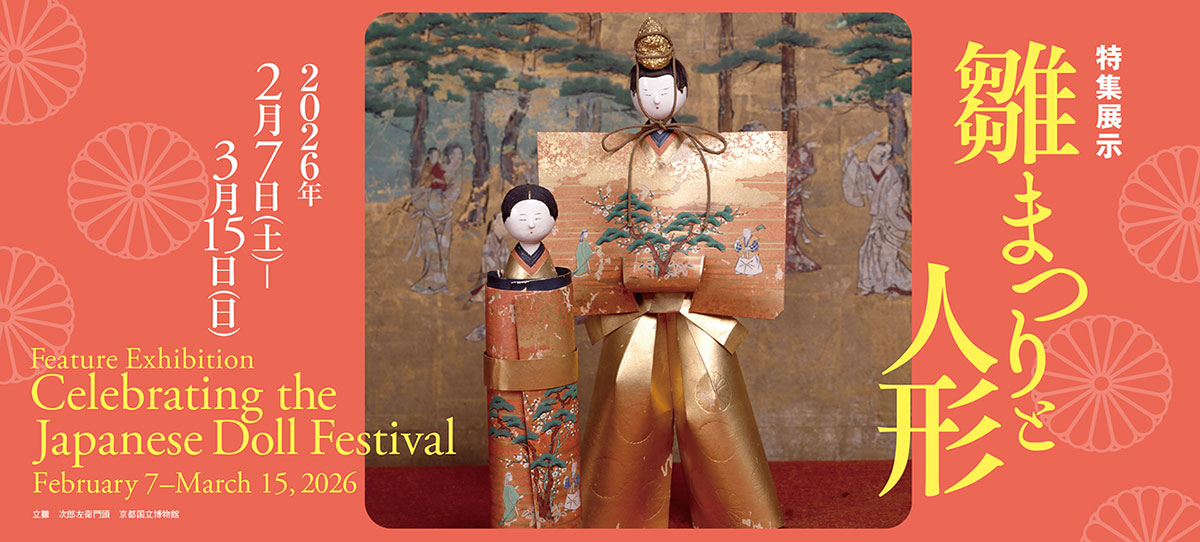
- Feature Exhibition Celebrating the Japanese Doll Festival
Title and URL copied to clipboard
- Share


General Information
- Exhibition Title
-
Feature Exhibition
Celebrating the Japanese Doll Festival
- Period
-
February 7–March 15, 2026
- Venue
-
Heisei Chishinkan Wing, Gallery 1F-2
- Closed
-
- Mondays, except February 23, 2026.
- February 24, 2026
- Museum Hours
-
9:30 a.m.–5:00 p.m. (entrance until 4:30 p.m.)
Open until 8:00 p.m. on Fridays (entrance until 7:30 p.m.)
- Admission
-
Adult 700 yen University Student
(ID required)350 yen - Admission fee includes admission to all galleries in the Heisei Chishinkan Wing.
- Admission is free for high school students and other youths age 0 – 17, seniors over 70, visitors with disabilities and one caretaker, and for Campus Members (including faculty). Please show ID.
- Admission for school groups: Admission to the Collection Galleries is free for elementary school, middle school, and high school students on school fieldtrips as well as teachers serving as their guides.
Description of Exhibition
As spring approaches, we again welcome the season of the Japanese Doll Festival (Hina Matsuri). The festival traces its origins to Jōshi no Sekku, one of the five seasonal festivals. This ancient observance began as a purification ritual at the beginning of the third month, during which the defilements accumulated in daily life were symbolically transferred onto hitogata——
paper dolls or wooden figurines——
and then set afloat on rivers or the ocean.
Over time, this practice became linked with dolls used in children’s play. By the Edo period (1615–1868), this ritual had evolved into ornate tiered displays of hina dolls put up to adorn the home.
The pair of hina dolls placed on the top tier of such a display, known as dairi bina (“imperial-court dolls”), are modeled after the emperor and empress. This year’s exhibition traces how their depictions have changed over time, while also showcasing a variety of hina dolls popular during the Edo period together with other types of dolls made in Kyoto. We invite you explore Japan’s rich and diverse doll culture.
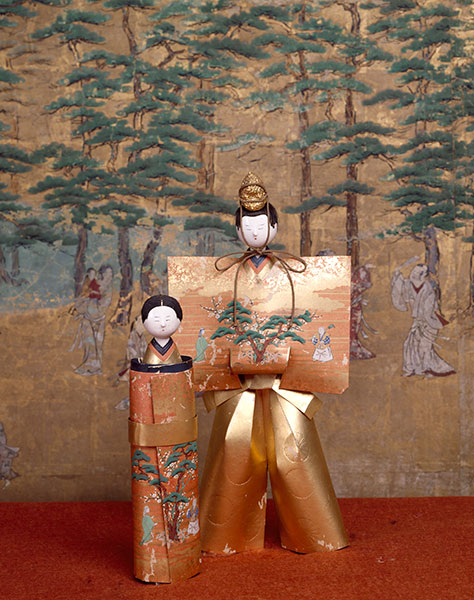
Hina Dolls, Jirōzaemon-Headed Type
Kyoto National Museum
Title and URL copied to clipboard
- Share