


WednesdayJuly 1, 2026
Exhibitions
Exhibition Schedule
June 16–July 12, 2026: Museum Gardens Only
Open areas: museum gardens, outdoor exhibits
All museum galleries are closed for re-installation.
July 14–September 6, 2026: Collection Exhibitions
- Galleries and Exhibition Themes
- 3F

3F-1
Closed
3F-2
Closed
- 2F
2F-1
Closed
2F-2
Closed
2F-3
Closed
2F-4
Closed
2F-5
Closed
- 1F
1F-1
Closed
1F-2
Closed
1F-3
Closed
1F-4
Closed
1F-5
Closed
1F-6
Closed
ThursdayJuly 2, 2026
Exhibitions
Exhibition Schedule
June 16–July 12, 2026: Museum Gardens Only
Open areas: museum gardens, outdoor exhibits
All museum galleries are closed for re-installation.
July 14–September 6, 2026: Collection Exhibitions
- Galleries and Exhibition Themes
- 3F
3F-1
Closed
3F-2
Closed
- 2F
2F-1
Closed
2F-2
Closed
2F-3
Closed
2F-4
Closed
2F-5
Closed
- 1F
1F-1
Closed
1F-2
Closed
1F-3
Closed
1F-4
Closed
1F-5
Closed
1F-6
Closed
FridayJuly 3, 2026
Exhibitions
Exhibition Schedule
June 16–July 12, 2026: Museum Gardens Only
Open areas: museum gardens, outdoor exhibits
All museum galleries are closed for re-installation.
July 14–September 6, 2026: Collection Exhibitions
- Galleries and Exhibition Themes
- 3F
3F-1
Closed
3F-2
Closed
- 2F
2F-1
Closed
2F-2
Closed
2F-3
Closed
2F-4
Closed
2F-5
Closed
- 1F
1F-1
Closed
1F-2
Closed
1F-3
Closed
1F-4
Closed
1F-5
Closed
1F-6
Closed
SaturdayJuly 4, 2026
Exhibitions
Exhibition Schedule
June 16–July 12, 2026: Museum Gardens Only
Open areas: museum gardens, outdoor exhibits
All museum galleries are closed for re-installation.
July 14–September 6, 2026: Collection Exhibitions
- Galleries and Exhibition Themes
- 3F
3F-1
Closed
3F-2
Closed
- 2F
2F-1
Closed
2F-2
Closed
2F-3
Closed
2F-4
Closed
2F-5
Closed
- 1F
1F-1
Closed
1F-2
Closed
1F-3
Closed
1F-4
Closed
1F-5
Closed
1F-6
Closed
SundayJuly 5, 2026
Exhibitions
Exhibition Schedule
June 16–July 12, 2026: Museum Gardens Only
Open areas: museum gardens, outdoor exhibits
All museum galleries are closed for re-installation.
July 14–September 6, 2026: Collection Exhibitions
- Galleries and Exhibition Themes
- 3F
3F-1
Closed
3F-2
Closed
- 2F
2F-1
Closed
2F-2
Closed
2F-3
Closed
2F-4
Closed
2F-5
Closed
- 1F
1F-1
Closed
1F-2
Closed
1F-3
Closed
1F-4
Closed
1F-5
Closed
1F-6
Closed
MondayJuly 6, 2026
The Museum is ClosedCalendarSee Current Exhibition Details
Exhibition Schedule
June 16–July 12, 2026: Museum Gardens Only
Open areas: museum gardens, outdoor exhibits
All museum galleries are closed for re-installation.
July 14–September 6, 2026: Collection Exhibitions
- Galleries and Exhibition Themes
- 3F
3F-1
Closed
3F-2
Closed
- 2F
2F-1
Closed
2F-2
Closed
2F-3
Closed
2F-4
Closed
2F-5
Closed
- 1F
1F-1
Closed
1F-2
Closed
1F-3
Closed
1F-4
Closed
1F-5
Closed
1F-6
Closed
TuesdayJuly 7, 2026
Exhibitions
Exhibition Schedule
June 16–July 12, 2026: Museum Gardens Only
Open areas: museum gardens, outdoor exhibits
All museum galleries are closed for re-installation.
July 14–September 6, 2026: Collection Exhibitions
- Galleries and Exhibition Themes
- 3F
3F-1
Closed
3F-2
Closed
- 2F
2F-1
Closed
2F-2
Closed
2F-3
Closed
2F-4
Closed
2F-5
Closed
- 1F
1F-1
Closed
1F-2
Closed
1F-3
Closed
1F-4
Closed
1F-5
Closed
1F-6
Closed
WednesdayJuly 8, 2026
Exhibitions
Exhibition Schedule
June 16–July 12, 2026: Museum Gardens Only
Open areas: museum gardens, outdoor exhibits
All museum galleries are closed for re-installation.
July 14–September 6, 2026: Collection Exhibitions
- Galleries and Exhibition Themes
- 3F
3F-1
Closed
3F-2
Closed
- 2F
2F-1
Closed
2F-2
Closed
2F-3
Closed
2F-4
Closed
2F-5
Closed
- 1F
1F-1
Closed
1F-2
Closed
1F-3
Closed
1F-4
Closed
1F-5
Closed
1F-6
Closed
ThursdayJuly 9, 2026
Exhibitions
Exhibition Schedule
June 16–July 12, 2026: Museum Gardens Only
Open areas: museum gardens, outdoor exhibits
All museum galleries are closed for re-installation.
July 14–September 6, 2026: Collection Exhibitions
- Galleries and Exhibition Themes
- 3F
3F-1
Closed
3F-2
Closed
- 2F
2F-1
Closed
2F-2
Closed
2F-3
Closed
2F-4
Closed
2F-5
Closed
- 1F
1F-1
Closed
1F-2
Closed
1F-3
Closed
1F-4
Closed
1F-5
Closed
1F-6
Closed
FridayJuly 10, 2026
Exhibitions
Exhibition Schedule
June 16–July 12, 2026: Museum Gardens Only
Open areas: museum gardens, outdoor exhibits
All museum galleries are closed for re-installation.
July 14–September 6, 2026: Collection Exhibitions
- Galleries and Exhibition Themes
- 3F
3F-1
Closed
3F-2
Closed
- 2F
2F-1
Closed
2F-2
Closed
2F-3
Closed
2F-4
Closed
2F-5
Closed
- 1F
1F-1
Closed
1F-2
Closed
1F-3
Closed
1F-4
Closed
1F-5
Closed
1F-6
Closed
SaturdayJuly 11, 2026
Exhibitions
Exhibition Schedule
June 16–July 12, 2026: Museum Gardens Only
Open areas: museum gardens, outdoor exhibits
All museum galleries are closed for re-installation.
July 14–September 6, 2026: Collection Exhibitions
- Galleries and Exhibition Themes
- 3F
3F-1
Closed
3F-2
Closed
- 2F
2F-1
Closed
2F-2
Closed
2F-3
Closed
2F-4
Closed
2F-5
Closed
- 1F
1F-1
Closed
1F-2
Closed
1F-3
Closed
1F-4
Closed
1F-5
Closed
1F-6
Closed
SundayJuly 12, 2026
Exhibitions
Exhibition Schedule
June 16–July 12, 2026: Museum Gardens Only
Open areas: museum gardens, outdoor exhibits
All museum galleries are closed for re-installation.
July 14–September 6, 2026: Collection Exhibitions
- Galleries and Exhibition Themes
- 3F
3F-1
Closed
3F-2
Closed
- 2F
2F-1
Closed
2F-2
Closed
2F-3
Closed
2F-4
Closed
2F-5
Closed
- 1F
1F-1
Closed
1F-2
Closed
1F-3
Closed
1F-4
Closed
1F-5
Closed
1F-6
Closed
MondayJuly 13, 2026
The Museum is ClosedCalendarSee Current Exhibition Details
Exhibition Schedule
June 16–July 12, 2026: Museum Gardens Only
Open areas: museum gardens, outdoor exhibits
All museum galleries are closed for re-installation.
July 14–September 6, 2026: Collection Exhibitions
- Galleries and Exhibition Themes
- 3F
3F-1
Closed
3F-2
Closed
- 2F
2F-1
Closed
2F-2
Closed
2F-3
Closed
2F-4
Closed
2F-5
Closed
- 1F
1F-1
Closed
1F-2
Closed
1F-3
Closed
1F-4
Closed
1F-5
Closed
1F-6
Closed
TuesdayJuly 14, 2026
Exhibitions
Exhibition Schedule
June 16–July 12, 2026: Museum Gardens Only
Open areas: museum gardens, outdoor exhibits
All museum galleries are closed for re-installation.
July 14–September 6, 2026: Collection Exhibitions
- Galleries and Exhibition Themes
- 3F
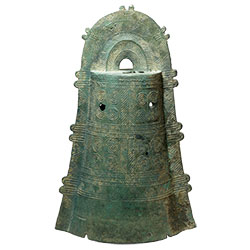
Galleries 3F-1, 2, 2F-1, 2 Feature Exhibition
Feature Exhibition
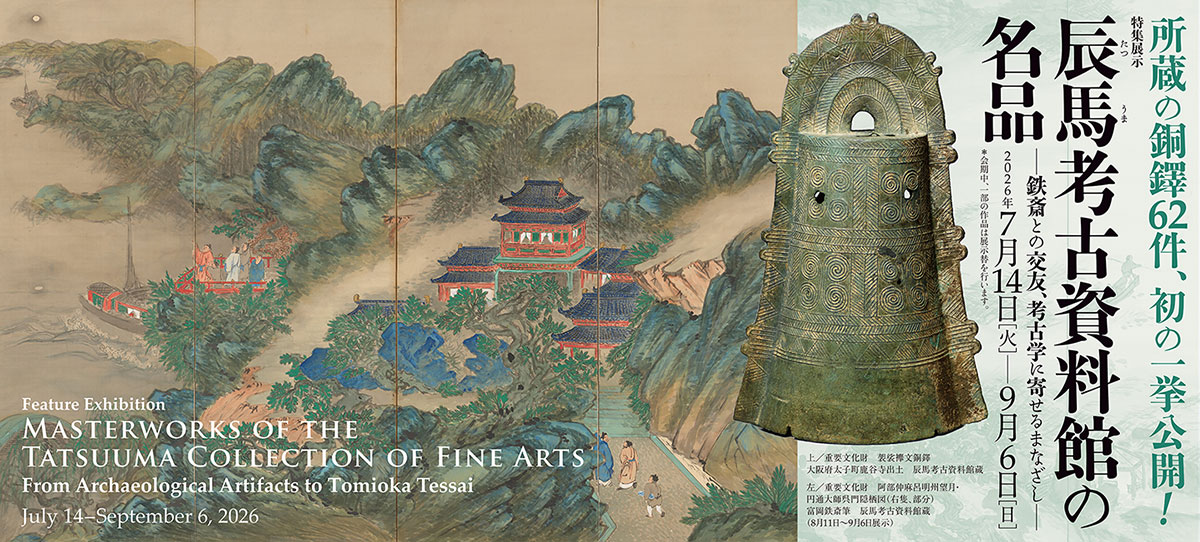
Masterworks of the Tatsuuma Collection of Fine Arts: From Archaeological Artifacts to Tomioka TessaiGalleries 3F-1, 2, 2F-1, 2 Feature Exhibition
Feature Exhibition
Masterworks of the Tatsuuma Collection of Fine Arts: From Archaeological Artifacts to Tomioka Tessai
- 2F
Galleries 3F-1, 2, 2F-1, 2 Feature Exhibition
Feature Exhibition
Masterworks of the Tatsuuma Collection of Fine Arts: From Archaeological Artifacts to Tomioka TessaiGalleries 3F-1, 2, 2F-1, 2 Feature Exhibition
Feature Exhibition
Masterworks of the Tatsuuma Collection of Fine Arts: From Archaeological Artifacts to Tomioka Tessai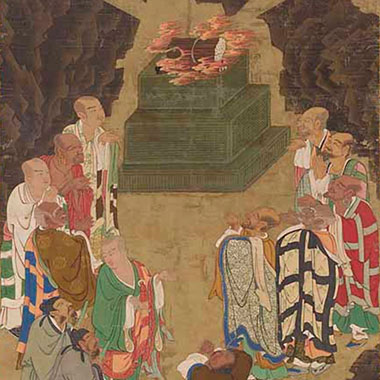
2F-3 Medieval Paintings
Minchō and Muromachi Ink Painting, Part I
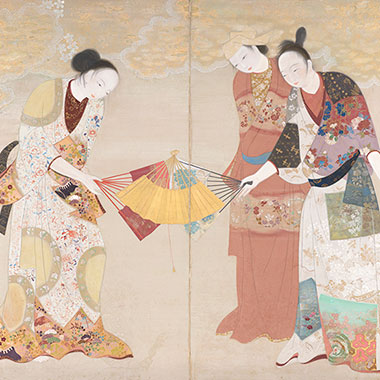
2F-4 Momoyama-Edo Paintings
Folding Screens of the Modern Era from the Hakujusai Collection
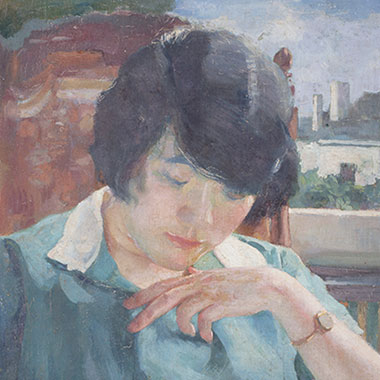
2F-5 Chinese Paintings
Modern Chinese Painting: Works by Liu Haisu, Xu Beihong, and Wang Jiyuan
- 1F
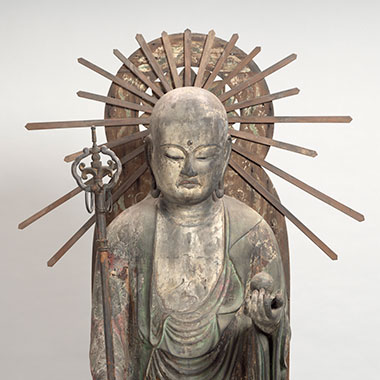
1F-1 Sculpture
Sculpture of the Kamakura Period
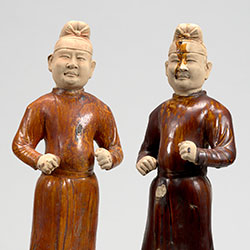
1F-2 Ceramics
Chinese Tomb Figures: Immortal Life Entrusted to the Earth
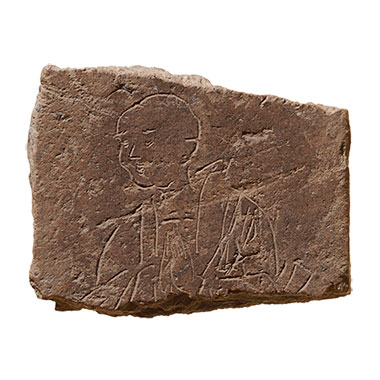
Galleries 1F-3, 4 Feature Exhibition
Feature Exhibition
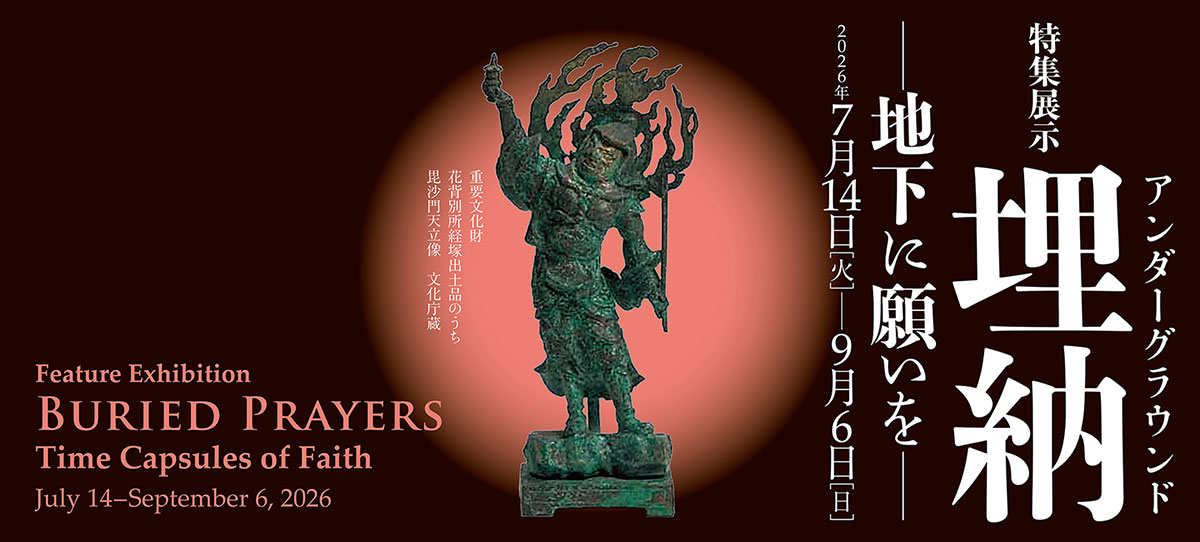
Buried Prayers: Time Capsules of FaithGalleries 1F-3, 4 Feature Exhibition
Feature Exhibition
Buried Prayers: Time Capsules of Faith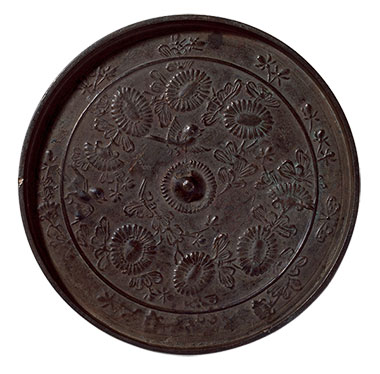
1F-5 Metalwork
Unearthed Metalwork: Vestiges of Ancient Devotion
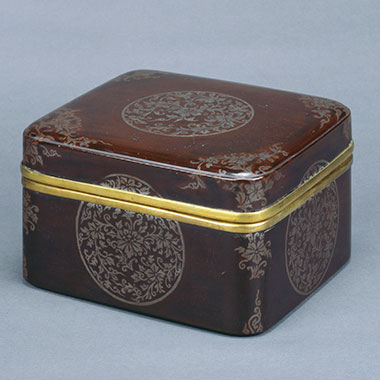
1F-6 Lacquerware
Sacred Lacquers: Vessels of Faith
WednesdayJuly 15, 2026
Exhibitions
Exhibition Schedule
June 16–July 12, 2026: Museum Gardens Only
Open areas: museum gardens, outdoor exhibits
All museum galleries are closed for re-installation.
July 14–September 6, 2026: Collection Exhibitions
- Galleries and Exhibition Themes
- 3F
Galleries 3F-1, 2, 2F-1, 2 Feature Exhibition
Feature Exhibition
Masterworks of the Tatsuuma Collection of Fine Arts: From Archaeological Artifacts to Tomioka TessaiGalleries 3F-1, 2, 2F-1, 2 Feature Exhibition
Feature Exhibition
Masterworks of the Tatsuuma Collection of Fine Arts: From Archaeological Artifacts to Tomioka Tessai
- 2F
Galleries 3F-1, 2, 2F-1, 2 Feature Exhibition
Feature Exhibition
Masterworks of the Tatsuuma Collection of Fine Arts: From Archaeological Artifacts to Tomioka TessaiGalleries 3F-1, 2, 2F-1, 2 Feature Exhibition
Feature Exhibition
Masterworks of the Tatsuuma Collection of Fine Arts: From Archaeological Artifacts to Tomioka Tessai2F-3 Medieval Paintings
Minchō and Muromachi Ink Painting, Part I
2F-4 Momoyama-Edo Paintings
Folding Screens of the Modern Era from the Hakujusai Collection
2F-5 Chinese Paintings
Modern Chinese Painting: Works by Liu Haisu, Xu Beihong, and Wang Jiyuan
- 1F
1F-1 Sculpture
Sculpture of the Kamakura Period
1F-2 Ceramics
Chinese Tomb Figures: Immortal Life Entrusted to the Earth
Galleries 1F-3, 4 Feature Exhibition
Feature Exhibition
Buried Prayers: Time Capsules of FaithGalleries 1F-3, 4 Feature Exhibition
Feature Exhibition
Buried Prayers: Time Capsules of Faith1F-5 Metalwork
Unearthed Metalwork: Vestiges of Ancient Devotion
1F-6 Lacquerware
Sacred Lacquers: Vessels of Faith
ThursdayJuly 16, 2026
Exhibitions
Exhibition Schedule
June 16–July 12, 2026: Museum Gardens Only
Open areas: museum gardens, outdoor exhibits
All museum galleries are closed for re-installation.
July 14–September 6, 2026: Collection Exhibitions
- Galleries and Exhibition Themes
- 3F
Galleries 3F-1, 2, 2F-1, 2 Feature Exhibition
Feature Exhibition
Masterworks of the Tatsuuma Collection of Fine Arts: From Archaeological Artifacts to Tomioka TessaiGalleries 3F-1, 2, 2F-1, 2 Feature Exhibition
Feature Exhibition
Masterworks of the Tatsuuma Collection of Fine Arts: From Archaeological Artifacts to Tomioka Tessai
- 2F
Galleries 3F-1, 2, 2F-1, 2 Feature Exhibition
Feature Exhibition
Masterworks of the Tatsuuma Collection of Fine Arts: From Archaeological Artifacts to Tomioka TessaiGalleries 3F-1, 2, 2F-1, 2 Feature Exhibition
Feature Exhibition
Masterworks of the Tatsuuma Collection of Fine Arts: From Archaeological Artifacts to Tomioka Tessai2F-3 Medieval Paintings
Minchō and Muromachi Ink Painting, Part I
2F-4 Momoyama-Edo Paintings
Folding Screens of the Modern Era from the Hakujusai Collection
2F-5 Chinese Paintings
Modern Chinese Painting: Works by Liu Haisu, Xu Beihong, and Wang Jiyuan
- 1F
1F-1 Sculpture
Sculpture of the Kamakura Period
1F-2 Ceramics
Chinese Tomb Figures: Immortal Life Entrusted to the Earth
Galleries 1F-3, 4 Feature Exhibition
Feature Exhibition
Buried Prayers: Time Capsules of FaithGalleries 1F-3, 4 Feature Exhibition
Feature Exhibition
Buried Prayers: Time Capsules of Faith1F-5 Metalwork
Unearthed Metalwork: Vestiges of Ancient Devotion
1F-6 Lacquerware
Sacred Lacquers: Vessels of Faith
FridayJuly 17, 2026
Exhibitions
Exhibition Schedule
June 16–July 12, 2026: Museum Gardens Only
Open areas: museum gardens, outdoor exhibits
All museum galleries are closed for re-installation.
July 14–September 6, 2026: Collection Exhibitions
- Galleries and Exhibition Themes
- 3F
Galleries 3F-1, 2, 2F-1, 2 Feature Exhibition
Feature Exhibition
Masterworks of the Tatsuuma Collection of Fine Arts: From Archaeological Artifacts to Tomioka TessaiGalleries 3F-1, 2, 2F-1, 2 Feature Exhibition
Feature Exhibition
Masterworks of the Tatsuuma Collection of Fine Arts: From Archaeological Artifacts to Tomioka Tessai
- 2F
Galleries 3F-1, 2, 2F-1, 2 Feature Exhibition
Feature Exhibition
Masterworks of the Tatsuuma Collection of Fine Arts: From Archaeological Artifacts to Tomioka TessaiGalleries 3F-1, 2, 2F-1, 2 Feature Exhibition
Feature Exhibition
Masterworks of the Tatsuuma Collection of Fine Arts: From Archaeological Artifacts to Tomioka Tessai2F-3 Medieval Paintings
Minchō and Muromachi Ink Painting, Part I
2F-4 Momoyama-Edo Paintings
Folding Screens of the Modern Era from the Hakujusai Collection
2F-5 Chinese Paintings
Modern Chinese Painting: Works by Liu Haisu, Xu Beihong, and Wang Jiyuan
- 1F
1F-1 Sculpture
Sculpture of the Kamakura Period
1F-2 Ceramics
Chinese Tomb Figures: Immortal Life Entrusted to the Earth
Galleries 1F-3, 4 Feature Exhibition
Feature Exhibition
Buried Prayers: Time Capsules of FaithGalleries 1F-3, 4 Feature Exhibition
Feature Exhibition
Buried Prayers: Time Capsules of Faith1F-5 Metalwork
Unearthed Metalwork: Vestiges of Ancient Devotion
1F-6 Lacquerware
Sacred Lacquers: Vessels of Faith
SaturdayJuly 18, 2026
Exhibitions
Exhibition Schedule
June 16–July 12, 2026: Museum Gardens Only
Open areas: museum gardens, outdoor exhibits
All museum galleries are closed for re-installation.
July 14–September 6, 2026: Collection Exhibitions
- Galleries and Exhibition Themes
- 3F
Galleries 3F-1, 2, 2F-1, 2 Feature Exhibition
Feature Exhibition
Masterworks of the Tatsuuma Collection of Fine Arts: From Archaeological Artifacts to Tomioka TessaiGalleries 3F-1, 2, 2F-1, 2 Feature Exhibition
Feature Exhibition
Masterworks of the Tatsuuma Collection of Fine Arts: From Archaeological Artifacts to Tomioka Tessai
- 2F
Galleries 3F-1, 2, 2F-1, 2 Feature Exhibition
Feature Exhibition
Masterworks of the Tatsuuma Collection of Fine Arts: From Archaeological Artifacts to Tomioka TessaiGalleries 3F-1, 2, 2F-1, 2 Feature Exhibition
Feature Exhibition
Masterworks of the Tatsuuma Collection of Fine Arts: From Archaeological Artifacts to Tomioka Tessai2F-3 Medieval Paintings
Minchō and Muromachi Ink Painting, Part I
2F-4 Momoyama-Edo Paintings
Folding Screens of the Modern Era from the Hakujusai Collection
2F-5 Chinese Paintings
Modern Chinese Painting: Works by Liu Haisu, Xu Beihong, and Wang Jiyuan
- 1F
1F-1 Sculpture
Sculpture of the Kamakura Period
1F-2 Ceramics
Chinese Tomb Figures: Immortal Life Entrusted to the Earth
Galleries 1F-3, 4 Feature Exhibition
Feature Exhibition
Buried Prayers: Time Capsules of FaithGalleries 1F-3, 4 Feature Exhibition
Feature Exhibition
Buried Prayers: Time Capsules of Faith1F-5 Metalwork
Unearthed Metalwork: Vestiges of Ancient Devotion
1F-6 Lacquerware
Sacred Lacquers: Vessels of Faith
SundayJuly 19, 2026
Exhibitions
Exhibition Schedule
June 16–July 12, 2026: Museum Gardens Only
Open areas: museum gardens, outdoor exhibits
All museum galleries are closed for re-installation.
July 14–September 6, 2026: Collection Exhibitions
- Galleries and Exhibition Themes
- 3F
Galleries 3F-1, 2, 2F-1, 2 Feature Exhibition
Feature Exhibition
Masterworks of the Tatsuuma Collection of Fine Arts: From Archaeological Artifacts to Tomioka TessaiGalleries 3F-1, 2, 2F-1, 2 Feature Exhibition
Feature Exhibition
Masterworks of the Tatsuuma Collection of Fine Arts: From Archaeological Artifacts to Tomioka Tessai
- 2F
Galleries 3F-1, 2, 2F-1, 2 Feature Exhibition
Feature Exhibition
Masterworks of the Tatsuuma Collection of Fine Arts: From Archaeological Artifacts to Tomioka TessaiGalleries 3F-1, 2, 2F-1, 2 Feature Exhibition
Feature Exhibition
Masterworks of the Tatsuuma Collection of Fine Arts: From Archaeological Artifacts to Tomioka Tessai2F-3 Medieval Paintings
Minchō and Muromachi Ink Painting, Part I
2F-4 Momoyama-Edo Paintings
Folding Screens of the Modern Era from the Hakujusai Collection
2F-5 Chinese Paintings
Modern Chinese Painting: Works by Liu Haisu, Xu Beihong, and Wang Jiyuan
- 1F
1F-1 Sculpture
Sculpture of the Kamakura Period
1F-2 Ceramics
Chinese Tomb Figures: Immortal Life Entrusted to the Earth
Galleries 1F-3, 4 Feature Exhibition
Feature Exhibition
Buried Prayers: Time Capsules of FaithGalleries 1F-3, 4 Feature Exhibition
Feature Exhibition
Buried Prayers: Time Capsules of Faith1F-5 Metalwork
Unearthed Metalwork: Vestiges of Ancient Devotion
1F-6 Lacquerware
Sacred Lacquers: Vessels of Faith
MondayJuly 20, 2026
Exhibitions
Exhibition Schedule
June 16–July 12, 2026: Museum Gardens Only
Open areas: museum gardens, outdoor exhibits
All museum galleries are closed for re-installation.
July 14–September 6, 2026: Collection Exhibitions
- Galleries and Exhibition Themes
- 3F
Galleries 3F-1, 2, 2F-1, 2 Feature Exhibition
Feature Exhibition
Masterworks of the Tatsuuma Collection of Fine Arts: From Archaeological Artifacts to Tomioka TessaiGalleries 3F-1, 2, 2F-1, 2 Feature Exhibition
Feature Exhibition
Masterworks of the Tatsuuma Collection of Fine Arts: From Archaeological Artifacts to Tomioka Tessai
- 2F
Galleries 3F-1, 2, 2F-1, 2 Feature Exhibition
Feature Exhibition
Masterworks of the Tatsuuma Collection of Fine Arts: From Archaeological Artifacts to Tomioka TessaiGalleries 3F-1, 2, 2F-1, 2 Feature Exhibition
Feature Exhibition
Masterworks of the Tatsuuma Collection of Fine Arts: From Archaeological Artifacts to Tomioka Tessai2F-3 Medieval Paintings
Minchō and Muromachi Ink Painting, Part I
2F-4 Momoyama-Edo Paintings
Folding Screens of the Modern Era from the Hakujusai Collection
2F-5 Chinese Paintings
Modern Chinese Painting: Works by Liu Haisu, Xu Beihong, and Wang Jiyuan
- 1F
1F-1 Sculpture
Sculpture of the Kamakura Period
1F-2 Ceramics
Chinese Tomb Figures: Immortal Life Entrusted to the Earth
Galleries 1F-3, 4 Feature Exhibition
Feature Exhibition
Buried Prayers: Time Capsules of FaithGalleries 1F-3, 4 Feature Exhibition
Feature Exhibition
Buried Prayers: Time Capsules of Faith1F-5 Metalwork
Unearthed Metalwork: Vestiges of Ancient Devotion
1F-6 Lacquerware
Sacred Lacquers: Vessels of Faith
TuesdayJuly 21, 2026
The Museum is ClosedCalendarSee Current Exhibition Details
Exhibition Schedule
June 16–July 12, 2026: Museum Gardens Only
Open areas: museum gardens, outdoor exhibits
All museum galleries are closed for re-installation.
July 14–September 6, 2026: Collection Exhibitions
- Galleries and Exhibition Themes
- 3F
Galleries 3F-1, 2, 2F-1, 2 Feature Exhibition
Feature Exhibition
Masterworks of the Tatsuuma Collection of Fine Arts: From Archaeological Artifacts to Tomioka TessaiGalleries 3F-1, 2, 2F-1, 2 Feature Exhibition
Feature Exhibition
Masterworks of the Tatsuuma Collection of Fine Arts: From Archaeological Artifacts to Tomioka Tessai
- 2F
Galleries 3F-1, 2, 2F-1, 2 Feature Exhibition
Feature Exhibition
Masterworks of the Tatsuuma Collection of Fine Arts: From Archaeological Artifacts to Tomioka TessaiGalleries 3F-1, 2, 2F-1, 2 Feature Exhibition
Feature Exhibition
Masterworks of the Tatsuuma Collection of Fine Arts: From Archaeological Artifacts to Tomioka Tessai2F-3 Medieval Paintings
Minchō and Muromachi Ink Painting, Part I
2F-4 Momoyama-Edo Paintings
Folding Screens of the Modern Era from the Hakujusai Collection
2F-5 Chinese Paintings
Modern Chinese Painting: Works by Liu Haisu, Xu Beihong, and Wang Jiyuan
- 1F
1F-1 Sculpture
Sculpture of the Kamakura Period
1F-2 Ceramics
Chinese Tomb Figures: Immortal Life Entrusted to the Earth
Galleries 1F-3, 4 Feature Exhibition
Feature Exhibition
Buried Prayers: Time Capsules of FaithGalleries 1F-3, 4 Feature Exhibition
Feature Exhibition
Buried Prayers: Time Capsules of Faith1F-5 Metalwork
Unearthed Metalwork: Vestiges of Ancient Devotion
1F-6 Lacquerware
Sacred Lacquers: Vessels of Faith
WednesdayJuly 22, 2026
Exhibitions
Exhibition Schedule
June 16–July 12, 2026: Museum Gardens Only
Open areas: museum gardens, outdoor exhibits
All museum galleries are closed for re-installation.
July 14–September 6, 2026: Collection Exhibitions
- Galleries and Exhibition Themes
- 3F
Galleries 3F-1, 2, 2F-1, 2 Feature Exhibition
Feature Exhibition
Masterworks of the Tatsuuma Collection of Fine Arts: From Archaeological Artifacts to Tomioka TessaiGalleries 3F-1, 2, 2F-1, 2 Feature Exhibition
Feature Exhibition
Masterworks of the Tatsuuma Collection of Fine Arts: From Archaeological Artifacts to Tomioka Tessai
- 2F
Galleries 3F-1, 2, 2F-1, 2 Feature Exhibition
Feature Exhibition
Masterworks of the Tatsuuma Collection of Fine Arts: From Archaeological Artifacts to Tomioka TessaiGalleries 3F-1, 2, 2F-1, 2 Feature Exhibition
Feature Exhibition
Masterworks of the Tatsuuma Collection of Fine Arts: From Archaeological Artifacts to Tomioka Tessai2F-3 Medieval Paintings
Minchō and Muromachi Ink Painting, Part I
2F-4 Momoyama-Edo Paintings
Folding Screens of the Modern Era from the Hakujusai Collection
2F-5 Chinese Paintings
Modern Chinese Painting: Works by Liu Haisu, Xu Beihong, and Wang Jiyuan
- 1F
1F-1 Sculpture
Sculpture of the Kamakura Period
1F-2 Ceramics
Chinese Tomb Figures: Immortal Life Entrusted to the Earth
Galleries 1F-3, 4 Feature Exhibition
Feature Exhibition
Buried Prayers: Time Capsules of FaithGalleries 1F-3, 4 Feature Exhibition
Feature Exhibition
Buried Prayers: Time Capsules of Faith1F-5 Metalwork
Unearthed Metalwork: Vestiges of Ancient Devotion
1F-6 Lacquerware
Sacred Lacquers: Vessels of Faith
ThursdayJuly 23, 2026
Exhibitions
Exhibition Schedule
June 16–July 12, 2026: Museum Gardens Only
Open areas: museum gardens, outdoor exhibits
All museum galleries are closed for re-installation.
July 14–September 6, 2026: Collection Exhibitions
- Galleries and Exhibition Themes
- 3F
Galleries 3F-1, 2, 2F-1, 2 Feature Exhibition
Feature Exhibition
Masterworks of the Tatsuuma Collection of Fine Arts: From Archaeological Artifacts to Tomioka TessaiGalleries 3F-1, 2, 2F-1, 2 Feature Exhibition
Feature Exhibition
Masterworks of the Tatsuuma Collection of Fine Arts: From Archaeological Artifacts to Tomioka Tessai
- 2F
Galleries 3F-1, 2, 2F-1, 2 Feature Exhibition
Feature Exhibition
Masterworks of the Tatsuuma Collection of Fine Arts: From Archaeological Artifacts to Tomioka TessaiGalleries 3F-1, 2, 2F-1, 2 Feature Exhibition
Feature Exhibition
Masterworks of the Tatsuuma Collection of Fine Arts: From Archaeological Artifacts to Tomioka Tessai2F-3 Medieval Paintings
Minchō and Muromachi Ink Painting, Part I
2F-4 Momoyama-Edo Paintings
Folding Screens of the Modern Era from the Hakujusai Collection
2F-5 Chinese Paintings
Modern Chinese Painting: Works by Liu Haisu, Xu Beihong, and Wang Jiyuan
- 1F
1F-1 Sculpture
Sculpture of the Kamakura Period
1F-2 Ceramics
Chinese Tomb Figures: Immortal Life Entrusted to the Earth
Galleries 1F-3, 4 Feature Exhibition
Feature Exhibition
Buried Prayers: Time Capsules of FaithGalleries 1F-3, 4 Feature Exhibition
Feature Exhibition
Buried Prayers: Time Capsules of Faith1F-5 Metalwork
Unearthed Metalwork: Vestiges of Ancient Devotion
1F-6 Lacquerware
Sacred Lacquers: Vessels of Faith
FridayJuly 24, 2026
Exhibitions
Exhibition Schedule
June 16–July 12, 2026: Museum Gardens Only
Open areas: museum gardens, outdoor exhibits
All museum galleries are closed for re-installation.
July 14–September 6, 2026: Collection Exhibitions
- Galleries and Exhibition Themes
- 3F
Galleries 3F-1, 2, 2F-1, 2 Feature Exhibition
Feature Exhibition
Masterworks of the Tatsuuma Collection of Fine Arts: From Archaeological Artifacts to Tomioka TessaiGalleries 3F-1, 2, 2F-1, 2 Feature Exhibition
Feature Exhibition
Masterworks of the Tatsuuma Collection of Fine Arts: From Archaeological Artifacts to Tomioka Tessai
- 2F
Galleries 3F-1, 2, 2F-1, 2 Feature Exhibition
Feature Exhibition
Masterworks of the Tatsuuma Collection of Fine Arts: From Archaeological Artifacts to Tomioka TessaiGalleries 3F-1, 2, 2F-1, 2 Feature Exhibition
Feature Exhibition
Masterworks of the Tatsuuma Collection of Fine Arts: From Archaeological Artifacts to Tomioka Tessai2F-3 Medieval Paintings
Minchō and Muromachi Ink Painting, Part I
2F-4 Momoyama-Edo Paintings
Folding Screens of the Modern Era from the Hakujusai Collection
2F-5 Chinese Paintings
Modern Chinese Painting: Works by Liu Haisu, Xu Beihong, and Wang Jiyuan
- 1F
1F-1 Sculpture
Sculpture of the Kamakura Period
1F-2 Ceramics
Chinese Tomb Figures: Immortal Life Entrusted to the Earth
Galleries 1F-3, 4 Feature Exhibition
Feature Exhibition
Buried Prayers: Time Capsules of FaithGalleries 1F-3, 4 Feature Exhibition
Feature Exhibition
Buried Prayers: Time Capsules of Faith1F-5 Metalwork
Unearthed Metalwork: Vestiges of Ancient Devotion
1F-6 Lacquerware
Sacred Lacquers: Vessels of Faith
SaturdayJuly 25, 2026
Exhibitions
Exhibition Schedule
June 16–July 12, 2026: Museum Gardens Only
Open areas: museum gardens, outdoor exhibits
All museum galleries are closed for re-installation.
July 14–September 6, 2026: Collection Exhibitions
- Galleries and Exhibition Themes
- 3F
Galleries 3F-1, 2, 2F-1, 2 Feature Exhibition
Feature Exhibition
Masterworks of the Tatsuuma Collection of Fine Arts: From Archaeological Artifacts to Tomioka TessaiGalleries 3F-1, 2, 2F-1, 2 Feature Exhibition
Feature Exhibition
Masterworks of the Tatsuuma Collection of Fine Arts: From Archaeological Artifacts to Tomioka Tessai
- 2F
Galleries 3F-1, 2, 2F-1, 2 Feature Exhibition
Feature Exhibition
Masterworks of the Tatsuuma Collection of Fine Arts: From Archaeological Artifacts to Tomioka TessaiGalleries 3F-1, 2, 2F-1, 2 Feature Exhibition
Feature Exhibition
Masterworks of the Tatsuuma Collection of Fine Arts: From Archaeological Artifacts to Tomioka Tessai2F-3 Medieval Paintings
Minchō and Muromachi Ink Painting, Part I
2F-4 Momoyama-Edo Paintings
Folding Screens of the Modern Era from the Hakujusai Collection
2F-5 Chinese Paintings
Modern Chinese Painting: Works by Liu Haisu, Xu Beihong, and Wang Jiyuan
- 1F
1F-1 Sculpture
Sculpture of the Kamakura Period
1F-2 Ceramics
Chinese Tomb Figures: Immortal Life Entrusted to the Earth
Galleries 1F-3, 4 Feature Exhibition
Feature Exhibition
Buried Prayers: Time Capsules of FaithGalleries 1F-3, 4 Feature Exhibition
Feature Exhibition
Buried Prayers: Time Capsules of Faith1F-5 Metalwork
Unearthed Metalwork: Vestiges of Ancient Devotion
1F-6 Lacquerware
Sacred Lacquers: Vessels of Faith
SundayJuly 26, 2026
Exhibitions
Exhibition Schedule
June 16–July 12, 2026: Museum Gardens Only
Open areas: museum gardens, outdoor exhibits
All museum galleries are closed for re-installation.
July 14–September 6, 2026: Collection Exhibitions
- Galleries and Exhibition Themes
- 3F
Galleries 3F-1, 2, 2F-1, 2 Feature Exhibition
Feature Exhibition
Masterworks of the Tatsuuma Collection of Fine Arts: From Archaeological Artifacts to Tomioka TessaiGalleries 3F-1, 2, 2F-1, 2 Feature Exhibition
Feature Exhibition
Masterworks of the Tatsuuma Collection of Fine Arts: From Archaeological Artifacts to Tomioka Tessai
- 2F
Galleries 3F-1, 2, 2F-1, 2 Feature Exhibition
Feature Exhibition
Masterworks of the Tatsuuma Collection of Fine Arts: From Archaeological Artifacts to Tomioka TessaiGalleries 3F-1, 2, 2F-1, 2 Feature Exhibition
Feature Exhibition
Masterworks of the Tatsuuma Collection of Fine Arts: From Archaeological Artifacts to Tomioka Tessai2F-3 Medieval Paintings
Minchō and Muromachi Ink Painting, Part I
2F-4 Momoyama-Edo Paintings
Folding Screens of the Modern Era from the Hakujusai Collection
2F-5 Chinese Paintings
Modern Chinese Painting: Works by Liu Haisu, Xu Beihong, and Wang Jiyuan
- 1F
1F-1 Sculpture
Sculpture of the Kamakura Period
1F-2 Ceramics
Chinese Tomb Figures: Immortal Life Entrusted to the Earth
Galleries 1F-3, 4 Feature Exhibition
Feature Exhibition
Buried Prayers: Time Capsules of FaithGalleries 1F-3, 4 Feature Exhibition
Feature Exhibition
Buried Prayers: Time Capsules of Faith1F-5 Metalwork
Unearthed Metalwork: Vestiges of Ancient Devotion
1F-6 Lacquerware
Sacred Lacquers: Vessels of Faith
MondayJuly 27, 2026
The Museum is ClosedCalendarSee Current Exhibition Details
Exhibition Schedule
June 16–July 12, 2026: Museum Gardens Only
Open areas: museum gardens, outdoor exhibits
All museum galleries are closed for re-installation.
July 14–September 6, 2026: Collection Exhibitions
- Galleries and Exhibition Themes
- 3F
Galleries 3F-1, 2, 2F-1, 2 Feature Exhibition
Feature Exhibition
Masterworks of the Tatsuuma Collection of Fine Arts: From Archaeological Artifacts to Tomioka TessaiGalleries 3F-1, 2, 2F-1, 2 Feature Exhibition
Feature Exhibition
Masterworks of the Tatsuuma Collection of Fine Arts: From Archaeological Artifacts to Tomioka Tessai
- 2F
Galleries 3F-1, 2, 2F-1, 2 Feature Exhibition
Feature Exhibition
Masterworks of the Tatsuuma Collection of Fine Arts: From Archaeological Artifacts to Tomioka TessaiGalleries 3F-1, 2, 2F-1, 2 Feature Exhibition
Feature Exhibition
Masterworks of the Tatsuuma Collection of Fine Arts: From Archaeological Artifacts to Tomioka Tessai2F-3 Medieval Paintings
Minchō and Muromachi Ink Painting, Part I
2F-4 Momoyama-Edo Paintings
Folding Screens of the Modern Era from the Hakujusai Collection
2F-5 Chinese Paintings
Modern Chinese Painting: Works by Liu Haisu, Xu Beihong, and Wang Jiyuan
- 1F
1F-1 Sculpture
Sculpture of the Kamakura Period
1F-2 Ceramics
Chinese Tomb Figures: Immortal Life Entrusted to the Earth
Galleries 1F-3, 4 Feature Exhibition
Feature Exhibition
Buried Prayers: Time Capsules of FaithGalleries 1F-3, 4 Feature Exhibition
Feature Exhibition
Buried Prayers: Time Capsules of Faith1F-5 Metalwork
Unearthed Metalwork: Vestiges of Ancient Devotion
1F-6 Lacquerware
Sacred Lacquers: Vessels of Faith
TuesdayJuly 28, 2026
Exhibitions
Exhibition Schedule
June 16–July 12, 2026: Museum Gardens Only
Open areas: museum gardens, outdoor exhibits
All museum galleries are closed for re-installation.
July 14–September 6, 2026: Collection Exhibitions
- Galleries and Exhibition Themes
- 3F
Galleries 3F-1, 2, 2F-1, 2 Feature Exhibition
Feature Exhibition
Masterworks of the Tatsuuma Collection of Fine Arts: From Archaeological Artifacts to Tomioka TessaiGalleries 3F-1, 2, 2F-1, 2 Feature Exhibition
Feature Exhibition
Masterworks of the Tatsuuma Collection of Fine Arts: From Archaeological Artifacts to Tomioka Tessai
- 2F
Galleries 3F-1, 2, 2F-1, 2 Feature Exhibition
Feature Exhibition
Masterworks of the Tatsuuma Collection of Fine Arts: From Archaeological Artifacts to Tomioka TessaiGalleries 3F-1, 2, 2F-1, 2 Feature Exhibition
Feature Exhibition
Masterworks of the Tatsuuma Collection of Fine Arts: From Archaeological Artifacts to Tomioka Tessai2F-3 Medieval Paintings
Minchō and Muromachi Ink Painting, Part I
2F-4 Momoyama-Edo Paintings
Folding Screens of the Modern Era from the Hakujusai Collection
2F-5 Chinese Paintings
Modern Chinese Painting: Works by Liu Haisu, Xu Beihong, and Wang Jiyuan
- 1F
1F-1 Sculpture
Sculpture of the Kamakura Period
1F-2 Ceramics
Chinese Tomb Figures: Immortal Life Entrusted to the Earth
Galleries 1F-3, 4 Feature Exhibition
Feature Exhibition
Buried Prayers: Time Capsules of FaithGalleries 1F-3, 4 Feature Exhibition
Feature Exhibition
Buried Prayers: Time Capsules of Faith1F-5 Metalwork
Unearthed Metalwork: Vestiges of Ancient Devotion
1F-6 Lacquerware
Sacred Lacquers: Vessels of Faith
WednesdayJuly 29, 2026
Exhibitions
Exhibition Schedule
June 16–July 12, 2026: Museum Gardens Only
Open areas: museum gardens, outdoor exhibits
All museum galleries are closed for re-installation.
July 14–September 6, 2026: Collection Exhibitions
- Galleries and Exhibition Themes
- 3F
Galleries 3F-1, 2, 2F-1, 2 Feature Exhibition
Feature Exhibition
Masterworks of the Tatsuuma Collection of Fine Arts: From Archaeological Artifacts to Tomioka TessaiGalleries 3F-1, 2, 2F-1, 2 Feature Exhibition
Feature Exhibition
Masterworks of the Tatsuuma Collection of Fine Arts: From Archaeological Artifacts to Tomioka Tessai
- 2F
Galleries 3F-1, 2, 2F-1, 2 Feature Exhibition
Feature Exhibition
Masterworks of the Tatsuuma Collection of Fine Arts: From Archaeological Artifacts to Tomioka TessaiGalleries 3F-1, 2, 2F-1, 2 Feature Exhibition
Feature Exhibition
Masterworks of the Tatsuuma Collection of Fine Arts: From Archaeological Artifacts to Tomioka Tessai2F-3 Medieval Paintings
Minchō and Muromachi Ink Painting, Part I
2F-4 Momoyama-Edo Paintings
Folding Screens of the Modern Era from the Hakujusai Collection
2F-5 Chinese Paintings
Modern Chinese Painting: Works by Liu Haisu, Xu Beihong, and Wang Jiyuan
- 1F
1F-1 Sculpture
Sculpture of the Kamakura Period
1F-2 Ceramics
Chinese Tomb Figures: Immortal Life Entrusted to the Earth
Galleries 1F-3, 4 Feature Exhibition
Feature Exhibition
Buried Prayers: Time Capsules of FaithGalleries 1F-3, 4 Feature Exhibition
Feature Exhibition
Buried Prayers: Time Capsules of Faith1F-5 Metalwork
Unearthed Metalwork: Vestiges of Ancient Devotion
1F-6 Lacquerware
Sacred Lacquers: Vessels of Faith
ThursdayJuly 30, 2026
Exhibitions
Exhibition Schedule
June 16–July 12, 2026: Museum Gardens Only
Open areas: museum gardens, outdoor exhibits
All museum galleries are closed for re-installation.
July 14–September 6, 2026: Collection Exhibitions
- Galleries and Exhibition Themes
- 3F
Galleries 3F-1, 2, 2F-1, 2 Feature Exhibition
Feature Exhibition
Masterworks of the Tatsuuma Collection of Fine Arts: From Archaeological Artifacts to Tomioka TessaiGalleries 3F-1, 2, 2F-1, 2 Feature Exhibition
Feature Exhibition
Masterworks of the Tatsuuma Collection of Fine Arts: From Archaeological Artifacts to Tomioka Tessai
- 2F
Galleries 3F-1, 2, 2F-1, 2 Feature Exhibition
Feature Exhibition
Masterworks of the Tatsuuma Collection of Fine Arts: From Archaeological Artifacts to Tomioka TessaiGalleries 3F-1, 2, 2F-1, 2 Feature Exhibition
Feature Exhibition
Masterworks of the Tatsuuma Collection of Fine Arts: From Archaeological Artifacts to Tomioka Tessai2F-3 Medieval Paintings
Minchō and Muromachi Ink Painting, Part I
2F-4 Momoyama-Edo Paintings
Folding Screens of the Modern Era from the Hakujusai Collection
2F-5 Chinese Paintings
Modern Chinese Painting: Works by Liu Haisu, Xu Beihong, and Wang Jiyuan
- 1F
1F-1 Sculpture
Sculpture of the Kamakura Period
1F-2 Ceramics
Chinese Tomb Figures: Immortal Life Entrusted to the Earth
Galleries 1F-3, 4 Feature Exhibition
Feature Exhibition
Buried Prayers: Time Capsules of FaithGalleries 1F-3, 4 Feature Exhibition
Feature Exhibition
Buried Prayers: Time Capsules of Faith1F-5 Metalwork
Unearthed Metalwork: Vestiges of Ancient Devotion
1F-6 Lacquerware
Sacred Lacquers: Vessels of Faith
FridayJuly 31, 2026
Exhibitions
Exhibition Schedule
June 16–July 12, 2026: Museum Gardens Only
Open areas: museum gardens, outdoor exhibits
All museum galleries are closed for re-installation.
July 14–September 6, 2026: Collection Exhibitions
- Galleries and Exhibition Themes
- 3F
Galleries 3F-1, 2, 2F-1, 2 Feature Exhibition
Feature Exhibition
Masterworks of the Tatsuuma Collection of Fine Arts: From Archaeological Artifacts to Tomioka TessaiGalleries 3F-1, 2, 2F-1, 2 Feature Exhibition
Feature Exhibition
Masterworks of the Tatsuuma Collection of Fine Arts: From Archaeological Artifacts to Tomioka Tessai
- 2F
Galleries 3F-1, 2, 2F-1, 2 Feature Exhibition
Feature Exhibition
Masterworks of the Tatsuuma Collection of Fine Arts: From Archaeological Artifacts to Tomioka TessaiGalleries 3F-1, 2, 2F-1, 2 Feature Exhibition
Feature Exhibition
Masterworks of the Tatsuuma Collection of Fine Arts: From Archaeological Artifacts to Tomioka Tessai2F-3 Medieval Paintings
Minchō and Muromachi Ink Painting, Part I
2F-4 Momoyama-Edo Paintings
Folding Screens of the Modern Era from the Hakujusai Collection
2F-5 Chinese Paintings
Modern Chinese Painting: Works by Liu Haisu, Xu Beihong, and Wang Jiyuan
- 1F
1F-1 Sculpture
Sculpture of the Kamakura Period
1F-2 Ceramics
Chinese Tomb Figures: Immortal Life Entrusted to the Earth
Galleries 1F-3, 4 Feature Exhibition
Feature Exhibition
Buried Prayers: Time Capsules of FaithGalleries 1F-3, 4 Feature Exhibition
Feature Exhibition
Buried Prayers: Time Capsules of Faith1F-5 Metalwork
Unearthed Metalwork: Vestiges of Ancient Devotion
1F-6 Lacquerware
Sacred Lacquers: Vessels of Faith
Also On View in the Collection Galleries特別展観覧料が必要
Minchō and Muromachi Ink Painting, Part I
July 14–August 9, 2026
Medieval Paintings|2F-3 gallery
Kissan Minchō (1352–1431) was a Zen monk-painter active at Tōfuku-ji Temple in Kyoto during the early Muromachi period (1392–1573). Tōfuku-ji, located south of this museum in Kyoto’s Higashiyama area, has served as one of Japan’s largest and most important Zen temples since the mid-thirteenth century. Founded by the monk Enni, who had studied in Southern Song China, it housed an extensive collection of Buddhist implements and teachings newly imported from the continent. In order to adorn Tōfuku-ji’s halls, Minchō produced numerous large-scale paintings along with series of hanging scrolls befitting the rituals of the massive temple complex. Particularly accomplished at ink painting, Minchō also established a major artistic lineage. Later, he came to be revered as one of the most important figures within the development of Japanese ink painting. This exhibition explores Minchō’s broad-ranging artistic achievements and their significance with particular attention to this crowning masterpiece.
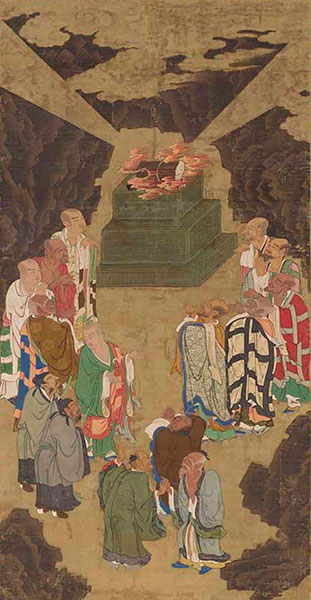
National Treasure
The Five Hundred Arhats, No. 1
By Minchō
Tōfuku-ji Temple, Kyoto
Folding Screens of the Modern Era from the Hakujusai Collection
July 14–September 6, 2026
Momoyama-Edo Paintings|2F-4 gallery
Although the Kyoto National Museum’s collections primarily focus on cultural properties dating through the Edo period (1615–1868), the museum has also collected fine and decorative arts of the modern era from an early stage. Yet historically it acquired few Japanese modern paintings, and many of these were lent to other institutions instead of being exhibited on site.
In recent years, however, a substantial number of donations have made it easier to show works at the museum itself and enabled more effective use of the collection. The Hakujusai Collection, comprising approximately 130 paintings from the early modern and modern periods, is one of the most important recent gifts. This exhibition introduces outstanding folding screens newly acquired as part of the Hakujusai Collection.
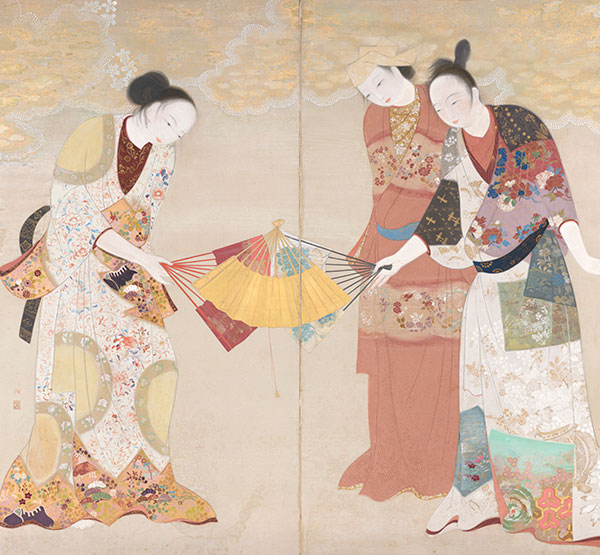
Fan-Tossing
By Kamenaga Gorō
Kyoto National Museum
Modern Chinese Painting: Works by Liu Haisu, Xu Beihong, and Wang Jiyuan
July 14–September 6, 2026
Chinese Paintings|2F-5 gallery
The term youhua (oil painting) refers to works in oil created in modern China through the study of Western painting. In contrast, traditional ink painting came to be known as guohua (national painting). In the early twentieth century, the low status of guohua within the Chinese art world became a cause of growing concern, leading to a movement advocating for its revival by incorporating the strengths of Western painting. In 1911, figures including Liu Haisu (1896–1994), then still in his teens, helped found China’s first private art school, the Shanghai Drawing and Art School (later the Shanghai Academy of Fine Arts). Through such institutions, as well as study abroad in Europe and the United States, Chinese painters began to engage seriously with oil painting, while seeking new directions for traditional styles. This exhibition presents the practices of three such artists, the contemporaries Liu Haisu, Xu Beihong (1895–1953), and Wang Jiyuan (1893–1975).
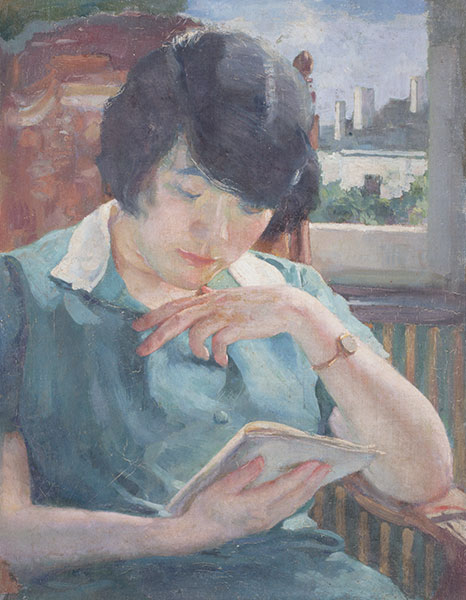
Portrait of Jiang Biwei
By Xu Beihong
Kyoto National Museum
Sculpture of the Kamakura Period
July 14–September 6, 2026
Sculpture|1F-1 gallery
Some of the most renowned Kamakura period (1185–1333) Buddhist sculptures came from Nara, crafted by Kei school sculptors such as Unkei and Kaikei for the reconstruction of temples. Other famous statues were made in the Kanto region, following the Kamakura shogunate’s establishment in present-day Kanagawa. Kyoto is often overlooked in comparison, yet Buddhist sculptures were continuously being produced in the capital. Three major lineages—the In school, En school, and Kei school—carried on traditions established during the late Heian period (794–1185).
From the Kamakura period onward, it became increasingly common for sculptors to inscribe production dates and their own signatures onto their works, though many statues are unsigned. There is much left to learn about the development of sculpture in Kamakura-period Kyoto—the works here offer important insight into this compelling era.
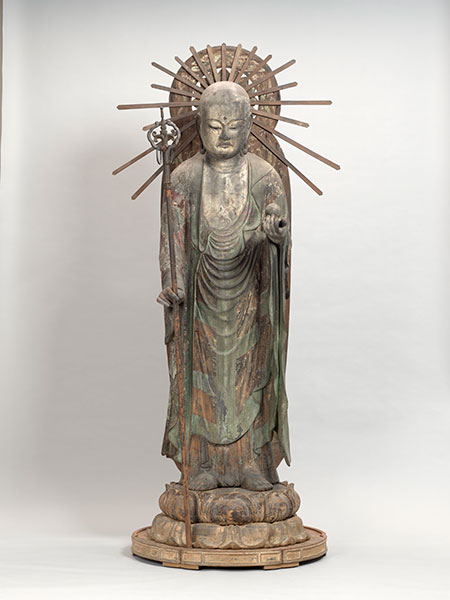
Standing Jizō (Kṣitigarbha) Bodhisattva
Jōnen-ji Temple, Kyoto
Inside Buddhist Sculptures: Votive Deposits and Dedicatory Inscriptions
July 14–September 6, 2026
Sculpture|1F-1 gallery
Buddhist sculptures are often produced in response to someone’s prayers. In order to eternally preserve these wishes, or to ensure the efficacy of the spiritual benefits, information such as the circumstances and date of production, along with the commissioner and sculptor, may be recorded inside the statues. Though originally carved on upplementary elements such as mandorlas (halos) or pedestals, these dedicatory inscriptions came to be engraved inside a given statue or on supports for its feet.
Additionally, objects are sometimes deposited within sculptures. These may include relics of the Buddha, small images, sutras and written prayers (ganmon)—the names of those with spiritual links (kechien) to the creation of the statue. Other votive items include the hair of the deceased and representations of internal organs made of silk or metal. This exhibition
introduces the wishes and prayers embodied within Buddhist sculptures.
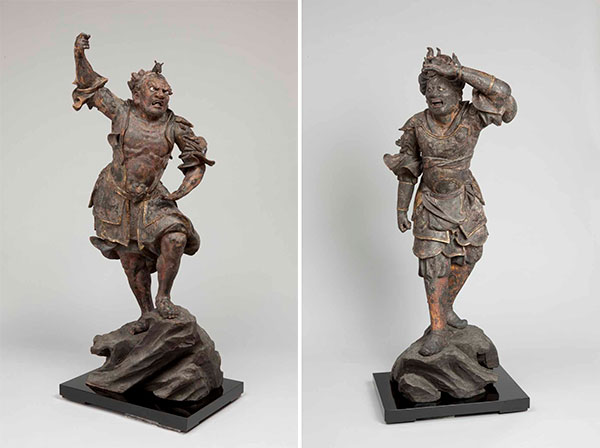
Horse General (left) and Snake General (right), from the Twelve Divine Generals
Daikō-ji Temple, Kyoto
Chinese Tomb Figures: Immortal Life Entrusted to the Earth
July 14–September 6, 2026
Ceramics|1F-2 gallery
In Ancient China, burial goods (mingqi) made of clay or wood were interred in tombs so that the deceased could continue to live after death just as they had in life. Such burial goods included human figures, known as yong, along with household furnishings and animals. Yong tomb figures were first interred in the Shang dynasty (ca. 1600–1050 BCE), and this custom continued through the Ming (1368–1644) and Qing (1644–1912) dynasties. Tomb figures reflect the clothing and customs of various periods, making them particularly intriguing within the realms of history and art.
Primarily centered around works from the Han (206 BCE–220 CE) through Tang (618–907) dynasties,, this exhibition presents an array of tomb figures, dynamically capturing the vibrancy of their time.
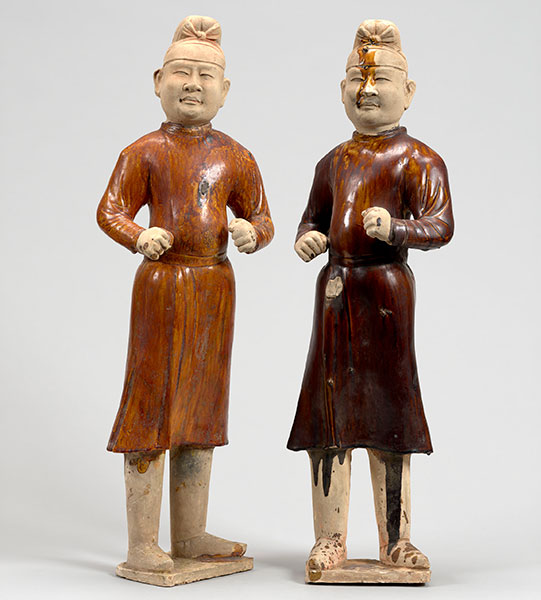
Tomb Figures of Government Officials
Kyoto National Museum
Unearthed Metalwork: Vestiges of Ancient Devotion
July 14–September 6, 2026
Metalwork|1F-5 gallery
Not all deposited objects have been discovered through systematic archaeological excavation; many came to light in circumstances that are now difficult to reconstruct. Yet the people who encountered these objects recognized the ancient hopes and aspirations embodied within them, preserving and passing them down as cultural heritage across generations.
This exhibition presents mirrors, Buddhist ritual implements, and other deposited objects, focusing on works discovered from the late nineteenth century onward whose precise circumstances of recovery remain unclear, while also showcasing more recently excavated examples of metalwork.
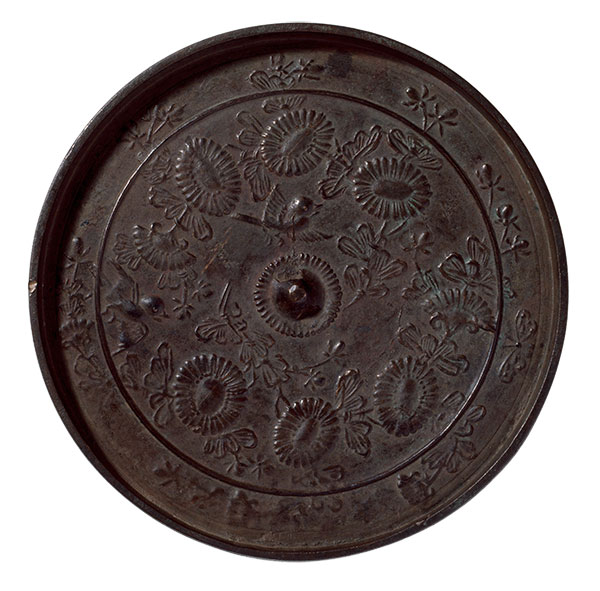
Mirror with Chrysanthemums, Butterflies, and Birds
Reportedly excavated from Mitarashiike, Yamagata
Kyoto National Museum
Sacred Lacquers: Vessels of Faith
July 14–September 6, 2026
Lacquerware|1F-6 gallery
Up through Japan’s medieval era, daily life was closely intertwined with faith, and the spaces and implements used for prayer were adorned with the utmost care. Vermillion has long been used in ritual contexts—perhaps because its vivid red tone contrasts with the colors of the earth, grass, sky, and water, imbuing it with special meaning. Offering stands and wooden esoteric Buddhist implements were likely coated in vermillion lacquer in order to express their sacred nature. Lacquered wooden objects are distinguished by both their lustrous sheen and exceptional durability. They are at times decorated using makie, the technique of sprinkling gold or silver powder to form intricate designs. Furnishings believed to be used by the gods—adorned with resplendent makie—along with items such as boxes storing wish-granting jewels, thought to fulfill all desires, reflect the lives and aspirations of those who bequeathed them.
This exhibition presents an array of sacred lacquers carefully preserved over time to the present day.
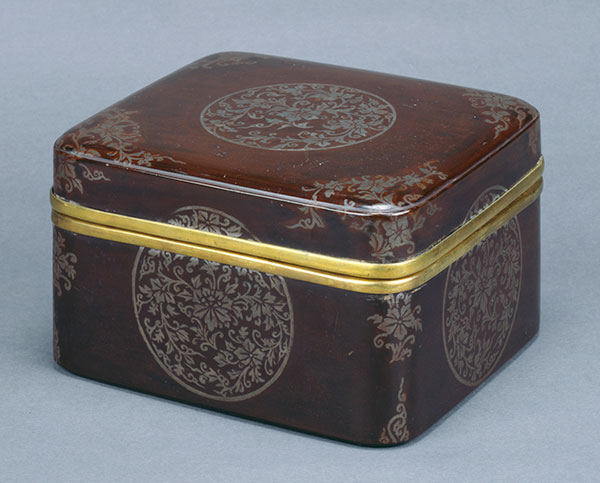
National Treasure
Shoe Box with Composite Flowers, from the Sacred Treasures of Asuka Shrine
Kyoto National Museum
Also On View in the Collection Galleries特別展観覧料が必要
Minchō and Muromachi Ink Painting, Part I
July 14–August 9, 2026
Medieval Paintings|2F-3 gallery
Kissan Minchō (1352–1431) was a Zen monk-painter active at Tōfuku-ji Temple in Kyoto during the early Muromachi period (1392–1573). Tōfuku-ji, located south of this museum in Kyoto’s Higashiyama area, has served as one of Japan’s largest and most important Zen temples since the mid-thirteenth century. Founded by the monk Enni, who had studied in Southern Song China, it housed an extensive collection of Buddhist implements and teachings newly imported from the continent. In order to adorn Tōfuku-ji’s halls, Minchō produced numerous large-scale paintings along with series of hanging scrolls befitting the rituals of the massive temple complex. Particularly accomplished at ink painting, Minchō also established a major artistic lineage. Later, he came to be revered as one of the most important figures within the development of Japanese ink painting. This exhibition explores Minchō’s broad-ranging artistic achievements and their significance with particular attention to this crowning masterpiece.
National Treasure
The Five Hundred Arhats, No. 1
By Minchō
Tōfuku-ji Temple, Kyoto
Folding Screens of the Modern Era from the Hakujusai Collection
July 14–September 6, 2026
Momoyama-Edo Paintings|2F-4 gallery
Although the Kyoto National Museum’s collections primarily focus on cultural properties dating through the Edo period (1615–1868), the museum has also collected fine and decorative arts of the modern era from an early stage. Yet historically it acquired few Japanese modern paintings, and many of these were lent to other institutions instead of being exhibited on site.
In recent years, however, a substantial number of donations have made it easier to show works at the museum itself and enabled more effective use of the collection. The Hakujusai Collection, comprising approximately 130 paintings from the early modern and modern periods, is one of the most important recent gifts. This exhibition introduces outstanding folding screens newly acquired as part of the Hakujusai Collection.
Fan-Tossing
By Kamenaga Gorō
Kyoto National Museum
Modern Chinese Painting: Works by Liu Haisu, Xu Beihong, and Wang Jiyuan
July 14–September 6, 2026
Chinese Paintings|2F-5 gallery
The term youhua (oil painting) refers to works in oil created in modern China through the study of Western painting. In contrast, traditional ink painting came to be known as guohua (national painting). In the early twentieth century, the low status of guohua within the Chinese art world became a cause of growing concern, leading to a movement advocating for its revival by incorporating the strengths of Western painting. In 1911, figures including Liu Haisu (1896–1994), then still in his teens, helped found China’s first private art school, the Shanghai Drawing and Art School (later the Shanghai Academy of Fine Arts). Through such institutions, as well as study abroad in Europe and the United States, Chinese painters began to engage seriously with oil painting, while seeking new directions for traditional styles. This exhibition presents the practices of three such artists, the contemporaries Liu Haisu, Xu Beihong (1895–1953), and Wang Jiyuan (1893–1975).
Portrait of Jiang Biwei
By Xu Beihong
Kyoto National Museum
Sculpture of the Kamakura Period
July 14–September 6, 2026
Sculpture|1F-1 gallery
Some of the most renowned Kamakura period (1185–1333) Buddhist sculptures came from Nara, crafted by Kei school sculptors such as Unkei and Kaikei for the reconstruction of temples. Other famous statues were made in the Kanto region, following the Kamakura shogunate’s establishment in present-day Kanagawa. Kyoto is often overlooked in comparison, yet Buddhist sculptures were continuously being produced in the capital. Three major lineages—the In school, En school, and Kei school—carried on traditions established during the late Heian period (794–1185).
From the Kamakura period onward, it became increasingly common for sculptors to inscribe production dates and their own signatures onto their works, though many statues are unsigned. There is much left to learn about the development of sculpture in Kamakura-period Kyoto—the works here offer important insight into this compelling era.
Standing Jizō (Kṣitigarbha) Bodhisattva
Jōnen-ji Temple, Kyoto
Inside Buddhist Sculptures: Votive Deposits and Dedicatory Inscriptions
July 14–September 6, 2026
Sculpture|1F-1 gallery
Buddhist sculptures are often produced in response to someone’s prayers. In order to eternally preserve these wishes, or to ensure the efficacy of the spiritual benefits, information such as the circumstances and date of production, along with the commissioner and sculptor, may be recorded inside the statues. Though originally carved on upplementary elements such as mandorlas (halos) or pedestals, these dedicatory inscriptions came to be engraved inside a given statue or on supports for its feet.
Additionally, objects are sometimes deposited within sculptures. These may include relics of the Buddha, small images, sutras and written prayers (ganmon)—the names of those with spiritual links (kechien) to the creation of the statue. Other votive items include the hair of the deceased and representations of internal organs made of silk or metal. This exhibition
introduces the wishes and prayers embodied within Buddhist sculptures.
Horse General (left) and Snake General (right), from the Twelve Divine Generals
Daikō-ji Temple, Kyoto
Chinese Tomb Figures: Immortal Life Entrusted to the Earth
July 14–September 6, 2026
Ceramics|1F-2 gallery
In Ancient China, burial goods (mingqi) made of clay or wood were interred in tombs so that the deceased could continue to live after death just as they had in life. Such burial goods included human figures, known as yong, along with household furnishings and animals. Yong tomb figures were first interred in the Shang dynasty (ca. 1600–1050 BCE), and this custom continued through the Ming (1368–1644) and Qing (1644–1912) dynasties. Tomb figures reflect the clothing and customs of various periods, making them particularly intriguing within the realms of history and art.
Primarily centered around works from the Han (206 BCE–220 CE) through Tang (618–907) dynasties,, this exhibition presents an array of tomb figures, dynamically capturing the vibrancy of their time.
Tomb Figures of Government Officials
Kyoto National Museum
Unearthed Metalwork: Vestiges of Ancient Devotion
July 14–September 6, 2026
Metalwork|1F-5 gallery
Not all deposited objects have been discovered through systematic archaeological excavation; many came to light in circumstances that are now difficult to reconstruct. Yet the people who encountered these objects recognized the ancient hopes and aspirations embodied within them, preserving and passing them down as cultural heritage across generations.
This exhibition presents mirrors, Buddhist ritual implements, and other deposited objects, focusing on works discovered from the late nineteenth century onward whose precise circumstances of recovery remain unclear, while also showcasing more recently excavated examples of metalwork.
Mirror with Chrysanthemums, Butterflies, and Birds
Reportedly excavated from Mitarashiike, Yamagata
Kyoto National Museum
Sacred Lacquers: Vessels of Faith
July 14–September 6, 2026
Lacquerware|1F-6 gallery
Up through Japan’s medieval era, daily life was closely intertwined with faith, and the spaces and implements used for prayer were adorned with the utmost care. Vermillion has long been used in ritual contexts—perhaps because its vivid red tone contrasts with the colors of the earth, grass, sky, and water, imbuing it with special meaning. Offering stands and wooden esoteric Buddhist implements were likely coated in vermillion lacquer in order to express their sacred nature. Lacquered wooden objects are distinguished by both their lustrous sheen and exceptional durability. They are at times decorated using makie, the technique of sprinkling gold or silver powder to form intricate designs. Furnishings believed to be used by the gods—adorned with resplendent makie—along with items such as boxes storing wish-granting jewels, thought to fulfill all desires, reflect the lives and aspirations of those who bequeathed them.
This exhibition presents an array of sacred lacquers carefully preserved over time to the present day.
National Treasure
Shoe Box with Composite Flowers, from the Sacred Treasures of Asuka Shrine
Kyoto National Museum
Also On View in the Collection Galleries特別展観覧料が必要
Minchō and Muromachi Ink Painting, Part I
July 14–August 9, 2026
Medieval Paintings|2F-3 gallery
Kissan Minchō (1352–1431) was a Zen monk-painter active at Tōfuku-ji Temple in Kyoto during the early Muromachi period (1392–1573). Tōfuku-ji, located south of this museum in Kyoto’s Higashiyama area, has served as one of Japan’s largest and most important Zen temples since the mid-thirteenth century. Founded by the monk Enni, who had studied in Southern Song China, it housed an extensive collection of Buddhist implements and teachings newly imported from the continent. In order to adorn Tōfuku-ji’s halls, Minchō produced numerous large-scale paintings along with series of hanging scrolls befitting the rituals of the massive temple complex. Particularly accomplished at ink painting, Minchō also established a major artistic lineage. Later, he came to be revered as one of the most important figures within the development of Japanese ink painting. This exhibition explores Minchō’s broad-ranging artistic achievements and their significance with particular attention to this crowning masterpiece.
National Treasure
The Five Hundred Arhats, No. 1
By Minchō
Tōfuku-ji Temple, Kyoto
Folding Screens of the Modern Era from the Hakujusai Collection
July 14–September 6, 2026
Momoyama-Edo Paintings|2F-4 gallery
Although the Kyoto National Museum’s collections primarily focus on cultural properties dating through the Edo period (1615–1868), the museum has also collected fine and decorative arts of the modern era from an early stage. Yet historically it acquired few Japanese modern paintings, and many of these were lent to other institutions instead of being exhibited on site.
In recent years, however, a substantial number of donations have made it easier to show works at the museum itself and enabled more effective use of the collection. The Hakujusai Collection, comprising approximately 130 paintings from the early modern and modern periods, is one of the most important recent gifts. This exhibition introduces outstanding folding screens newly acquired as part of the Hakujusai Collection.
Fan-Tossing
By Kamenaga Gorō
Kyoto National Museum
Modern Chinese Painting: Works by Liu Haisu, Xu Beihong, and Wang Jiyuan
July 14–September 6, 2026
Chinese Paintings|2F-5 gallery
The term youhua (oil painting) refers to works in oil created in modern China through the study of Western painting. In contrast, traditional ink painting came to be known as guohua (national painting). In the early twentieth century, the low status of guohua within the Chinese art world became a cause of growing concern, leading to a movement advocating for its revival by incorporating the strengths of Western painting. In 1911, figures including Liu Haisu (1896–1994), then still in his teens, helped found China’s first private art school, the Shanghai Drawing and Art School (later the Shanghai Academy of Fine Arts). Through such institutions, as well as study abroad in Europe and the United States, Chinese painters began to engage seriously with oil painting, while seeking new directions for traditional styles. This exhibition presents the practices of three such artists, the contemporaries Liu Haisu, Xu Beihong (1895–1953), and Wang Jiyuan (1893–1975).
Portrait of Jiang Biwei
By Xu Beihong
Kyoto National Museum
Sculpture of the Kamakura Period
July 14–September 6, 2026
Sculpture|1F-1 gallery
Some of the most renowned Kamakura period (1185–1333) Buddhist sculptures came from Nara, crafted by Kei school sculptors such as Unkei and Kaikei for the reconstruction of temples. Other famous statues were made in the Kanto region, following the Kamakura shogunate’s establishment in present-day Kanagawa. Kyoto is often overlooked in comparison, yet Buddhist sculptures were continuously being produced in the capital. Three major lineages—the In school, En school, and Kei school—carried on traditions established during the late Heian period (794–1185).
From the Kamakura period onward, it became increasingly common for sculptors to inscribe production dates and their own signatures onto their works, though many statues are unsigned. There is much left to learn about the development of sculpture in Kamakura-period Kyoto—the works here offer important insight into this compelling era.
Standing Jizō (Kṣitigarbha) Bodhisattva
Jōnen-ji Temple, Kyoto
Inside Buddhist Sculptures: Votive Deposits and Dedicatory Inscriptions
July 14–September 6, 2026
Sculpture|1F-1 gallery
Buddhist sculptures are often produced in response to someone’s prayers. In order to eternally preserve these wishes, or to ensure the efficacy of the spiritual benefits, information such as the circumstances and date of production, along with the commissioner and sculptor, may be recorded inside the statues. Though originally carved on upplementary elements such as mandorlas (halos) or pedestals, these dedicatory inscriptions came to be engraved inside a given statue or on supports for its feet.
Additionally, objects are sometimes deposited within sculptures. These may include relics of the Buddha, small images, sutras and written prayers (ganmon)—the names of those with spiritual links (kechien) to the creation of the statue. Other votive items include the hair of the deceased and representations of internal organs made of silk or metal. This exhibition
introduces the wishes and prayers embodied within Buddhist sculptures.
Horse General (left) and Snake General (right), from the Twelve Divine Generals
Daikō-ji Temple, Kyoto
Chinese Tomb Figures: Immortal Life Entrusted to the Earth
July 14–September 6, 2026
Ceramics|1F-2 gallery
In Ancient China, burial goods (mingqi) made of clay or wood were interred in tombs so that the deceased could continue to live after death just as they had in life. Such burial goods included human figures, known as yong, along with household furnishings and animals. Yong tomb figures were first interred in the Shang dynasty (ca. 1600–1050 BCE), and this custom continued through the Ming (1368–1644) and Qing (1644–1912) dynasties. Tomb figures reflect the clothing and customs of various periods, making them particularly intriguing within the realms of history and art.
Primarily centered around works from the Han (206 BCE–220 CE) through Tang (618–907) dynasties,, this exhibition presents an array of tomb figures, dynamically capturing the vibrancy of their time.
Tomb Figures of Government Officials
Kyoto National Museum
Unearthed Metalwork: Vestiges of Ancient Devotion
July 14–September 6, 2026
Metalwork|1F-5 gallery
Not all deposited objects have been discovered through systematic archaeological excavation; many came to light in circumstances that are now difficult to reconstruct. Yet the people who encountered these objects recognized the ancient hopes and aspirations embodied within them, preserving and passing them down as cultural heritage across generations.
This exhibition presents mirrors, Buddhist ritual implements, and other deposited objects, focusing on works discovered from the late nineteenth century onward whose precise circumstances of recovery remain unclear, while also showcasing more recently excavated examples of metalwork.
Mirror with Chrysanthemums, Butterflies, and Birds
Reportedly excavated from Mitarashiike, Yamagata
Kyoto National Museum
Sacred Lacquers: Vessels of Faith
July 14–September 6, 2026
Lacquerware|1F-6 gallery
Up through Japan’s medieval era, daily life was closely intertwined with faith, and the spaces and implements used for prayer were adorned with the utmost care. Vermillion has long been used in ritual contexts—perhaps because its vivid red tone contrasts with the colors of the earth, grass, sky, and water, imbuing it with special meaning. Offering stands and wooden esoteric Buddhist implements were likely coated in vermillion lacquer in order to express their sacred nature. Lacquered wooden objects are distinguished by both their lustrous sheen and exceptional durability. They are at times decorated using makie, the technique of sprinkling gold or silver powder to form intricate designs. Furnishings believed to be used by the gods—adorned with resplendent makie—along with items such as boxes storing wish-granting jewels, thought to fulfill all desires, reflect the lives and aspirations of those who bequeathed them.
This exhibition presents an array of sacred lacquers carefully preserved over time to the present day.
National Treasure
Shoe Box with Composite Flowers, from the Sacred Treasures of Asuka Shrine
Kyoto National Museum
Also On View in the Collection Galleries特別展観覧料が必要
Minchō and Muromachi Ink Painting, Part I
July 14–August 9, 2026
Medieval Paintings|2F-3 gallery
Kissan Minchō (1352–1431) was a Zen monk-painter active at Tōfuku-ji Temple in Kyoto during the early Muromachi period (1392–1573). Tōfuku-ji, located south of this museum in Kyoto’s Higashiyama area, has served as one of Japan’s largest and most important Zen temples since the mid-thirteenth century. Founded by the monk Enni, who had studied in Southern Song China, it housed an extensive collection of Buddhist implements and teachings newly imported from the continent. In order to adorn Tōfuku-ji’s halls, Minchō produced numerous large-scale paintings along with series of hanging scrolls befitting the rituals of the massive temple complex. Particularly accomplished at ink painting, Minchō also established a major artistic lineage. Later, he came to be revered as one of the most important figures within the development of Japanese ink painting. This exhibition explores Minchō’s broad-ranging artistic achievements and their significance with particular attention to this crowning masterpiece.
National Treasure
The Five Hundred Arhats, No. 1
By Minchō
Tōfuku-ji Temple, Kyoto
Folding Screens of the Modern Era from the Hakujusai Collection
July 14–September 6, 2026
Momoyama-Edo Paintings|2F-4 gallery
Although the Kyoto National Museum’s collections primarily focus on cultural properties dating through the Edo period (1615–1868), the museum has also collected fine and decorative arts of the modern era from an early stage. Yet historically it acquired few Japanese modern paintings, and many of these were lent to other institutions instead of being exhibited on site.
In recent years, however, a substantial number of donations have made it easier to show works at the museum itself and enabled more effective use of the collection. The Hakujusai Collection, comprising approximately 130 paintings from the early modern and modern periods, is one of the most important recent gifts. This exhibition introduces outstanding folding screens newly acquired as part of the Hakujusai Collection.
Fan-Tossing
By Kamenaga Gorō
Kyoto National Museum
Modern Chinese Painting: Works by Liu Haisu, Xu Beihong, and Wang Jiyuan
July 14–September 6, 2026
Chinese Paintings|2F-5 gallery
The term youhua (oil painting) refers to works in oil created in modern China through the study of Western painting. In contrast, traditional ink painting came to be known as guohua (national painting). In the early twentieth century, the low status of guohua within the Chinese art world became a cause of growing concern, leading to a movement advocating for its revival by incorporating the strengths of Western painting. In 1911, figures including Liu Haisu (1896–1994), then still in his teens, helped found China’s first private art school, the Shanghai Drawing and Art School (later the Shanghai Academy of Fine Arts). Through such institutions, as well as study abroad in Europe and the United States, Chinese painters began to engage seriously with oil painting, while seeking new directions for traditional styles. This exhibition presents the practices of three such artists, the contemporaries Liu Haisu, Xu Beihong (1895–1953), and Wang Jiyuan (1893–1975).
Portrait of Jiang Biwei
By Xu Beihong
Kyoto National Museum
Sculpture of the Kamakura Period
July 14–September 6, 2026
Sculpture|1F-1 gallery
Some of the most renowned Kamakura period (1185–1333) Buddhist sculptures came from Nara, crafted by Kei school sculptors such as Unkei and Kaikei for the reconstruction of temples. Other famous statues were made in the Kanto region, following the Kamakura shogunate’s establishment in present-day Kanagawa. Kyoto is often overlooked in comparison, yet Buddhist sculptures were continuously being produced in the capital. Three major lineages—the In school, En school, and Kei school—carried on traditions established during the late Heian period (794–1185).
From the Kamakura period onward, it became increasingly common for sculptors to inscribe production dates and their own signatures onto their works, though many statues are unsigned. There is much left to learn about the development of sculpture in Kamakura-period Kyoto—the works here offer important insight into this compelling era.
Standing Jizō (Kṣitigarbha) Bodhisattva
Jōnen-ji Temple, Kyoto
Inside Buddhist Sculptures: Votive Deposits and Dedicatory Inscriptions
July 14–September 6, 2026
Sculpture|1F-1 gallery
Buddhist sculptures are often produced in response to someone’s prayers. In order to eternally preserve these wishes, or to ensure the efficacy of the spiritual benefits, information such as the circumstances and date of production, along with the commissioner and sculptor, may be recorded inside the statues. Though originally carved on upplementary elements such as mandorlas (halos) or pedestals, these dedicatory inscriptions came to be engraved inside a given statue or on supports for its feet.
Additionally, objects are sometimes deposited within sculptures. These may include relics of the Buddha, small images, sutras and written prayers (ganmon)—the names of those with spiritual links (kechien) to the creation of the statue. Other votive items include the hair of the deceased and representations of internal organs made of silk or metal. This exhibition
introduces the wishes and prayers embodied within Buddhist sculptures.
Horse General (left) and Snake General (right), from the Twelve Divine Generals
Daikō-ji Temple, Kyoto
Chinese Tomb Figures: Immortal Life Entrusted to the Earth
July 14–September 6, 2026
Ceramics|1F-2 gallery
In Ancient China, burial goods (mingqi) made of clay or wood were interred in tombs so that the deceased could continue to live after death just as they had in life. Such burial goods included human figures, known as yong, along with household furnishings and animals. Yong tomb figures were first interred in the Shang dynasty (ca. 1600–1050 BCE), and this custom continued through the Ming (1368–1644) and Qing (1644–1912) dynasties. Tomb figures reflect the clothing and customs of various periods, making them particularly intriguing within the realms of history and art.
Primarily centered around works from the Han (206 BCE–220 CE) through Tang (618–907) dynasties,, this exhibition presents an array of tomb figures, dynamically capturing the vibrancy of their time.
Tomb Figures of Government Officials
Kyoto National Museum
Unearthed Metalwork: Vestiges of Ancient Devotion
July 14–September 6, 2026
Metalwork|1F-5 gallery
Not all deposited objects have been discovered through systematic archaeological excavation; many came to light in circumstances that are now difficult to reconstruct. Yet the people who encountered these objects recognized the ancient hopes and aspirations embodied within them, preserving and passing them down as cultural heritage across generations.
This exhibition presents mirrors, Buddhist ritual implements, and other deposited objects, focusing on works discovered from the late nineteenth century onward whose precise circumstances of recovery remain unclear, while also showcasing more recently excavated examples of metalwork.
Mirror with Chrysanthemums, Butterflies, and Birds
Reportedly excavated from Mitarashiike, Yamagata
Kyoto National Museum
Sacred Lacquers: Vessels of Faith
July 14–September 6, 2026
Lacquerware|1F-6 gallery
Up through Japan’s medieval era, daily life was closely intertwined with faith, and the spaces and implements used for prayer were adorned with the utmost care. Vermillion has long been used in ritual contexts—perhaps because its vivid red tone contrasts with the colors of the earth, grass, sky, and water, imbuing it with special meaning. Offering stands and wooden esoteric Buddhist implements were likely coated in vermillion lacquer in order to express their sacred nature. Lacquered wooden objects are distinguished by both their lustrous sheen and exceptional durability. They are at times decorated using makie, the technique of sprinkling gold or silver powder to form intricate designs. Furnishings believed to be used by the gods—adorned with resplendent makie—along with items such as boxes storing wish-granting jewels, thought to fulfill all desires, reflect the lives and aspirations of those who bequeathed them.
This exhibition presents an array of sacred lacquers carefully preserved over time to the present day.
National Treasure
Shoe Box with Composite Flowers, from the Sacred Treasures of Asuka Shrine
Kyoto National Museum
Also On View in the Collection Galleries特別展観覧料が必要
Minchō and Muromachi Ink Painting, Part I
July 14–August 9, 2026
Medieval Paintings|2F-3 gallery
Kissan Minchō (1352–1431) was a Zen monk-painter active at Tōfuku-ji Temple in Kyoto during the early Muromachi period (1392–1573). Tōfuku-ji, located south of this museum in Kyoto’s Higashiyama area, has served as one of Japan’s largest and most important Zen temples since the mid-thirteenth century. Founded by the monk Enni, who had studied in Southern Song China, it housed an extensive collection of Buddhist implements and teachings newly imported from the continent. In order to adorn Tōfuku-ji’s halls, Minchō produced numerous large-scale paintings along with series of hanging scrolls befitting the rituals of the massive temple complex. Particularly accomplished at ink painting, Minchō also established a major artistic lineage. Later, he came to be revered as one of the most important figures within the development of Japanese ink painting. This exhibition explores Minchō’s broad-ranging artistic achievements and their significance with particular attention to this crowning masterpiece.
National Treasure
The Five Hundred Arhats, No. 1
By Minchō
Tōfuku-ji Temple, Kyoto
Folding Screens of the Modern Era from the Hakujusai Collection
July 14–September 6, 2026
Momoyama-Edo Paintings|2F-4 gallery
Although the Kyoto National Museum’s collections primarily focus on cultural properties dating through the Edo period (1615–1868), the museum has also collected fine and decorative arts of the modern era from an early stage. Yet historically it acquired few Japanese modern paintings, and many of these were lent to other institutions instead of being exhibited on site.
In recent years, however, a substantial number of donations have made it easier to show works at the museum itself and enabled more effective use of the collection. The Hakujusai Collection, comprising approximately 130 paintings from the early modern and modern periods, is one of the most important recent gifts. This exhibition introduces outstanding folding screens newly acquired as part of the Hakujusai Collection.
Fan-Tossing
By Kamenaga Gorō
Kyoto National Museum
Modern Chinese Painting: Works by Liu Haisu, Xu Beihong, and Wang Jiyuan
July 14–September 6, 2026
Chinese Paintings|2F-5 gallery
The term youhua (oil painting) refers to works in oil created in modern China through the study of Western painting. In contrast, traditional ink painting came to be known as guohua (national painting). In the early twentieth century, the low status of guohua within the Chinese art world became a cause of growing concern, leading to a movement advocating for its revival by incorporating the strengths of Western painting. In 1911, figures including Liu Haisu (1896–1994), then still in his teens, helped found China’s first private art school, the Shanghai Drawing and Art School (later the Shanghai Academy of Fine Arts). Through such institutions, as well as study abroad in Europe and the United States, Chinese painters began to engage seriously with oil painting, while seeking new directions for traditional styles. This exhibition presents the practices of three such artists, the contemporaries Liu Haisu, Xu Beihong (1895–1953), and Wang Jiyuan (1893–1975).
Portrait of Jiang Biwei
By Xu Beihong
Kyoto National Museum
Sculpture of the Kamakura Period
July 14–September 6, 2026
Sculpture|1F-1 gallery
Some of the most renowned Kamakura period (1185–1333) Buddhist sculptures came from Nara, crafted by Kei school sculptors such as Unkei and Kaikei for the reconstruction of temples. Other famous statues were made in the Kanto region, following the Kamakura shogunate’s establishment in present-day Kanagawa. Kyoto is often overlooked in comparison, yet Buddhist sculptures were continuously being produced in the capital. Three major lineages—the In school, En school, and Kei school—carried on traditions established during the late Heian period (794–1185).
From the Kamakura period onward, it became increasingly common for sculptors to inscribe production dates and their own signatures onto their works, though many statues are unsigned. There is much left to learn about the development of sculpture in Kamakura-period Kyoto—the works here offer important insight into this compelling era.
Standing Jizō (Kṣitigarbha) Bodhisattva
Jōnen-ji Temple, Kyoto
Inside Buddhist Sculptures: Votive Deposits and Dedicatory Inscriptions
July 14–September 6, 2026
Sculpture|1F-1 gallery
Buddhist sculptures are often produced in response to someone’s prayers. In order to eternally preserve these wishes, or to ensure the efficacy of the spiritual benefits, information such as the circumstances and date of production, along with the commissioner and sculptor, may be recorded inside the statues. Though originally carved on upplementary elements such as mandorlas (halos) or pedestals, these dedicatory inscriptions came to be engraved inside a given statue or on supports for its feet.
Additionally, objects are sometimes deposited within sculptures. These may include relics of the Buddha, small images, sutras and written prayers (ganmon)—the names of those with spiritual links (kechien) to the creation of the statue. Other votive items include the hair of the deceased and representations of internal organs made of silk or metal. This exhibition
introduces the wishes and prayers embodied within Buddhist sculptures.
Horse General (left) and Snake General (right), from the Twelve Divine Generals
Daikō-ji Temple, Kyoto
Chinese Tomb Figures: Immortal Life Entrusted to the Earth
July 14–September 6, 2026
Ceramics|1F-2 gallery
In Ancient China, burial goods (mingqi) made of clay or wood were interred in tombs so that the deceased could continue to live after death just as they had in life. Such burial goods included human figures, known as yong, along with household furnishings and animals. Yong tomb figures were first interred in the Shang dynasty (ca. 1600–1050 BCE), and this custom continued through the Ming (1368–1644) and Qing (1644–1912) dynasties. Tomb figures reflect the clothing and customs of various periods, making them particularly intriguing within the realms of history and art.
Primarily centered around works from the Han (206 BCE–220 CE) through Tang (618–907) dynasties,, this exhibition presents an array of tomb figures, dynamically capturing the vibrancy of their time.
Tomb Figures of Government Officials
Kyoto National Museum
Unearthed Metalwork: Vestiges of Ancient Devotion
July 14–September 6, 2026
Metalwork|1F-5 gallery
Not all deposited objects have been discovered through systematic archaeological excavation; many came to light in circumstances that are now difficult to reconstruct. Yet the people who encountered these objects recognized the ancient hopes and aspirations embodied within them, preserving and passing them down as cultural heritage across generations.
This exhibition presents mirrors, Buddhist ritual implements, and other deposited objects, focusing on works discovered from the late nineteenth century onward whose precise circumstances of recovery remain unclear, while also showcasing more recently excavated examples of metalwork.
Mirror with Chrysanthemums, Butterflies, and Birds
Reportedly excavated from Mitarashiike, Yamagata
Kyoto National Museum
Sacred Lacquers: Vessels of Faith
July 14–September 6, 2026
Lacquerware|1F-6 gallery
Up through Japan’s medieval era, daily life was closely intertwined with faith, and the spaces and implements used for prayer were adorned with the utmost care. Vermillion has long been used in ritual contexts—perhaps because its vivid red tone contrasts with the colors of the earth, grass, sky, and water, imbuing it with special meaning. Offering stands and wooden esoteric Buddhist implements were likely coated in vermillion lacquer in order to express their sacred nature. Lacquered wooden objects are distinguished by both their lustrous sheen and exceptional durability. They are at times decorated using makie, the technique of sprinkling gold or silver powder to form intricate designs. Furnishings believed to be used by the gods—adorned with resplendent makie—along with items such as boxes storing wish-granting jewels, thought to fulfill all desires, reflect the lives and aspirations of those who bequeathed them.
This exhibition presents an array of sacred lacquers carefully preserved over time to the present day.
National Treasure
Shoe Box with Composite Flowers, from the Sacred Treasures of Asuka Shrine
Kyoto National Museum
Also On View in the Collection Galleries特別展観覧料が必要
Minchō and Muromachi Ink Painting, Part I
July 14–August 9, 2026
Medieval Paintings|2F-3 gallery
Kissan Minchō (1352–1431) was a Zen monk-painter active at Tōfuku-ji Temple in Kyoto during the early Muromachi period (1392–1573). Tōfuku-ji, located south of this museum in Kyoto’s Higashiyama area, has served as one of Japan’s largest and most important Zen temples since the mid-thirteenth century. Founded by the monk Enni, who had studied in Southern Song China, it housed an extensive collection of Buddhist implements and teachings newly imported from the continent. In order to adorn Tōfuku-ji’s halls, Minchō produced numerous large-scale paintings along with series of hanging scrolls befitting the rituals of the massive temple complex. Particularly accomplished at ink painting, Minchō also established a major artistic lineage. Later, he came to be revered as one of the most important figures within the development of Japanese ink painting. This exhibition explores Minchō’s broad-ranging artistic achievements and their significance with particular attention to this crowning masterpiece.
National Treasure
The Five Hundred Arhats, No. 1
By Minchō
Tōfuku-ji Temple, Kyoto
Folding Screens of the Modern Era from the Hakujusai Collection
July 14–September 6, 2026
Momoyama-Edo Paintings|2F-4 gallery
Although the Kyoto National Museum’s collections primarily focus on cultural properties dating through the Edo period (1615–1868), the museum has also collected fine and decorative arts of the modern era from an early stage. Yet historically it acquired few Japanese modern paintings, and many of these were lent to other institutions instead of being exhibited on site.
In recent years, however, a substantial number of donations have made it easier to show works at the museum itself and enabled more effective use of the collection. The Hakujusai Collection, comprising approximately 130 paintings from the early modern and modern periods, is one of the most important recent gifts. This exhibition introduces outstanding folding screens newly acquired as part of the Hakujusai Collection.
Fan-Tossing
By Kamenaga Gorō
Kyoto National Museum
Modern Chinese Painting: Works by Liu Haisu, Xu Beihong, and Wang Jiyuan
July 14–September 6, 2026
Chinese Paintings|2F-5 gallery
The term youhua (oil painting) refers to works in oil created in modern China through the study of Western painting. In contrast, traditional ink painting came to be known as guohua (national painting). In the early twentieth century, the low status of guohua within the Chinese art world became a cause of growing concern, leading to a movement advocating for its revival by incorporating the strengths of Western painting. In 1911, figures including Liu Haisu (1896–1994), then still in his teens, helped found China’s first private art school, the Shanghai Drawing and Art School (later the Shanghai Academy of Fine Arts). Through such institutions, as well as study abroad in Europe and the United States, Chinese painters began to engage seriously with oil painting, while seeking new directions for traditional styles. This exhibition presents the practices of three such artists, the contemporaries Liu Haisu, Xu Beihong (1895–1953), and Wang Jiyuan (1893–1975).
Portrait of Jiang Biwei
By Xu Beihong
Kyoto National Museum
Sculpture of the Kamakura Period
July 14–September 6, 2026
Sculpture|1F-1 gallery
Some of the most renowned Kamakura period (1185–1333) Buddhist sculptures came from Nara, crafted by Kei school sculptors such as Unkei and Kaikei for the reconstruction of temples. Other famous statues were made in the Kanto region, following the Kamakura shogunate’s establishment in present-day Kanagawa. Kyoto is often overlooked in comparison, yet Buddhist sculptures were continuously being produced in the capital. Three major lineages—the In school, En school, and Kei school—carried on traditions established during the late Heian period (794–1185).
From the Kamakura period onward, it became increasingly common for sculptors to inscribe production dates and their own signatures onto their works, though many statues are unsigned. There is much left to learn about the development of sculpture in Kamakura-period Kyoto—the works here offer important insight into this compelling era.
Standing Jizō (Kṣitigarbha) Bodhisattva
Jōnen-ji Temple, Kyoto
Inside Buddhist Sculptures: Votive Deposits and Dedicatory Inscriptions
July 14–September 6, 2026
Sculpture|1F-1 gallery
Buddhist sculptures are often produced in response to someone’s prayers. In order to eternally preserve these wishes, or to ensure the efficacy of the spiritual benefits, information such as the circumstances and date of production, along with the commissioner and sculptor, may be recorded inside the statues. Though originally carved on upplementary elements such as mandorlas (halos) or pedestals, these dedicatory inscriptions came to be engraved inside a given statue or on supports for its feet.
Additionally, objects are sometimes deposited within sculptures. These may include relics of the Buddha, small images, sutras and written prayers (ganmon)—the names of those with spiritual links (kechien) to the creation of the statue. Other votive items include the hair of the deceased and representations of internal organs made of silk or metal. This exhibition
introduces the wishes and prayers embodied within Buddhist sculptures.
Horse General (left) and Snake General (right), from the Twelve Divine Generals
Daikō-ji Temple, Kyoto
Chinese Tomb Figures: Immortal Life Entrusted to the Earth
July 14–September 6, 2026
Ceramics|1F-2 gallery
In Ancient China, burial goods (mingqi) made of clay or wood were interred in tombs so that the deceased could continue to live after death just as they had in life. Such burial goods included human figures, known as yong, along with household furnishings and animals. Yong tomb figures were first interred in the Shang dynasty (ca. 1600–1050 BCE), and this custom continued through the Ming (1368–1644) and Qing (1644–1912) dynasties. Tomb figures reflect the clothing and customs of various periods, making them particularly intriguing within the realms of history and art.
Primarily centered around works from the Han (206 BCE–220 CE) through Tang (618–907) dynasties,, this exhibition presents an array of tomb figures, dynamically capturing the vibrancy of their time.
Tomb Figures of Government Officials
Kyoto National Museum
Unearthed Metalwork: Vestiges of Ancient Devotion
July 14–September 6, 2026
Metalwork|1F-5 gallery
Not all deposited objects have been discovered through systematic archaeological excavation; many came to light in circumstances that are now difficult to reconstruct. Yet the people who encountered these objects recognized the ancient hopes and aspirations embodied within them, preserving and passing them down as cultural heritage across generations.
This exhibition presents mirrors, Buddhist ritual implements, and other deposited objects, focusing on works discovered from the late nineteenth century onward whose precise circumstances of recovery remain unclear, while also showcasing more recently excavated examples of metalwork.
Mirror with Chrysanthemums, Butterflies, and Birds
Reportedly excavated from Mitarashiike, Yamagata
Kyoto National Museum
Sacred Lacquers: Vessels of Faith
July 14–September 6, 2026
Lacquerware|1F-6 gallery
Up through Japan’s medieval era, daily life was closely intertwined with faith, and the spaces and implements used for prayer were adorned with the utmost care. Vermillion has long been used in ritual contexts—perhaps because its vivid red tone contrasts with the colors of the earth, grass, sky, and water, imbuing it with special meaning. Offering stands and wooden esoteric Buddhist implements were likely coated in vermillion lacquer in order to express their sacred nature. Lacquered wooden objects are distinguished by both their lustrous sheen and exceptional durability. They are at times decorated using makie, the technique of sprinkling gold or silver powder to form intricate designs. Furnishings believed to be used by the gods—adorned with resplendent makie—along with items such as boxes storing wish-granting jewels, thought to fulfill all desires, reflect the lives and aspirations of those who bequeathed them.
This exhibition presents an array of sacred lacquers carefully preserved over time to the present day.
National Treasure
Shoe Box with Composite Flowers, from the Sacred Treasures of Asuka Shrine
Kyoto National Museum
Also On View in the Collection Galleries特別展観覧料が必要
Minchō and Muromachi Ink Painting, Part I
July 14–August 9, 2026
Medieval Paintings|2F-3 gallery
Kissan Minchō (1352–1431) was a Zen monk-painter active at Tōfuku-ji Temple in Kyoto during the early Muromachi period (1392–1573). Tōfuku-ji, located south of this museum in Kyoto’s Higashiyama area, has served as one of Japan’s largest and most important Zen temples since the mid-thirteenth century. Founded by the monk Enni, who had studied in Southern Song China, it housed an extensive collection of Buddhist implements and teachings newly imported from the continent. In order to adorn Tōfuku-ji’s halls, Minchō produced numerous large-scale paintings along with series of hanging scrolls befitting the rituals of the massive temple complex. Particularly accomplished at ink painting, Minchō also established a major artistic lineage. Later, he came to be revered as one of the most important figures within the development of Japanese ink painting. This exhibition explores Minchō’s broad-ranging artistic achievements and their significance with particular attention to this crowning masterpiece.
National Treasure
The Five Hundred Arhats, No. 1
By Minchō
Tōfuku-ji Temple, Kyoto
Folding Screens of the Modern Era from the Hakujusai Collection
July 14–September 6, 2026
Momoyama-Edo Paintings|2F-4 gallery
Although the Kyoto National Museum’s collections primarily focus on cultural properties dating through the Edo period (1615–1868), the museum has also collected fine and decorative arts of the modern era from an early stage. Yet historically it acquired few Japanese modern paintings, and many of these were lent to other institutions instead of being exhibited on site.
In recent years, however, a substantial number of donations have made it easier to show works at the museum itself and enabled more effective use of the collection. The Hakujusai Collection, comprising approximately 130 paintings from the early modern and modern periods, is one of the most important recent gifts. This exhibition introduces outstanding folding screens newly acquired as part of the Hakujusai Collection.
Fan-Tossing
By Kamenaga Gorō
Kyoto National Museum
Modern Chinese Painting: Works by Liu Haisu, Xu Beihong, and Wang Jiyuan
July 14–September 6, 2026
Chinese Paintings|2F-5 gallery
The term youhua (oil painting) refers to works in oil created in modern China through the study of Western painting. In contrast, traditional ink painting came to be known as guohua (national painting). In the early twentieth century, the low status of guohua within the Chinese art world became a cause of growing concern, leading to a movement advocating for its revival by incorporating the strengths of Western painting. In 1911, figures including Liu Haisu (1896–1994), then still in his teens, helped found China’s first private art school, the Shanghai Drawing and Art School (later the Shanghai Academy of Fine Arts). Through such institutions, as well as study abroad in Europe and the United States, Chinese painters began to engage seriously with oil painting, while seeking new directions for traditional styles. This exhibition presents the practices of three such artists, the contemporaries Liu Haisu, Xu Beihong (1895–1953), and Wang Jiyuan (1893–1975).
Portrait of Jiang Biwei
By Xu Beihong
Kyoto National Museum
Sculpture of the Kamakura Period
July 14–September 6, 2026
Sculpture|1F-1 gallery
Some of the most renowned Kamakura period (1185–1333) Buddhist sculptures came from Nara, crafted by Kei school sculptors such as Unkei and Kaikei for the reconstruction of temples. Other famous statues were made in the Kanto region, following the Kamakura shogunate’s establishment in present-day Kanagawa. Kyoto is often overlooked in comparison, yet Buddhist sculptures were continuously being produced in the capital. Three major lineages—the In school, En school, and Kei school—carried on traditions established during the late Heian period (794–1185).
From the Kamakura period onward, it became increasingly common for sculptors to inscribe production dates and their own signatures onto their works, though many statues are unsigned. There is much left to learn about the development of sculpture in Kamakura-period Kyoto—the works here offer important insight into this compelling era.
Standing Jizō (Kṣitigarbha) Bodhisattva
Jōnen-ji Temple, Kyoto
Inside Buddhist Sculptures: Votive Deposits and Dedicatory Inscriptions
July 14–September 6, 2026
Sculpture|1F-1 gallery
Buddhist sculptures are often produced in response to someone’s prayers. In order to eternally preserve these wishes, or to ensure the efficacy of the spiritual benefits, information such as the circumstances and date of production, along with the commissioner and sculptor, may be recorded inside the statues. Though originally carved on upplementary elements such as mandorlas (halos) or pedestals, these dedicatory inscriptions came to be engraved inside a given statue or on supports for its feet.
Additionally, objects are sometimes deposited within sculptures. These may include relics of the Buddha, small images, sutras and written prayers (ganmon)—the names of those with spiritual links (kechien) to the creation of the statue. Other votive items include the hair of the deceased and representations of internal organs made of silk or metal. This exhibition
introduces the wishes and prayers embodied within Buddhist sculptures.
Horse General (left) and Snake General (right), from the Twelve Divine Generals
Daikō-ji Temple, Kyoto
Chinese Tomb Figures: Immortal Life Entrusted to the Earth
July 14–September 6, 2026
Ceramics|1F-2 gallery
In Ancient China, burial goods (mingqi) made of clay or wood were interred in tombs so that the deceased could continue to live after death just as they had in life. Such burial goods included human figures, known as yong, along with household furnishings and animals. Yong tomb figures were first interred in the Shang dynasty (ca. 1600–1050 BCE), and this custom continued through the Ming (1368–1644) and Qing (1644–1912) dynasties. Tomb figures reflect the clothing and customs of various periods, making them particularly intriguing within the realms of history and art.
Primarily centered around works from the Han (206 BCE–220 CE) through Tang (618–907) dynasties,, this exhibition presents an array of tomb figures, dynamically capturing the vibrancy of their time.
Tomb Figures of Government Officials
Kyoto National Museum
Unearthed Metalwork: Vestiges of Ancient Devotion
July 14–September 6, 2026
Metalwork|1F-5 gallery
Not all deposited objects have been discovered through systematic archaeological excavation; many came to light in circumstances that are now difficult to reconstruct. Yet the people who encountered these objects recognized the ancient hopes and aspirations embodied within them, preserving and passing them down as cultural heritage across generations.
This exhibition presents mirrors, Buddhist ritual implements, and other deposited objects, focusing on works discovered from the late nineteenth century onward whose precise circumstances of recovery remain unclear, while also showcasing more recently excavated examples of metalwork.
Mirror with Chrysanthemums, Butterflies, and Birds
Reportedly excavated from Mitarashiike, Yamagata
Kyoto National Museum
Sacred Lacquers: Vessels of Faith
July 14–September 6, 2026
Lacquerware|1F-6 gallery
Up through Japan’s medieval era, daily life was closely intertwined with faith, and the spaces and implements used for prayer were adorned with the utmost care. Vermillion has long been used in ritual contexts—perhaps because its vivid red tone contrasts with the colors of the earth, grass, sky, and water, imbuing it with special meaning. Offering stands and wooden esoteric Buddhist implements were likely coated in vermillion lacquer in order to express their sacred nature. Lacquered wooden objects are distinguished by both their lustrous sheen and exceptional durability. They are at times decorated using makie, the technique of sprinkling gold or silver powder to form intricate designs. Furnishings believed to be used by the gods—adorned with resplendent makie—along with items such as boxes storing wish-granting jewels, thought to fulfill all desires, reflect the lives and aspirations of those who bequeathed them.
This exhibition presents an array of sacred lacquers carefully preserved over time to the present day.
National Treasure
Shoe Box with Composite Flowers, from the Sacred Treasures of Asuka Shrine
Kyoto National Museum
Also On View in the Collection Galleries特別展観覧料が必要
Minchō and Muromachi Ink Painting, Part I
July 14–August 9, 2026
Medieval Paintings|2F-3 gallery
Kissan Minchō (1352–1431) was a Zen monk-painter active at Tōfuku-ji Temple in Kyoto during the early Muromachi period (1392–1573). Tōfuku-ji, located south of this museum in Kyoto’s Higashiyama area, has served as one of Japan’s largest and most important Zen temples since the mid-thirteenth century. Founded by the monk Enni, who had studied in Southern Song China, it housed an extensive collection of Buddhist implements and teachings newly imported from the continent. In order to adorn Tōfuku-ji’s halls, Minchō produced numerous large-scale paintings along with series of hanging scrolls befitting the rituals of the massive temple complex. Particularly accomplished at ink painting, Minchō also established a major artistic lineage. Later, he came to be revered as one of the most important figures within the development of Japanese ink painting. This exhibition explores Minchō’s broad-ranging artistic achievements and their significance with particular attention to this crowning masterpiece.
National Treasure
The Five Hundred Arhats, No. 1
By Minchō
Tōfuku-ji Temple, Kyoto
Folding Screens of the Modern Era from the Hakujusai Collection
July 14–September 6, 2026
Momoyama-Edo Paintings|2F-4 gallery
Although the Kyoto National Museum’s collections primarily focus on cultural properties dating through the Edo period (1615–1868), the museum has also collected fine and decorative arts of the modern era from an early stage. Yet historically it acquired few Japanese modern paintings, and many of these were lent to other institutions instead of being exhibited on site.
In recent years, however, a substantial number of donations have made it easier to show works at the museum itself and enabled more effective use of the collection. The Hakujusai Collection, comprising approximately 130 paintings from the early modern and modern periods, is one of the most important recent gifts. This exhibition introduces outstanding folding screens newly acquired as part of the Hakujusai Collection.
Fan-Tossing
By Kamenaga Gorō
Kyoto National Museum
Modern Chinese Painting: Works by Liu Haisu, Xu Beihong, and Wang Jiyuan
July 14–September 6, 2026
Chinese Paintings|2F-5 gallery
The term youhua (oil painting) refers to works in oil created in modern China through the study of Western painting. In contrast, traditional ink painting came to be known as guohua (national painting). In the early twentieth century, the low status of guohua within the Chinese art world became a cause of growing concern, leading to a movement advocating for its revival by incorporating the strengths of Western painting. In 1911, figures including Liu Haisu (1896–1994), then still in his teens, helped found China’s first private art school, the Shanghai Drawing and Art School (later the Shanghai Academy of Fine Arts). Through such institutions, as well as study abroad in Europe and the United States, Chinese painters began to engage seriously with oil painting, while seeking new directions for traditional styles. This exhibition presents the practices of three such artists, the contemporaries Liu Haisu, Xu Beihong (1895–1953), and Wang Jiyuan (1893–1975).
Portrait of Jiang Biwei
By Xu Beihong
Kyoto National Museum
Sculpture of the Kamakura Period
July 14–September 6, 2026
Sculpture|1F-1 gallery
Some of the most renowned Kamakura period (1185–1333) Buddhist sculptures came from Nara, crafted by Kei school sculptors such as Unkei and Kaikei for the reconstruction of temples. Other famous statues were made in the Kanto region, following the Kamakura shogunate’s establishment in present-day Kanagawa. Kyoto is often overlooked in comparison, yet Buddhist sculptures were continuously being produced in the capital. Three major lineages—the In school, En school, and Kei school—carried on traditions established during the late Heian period (794–1185).
From the Kamakura period onward, it became increasingly common for sculptors to inscribe production dates and their own signatures onto their works, though many statues are unsigned. There is much left to learn about the development of sculpture in Kamakura-period Kyoto—the works here offer important insight into this compelling era.
Standing Jizō (Kṣitigarbha) Bodhisattva
Jōnen-ji Temple, Kyoto
Inside Buddhist Sculptures: Votive Deposits and Dedicatory Inscriptions
July 14–September 6, 2026
Sculpture|1F-1 gallery
Buddhist sculptures are often produced in response to someone’s prayers. In order to eternally preserve these wishes, or to ensure the efficacy of the spiritual benefits, information such as the circumstances and date of production, along with the commissioner and sculptor, may be recorded inside the statues. Though originally carved on upplementary elements such as mandorlas (halos) or pedestals, these dedicatory inscriptions came to be engraved inside a given statue or on supports for its feet.
Additionally, objects are sometimes deposited within sculptures. These may include relics of the Buddha, small images, sutras and written prayers (ganmon)—the names of those with spiritual links (kechien) to the creation of the statue. Other votive items include the hair of the deceased and representations of internal organs made of silk or metal. This exhibition
introduces the wishes and prayers embodied within Buddhist sculptures.
Horse General (left) and Snake General (right), from the Twelve Divine Generals
Daikō-ji Temple, Kyoto
Chinese Tomb Figures: Immortal Life Entrusted to the Earth
July 14–September 6, 2026
Ceramics|1F-2 gallery
In Ancient China, burial goods (mingqi) made of clay or wood were interred in tombs so that the deceased could continue to live after death just as they had in life. Such burial goods included human figures, known as yong, along with household furnishings and animals. Yong tomb figures were first interred in the Shang dynasty (ca. 1600–1050 BCE), and this custom continued through the Ming (1368–1644) and Qing (1644–1912) dynasties. Tomb figures reflect the clothing and customs of various periods, making them particularly intriguing within the realms of history and art.
Primarily centered around works from the Han (206 BCE–220 CE) through Tang (618–907) dynasties,, this exhibition presents an array of tomb figures, dynamically capturing the vibrancy of their time.
Tomb Figures of Government Officials
Kyoto National Museum
Unearthed Metalwork: Vestiges of Ancient Devotion
July 14–September 6, 2026
Metalwork|1F-5 gallery
Not all deposited objects have been discovered through systematic archaeological excavation; many came to light in circumstances that are now difficult to reconstruct. Yet the people who encountered these objects recognized the ancient hopes and aspirations embodied within them, preserving and passing them down as cultural heritage across generations.
This exhibition presents mirrors, Buddhist ritual implements, and other deposited objects, focusing on works discovered from the late nineteenth century onward whose precise circumstances of recovery remain unclear, while also showcasing more recently excavated examples of metalwork.
Mirror with Chrysanthemums, Butterflies, and Birds
Reportedly excavated from Mitarashiike, Yamagata
Kyoto National Museum
Sacred Lacquers: Vessels of Faith
July 14–September 6, 2026
Lacquerware|1F-6 gallery
Up through Japan’s medieval era, daily life was closely intertwined with faith, and the spaces and implements used for prayer were adorned with the utmost care. Vermillion has long been used in ritual contexts—perhaps because its vivid red tone contrasts with the colors of the earth, grass, sky, and water, imbuing it with special meaning. Offering stands and wooden esoteric Buddhist implements were likely coated in vermillion lacquer in order to express their sacred nature. Lacquered wooden objects are distinguished by both their lustrous sheen and exceptional durability. They are at times decorated using makie, the technique of sprinkling gold or silver powder to form intricate designs. Furnishings believed to be used by the gods—adorned with resplendent makie—along with items such as boxes storing wish-granting jewels, thought to fulfill all desires, reflect the lives and aspirations of those who bequeathed them.
This exhibition presents an array of sacred lacquers carefully preserved over time to the present day.
National Treasure
Shoe Box with Composite Flowers, from the Sacred Treasures of Asuka Shrine
Kyoto National Museum
Also On View in the Collection Galleries特別展観覧料が必要
Minchō and Muromachi Ink Painting, Part I
July 14–August 9, 2026
Medieval Paintings|2F-3 gallery
Kissan Minchō (1352–1431) was a Zen monk-painter active at Tōfuku-ji Temple in Kyoto during the early Muromachi period (1392–1573). Tōfuku-ji, located south of this museum in Kyoto’s Higashiyama area, has served as one of Japan’s largest and most important Zen temples since the mid-thirteenth century. Founded by the monk Enni, who had studied in Southern Song China, it housed an extensive collection of Buddhist implements and teachings newly imported from the continent. In order to adorn Tōfuku-ji’s halls, Minchō produced numerous large-scale paintings along with series of hanging scrolls befitting the rituals of the massive temple complex. Particularly accomplished at ink painting, Minchō also established a major artistic lineage. Later, he came to be revered as one of the most important figures within the development of Japanese ink painting. This exhibition explores Minchō’s broad-ranging artistic achievements and their significance with particular attention to this crowning masterpiece.
National Treasure
The Five Hundred Arhats, No. 1
By Minchō
Tōfuku-ji Temple, Kyoto
Folding Screens of the Modern Era from the Hakujusai Collection
July 14–September 6, 2026
Momoyama-Edo Paintings|2F-4 gallery
Although the Kyoto National Museum’s collections primarily focus on cultural properties dating through the Edo period (1615–1868), the museum has also collected fine and decorative arts of the modern era from an early stage. Yet historically it acquired few Japanese modern paintings, and many of these were lent to other institutions instead of being exhibited on site.
In recent years, however, a substantial number of donations have made it easier to show works at the museum itself and enabled more effective use of the collection. The Hakujusai Collection, comprising approximately 130 paintings from the early modern and modern periods, is one of the most important recent gifts. This exhibition introduces outstanding folding screens newly acquired as part of the Hakujusai Collection.
Fan-Tossing
By Kamenaga Gorō
Kyoto National Museum
Modern Chinese Painting: Works by Liu Haisu, Xu Beihong, and Wang Jiyuan
July 14–September 6, 2026
Chinese Paintings|2F-5 gallery
The term youhua (oil painting) refers to works in oil created in modern China through the study of Western painting. In contrast, traditional ink painting came to be known as guohua (national painting). In the early twentieth century, the low status of guohua within the Chinese art world became a cause of growing concern, leading to a movement advocating for its revival by incorporating the strengths of Western painting. In 1911, figures including Liu Haisu (1896–1994), then still in his teens, helped found China’s first private art school, the Shanghai Drawing and Art School (later the Shanghai Academy of Fine Arts). Through such institutions, as well as study abroad in Europe and the United States, Chinese painters began to engage seriously with oil painting, while seeking new directions for traditional styles. This exhibition presents the practices of three such artists, the contemporaries Liu Haisu, Xu Beihong (1895–1953), and Wang Jiyuan (1893–1975).
Portrait of Jiang Biwei
By Xu Beihong
Kyoto National Museum
Sculpture of the Kamakura Period
July 14–September 6, 2026
Sculpture|1F-1 gallery
Some of the most renowned Kamakura period (1185–1333) Buddhist sculptures came from Nara, crafted by Kei school sculptors such as Unkei and Kaikei for the reconstruction of temples. Other famous statues were made in the Kanto region, following the Kamakura shogunate’s establishment in present-day Kanagawa. Kyoto is often overlooked in comparison, yet Buddhist sculptures were continuously being produced in the capital. Three major lineages—the In school, En school, and Kei school—carried on traditions established during the late Heian period (794–1185).
From the Kamakura period onward, it became increasingly common for sculptors to inscribe production dates and their own signatures onto their works, though many statues are unsigned. There is much left to learn about the development of sculpture in Kamakura-period Kyoto—the works here offer important insight into this compelling era.
Standing Jizō (Kṣitigarbha) Bodhisattva
Jōnen-ji Temple, Kyoto
Inside Buddhist Sculptures: Votive Deposits and Dedicatory Inscriptions
July 14–September 6, 2026
Sculpture|1F-1 gallery
Buddhist sculptures are often produced in response to someone’s prayers. In order to eternally preserve these wishes, or to ensure the efficacy of the spiritual benefits, information such as the circumstances and date of production, along with the commissioner and sculptor, may be recorded inside the statues. Though originally carved on upplementary elements such as mandorlas (halos) or pedestals, these dedicatory inscriptions came to be engraved inside a given statue or on supports for its feet.
Additionally, objects are sometimes deposited within sculptures. These may include relics of the Buddha, small images, sutras and written prayers (ganmon)—the names of those with spiritual links (kechien) to the creation of the statue. Other votive items include the hair of the deceased and representations of internal organs made of silk or metal. This exhibition
introduces the wishes and prayers embodied within Buddhist sculptures.
Horse General (left) and Snake General (right), from the Twelve Divine Generals
Daikō-ji Temple, Kyoto
Chinese Tomb Figures: Immortal Life Entrusted to the Earth
July 14–September 6, 2026
Ceramics|1F-2 gallery
In Ancient China, burial goods (mingqi) made of clay or wood were interred in tombs so that the deceased could continue to live after death just as they had in life. Such burial goods included human figures, known as yong, along with household furnishings and animals. Yong tomb figures were first interred in the Shang dynasty (ca. 1600–1050 BCE), and this custom continued through the Ming (1368–1644) and Qing (1644–1912) dynasties. Tomb figures reflect the clothing and customs of various periods, making them particularly intriguing within the realms of history and art.
Primarily centered around works from the Han (206 BCE–220 CE) through Tang (618–907) dynasties,, this exhibition presents an array of tomb figures, dynamically capturing the vibrancy of their time.
Tomb Figures of Government Officials
Kyoto National Museum
Unearthed Metalwork: Vestiges of Ancient Devotion
July 14–September 6, 2026
Metalwork|1F-5 gallery
Not all deposited objects have been discovered through systematic archaeological excavation; many came to light in circumstances that are now difficult to reconstruct. Yet the people who encountered these objects recognized the ancient hopes and aspirations embodied within them, preserving and passing them down as cultural heritage across generations.
This exhibition presents mirrors, Buddhist ritual implements, and other deposited objects, focusing on works discovered from the late nineteenth century onward whose precise circumstances of recovery remain unclear, while also showcasing more recently excavated examples of metalwork.
Mirror with Chrysanthemums, Butterflies, and Birds
Reportedly excavated from Mitarashiike, Yamagata
Kyoto National Museum
Sacred Lacquers: Vessels of Faith
July 14–September 6, 2026
Lacquerware|1F-6 gallery
Up through Japan’s medieval era, daily life was closely intertwined with faith, and the spaces and implements used for prayer were adorned with the utmost care. Vermillion has long been used in ritual contexts—perhaps because its vivid red tone contrasts with the colors of the earth, grass, sky, and water, imbuing it with special meaning. Offering stands and wooden esoteric Buddhist implements were likely coated in vermillion lacquer in order to express their sacred nature. Lacquered wooden objects are distinguished by both their lustrous sheen and exceptional durability. They are at times decorated using makie, the technique of sprinkling gold or silver powder to form intricate designs. Furnishings believed to be used by the gods—adorned with resplendent makie—along with items such as boxes storing wish-granting jewels, thought to fulfill all desires, reflect the lives and aspirations of those who bequeathed them.
This exhibition presents an array of sacred lacquers carefully preserved over time to the present day.
National Treasure
Shoe Box with Composite Flowers, from the Sacred Treasures of Asuka Shrine
Kyoto National Museum
Also On View in the Collection Galleries特別展観覧料が必要
Minchō and Muromachi Ink Painting, Part I
July 14–August 9, 2026
Medieval Paintings|2F-3 gallery
Kissan Minchō (1352–1431) was a Zen monk-painter active at Tōfuku-ji Temple in Kyoto during the early Muromachi period (1392–1573). Tōfuku-ji, located south of this museum in Kyoto’s Higashiyama area, has served as one of Japan’s largest and most important Zen temples since the mid-thirteenth century. Founded by the monk Enni, who had studied in Southern Song China, it housed an extensive collection of Buddhist implements and teachings newly imported from the continent. In order to adorn Tōfuku-ji’s halls, Minchō produced numerous large-scale paintings along with series of hanging scrolls befitting the rituals of the massive temple complex. Particularly accomplished at ink painting, Minchō also established a major artistic lineage. Later, he came to be revered as one of the most important figures within the development of Japanese ink painting. This exhibition explores Minchō’s broad-ranging artistic achievements and their significance with particular attention to this crowning masterpiece.
National Treasure
The Five Hundred Arhats, No. 1
By Minchō
Tōfuku-ji Temple, Kyoto
Folding Screens of the Modern Era from the Hakujusai Collection
July 14–September 6, 2026
Momoyama-Edo Paintings|2F-4 gallery
Although the Kyoto National Museum’s collections primarily focus on cultural properties dating through the Edo period (1615–1868), the museum has also collected fine and decorative arts of the modern era from an early stage. Yet historically it acquired few Japanese modern paintings, and many of these were lent to other institutions instead of being exhibited on site.
In recent years, however, a substantial number of donations have made it easier to show works at the museum itself and enabled more effective use of the collection. The Hakujusai Collection, comprising approximately 130 paintings from the early modern and modern periods, is one of the most important recent gifts. This exhibition introduces outstanding folding screens newly acquired as part of the Hakujusai Collection.
Fan-Tossing
By Kamenaga Gorō
Kyoto National Museum
Modern Chinese Painting: Works by Liu Haisu, Xu Beihong, and Wang Jiyuan
July 14–September 6, 2026
Chinese Paintings|2F-5 gallery
The term youhua (oil painting) refers to works in oil created in modern China through the study of Western painting. In contrast, traditional ink painting came to be known as guohua (national painting). In the early twentieth century, the low status of guohua within the Chinese art world became a cause of growing concern, leading to a movement advocating for its revival by incorporating the strengths of Western painting. In 1911, figures including Liu Haisu (1896–1994), then still in his teens, helped found China’s first private art school, the Shanghai Drawing and Art School (later the Shanghai Academy of Fine Arts). Through such institutions, as well as study abroad in Europe and the United States, Chinese painters began to engage seriously with oil painting, while seeking new directions for traditional styles. This exhibition presents the practices of three such artists, the contemporaries Liu Haisu, Xu Beihong (1895–1953), and Wang Jiyuan (1893–1975).
Portrait of Jiang Biwei
By Xu Beihong
Kyoto National Museum
Sculpture of the Kamakura Period
July 14–September 6, 2026
Sculpture|1F-1 gallery
Some of the most renowned Kamakura period (1185–1333) Buddhist sculptures came from Nara, crafted by Kei school sculptors such as Unkei and Kaikei for the reconstruction of temples. Other famous statues were made in the Kanto region, following the Kamakura shogunate’s establishment in present-day Kanagawa. Kyoto is often overlooked in comparison, yet Buddhist sculptures were continuously being produced in the capital. Three major lineages—the In school, En school, and Kei school—carried on traditions established during the late Heian period (794–1185).
From the Kamakura period onward, it became increasingly common for sculptors to inscribe production dates and their own signatures onto their works, though many statues are unsigned. There is much left to learn about the development of sculpture in Kamakura-period Kyoto—the works here offer important insight into this compelling era.
Standing Jizō (Kṣitigarbha) Bodhisattva
Jōnen-ji Temple, Kyoto
Inside Buddhist Sculptures: Votive Deposits and Dedicatory Inscriptions
July 14–September 6, 2026
Sculpture|1F-1 gallery
Buddhist sculptures are often produced in response to someone’s prayers. In order to eternally preserve these wishes, or to ensure the efficacy of the spiritual benefits, information such as the circumstances and date of production, along with the commissioner and sculptor, may be recorded inside the statues. Though originally carved on upplementary elements such as mandorlas (halos) or pedestals, these dedicatory inscriptions came to be engraved inside a given statue or on supports for its feet.
Additionally, objects are sometimes deposited within sculptures. These may include relics of the Buddha, small images, sutras and written prayers (ganmon)—the names of those with spiritual links (kechien) to the creation of the statue. Other votive items include the hair of the deceased and representations of internal organs made of silk or metal. This exhibition
introduces the wishes and prayers embodied within Buddhist sculptures.
Horse General (left) and Snake General (right), from the Twelve Divine Generals
Daikō-ji Temple, Kyoto
Chinese Tomb Figures: Immortal Life Entrusted to the Earth
July 14–September 6, 2026
Ceramics|1F-2 gallery
In Ancient China, burial goods (mingqi) made of clay or wood were interred in tombs so that the deceased could continue to live after death just as they had in life. Such burial goods included human figures, known as yong, along with household furnishings and animals. Yong tomb figures were first interred in the Shang dynasty (ca. 1600–1050 BCE), and this custom continued through the Ming (1368–1644) and Qing (1644–1912) dynasties. Tomb figures reflect the clothing and customs of various periods, making them particularly intriguing within the realms of history and art.
Primarily centered around works from the Han (206 BCE–220 CE) through Tang (618–907) dynasties,, this exhibition presents an array of tomb figures, dynamically capturing the vibrancy of their time.
Tomb Figures of Government Officials
Kyoto National Museum
Unearthed Metalwork: Vestiges of Ancient Devotion
July 14–September 6, 2026
Metalwork|1F-5 gallery
Not all deposited objects have been discovered through systematic archaeological excavation; many came to light in circumstances that are now difficult to reconstruct. Yet the people who encountered these objects recognized the ancient hopes and aspirations embodied within them, preserving and passing them down as cultural heritage across generations.
This exhibition presents mirrors, Buddhist ritual implements, and other deposited objects, focusing on works discovered from the late nineteenth century onward whose precise circumstances of recovery remain unclear, while also showcasing more recently excavated examples of metalwork.
Mirror with Chrysanthemums, Butterflies, and Birds
Reportedly excavated from Mitarashiike, Yamagata
Kyoto National Museum
Sacred Lacquers: Vessels of Faith
July 14–September 6, 2026
Lacquerware|1F-6 gallery
Up through Japan’s medieval era, daily life was closely intertwined with faith, and the spaces and implements used for prayer were adorned with the utmost care. Vermillion has long been used in ritual contexts—perhaps because its vivid red tone contrasts with the colors of the earth, grass, sky, and water, imbuing it with special meaning. Offering stands and wooden esoteric Buddhist implements were likely coated in vermillion lacquer in order to express their sacred nature. Lacquered wooden objects are distinguished by both their lustrous sheen and exceptional durability. They are at times decorated using makie, the technique of sprinkling gold or silver powder to form intricate designs. Furnishings believed to be used by the gods—adorned with resplendent makie—along with items such as boxes storing wish-granting jewels, thought to fulfill all desires, reflect the lives and aspirations of those who bequeathed them.
This exhibition presents an array of sacred lacquers carefully preserved over time to the present day.
National Treasure
Shoe Box with Composite Flowers, from the Sacred Treasures of Asuka Shrine
Kyoto National Museum
Also On View in the Collection Galleries特別展観覧料が必要
Minchō and Muromachi Ink Painting, Part I
July 14–August 9, 2026
Medieval Paintings|2F-3 gallery
Kissan Minchō (1352–1431) was a Zen monk-painter active at Tōfuku-ji Temple in Kyoto during the early Muromachi period (1392–1573). Tōfuku-ji, located south of this museum in Kyoto’s Higashiyama area, has served as one of Japan’s largest and most important Zen temples since the mid-thirteenth century. Founded by the monk Enni, who had studied in Southern Song China, it housed an extensive collection of Buddhist implements and teachings newly imported from the continent. In order to adorn Tōfuku-ji’s halls, Minchō produced numerous large-scale paintings along with series of hanging scrolls befitting the rituals of the massive temple complex. Particularly accomplished at ink painting, Minchō also established a major artistic lineage. Later, he came to be revered as one of the most important figures within the development of Japanese ink painting. This exhibition explores Minchō’s broad-ranging artistic achievements and their significance with particular attention to this crowning masterpiece.
National Treasure
The Five Hundred Arhats, No. 1
By Minchō
Tōfuku-ji Temple, Kyoto
Folding Screens of the Modern Era from the Hakujusai Collection
July 14–September 6, 2026
Momoyama-Edo Paintings|2F-4 gallery
Although the Kyoto National Museum’s collections primarily focus on cultural properties dating through the Edo period (1615–1868), the museum has also collected fine and decorative arts of the modern era from an early stage. Yet historically it acquired few Japanese modern paintings, and many of these were lent to other institutions instead of being exhibited on site.
In recent years, however, a substantial number of donations have made it easier to show works at the museum itself and enabled more effective use of the collection. The Hakujusai Collection, comprising approximately 130 paintings from the early modern and modern periods, is one of the most important recent gifts. This exhibition introduces outstanding folding screens newly acquired as part of the Hakujusai Collection.
Fan-Tossing
By Kamenaga Gorō
Kyoto National Museum
Modern Chinese Painting: Works by Liu Haisu, Xu Beihong, and Wang Jiyuan
July 14–September 6, 2026
Chinese Paintings|2F-5 gallery
The term youhua (oil painting) refers to works in oil created in modern China through the study of Western painting. In contrast, traditional ink painting came to be known as guohua (national painting). In the early twentieth century, the low status of guohua within the Chinese art world became a cause of growing concern, leading to a movement advocating for its revival by incorporating the strengths of Western painting. In 1911, figures including Liu Haisu (1896–1994), then still in his teens, helped found China’s first private art school, the Shanghai Drawing and Art School (later the Shanghai Academy of Fine Arts). Through such institutions, as well as study abroad in Europe and the United States, Chinese painters began to engage seriously with oil painting, while seeking new directions for traditional styles. This exhibition presents the practices of three such artists, the contemporaries Liu Haisu, Xu Beihong (1895–1953), and Wang Jiyuan (1893–1975).
Portrait of Jiang Biwei
By Xu Beihong
Kyoto National Museum
Sculpture of the Kamakura Period
July 14–September 6, 2026
Sculpture|1F-1 gallery
Some of the most renowned Kamakura period (1185–1333) Buddhist sculptures came from Nara, crafted by Kei school sculptors such as Unkei and Kaikei for the reconstruction of temples. Other famous statues were made in the Kanto region, following the Kamakura shogunate’s establishment in present-day Kanagawa. Kyoto is often overlooked in comparison, yet Buddhist sculptures were continuously being produced in the capital. Three major lineages—the In school, En school, and Kei school—carried on traditions established during the late Heian period (794–1185).
From the Kamakura period onward, it became increasingly common for sculptors to inscribe production dates and their own signatures onto their works, though many statues are unsigned. There is much left to learn about the development of sculpture in Kamakura-period Kyoto—the works here offer important insight into this compelling era.
Standing Jizō (Kṣitigarbha) Bodhisattva
Jōnen-ji Temple, Kyoto
Inside Buddhist Sculptures: Votive Deposits and Dedicatory Inscriptions
July 14–September 6, 2026
Sculpture|1F-1 gallery
Buddhist sculptures are often produced in response to someone’s prayers. In order to eternally preserve these wishes, or to ensure the efficacy of the spiritual benefits, information such as the circumstances and date of production, along with the commissioner and sculptor, may be recorded inside the statues. Though originally carved on upplementary elements such as mandorlas (halos) or pedestals, these dedicatory inscriptions came to be engraved inside a given statue or on supports for its feet.
Additionally, objects are sometimes deposited within sculptures. These may include relics of the Buddha, small images, sutras and written prayers (ganmon)—the names of those with spiritual links (kechien) to the creation of the statue. Other votive items include the hair of the deceased and representations of internal organs made of silk or metal. This exhibition
introduces the wishes and prayers embodied within Buddhist sculptures.
Horse General (left) and Snake General (right), from the Twelve Divine Generals
Daikō-ji Temple, Kyoto
Chinese Tomb Figures: Immortal Life Entrusted to the Earth
July 14–September 6, 2026
Ceramics|1F-2 gallery
In Ancient China, burial goods (mingqi) made of clay or wood were interred in tombs so that the deceased could continue to live after death just as they had in life. Such burial goods included human figures, known as yong, along with household furnishings and animals. Yong tomb figures were first interred in the Shang dynasty (ca. 1600–1050 BCE), and this custom continued through the Ming (1368–1644) and Qing (1644–1912) dynasties. Tomb figures reflect the clothing and customs of various periods, making them particularly intriguing within the realms of history and art.
Primarily centered around works from the Han (206 BCE–220 CE) through Tang (618–907) dynasties,, this exhibition presents an array of tomb figures, dynamically capturing the vibrancy of their time.
Tomb Figures of Government Officials
Kyoto National Museum
Unearthed Metalwork: Vestiges of Ancient Devotion
July 14–September 6, 2026
Metalwork|1F-5 gallery
Not all deposited objects have been discovered through systematic archaeological excavation; many came to light in circumstances that are now difficult to reconstruct. Yet the people who encountered these objects recognized the ancient hopes and aspirations embodied within them, preserving and passing them down as cultural heritage across generations.
This exhibition presents mirrors, Buddhist ritual implements, and other deposited objects, focusing on works discovered from the late nineteenth century onward whose precise circumstances of recovery remain unclear, while also showcasing more recently excavated examples of metalwork.
Mirror with Chrysanthemums, Butterflies, and Birds
Reportedly excavated from Mitarashiike, Yamagata
Kyoto National Museum
Sacred Lacquers: Vessels of Faith
July 14–September 6, 2026
Lacquerware|1F-6 gallery
Up through Japan’s medieval era, daily life was closely intertwined with faith, and the spaces and implements used for prayer were adorned with the utmost care. Vermillion has long been used in ritual contexts—perhaps because its vivid red tone contrasts with the colors of the earth, grass, sky, and water, imbuing it with special meaning. Offering stands and wooden esoteric Buddhist implements were likely coated in vermillion lacquer in order to express their sacred nature. Lacquered wooden objects are distinguished by both their lustrous sheen and exceptional durability. They are at times decorated using makie, the technique of sprinkling gold or silver powder to form intricate designs. Furnishings believed to be used by the gods—adorned with resplendent makie—along with items such as boxes storing wish-granting jewels, thought to fulfill all desires, reflect the lives and aspirations of those who bequeathed them.
This exhibition presents an array of sacred lacquers carefully preserved over time to the present day.
National Treasure
Shoe Box with Composite Flowers, from the Sacred Treasures of Asuka Shrine
Kyoto National Museum
Also On View in the Collection Galleries特別展観覧料が必要
Minchō and Muromachi Ink Painting, Part I
July 14–August 9, 2026
Medieval Paintings|2F-3 gallery
Kissan Minchō (1352–1431) was a Zen monk-painter active at Tōfuku-ji Temple in Kyoto during the early Muromachi period (1392–1573). Tōfuku-ji, located south of this museum in Kyoto’s Higashiyama area, has served as one of Japan’s largest and most important Zen temples since the mid-thirteenth century. Founded by the monk Enni, who had studied in Southern Song China, it housed an extensive collection of Buddhist implements and teachings newly imported from the continent. In order to adorn Tōfuku-ji’s halls, Minchō produced numerous large-scale paintings along with series of hanging scrolls befitting the rituals of the massive temple complex. Particularly accomplished at ink painting, Minchō also established a major artistic lineage. Later, he came to be revered as one of the most important figures within the development of Japanese ink painting. This exhibition explores Minchō’s broad-ranging artistic achievements and their significance with particular attention to this crowning masterpiece.
National Treasure
The Five Hundred Arhats, No. 1
By Minchō
Tōfuku-ji Temple, Kyoto
Folding Screens of the Modern Era from the Hakujusai Collection
July 14–September 6, 2026
Momoyama-Edo Paintings|2F-4 gallery
Although the Kyoto National Museum’s collections primarily focus on cultural properties dating through the Edo period (1615–1868), the museum has also collected fine and decorative arts of the modern era from an early stage. Yet historically it acquired few Japanese modern paintings, and many of these were lent to other institutions instead of being exhibited on site.
In recent years, however, a substantial number of donations have made it easier to show works at the museum itself and enabled more effective use of the collection. The Hakujusai Collection, comprising approximately 130 paintings from the early modern and modern periods, is one of the most important recent gifts. This exhibition introduces outstanding folding screens newly acquired as part of the Hakujusai Collection.
Fan-Tossing
By Kamenaga Gorō
Kyoto National Museum
Modern Chinese Painting: Works by Liu Haisu, Xu Beihong, and Wang Jiyuan
July 14–September 6, 2026
Chinese Paintings|2F-5 gallery
The term youhua (oil painting) refers to works in oil created in modern China through the study of Western painting. In contrast, traditional ink painting came to be known as guohua (national painting). In the early twentieth century, the low status of guohua within the Chinese art world became a cause of growing concern, leading to a movement advocating for its revival by incorporating the strengths of Western painting. In 1911, figures including Liu Haisu (1896–1994), then still in his teens, helped found China’s first private art school, the Shanghai Drawing and Art School (later the Shanghai Academy of Fine Arts). Through such institutions, as well as study abroad in Europe and the United States, Chinese painters began to engage seriously with oil painting, while seeking new directions for traditional styles. This exhibition presents the practices of three such artists, the contemporaries Liu Haisu, Xu Beihong (1895–1953), and Wang Jiyuan (1893–1975).
Portrait of Jiang Biwei
By Xu Beihong
Kyoto National Museum
Sculpture of the Kamakura Period
July 14–September 6, 2026
Sculpture|1F-1 gallery
Some of the most renowned Kamakura period (1185–1333) Buddhist sculptures came from Nara, crafted by Kei school sculptors such as Unkei and Kaikei for the reconstruction of temples. Other famous statues were made in the Kanto region, following the Kamakura shogunate’s establishment in present-day Kanagawa. Kyoto is often overlooked in comparison, yet Buddhist sculptures were continuously being produced in the capital. Three major lineages—the In school, En school, and Kei school—carried on traditions established during the late Heian period (794–1185).
From the Kamakura period onward, it became increasingly common for sculptors to inscribe production dates and their own signatures onto their works, though many statues are unsigned. There is much left to learn about the development of sculpture in Kamakura-period Kyoto—the works here offer important insight into this compelling era.
Standing Jizō (Kṣitigarbha) Bodhisattva
Jōnen-ji Temple, Kyoto
Inside Buddhist Sculptures: Votive Deposits and Dedicatory Inscriptions
July 14–September 6, 2026
Sculpture|1F-1 gallery
Buddhist sculptures are often produced in response to someone’s prayers. In order to eternally preserve these wishes, or to ensure the efficacy of the spiritual benefits, information such as the circumstances and date of production, along with the commissioner and sculptor, may be recorded inside the statues. Though originally carved on upplementary elements such as mandorlas (halos) or pedestals, these dedicatory inscriptions came to be engraved inside a given statue or on supports for its feet.
Additionally, objects are sometimes deposited within sculptures. These may include relics of the Buddha, small images, sutras and written prayers (ganmon)—the names of those with spiritual links (kechien) to the creation of the statue. Other votive items include the hair of the deceased and representations of internal organs made of silk or metal. This exhibition
introduces the wishes and prayers embodied within Buddhist sculptures.
Horse General (left) and Snake General (right), from the Twelve Divine Generals
Daikō-ji Temple, Kyoto
Chinese Tomb Figures: Immortal Life Entrusted to the Earth
July 14–September 6, 2026
Ceramics|1F-2 gallery
In Ancient China, burial goods (mingqi) made of clay or wood were interred in tombs so that the deceased could continue to live after death just as they had in life. Such burial goods included human figures, known as yong, along with household furnishings and animals. Yong tomb figures were first interred in the Shang dynasty (ca. 1600–1050 BCE), and this custom continued through the Ming (1368–1644) and Qing (1644–1912) dynasties. Tomb figures reflect the clothing and customs of various periods, making them particularly intriguing within the realms of history and art.
Primarily centered around works from the Han (206 BCE–220 CE) through Tang (618–907) dynasties,, this exhibition presents an array of tomb figures, dynamically capturing the vibrancy of their time.
Tomb Figures of Government Officials
Kyoto National Museum
Unearthed Metalwork: Vestiges of Ancient Devotion
July 14–September 6, 2026
Metalwork|1F-5 gallery
Not all deposited objects have been discovered through systematic archaeological excavation; many came to light in circumstances that are now difficult to reconstruct. Yet the people who encountered these objects recognized the ancient hopes and aspirations embodied within them, preserving and passing them down as cultural heritage across generations.
This exhibition presents mirrors, Buddhist ritual implements, and other deposited objects, focusing on works discovered from the late nineteenth century onward whose precise circumstances of recovery remain unclear, while also showcasing more recently excavated examples of metalwork.
Mirror with Chrysanthemums, Butterflies, and Birds
Reportedly excavated from Mitarashiike, Yamagata
Kyoto National Museum
Sacred Lacquers: Vessels of Faith
July 14–September 6, 2026
Lacquerware|1F-6 gallery
Up through Japan’s medieval era, daily life was closely intertwined with faith, and the spaces and implements used for prayer were adorned with the utmost care. Vermillion has long been used in ritual contexts—perhaps because its vivid red tone contrasts with the colors of the earth, grass, sky, and water, imbuing it with special meaning. Offering stands and wooden esoteric Buddhist implements were likely coated in vermillion lacquer in order to express their sacred nature. Lacquered wooden objects are distinguished by both their lustrous sheen and exceptional durability. They are at times decorated using makie, the technique of sprinkling gold or silver powder to form intricate designs. Furnishings believed to be used by the gods—adorned with resplendent makie—along with items such as boxes storing wish-granting jewels, thought to fulfill all desires, reflect the lives and aspirations of those who bequeathed them.
This exhibition presents an array of sacred lacquers carefully preserved over time to the present day.
National Treasure
Shoe Box with Composite Flowers, from the Sacred Treasures of Asuka Shrine
Kyoto National Museum
Also On View in the Collection Galleries特別展観覧料が必要
Minchō and Muromachi Ink Painting, Part I
July 14–August 9, 2026
Medieval Paintings|2F-3 gallery
Kissan Minchō (1352–1431) was a Zen monk-painter active at Tōfuku-ji Temple in Kyoto during the early Muromachi period (1392–1573). Tōfuku-ji, located south of this museum in Kyoto’s Higashiyama area, has served as one of Japan’s largest and most important Zen temples since the mid-thirteenth century. Founded by the monk Enni, who had studied in Southern Song China, it housed an extensive collection of Buddhist implements and teachings newly imported from the continent. In order to adorn Tōfuku-ji’s halls, Minchō produced numerous large-scale paintings along with series of hanging scrolls befitting the rituals of the massive temple complex. Particularly accomplished at ink painting, Minchō also established a major artistic lineage. Later, he came to be revered as one of the most important figures within the development of Japanese ink painting. This exhibition explores Minchō’s broad-ranging artistic achievements and their significance with particular attention to this crowning masterpiece.
National Treasure
The Five Hundred Arhats, No. 1
By Minchō
Tōfuku-ji Temple, Kyoto
Folding Screens of the Modern Era from the Hakujusai Collection
July 14–September 6, 2026
Momoyama-Edo Paintings|2F-4 gallery
Although the Kyoto National Museum’s collections primarily focus on cultural properties dating through the Edo period (1615–1868), the museum has also collected fine and decorative arts of the modern era from an early stage. Yet historically it acquired few Japanese modern paintings, and many of these were lent to other institutions instead of being exhibited on site.
In recent years, however, a substantial number of donations have made it easier to show works at the museum itself and enabled more effective use of the collection. The Hakujusai Collection, comprising approximately 130 paintings from the early modern and modern periods, is one of the most important recent gifts. This exhibition introduces outstanding folding screens newly acquired as part of the Hakujusai Collection.
Fan-Tossing
By Kamenaga Gorō
Kyoto National Museum
Modern Chinese Painting: Works by Liu Haisu, Xu Beihong, and Wang Jiyuan
July 14–September 6, 2026
Chinese Paintings|2F-5 gallery
The term youhua (oil painting) refers to works in oil created in modern China through the study of Western painting. In contrast, traditional ink painting came to be known as guohua (national painting). In the early twentieth century, the low status of guohua within the Chinese art world became a cause of growing concern, leading to a movement advocating for its revival by incorporating the strengths of Western painting. In 1911, figures including Liu Haisu (1896–1994), then still in his teens, helped found China’s first private art school, the Shanghai Drawing and Art School (later the Shanghai Academy of Fine Arts). Through such institutions, as well as study abroad in Europe and the United States, Chinese painters began to engage seriously with oil painting, while seeking new directions for traditional styles. This exhibition presents the practices of three such artists, the contemporaries Liu Haisu, Xu Beihong (1895–1953), and Wang Jiyuan (1893–1975).
Portrait of Jiang Biwei
By Xu Beihong
Kyoto National Museum
Sculpture of the Kamakura Period
July 14–September 6, 2026
Sculpture|1F-1 gallery
Some of the most renowned Kamakura period (1185–1333) Buddhist sculptures came from Nara, crafted by Kei school sculptors such as Unkei and Kaikei for the reconstruction of temples. Other famous statues were made in the Kanto region, following the Kamakura shogunate’s establishment in present-day Kanagawa. Kyoto is often overlooked in comparison, yet Buddhist sculptures were continuously being produced in the capital. Three major lineages—the In school, En school, and Kei school—carried on traditions established during the late Heian period (794–1185).
From the Kamakura period onward, it became increasingly common for sculptors to inscribe production dates and their own signatures onto their works, though many statues are unsigned. There is much left to learn about the development of sculpture in Kamakura-period Kyoto—the works here offer important insight into this compelling era.
Standing Jizō (Kṣitigarbha) Bodhisattva
Jōnen-ji Temple, Kyoto
Inside Buddhist Sculptures: Votive Deposits and Dedicatory Inscriptions
July 14–September 6, 2026
Sculpture|1F-1 gallery
Buddhist sculptures are often produced in response to someone’s prayers. In order to eternally preserve these wishes, or to ensure the efficacy of the spiritual benefits, information such as the circumstances and date of production, along with the commissioner and sculptor, may be recorded inside the statues. Though originally carved on upplementary elements such as mandorlas (halos) or pedestals, these dedicatory inscriptions came to be engraved inside a given statue or on supports for its feet.
Additionally, objects are sometimes deposited within sculptures. These may include relics of the Buddha, small images, sutras and written prayers (ganmon)—the names of those with spiritual links (kechien) to the creation of the statue. Other votive items include the hair of the deceased and representations of internal organs made of silk or metal. This exhibition
introduces the wishes and prayers embodied within Buddhist sculptures.
Horse General (left) and Snake General (right), from the Twelve Divine Generals
Daikō-ji Temple, Kyoto
Chinese Tomb Figures: Immortal Life Entrusted to the Earth
July 14–September 6, 2026
Ceramics|1F-2 gallery
In Ancient China, burial goods (mingqi) made of clay or wood were interred in tombs so that the deceased could continue to live after death just as they had in life. Such burial goods included human figures, known as yong, along with household furnishings and animals. Yong tomb figures were first interred in the Shang dynasty (ca. 1600–1050 BCE), and this custom continued through the Ming (1368–1644) and Qing (1644–1912) dynasties. Tomb figures reflect the clothing and customs of various periods, making them particularly intriguing within the realms of history and art.
Primarily centered around works from the Han (206 BCE–220 CE) through Tang (618–907) dynasties,, this exhibition presents an array of tomb figures, dynamically capturing the vibrancy of their time.
Tomb Figures of Government Officials
Kyoto National Museum
Unearthed Metalwork: Vestiges of Ancient Devotion
July 14–September 6, 2026
Metalwork|1F-5 gallery
Not all deposited objects have been discovered through systematic archaeological excavation; many came to light in circumstances that are now difficult to reconstruct. Yet the people who encountered these objects recognized the ancient hopes and aspirations embodied within them, preserving and passing them down as cultural heritage across generations.
This exhibition presents mirrors, Buddhist ritual implements, and other deposited objects, focusing on works discovered from the late nineteenth century onward whose precise circumstances of recovery remain unclear, while also showcasing more recently excavated examples of metalwork.
Mirror with Chrysanthemums, Butterflies, and Birds
Reportedly excavated from Mitarashiike, Yamagata
Kyoto National Museum
Sacred Lacquers: Vessels of Faith
July 14–September 6, 2026
Lacquerware|1F-6 gallery
Up through Japan’s medieval era, daily life was closely intertwined with faith, and the spaces and implements used for prayer were adorned with the utmost care. Vermillion has long been used in ritual contexts—perhaps because its vivid red tone contrasts with the colors of the earth, grass, sky, and water, imbuing it with special meaning. Offering stands and wooden esoteric Buddhist implements were likely coated in vermillion lacquer in order to express their sacred nature. Lacquered wooden objects are distinguished by both their lustrous sheen and exceptional durability. They are at times decorated using makie, the technique of sprinkling gold or silver powder to form intricate designs. Furnishings believed to be used by the gods—adorned with resplendent makie—along with items such as boxes storing wish-granting jewels, thought to fulfill all desires, reflect the lives and aspirations of those who bequeathed them.
This exhibition presents an array of sacred lacquers carefully preserved over time to the present day.
National Treasure
Shoe Box with Composite Flowers, from the Sacred Treasures of Asuka Shrine
Kyoto National Museum
Also On View in the Collection Galleries特別展観覧料が必要
Minchō and Muromachi Ink Painting, Part I
July 14–August 9, 2026
Medieval Paintings|2F-3 gallery
Kissan Minchō (1352–1431) was a Zen monk-painter active at Tōfuku-ji Temple in Kyoto during the early Muromachi period (1392–1573). Tōfuku-ji, located south of this museum in Kyoto’s Higashiyama area, has served as one of Japan’s largest and most important Zen temples since the mid-thirteenth century. Founded by the monk Enni, who had studied in Southern Song China, it housed an extensive collection of Buddhist implements and teachings newly imported from the continent. In order to adorn Tōfuku-ji’s halls, Minchō produced numerous large-scale paintings along with series of hanging scrolls befitting the rituals of the massive temple complex. Particularly accomplished at ink painting, Minchō also established a major artistic lineage. Later, he came to be revered as one of the most important figures within the development of Japanese ink painting. This exhibition explores Minchō’s broad-ranging artistic achievements and their significance with particular attention to this crowning masterpiece.
National Treasure
The Five Hundred Arhats, No. 1
By Minchō
Tōfuku-ji Temple, Kyoto
Folding Screens of the Modern Era from the Hakujusai Collection
July 14–September 6, 2026
Momoyama-Edo Paintings|2F-4 gallery
Although the Kyoto National Museum’s collections primarily focus on cultural properties dating through the Edo period (1615–1868), the museum has also collected fine and decorative arts of the modern era from an early stage. Yet historically it acquired few Japanese modern paintings, and many of these were lent to other institutions instead of being exhibited on site.
In recent years, however, a substantial number of donations have made it easier to show works at the museum itself and enabled more effective use of the collection. The Hakujusai Collection, comprising approximately 130 paintings from the early modern and modern periods, is one of the most important recent gifts. This exhibition introduces outstanding folding screens newly acquired as part of the Hakujusai Collection.
Fan-Tossing
By Kamenaga Gorō
Kyoto National Museum
Modern Chinese Painting: Works by Liu Haisu, Xu Beihong, and Wang Jiyuan
July 14–September 6, 2026
Chinese Paintings|2F-5 gallery
The term youhua (oil painting) refers to works in oil created in modern China through the study of Western painting. In contrast, traditional ink painting came to be known as guohua (national painting). In the early twentieth century, the low status of guohua within the Chinese art world became a cause of growing concern, leading to a movement advocating for its revival by incorporating the strengths of Western painting. In 1911, figures including Liu Haisu (1896–1994), then still in his teens, helped found China’s first private art school, the Shanghai Drawing and Art School (later the Shanghai Academy of Fine Arts). Through such institutions, as well as study abroad in Europe and the United States, Chinese painters began to engage seriously with oil painting, while seeking new directions for traditional styles. This exhibition presents the practices of three such artists, the contemporaries Liu Haisu, Xu Beihong (1895–1953), and Wang Jiyuan (1893–1975).
Portrait of Jiang Biwei
By Xu Beihong
Kyoto National Museum
Sculpture of the Kamakura Period
July 14–September 6, 2026
Sculpture|1F-1 gallery
Some of the most renowned Kamakura period (1185–1333) Buddhist sculptures came from Nara, crafted by Kei school sculptors such as Unkei and Kaikei for the reconstruction of temples. Other famous statues were made in the Kanto region, following the Kamakura shogunate’s establishment in present-day Kanagawa. Kyoto is often overlooked in comparison, yet Buddhist sculptures were continuously being produced in the capital. Three major lineages—the In school, En school, and Kei school—carried on traditions established during the late Heian period (794–1185).
From the Kamakura period onward, it became increasingly common for sculptors to inscribe production dates and their own signatures onto their works, though many statues are unsigned. There is much left to learn about the development of sculpture in Kamakura-period Kyoto—the works here offer important insight into this compelling era.
Standing Jizō (Kṣitigarbha) Bodhisattva
Jōnen-ji Temple, Kyoto
Inside Buddhist Sculptures: Votive Deposits and Dedicatory Inscriptions
July 14–September 6, 2026
Sculpture|1F-1 gallery
Buddhist sculptures are often produced in response to someone’s prayers. In order to eternally preserve these wishes, or to ensure the efficacy of the spiritual benefits, information such as the circumstances and date of production, along with the commissioner and sculptor, may be recorded inside the statues. Though originally carved on upplementary elements such as mandorlas (halos) or pedestals, these dedicatory inscriptions came to be engraved inside a given statue or on supports for its feet.
Additionally, objects are sometimes deposited within sculptures. These may include relics of the Buddha, small images, sutras and written prayers (ganmon)—the names of those with spiritual links (kechien) to the creation of the statue. Other votive items include the hair of the deceased and representations of internal organs made of silk or metal. This exhibition
introduces the wishes and prayers embodied within Buddhist sculptures.
Horse General (left) and Snake General (right), from the Twelve Divine Generals
Daikō-ji Temple, Kyoto
Chinese Tomb Figures: Immortal Life Entrusted to the Earth
July 14–September 6, 2026
Ceramics|1F-2 gallery
In Ancient China, burial goods (mingqi) made of clay or wood were interred in tombs so that the deceased could continue to live after death just as they had in life. Such burial goods included human figures, known as yong, along with household furnishings and animals. Yong tomb figures were first interred in the Shang dynasty (ca. 1600–1050 BCE), and this custom continued through the Ming (1368–1644) and Qing (1644–1912) dynasties. Tomb figures reflect the clothing and customs of various periods, making them particularly intriguing within the realms of history and art.
Primarily centered around works from the Han (206 BCE–220 CE) through Tang (618–907) dynasties,, this exhibition presents an array of tomb figures, dynamically capturing the vibrancy of their time.
Tomb Figures of Government Officials
Kyoto National Museum
Unearthed Metalwork: Vestiges of Ancient Devotion
July 14–September 6, 2026
Metalwork|1F-5 gallery
Not all deposited objects have been discovered through systematic archaeological excavation; many came to light in circumstances that are now difficult to reconstruct. Yet the people who encountered these objects recognized the ancient hopes and aspirations embodied within them, preserving and passing them down as cultural heritage across generations.
This exhibition presents mirrors, Buddhist ritual implements, and other deposited objects, focusing on works discovered from the late nineteenth century onward whose precise circumstances of recovery remain unclear, while also showcasing more recently excavated examples of metalwork.
Mirror with Chrysanthemums, Butterflies, and Birds
Reportedly excavated from Mitarashiike, Yamagata
Kyoto National Museum
Sacred Lacquers: Vessels of Faith
July 14–September 6, 2026
Lacquerware|1F-6 gallery
Up through Japan’s medieval era, daily life was closely intertwined with faith, and the spaces and implements used for prayer were adorned with the utmost care. Vermillion has long been used in ritual contexts—perhaps because its vivid red tone contrasts with the colors of the earth, grass, sky, and water, imbuing it with special meaning. Offering stands and wooden esoteric Buddhist implements were likely coated in vermillion lacquer in order to express their sacred nature. Lacquered wooden objects are distinguished by both their lustrous sheen and exceptional durability. They are at times decorated using makie, the technique of sprinkling gold or silver powder to form intricate designs. Furnishings believed to be used by the gods—adorned with resplendent makie—along with items such as boxes storing wish-granting jewels, thought to fulfill all desires, reflect the lives and aspirations of those who bequeathed them.
This exhibition presents an array of sacred lacquers carefully preserved over time to the present day.
National Treasure
Shoe Box with Composite Flowers, from the Sacred Treasures of Asuka Shrine
Kyoto National Museum
Also On View in the Collection Galleries特別展観覧料が必要
Minchō and Muromachi Ink Painting, Part I
July 14–August 9, 2026
Medieval Paintings|2F-3 gallery
Kissan Minchō (1352–1431) was a Zen monk-painter active at Tōfuku-ji Temple in Kyoto during the early Muromachi period (1392–1573). Tōfuku-ji, located south of this museum in Kyoto’s Higashiyama area, has served as one of Japan’s largest and most important Zen temples since the mid-thirteenth century. Founded by the monk Enni, who had studied in Southern Song China, it housed an extensive collection of Buddhist implements and teachings newly imported from the continent. In order to adorn Tōfuku-ji’s halls, Minchō produced numerous large-scale paintings along with series of hanging scrolls befitting the rituals of the massive temple complex. Particularly accomplished at ink painting, Minchō also established a major artistic lineage. Later, he came to be revered as one of the most important figures within the development of Japanese ink painting. This exhibition explores Minchō’s broad-ranging artistic achievements and their significance with particular attention to this crowning masterpiece.
National Treasure
The Five Hundred Arhats, No. 1
By Minchō
Tōfuku-ji Temple, Kyoto
Folding Screens of the Modern Era from the Hakujusai Collection
July 14–September 6, 2026
Momoyama-Edo Paintings|2F-4 gallery
Although the Kyoto National Museum’s collections primarily focus on cultural properties dating through the Edo period (1615–1868), the museum has also collected fine and decorative arts of the modern era from an early stage. Yet historically it acquired few Japanese modern paintings, and many of these were lent to other institutions instead of being exhibited on site.
In recent years, however, a substantial number of donations have made it easier to show works at the museum itself and enabled more effective use of the collection. The Hakujusai Collection, comprising approximately 130 paintings from the early modern and modern periods, is one of the most important recent gifts. This exhibition introduces outstanding folding screens newly acquired as part of the Hakujusai Collection.
Fan-Tossing
By Kamenaga Gorō
Kyoto National Museum
Modern Chinese Painting: Works by Liu Haisu, Xu Beihong, and Wang Jiyuan
July 14–September 6, 2026
Chinese Paintings|2F-5 gallery
The term youhua (oil painting) refers to works in oil created in modern China through the study of Western painting. In contrast, traditional ink painting came to be known as guohua (national painting). In the early twentieth century, the low status of guohua within the Chinese art world became a cause of growing concern, leading to a movement advocating for its revival by incorporating the strengths of Western painting. In 1911, figures including Liu Haisu (1896–1994), then still in his teens, helped found China’s first private art school, the Shanghai Drawing and Art School (later the Shanghai Academy of Fine Arts). Through such institutions, as well as study abroad in Europe and the United States, Chinese painters began to engage seriously with oil painting, while seeking new directions for traditional styles. This exhibition presents the practices of three such artists, the contemporaries Liu Haisu, Xu Beihong (1895–1953), and Wang Jiyuan (1893–1975).
Portrait of Jiang Biwei
By Xu Beihong
Kyoto National Museum
Sculpture of the Kamakura Period
July 14–September 6, 2026
Sculpture|1F-1 gallery
Some of the most renowned Kamakura period (1185–1333) Buddhist sculptures came from Nara, crafted by Kei school sculptors such as Unkei and Kaikei for the reconstruction of temples. Other famous statues were made in the Kanto region, following the Kamakura shogunate’s establishment in present-day Kanagawa. Kyoto is often overlooked in comparison, yet Buddhist sculptures were continuously being produced in the capital. Three major lineages—the In school, En school, and Kei school—carried on traditions established during the late Heian period (794–1185).
From the Kamakura period onward, it became increasingly common for sculptors to inscribe production dates and their own signatures onto their works, though many statues are unsigned. There is much left to learn about the development of sculpture in Kamakura-period Kyoto—the works here offer important insight into this compelling era.
Standing Jizō (Kṣitigarbha) Bodhisattva
Jōnen-ji Temple, Kyoto
Inside Buddhist Sculptures: Votive Deposits and Dedicatory Inscriptions
July 14–September 6, 2026
Sculpture|1F-1 gallery
Buddhist sculptures are often produced in response to someone’s prayers. In order to eternally preserve these wishes, or to ensure the efficacy of the spiritual benefits, information such as the circumstances and date of production, along with the commissioner and sculptor, may be recorded inside the statues. Though originally carved on upplementary elements such as mandorlas (halos) or pedestals, these dedicatory inscriptions came to be engraved inside a given statue or on supports for its feet.
Additionally, objects are sometimes deposited within sculptures. These may include relics of the Buddha, small images, sutras and written prayers (ganmon)—the names of those with spiritual links (kechien) to the creation of the statue. Other votive items include the hair of the deceased and representations of internal organs made of silk or metal. This exhibition
introduces the wishes and prayers embodied within Buddhist sculptures.
Horse General (left) and Snake General (right), from the Twelve Divine Generals
Daikō-ji Temple, Kyoto
Chinese Tomb Figures: Immortal Life Entrusted to the Earth
July 14–September 6, 2026
Ceramics|1F-2 gallery
In Ancient China, burial goods (mingqi) made of clay or wood were interred in tombs so that the deceased could continue to live after death just as they had in life. Such burial goods included human figures, known as yong, along with household furnishings and animals. Yong tomb figures were first interred in the Shang dynasty (ca. 1600–1050 BCE), and this custom continued through the Ming (1368–1644) and Qing (1644–1912) dynasties. Tomb figures reflect the clothing and customs of various periods, making them particularly intriguing within the realms of history and art.
Primarily centered around works from the Han (206 BCE–220 CE) through Tang (618–907) dynasties,, this exhibition presents an array of tomb figures, dynamically capturing the vibrancy of their time.
Tomb Figures of Government Officials
Kyoto National Museum
Unearthed Metalwork: Vestiges of Ancient Devotion
July 14–September 6, 2026
Metalwork|1F-5 gallery
Not all deposited objects have been discovered through systematic archaeological excavation; many came to light in circumstances that are now difficult to reconstruct. Yet the people who encountered these objects recognized the ancient hopes and aspirations embodied within them, preserving and passing them down as cultural heritage across generations.
This exhibition presents mirrors, Buddhist ritual implements, and other deposited objects, focusing on works discovered from the late nineteenth century onward whose precise circumstances of recovery remain unclear, while also showcasing more recently excavated examples of metalwork.
Mirror with Chrysanthemums, Butterflies, and Birds
Reportedly excavated from Mitarashiike, Yamagata
Kyoto National Museum
Sacred Lacquers: Vessels of Faith
July 14–September 6, 2026
Lacquerware|1F-6 gallery
Up through Japan’s medieval era, daily life was closely intertwined with faith, and the spaces and implements used for prayer were adorned with the utmost care. Vermillion has long been used in ritual contexts—perhaps because its vivid red tone contrasts with the colors of the earth, grass, sky, and water, imbuing it with special meaning. Offering stands and wooden esoteric Buddhist implements were likely coated in vermillion lacquer in order to express their sacred nature. Lacquered wooden objects are distinguished by both their lustrous sheen and exceptional durability. They are at times decorated using makie, the technique of sprinkling gold or silver powder to form intricate designs. Furnishings believed to be used by the gods—adorned with resplendent makie—along with items such as boxes storing wish-granting jewels, thought to fulfill all desires, reflect the lives and aspirations of those who bequeathed them.
This exhibition presents an array of sacred lacquers carefully preserved over time to the present day.
National Treasure
Shoe Box with Composite Flowers, from the Sacred Treasures of Asuka Shrine
Kyoto National Museum
Also On View in the Collection Galleries特別展観覧料が必要
Minchō and Muromachi Ink Painting, Part I
July 14–August 9, 2026
Medieval Paintings|2F-3 gallery
Kissan Minchō (1352–1431) was a Zen monk-painter active at Tōfuku-ji Temple in Kyoto during the early Muromachi period (1392–1573). Tōfuku-ji, located south of this museum in Kyoto’s Higashiyama area, has served as one of Japan’s largest and most important Zen temples since the mid-thirteenth century. Founded by the monk Enni, who had studied in Southern Song China, it housed an extensive collection of Buddhist implements and teachings newly imported from the continent. In order to adorn Tōfuku-ji’s halls, Minchō produced numerous large-scale paintings along with series of hanging scrolls befitting the rituals of the massive temple complex. Particularly accomplished at ink painting, Minchō also established a major artistic lineage. Later, he came to be revered as one of the most important figures within the development of Japanese ink painting. This exhibition explores Minchō’s broad-ranging artistic achievements and their significance with particular attention to this crowning masterpiece.
National Treasure
The Five Hundred Arhats, No. 1
By Minchō
Tōfuku-ji Temple, Kyoto
Folding Screens of the Modern Era from the Hakujusai Collection
July 14–September 6, 2026
Momoyama-Edo Paintings|2F-4 gallery
Although the Kyoto National Museum’s collections primarily focus on cultural properties dating through the Edo period (1615–1868), the museum has also collected fine and decorative arts of the modern era from an early stage. Yet historically it acquired few Japanese modern paintings, and many of these were lent to other institutions instead of being exhibited on site.
In recent years, however, a substantial number of donations have made it easier to show works at the museum itself and enabled more effective use of the collection. The Hakujusai Collection, comprising approximately 130 paintings from the early modern and modern periods, is one of the most important recent gifts. This exhibition introduces outstanding folding screens newly acquired as part of the Hakujusai Collection.
Fan-Tossing
By Kamenaga Gorō
Kyoto National Museum
Modern Chinese Painting: Works by Liu Haisu, Xu Beihong, and Wang Jiyuan
July 14–September 6, 2026
Chinese Paintings|2F-5 gallery
The term youhua (oil painting) refers to works in oil created in modern China through the study of Western painting. In contrast, traditional ink painting came to be known as guohua (national painting). In the early twentieth century, the low status of guohua within the Chinese art world became a cause of growing concern, leading to a movement advocating for its revival by incorporating the strengths of Western painting. In 1911, figures including Liu Haisu (1896–1994), then still in his teens, helped found China’s first private art school, the Shanghai Drawing and Art School (later the Shanghai Academy of Fine Arts). Through such institutions, as well as study abroad in Europe and the United States, Chinese painters began to engage seriously with oil painting, while seeking new directions for traditional styles. This exhibition presents the practices of three such artists, the contemporaries Liu Haisu, Xu Beihong (1895–1953), and Wang Jiyuan (1893–1975).
Portrait of Jiang Biwei
By Xu Beihong
Kyoto National Museum
Sculpture of the Kamakura Period
July 14–September 6, 2026
Sculpture|1F-1 gallery
Some of the most renowned Kamakura period (1185–1333) Buddhist sculptures came from Nara, crafted by Kei school sculptors such as Unkei and Kaikei for the reconstruction of temples. Other famous statues were made in the Kanto region, following the Kamakura shogunate’s establishment in present-day Kanagawa. Kyoto is often overlooked in comparison, yet Buddhist sculptures were continuously being produced in the capital. Three major lineages—the In school, En school, and Kei school—carried on traditions established during the late Heian period (794–1185).
From the Kamakura period onward, it became increasingly common for sculptors to inscribe production dates and their own signatures onto their works, though many statues are unsigned. There is much left to learn about the development of sculpture in Kamakura-period Kyoto—the works here offer important insight into this compelling era.
Standing Jizō (Kṣitigarbha) Bodhisattva
Jōnen-ji Temple, Kyoto
Inside Buddhist Sculptures: Votive Deposits and Dedicatory Inscriptions
July 14–September 6, 2026
Sculpture|1F-1 gallery
Buddhist sculptures are often produced in response to someone’s prayers. In order to eternally preserve these wishes, or to ensure the efficacy of the spiritual benefits, information such as the circumstances and date of production, along with the commissioner and sculptor, may be recorded inside the statues. Though originally carved on upplementary elements such as mandorlas (halos) or pedestals, these dedicatory inscriptions came to be engraved inside a given statue or on supports for its feet.
Additionally, objects are sometimes deposited within sculptures. These may include relics of the Buddha, small images, sutras and written prayers (ganmon)—the names of those with spiritual links (kechien) to the creation of the statue. Other votive items include the hair of the deceased and representations of internal organs made of silk or metal. This exhibition
introduces the wishes and prayers embodied within Buddhist sculptures.
Horse General (left) and Snake General (right), from the Twelve Divine Generals
Daikō-ji Temple, Kyoto
Chinese Tomb Figures: Immortal Life Entrusted to the Earth
July 14–September 6, 2026
Ceramics|1F-2 gallery
In Ancient China, burial goods (mingqi) made of clay or wood were interred in tombs so that the deceased could continue to live after death just as they had in life. Such burial goods included human figures, known as yong, along with household furnishings and animals. Yong tomb figures were first interred in the Shang dynasty (ca. 1600–1050 BCE), and this custom continued through the Ming (1368–1644) and Qing (1644–1912) dynasties. Tomb figures reflect the clothing and customs of various periods, making them particularly intriguing within the realms of history and art.
Primarily centered around works from the Han (206 BCE–220 CE) through Tang (618–907) dynasties,, this exhibition presents an array of tomb figures, dynamically capturing the vibrancy of their time.
Tomb Figures of Government Officials
Kyoto National Museum
Unearthed Metalwork: Vestiges of Ancient Devotion
July 14–September 6, 2026
Metalwork|1F-5 gallery
Not all deposited objects have been discovered through systematic archaeological excavation; many came to light in circumstances that are now difficult to reconstruct. Yet the people who encountered these objects recognized the ancient hopes and aspirations embodied within them, preserving and passing them down as cultural heritage across generations.
This exhibition presents mirrors, Buddhist ritual implements, and other deposited objects, focusing on works discovered from the late nineteenth century onward whose precise circumstances of recovery remain unclear, while also showcasing more recently excavated examples of metalwork.
Mirror with Chrysanthemums, Butterflies, and Birds
Reportedly excavated from Mitarashiike, Yamagata
Kyoto National Museum
Sacred Lacquers: Vessels of Faith
July 14–September 6, 2026
Lacquerware|1F-6 gallery
Up through Japan’s medieval era, daily life was closely intertwined with faith, and the spaces and implements used for prayer were adorned with the utmost care. Vermillion has long been used in ritual contexts—perhaps because its vivid red tone contrasts with the colors of the earth, grass, sky, and water, imbuing it with special meaning. Offering stands and wooden esoteric Buddhist implements were likely coated in vermillion lacquer in order to express their sacred nature. Lacquered wooden objects are distinguished by both their lustrous sheen and exceptional durability. They are at times decorated using makie, the technique of sprinkling gold or silver powder to form intricate designs. Furnishings believed to be used by the gods—adorned with resplendent makie—along with items such as boxes storing wish-granting jewels, thought to fulfill all desires, reflect the lives and aspirations of those who bequeathed them.
This exhibition presents an array of sacred lacquers carefully preserved over time to the present day.
National Treasure
Shoe Box with Composite Flowers, from the Sacred Treasures of Asuka Shrine
Kyoto National Museum
Also On View in the Collection Galleries特別展観覧料が必要
Minchō and Muromachi Ink Painting, Part I
July 14–August 9, 2026
Medieval Paintings|2F-3 gallery
Kissan Minchō (1352–1431) was a Zen monk-painter active at Tōfuku-ji Temple in Kyoto during the early Muromachi period (1392–1573). Tōfuku-ji, located south of this museum in Kyoto’s Higashiyama area, has served as one of Japan’s largest and most important Zen temples since the mid-thirteenth century. Founded by the monk Enni, who had studied in Southern Song China, it housed an extensive collection of Buddhist implements and teachings newly imported from the continent. In order to adorn Tōfuku-ji’s halls, Minchō produced numerous large-scale paintings along with series of hanging scrolls befitting the rituals of the massive temple complex. Particularly accomplished at ink painting, Minchō also established a major artistic lineage. Later, he came to be revered as one of the most important figures within the development of Japanese ink painting. This exhibition explores Minchō’s broad-ranging artistic achievements and their significance with particular attention to this crowning masterpiece.
National Treasure
The Five Hundred Arhats, No. 1
By Minchō
Tōfuku-ji Temple, Kyoto
Folding Screens of the Modern Era from the Hakujusai Collection
July 14–September 6, 2026
Momoyama-Edo Paintings|2F-4 gallery
Although the Kyoto National Museum’s collections primarily focus on cultural properties dating through the Edo period (1615–1868), the museum has also collected fine and decorative arts of the modern era from an early stage. Yet historically it acquired few Japanese modern paintings, and many of these were lent to other institutions instead of being exhibited on site.
In recent years, however, a substantial number of donations have made it easier to show works at the museum itself and enabled more effective use of the collection. The Hakujusai Collection, comprising approximately 130 paintings from the early modern and modern periods, is one of the most important recent gifts. This exhibition introduces outstanding folding screens newly acquired as part of the Hakujusai Collection.
Fan-Tossing
By Kamenaga Gorō
Kyoto National Museum
Modern Chinese Painting: Works by Liu Haisu, Xu Beihong, and Wang Jiyuan
July 14–September 6, 2026
Chinese Paintings|2F-5 gallery
The term youhua (oil painting) refers to works in oil created in modern China through the study of Western painting. In contrast, traditional ink painting came to be known as guohua (national painting). In the early twentieth century, the low status of guohua within the Chinese art world became a cause of growing concern, leading to a movement advocating for its revival by incorporating the strengths of Western painting. In 1911, figures including Liu Haisu (1896–1994), then still in his teens, helped found China’s first private art school, the Shanghai Drawing and Art School (later the Shanghai Academy of Fine Arts). Through such institutions, as well as study abroad in Europe and the United States, Chinese painters began to engage seriously with oil painting, while seeking new directions for traditional styles. This exhibition presents the practices of three such artists, the contemporaries Liu Haisu, Xu Beihong (1895–1953), and Wang Jiyuan (1893–1975).
Portrait of Jiang Biwei
By Xu Beihong
Kyoto National Museum
Sculpture of the Kamakura Period
July 14–September 6, 2026
Sculpture|1F-1 gallery
Some of the most renowned Kamakura period (1185–1333) Buddhist sculptures came from Nara, crafted by Kei school sculptors such as Unkei and Kaikei for the reconstruction of temples. Other famous statues were made in the Kanto region, following the Kamakura shogunate’s establishment in present-day Kanagawa. Kyoto is often overlooked in comparison, yet Buddhist sculptures were continuously being produced in the capital. Three major lineages—the In school, En school, and Kei school—carried on traditions established during the late Heian period (794–1185).
From the Kamakura period onward, it became increasingly common for sculptors to inscribe production dates and their own signatures onto their works, though many statues are unsigned. There is much left to learn about the development of sculpture in Kamakura-period Kyoto—the works here offer important insight into this compelling era.
Standing Jizō (Kṣitigarbha) Bodhisattva
Jōnen-ji Temple, Kyoto
Inside Buddhist Sculptures: Votive Deposits and Dedicatory Inscriptions
July 14–September 6, 2026
Sculpture|1F-1 gallery
Buddhist sculptures are often produced in response to someone’s prayers. In order to eternally preserve these wishes, or to ensure the efficacy of the spiritual benefits, information such as the circumstances and date of production, along with the commissioner and sculptor, may be recorded inside the statues. Though originally carved on upplementary elements such as mandorlas (halos) or pedestals, these dedicatory inscriptions came to be engraved inside a given statue or on supports for its feet.
Additionally, objects are sometimes deposited within sculptures. These may include relics of the Buddha, small images, sutras and written prayers (ganmon)—the names of those with spiritual links (kechien) to the creation of the statue. Other votive items include the hair of the deceased and representations of internal organs made of silk or metal. This exhibition
introduces the wishes and prayers embodied within Buddhist sculptures.
Horse General (left) and Snake General (right), from the Twelve Divine Generals
Daikō-ji Temple, Kyoto
Chinese Tomb Figures: Immortal Life Entrusted to the Earth
July 14–September 6, 2026
Ceramics|1F-2 gallery
In Ancient China, burial goods (mingqi) made of clay or wood were interred in tombs so that the deceased could continue to live after death just as they had in life. Such burial goods included human figures, known as yong, along with household furnishings and animals. Yong tomb figures were first interred in the Shang dynasty (ca. 1600–1050 BCE), and this custom continued through the Ming (1368–1644) and Qing (1644–1912) dynasties. Tomb figures reflect the clothing and customs of various periods, making them particularly intriguing within the realms of history and art.
Primarily centered around works from the Han (206 BCE–220 CE) through Tang (618–907) dynasties,, this exhibition presents an array of tomb figures, dynamically capturing the vibrancy of their time.
Tomb Figures of Government Officials
Kyoto National Museum
Unearthed Metalwork: Vestiges of Ancient Devotion
July 14–September 6, 2026
Metalwork|1F-5 gallery
Not all deposited objects have been discovered through systematic archaeological excavation; many came to light in circumstances that are now difficult to reconstruct. Yet the people who encountered these objects recognized the ancient hopes and aspirations embodied within them, preserving and passing them down as cultural heritage across generations.
This exhibition presents mirrors, Buddhist ritual implements, and other deposited objects, focusing on works discovered from the late nineteenth century onward whose precise circumstances of recovery remain unclear, while also showcasing more recently excavated examples of metalwork.
Mirror with Chrysanthemums, Butterflies, and Birds
Reportedly excavated from Mitarashiike, Yamagata
Kyoto National Museum
Sacred Lacquers: Vessels of Faith
July 14–September 6, 2026
Lacquerware|1F-6 gallery
Up through Japan’s medieval era, daily life was closely intertwined with faith, and the spaces and implements used for prayer were adorned with the utmost care. Vermillion has long been used in ritual contexts—perhaps because its vivid red tone contrasts with the colors of the earth, grass, sky, and water, imbuing it with special meaning. Offering stands and wooden esoteric Buddhist implements were likely coated in vermillion lacquer in order to express their sacred nature. Lacquered wooden objects are distinguished by both their lustrous sheen and exceptional durability. They are at times decorated using makie, the technique of sprinkling gold or silver powder to form intricate designs. Furnishings believed to be used by the gods—adorned with resplendent makie—along with items such as boxes storing wish-granting jewels, thought to fulfill all desires, reflect the lives and aspirations of those who bequeathed them.
This exhibition presents an array of sacred lacquers carefully preserved over time to the present day.
National Treasure
Shoe Box with Composite Flowers, from the Sacred Treasures of Asuka Shrine
Kyoto National Museum
Also On View in the Collection Galleries特別展観覧料が必要
Minchō and Muromachi Ink Painting, Part I
July 14–August 9, 2026
Medieval Paintings|2F-3 gallery
Kissan Minchō (1352–1431) was a Zen monk-painter active at Tōfuku-ji Temple in Kyoto during the early Muromachi period (1392–1573). Tōfuku-ji, located south of this museum in Kyoto’s Higashiyama area, has served as one of Japan’s largest and most important Zen temples since the mid-thirteenth century. Founded by the monk Enni, who had studied in Southern Song China, it housed an extensive collection of Buddhist implements and teachings newly imported from the continent. In order to adorn Tōfuku-ji’s halls, Minchō produced numerous large-scale paintings along with series of hanging scrolls befitting the rituals of the massive temple complex. Particularly accomplished at ink painting, Minchō also established a major artistic lineage. Later, he came to be revered as one of the most important figures within the development of Japanese ink painting. This exhibition explores Minchō’s broad-ranging artistic achievements and their significance with particular attention to this crowning masterpiece.
National Treasure
The Five Hundred Arhats, No. 1
By Minchō
Tōfuku-ji Temple, Kyoto
Folding Screens of the Modern Era from the Hakujusai Collection
July 14–September 6, 2026
Momoyama-Edo Paintings|2F-4 gallery
Although the Kyoto National Museum’s collections primarily focus on cultural properties dating through the Edo period (1615–1868), the museum has also collected fine and decorative arts of the modern era from an early stage. Yet historically it acquired few Japanese modern paintings, and many of these were lent to other institutions instead of being exhibited on site.
In recent years, however, a substantial number of donations have made it easier to show works at the museum itself and enabled more effective use of the collection. The Hakujusai Collection, comprising approximately 130 paintings from the early modern and modern periods, is one of the most important recent gifts. This exhibition introduces outstanding folding screens newly acquired as part of the Hakujusai Collection.
Fan-Tossing
By Kamenaga Gorō
Kyoto National Museum
Modern Chinese Painting: Works by Liu Haisu, Xu Beihong, and Wang Jiyuan
July 14–September 6, 2026
Chinese Paintings|2F-5 gallery
The term youhua (oil painting) refers to works in oil created in modern China through the study of Western painting. In contrast, traditional ink painting came to be known as guohua (national painting). In the early twentieth century, the low status of guohua within the Chinese art world became a cause of growing concern, leading to a movement advocating for its revival by incorporating the strengths of Western painting. In 1911, figures including Liu Haisu (1896–1994), then still in his teens, helped found China’s first private art school, the Shanghai Drawing and Art School (later the Shanghai Academy of Fine Arts). Through such institutions, as well as study abroad in Europe and the United States, Chinese painters began to engage seriously with oil painting, while seeking new directions for traditional styles. This exhibition presents the practices of three such artists, the contemporaries Liu Haisu, Xu Beihong (1895–1953), and Wang Jiyuan (1893–1975).
Portrait of Jiang Biwei
By Xu Beihong
Kyoto National Museum
Sculpture of the Kamakura Period
July 14–September 6, 2026
Sculpture|1F-1 gallery
Some of the most renowned Kamakura period (1185–1333) Buddhist sculptures came from Nara, crafted by Kei school sculptors such as Unkei and Kaikei for the reconstruction of temples. Other famous statues were made in the Kanto region, following the Kamakura shogunate’s establishment in present-day Kanagawa. Kyoto is often overlooked in comparison, yet Buddhist sculptures were continuously being produced in the capital. Three major lineages—the In school, En school, and Kei school—carried on traditions established during the late Heian period (794–1185).
From the Kamakura period onward, it became increasingly common for sculptors to inscribe production dates and their own signatures onto their works, though many statues are unsigned. There is much left to learn about the development of sculpture in Kamakura-period Kyoto—the works here offer important insight into this compelling era.
Standing Jizō (Kṣitigarbha) Bodhisattva
Jōnen-ji Temple, Kyoto
Inside Buddhist Sculptures: Votive Deposits and Dedicatory Inscriptions
July 14–September 6, 2026
Sculpture|1F-1 gallery
Buddhist sculptures are often produced in response to someone’s prayers. In order to eternally preserve these wishes, or to ensure the efficacy of the spiritual benefits, information such as the circumstances and date of production, along with the commissioner and sculptor, may be recorded inside the statues. Though originally carved on upplementary elements such as mandorlas (halos) or pedestals, these dedicatory inscriptions came to be engraved inside a given statue or on supports for its feet.
Additionally, objects are sometimes deposited within sculptures. These may include relics of the Buddha, small images, sutras and written prayers (ganmon)—the names of those with spiritual links (kechien) to the creation of the statue. Other votive items include the hair of the deceased and representations of internal organs made of silk or metal. This exhibition
introduces the wishes and prayers embodied within Buddhist sculptures.
Horse General (left) and Snake General (right), from the Twelve Divine Generals
Daikō-ji Temple, Kyoto
Chinese Tomb Figures: Immortal Life Entrusted to the Earth
July 14–September 6, 2026
Ceramics|1F-2 gallery
In Ancient China, burial goods (mingqi) made of clay or wood were interred in tombs so that the deceased could continue to live after death just as they had in life. Such burial goods included human figures, known as yong, along with household furnishings and animals. Yong tomb figures were first interred in the Shang dynasty (ca. 1600–1050 BCE), and this custom continued through the Ming (1368–1644) and Qing (1644–1912) dynasties. Tomb figures reflect the clothing and customs of various periods, making them particularly intriguing within the realms of history and art.
Primarily centered around works from the Han (206 BCE–220 CE) through Tang (618–907) dynasties,, this exhibition presents an array of tomb figures, dynamically capturing the vibrancy of their time.
Tomb Figures of Government Officials
Kyoto National Museum
Unearthed Metalwork: Vestiges of Ancient Devotion
July 14–September 6, 2026
Metalwork|1F-5 gallery
Not all deposited objects have been discovered through systematic archaeological excavation; many came to light in circumstances that are now difficult to reconstruct. Yet the people who encountered these objects recognized the ancient hopes and aspirations embodied within them, preserving and passing them down as cultural heritage across generations.
This exhibition presents mirrors, Buddhist ritual implements, and other deposited objects, focusing on works discovered from the late nineteenth century onward whose precise circumstances of recovery remain unclear, while also showcasing more recently excavated examples of metalwork.
Mirror with Chrysanthemums, Butterflies, and Birds
Reportedly excavated from Mitarashiike, Yamagata
Kyoto National Museum
Sacred Lacquers: Vessels of Faith
July 14–September 6, 2026
Lacquerware|1F-6 gallery
Up through Japan’s medieval era, daily life was closely intertwined with faith, and the spaces and implements used for prayer were adorned with the utmost care. Vermillion has long been used in ritual contexts—perhaps because its vivid red tone contrasts with the colors of the earth, grass, sky, and water, imbuing it with special meaning. Offering stands and wooden esoteric Buddhist implements were likely coated in vermillion lacquer in order to express their sacred nature. Lacquered wooden objects are distinguished by both their lustrous sheen and exceptional durability. They are at times decorated using makie, the technique of sprinkling gold or silver powder to form intricate designs. Furnishings believed to be used by the gods—adorned with resplendent makie—along with items such as boxes storing wish-granting jewels, thought to fulfill all desires, reflect the lives and aspirations of those who bequeathed them.
This exhibition presents an array of sacred lacquers carefully preserved over time to the present day.
National Treasure
Shoe Box with Composite Flowers, from the Sacred Treasures of Asuka Shrine
Kyoto National Museum
Title and URL copied to clipboard
- Share


