


- TOP
- Exhibitions
- Feature Exhibitions
- Feature Exhibition Masterworks of the Tatsuuma Collection of Fine Arts: From Archaeological Artifacts to Tomioka Tessai
Title and URL copied to clipboard
- Share


General Information
- Exhibition Title
-
Feature Exhibition
Masterworks of the Tatsuuma Collection of Fine Arts: From Archaeological Artifacts to Tomioka Tessai
- Period
-
July 14–September 6, 2026
- Venue
-
Heisei Chishinkan Wing, Galleries 3F-1, 2, 2F-1, 2
- Closed
-
- Mondays, except July 20, 2026
- July 21, 2026
- Museum Hours
-
9:30 a.m.–5:00 p.m. (entrance until 4:30 p.m.)
Open until 8:00 p.m. on Fridays (entrance until 7:30 p.m.)
- Admission
-
Adult 700 yen University Student
(ID required)350 yen - Admission fee includes admission to all galleries in the Heisei Chishinkan Wing.
- Admission is free for high school students and other youths age 0–17, seniors over 70, visitors with disabilities and one caretaker, and for Campus Members (including faculty). Please show ID.
- Admission to the Collection Galleries is free for teachers accompanying groups of preschool through high school students on fieldtrips.
Description of Exhibition
The Tatsuuma Collection of Fine Arts, located in Nishinomiya, Hyogo, was founded in 1976 by Tatsuuma Etsuzō (1892–1980). Trained in archaeology at Kyoto Imperial University, Etsuzō retained a lifelong passion for the field, even after inheriting his family’s brewing business. He devoted his resources to acquiring and preserving archaeological materials, drawing on his own archaeological expertise to assemble one of Japan’s leading collections, with a particular emphasis on bronze dōtaku bells.
The Tatsuuma Collection of Fine Arts also houses a great number of outstanding paintings, including many by Tomioka Tessai (1836–1924), who was a close associate of Etsuzō’s grandfather, Essō (1835–1920). This exhibition traces the discerning gazes of Tatsuuma Essō and Etsuzō—figures who, while engaged in business, maintained an insatiable curiosity for art and archaeology.
1. The Collection of Dōtaku Ritual Bells by the Tatsuuma Family
Tatsuuma Etsuzō, founder of the Tatsuuma Collection of Fine Arts and third-generation head of the Hakutaka sake brewery in Kobe, continued his own archaeological research even after inheriting the family business. Recognizing that ancient dōtaku ritual bronze bells were being dispersed and lost, he sought to preserve them through active acquisition. With the guidance of scholars and antiquarian dealers, Etsuzō amassed a diverse collection of over fifty dōtaku bells. Etsuzō’s contributions extend far beyond collecting alone, encompassing activities such as field work, provenance research, and chemical analysis.
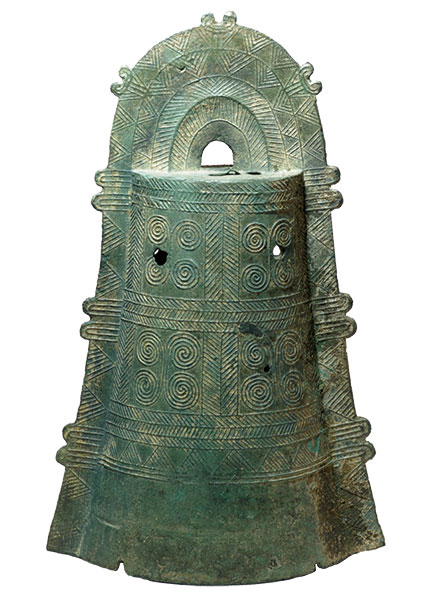
Important Cultural Property
Dōtaku Ritual Bell with Crossed Band Design
(Rokutan-ji Temple Dōtaku; Tatsuuma Bell No. 416)
Excavated from Rokutan-ji Temple, Osaka
Tatsuuma Collection of Fine Arts, Hyogo
2. Distinctive Features of the Archaeology Collection at the
Tatsuuma Collection of Fine Arts
The Tatsuuma Collection of Fine Arts is best known for its many Yayoi-period dōtaku bronze bells, but it also houses a large number of objects from the preceding Jōmon period (pre 10,000–ca. 5th c. BCE), including earthenware vessels and clay figurines (dogū), as well as materials from the subsequent Kofun period (ca. 3rd–6th c.) onward and archaeological artifacts from across East Asia. This section of the exhibition introduces archaeological examples beyond dōtaku while also highlighting Tatsuuma Etsuzō’s lifelong interest in beads, offering insight into another facet of his work as an archaeologist.
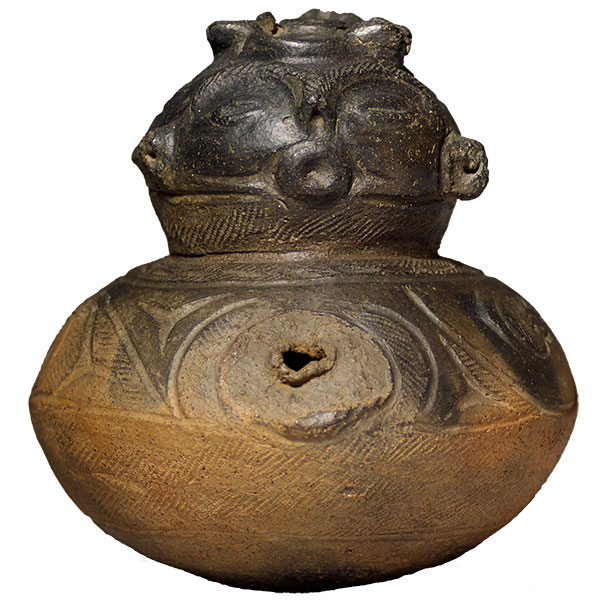
Important Cultural Property
Spouted Vessel with a Face
Excavated from Fukuda shell mound, Ibaraki
Tatsuuma Collection of Fine Arts, Hyogo
3. The Tatsuuma Family and Tomioka Tessai
Tatsuuma Essō (1835–1920) was a close friend of the painter Tomioka Tessai (1836–1924) and collected a number of his works. Despite being only a year apart in age, the two did not begin corresponding until they were both in their seventies. Though their exchanges primarily took place via letters, in 1913 Tessai visited the Tatsuuma residence, where he met Essō in person for the first time and painted a large pair of folding screens (on view Aug. 11–Sep. 6). In addition to works created for Essō, the Tatsuuma Collection of Fine Arts also includes paintings Tessai made prior to their acquaintance, forming a major assemblage that spans virtually every period of Tessai’s career.
![Banquet of Immortals. By Tomioka Tessai.
Tatsuuma Collection of Fine Arts, Hyogo. [on view: August 11– September 6, 2026]](/jp/exhibitions/assets/feature/2026_tatsuuma/20260714_tessai.jpg)
Banquet of Immortals
By Tomioka Tessai
Tatsuuma Collection of Fine Arts, Hyogo
[on view: August 11– September 6, 2026]
4. Admiration for Literati
Tatsuuma Etsuzō (1892–1980), the grandson of Essō, is primarily known for his collection and study of archaeological artifacts, however, he also collected materials related to the famed early modern naturalist Kimura Kenkadō (1736–1802). These encompassed Kenkadō’s original writings and manuscripts copied in his own hand, along with books and archaeological artifacts, such as mirrors, that were once part of his personal collection. Together they form a valuable group of objects conveying the true character of one of the intellectual giants of the Edo period (1615–1868).
Tessai deeply respected scholars and literati such as Rai San’yō (1781–1832) and Ike no Taiga (1723–1776), but he was particularly interested in Kenkadō. Indeed, many of the materials related to Kenkadō within Etsuzō’s collection previously belonged to Tessai. It seems that Etsuzō was not only influenced by Tessai’s intellectual interests, but was also drawn to Kenkadō because, like himself, he was engaged in the business of sake brewing.
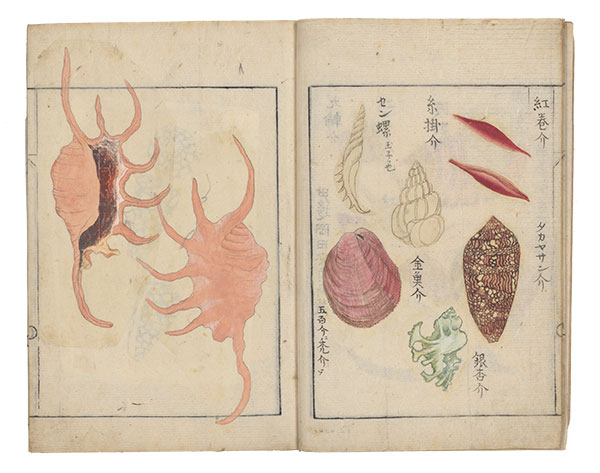
Illustrated Catalogue of Curious Shells
By Kimura Kenkadō
Tatsuuma Collection of Fine Arts, Hyogo
Title and URL copied to clipboard
- Share